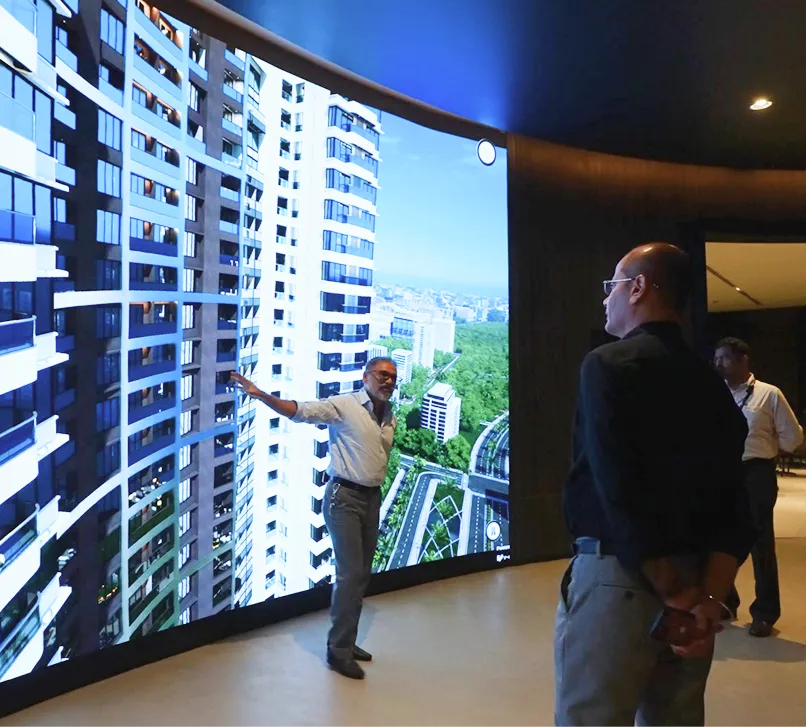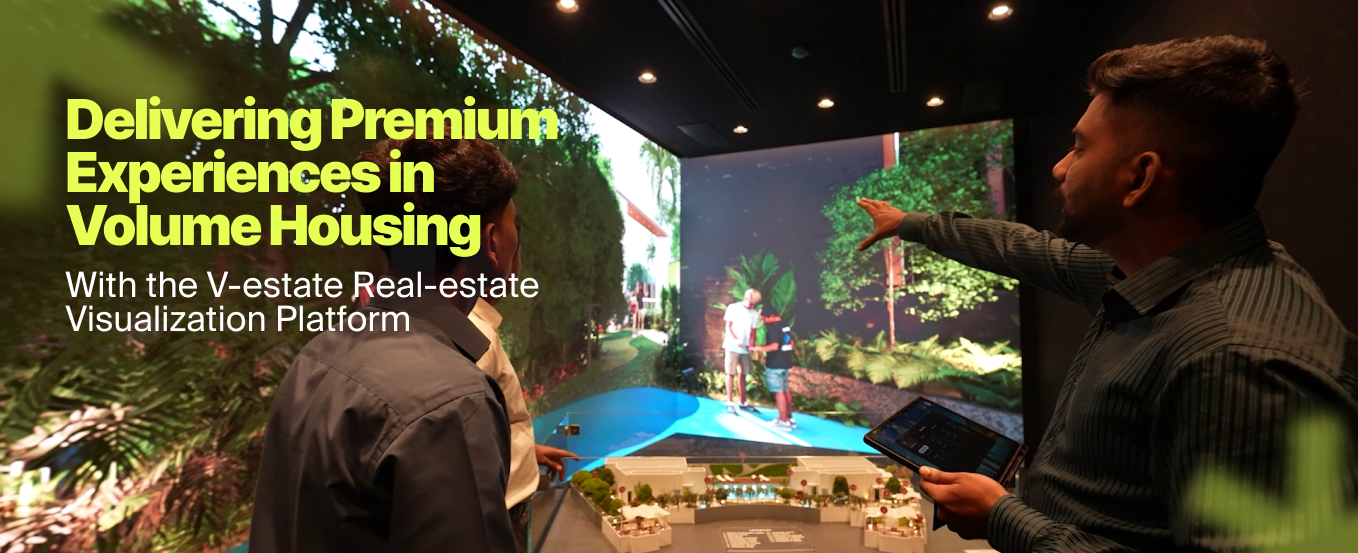
First-time homebuyers visiting township sites in Dombivli now expect structured presentations. Families upgrading from smaller units want detailed visual comparisons. Investors need quick configuration assessments. Outstation prospects require remote clarity without repeated site visits.
Mid-income buyers compare presentation quality across price segments, visiting premium developments before exploring volume housing options. When projects fail to deliver interactive clarity through static brochures and verbal explanations, buyers perceive execution risk—even when construction quality matches expectations.
Developers need premium clarity without premium spend. Rustomjee Urban Woods solved this challenge by implementing the V-estate Visualization Platform, creating structured infrastructure that standardizes project presentation across all buyer segments and sales touchpoints.
The Core Problems in Volume Housing Sales
Township complexity overwhelms verbal communication. Large projects with multiple towers, clusters, phases, and amenity zones are difficult to explain through words alone. Sales teams describe configurations, tower positions, and connectivity verbally, but buyers can't form clear mental models. This triggers repeated clarifications and additional site visits that stretch sales cycles unnecessarily.
High footfall multiplies repetitive explanations. During weekend campaigns, teams answer the same foundational questions repeatedly: Where are towers positioned? How do units connect to amenities? What's the difference between configurations? Sales staff spend hours explaining fundamentals instead of addressing qualified decision factors.
Visualization gaps delay shortlisting. Most buyers struggle understanding layout flow, judging unit efficiency, comparing configurations, understanding project scale, and visualizing future construction from flat land. These comprehension gaps slow decision-making, requiring additional visits and follow-up calls that extend conversion windows beyond necessary timelines.
Large teams create messaging inconsistency. Volume housing projects deploy multiple sales agencies, channel partners, and support staff. Different team members present project details differently—one emphasizes connectivity, another focuses on amenity quality, a third highlights unit efficiency. This narrative variation reduces trust and complicates decision-making when buyers revisit with family members who hear different explanations.
How V-estate Delivers Structured Visualization
The V-estate platform organizes entire projects into clear visual segments and standardizes buyer journeys across all sales members, delivering premium clarity within volume housing budgets.
Consistent presentation structure eliminates narrative variation. All sales staff present using identical visual flow: township overview, amenity distribution, tower breakdown, unit configurations, connectivity context, and floor-wise layouts. Every buyer receives the same foundational information regardless of which executive manages the walkthrough.
Visual clarity replaces abstract explanations. The platform uses 3D masterplans, tower-level exploration, unit-level graphics, amenity walkthroughs, and cluster views. Buyers see spatial relationships instead of imagining them, understanding scale without architectural interpretation skills. This particularly helps first-time buyers who lack experience reading technical drawings.
Fast configuration comparison speeds shortlisting. Buyers compare unit types, view options, layout styles, and floor placements instantly. The system switches between configurations without manual presentation adjustments, helping buyers explore multiple options before deciding without waiting for staff to reload content.
Reduced repetitive explanation load. Basic elements like amenities, layouts, and tower positioning are presented visually. Sales teams focus on personalized queries about financing, possession timelines, and customization options. Conversations shift from information delivery to solution building earlier in the buyer journey.
Operational Performance Across All Touchpoints
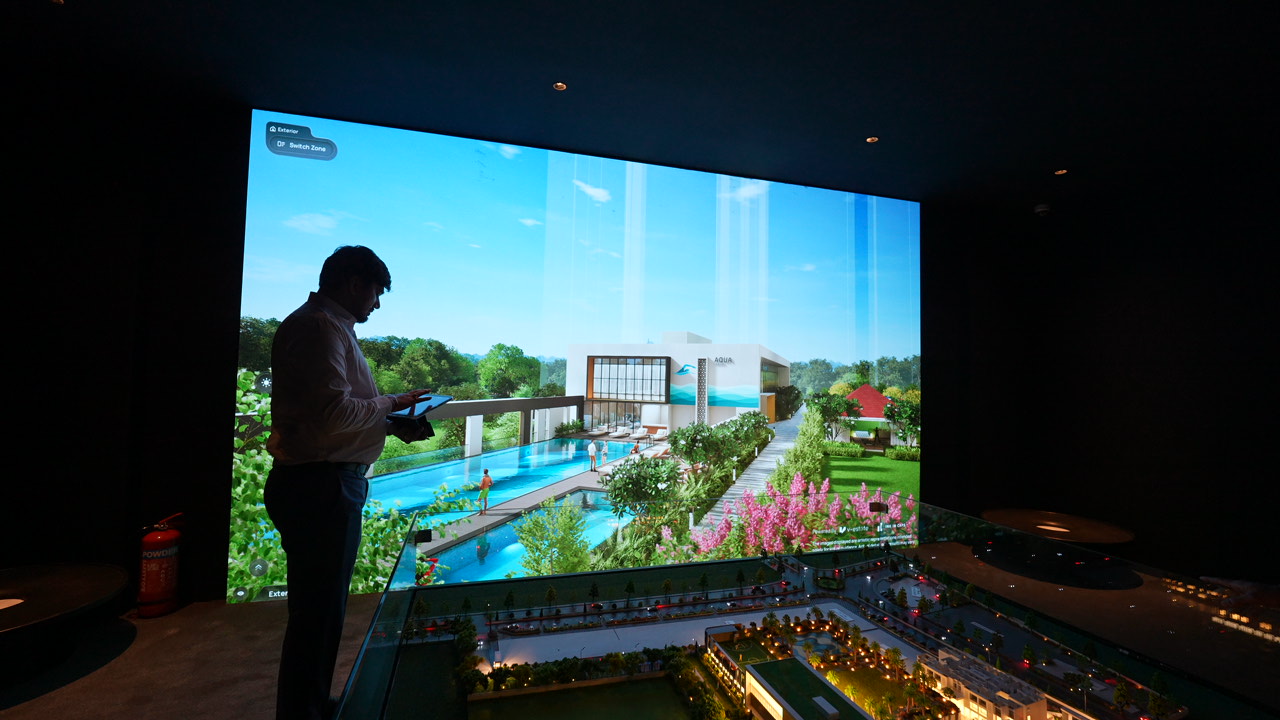
Multi-device consistency across zones. The platform operates identically across large LED walls, tabletop screens, sales tablets, and remote screen-share setups. Buyers moving between zones or continuing discussions remotely receive consistent information without restarts.
Offline reliability during peak hours. The system runs without internet dependency. All visuals, 3D assets, and navigation functions load from local infrastructure, ensuring reliability during weekend campaigns when footfall peaks and network stability becomes unpredictable.
Remote clarity for outstation prospects. Structured demos transfer directly to screen-share sessions. NRI and outstation buyers receive identical presentations remotely without teams creating separate materials for different channels.
Simplified staff training. New hires follow the same navigation logic across all buyer interactions. Training time decreases and performance consistency improves faster across large teams managing high-volume environments.
Automated version control. All screens access the same content backend. Updates distribute simultaneously to every touchpoint, eliminating outdated PDFs or mismatched visuals. Information stays current across all zones automatically.
Why This Infrastructure Matters for Dombivli Developers
Markets like Dombivli generate concentrated weekend traffic where standardized visuals help teams manage multiple buyer conversations simultaneously. Better visualization leads to faster comprehension, which leads to shorter shortlisting timelines. Buyers make confident decisions with fewer site revisits and clarification calls.
Experience centers represent significant developer investments. Structured visualization systems ensure these spaces deliver measurable operational value by connecting displays, models, and screens into coherent buyer journeys that amplify hardware investments.
Premium interactions create stronger perceived value even in volume housing segments. Buyers associate experience quality with execution capability. Projects delivering structured, clear presentations differentiate themselves in competitive micro-markets where traditional tools signal outdated practices.
The Results at Rustomjee Urban Woods
V-estate infrastructure allowed sales teams to serve diverse buyer segments with consistent presentation quality. First-time buyers gained quick comprehension of complex township layouts. Upgraders compared configurations efficiently without manual presentation delays. Outstation prospects received remote clarity matching on-site walkthroughs. Sales staff focused on decision factors instead of repeating basic explanations across multiple zones.
The platform functions as sales infrastructure—not marketing collateral. It transforms how buyers understand projects and how teams manage high-volume sales environments within volume housing economics.