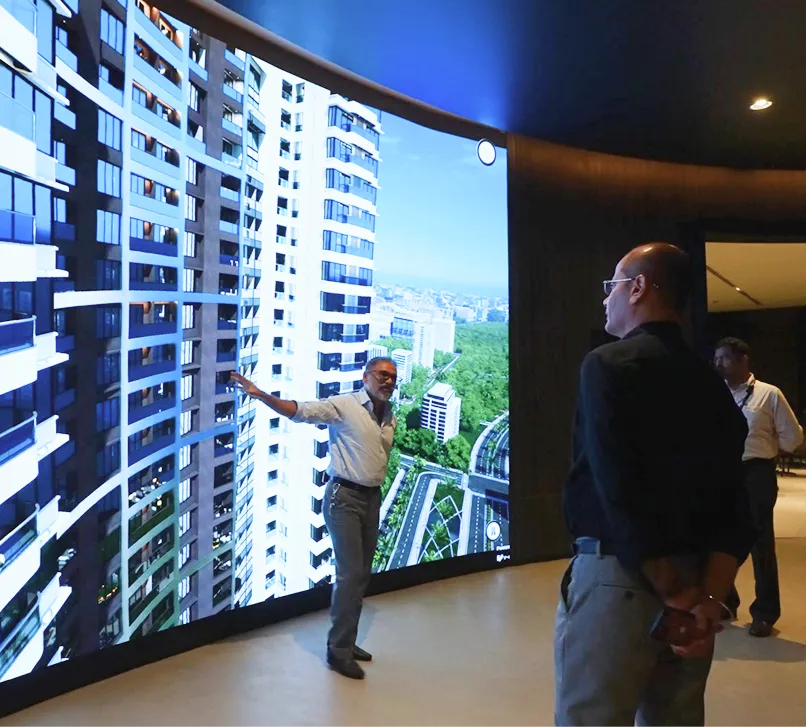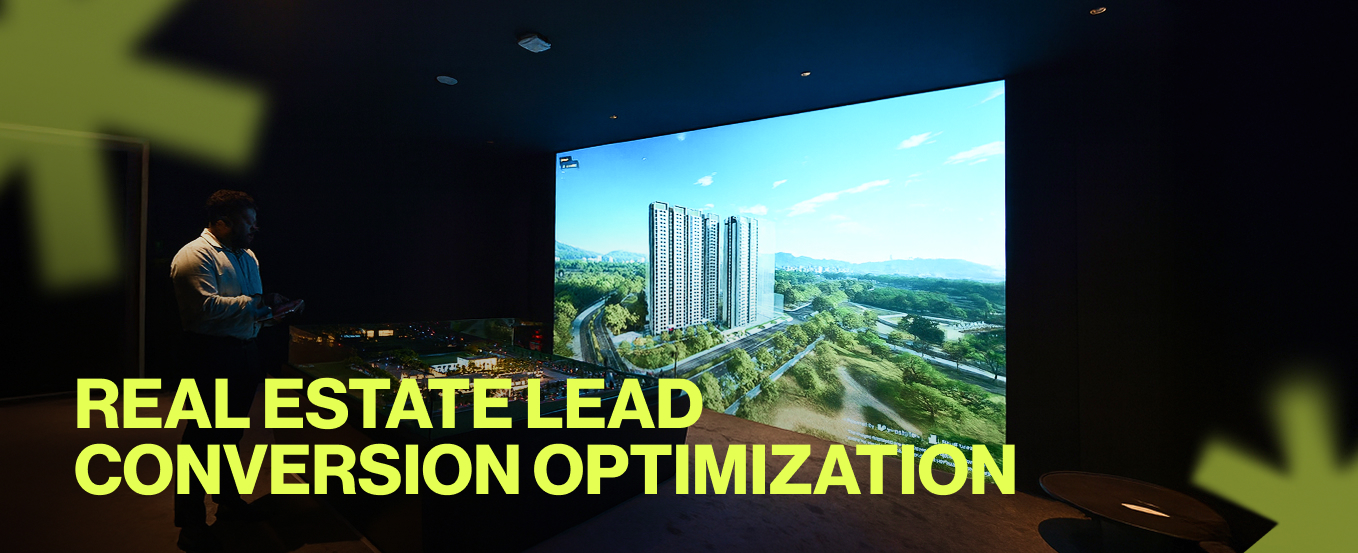
Offline property events fail to convert. Developers deploy at expos, showrooms, and activations. Prospects browse. Few commit. The problem isn't foot traffic—it's engagement depth.
Real estate buyers need clarity before deciding. They want to visualize spaces, not imagine them. Static displays and 2D renderings leave gaps. Marketing teams measure footfall, not qualified leads. Sales cycles stretch. Conversion rates plateau at 5-10% across most offline activations.
The gap exists between what buyers need and what traditional tools deliver. This directly impacts your bottom line.
The Real Conversion Problem at Offline Events
Prospects lose interest fast. Industry data confirms 70% of leads go cold within 48 hours of an event. Why? Incomplete information. Generic pitches. Lack of personalization. Buyers juggle multiple property options, and without vivid context, they default to safer choices.
Decision fatigue is real. Buyers face too many unknowns. Will the afternoon light flood the living room? How does the neighborhood feel at different times? Which amenity matters most—proximity to schools or transit access? These questions linger without answers. Buyers leave events uncertain, then move on to competitors with clearer value propositions.
Your sales team bears the cost. Generic follow-ups chase cold leads. Demo stations queue up during peak hours, forcing rushed conversations. Staff struggle to personalize pitches for diverse buyer profiles. Retention suffers because first impressions feel transactional, not immersive.
ROI shrinks under operational weight. Physical models cost money. Printing brochures consumes budgets. Logistics and staffing drain resources. Most developers see event ROI below 2x—a concerning ratio for high-stakes activations.
Why Conventional Offline Tools Underperform
Brochures and renders lack dimension. 2D images cannot convey lived experience. Buyers cannot assess window views, natural lighting, or sightlines from their kitchen. Amenity connections remain abstract. Lifestyle fit feels uncertain.
Staff-dependent engagement creates bottlenecks. Prospects wait for sales reps. Conversations interrupt other customers. Detailed customization discussions happen offline, after the event. Momentum dies.
Data capture stays fragmented. Post-event, tracking which features resonated is guesswork. Did buyers care about the balcony size or the view? Which amenities drove interest? Without granular insights, marketing teams cannot refine messaging or developers cannot prioritize features in future projects.
The Offline Activation Solution
Standalone interactive devices solve these gaps. V-estate operates as an offline-first sales tool deployed at your events. No internet dependency. No cloud reliance. Prospects engage directly with photorealistic 3D virtual show flats on tablets or kiosks.
The experience is tangible and personalized. Users see minute architectural details. They visualize evening light hitting their coffee table. They simulate seasonal changes and different times of day. Paint colors shift on walls. Furniture arrangements adjust instantly. This isn't theoretical—buyers see concrete outcomes in real-time.
Neighborhood context becomes immediate. Amenity mapping displays nearby schools, shopping centers, transit stations, and current or upcoming projects. Buyers grasp connectivity and convenience instantly. Lifestyle alignment becomes clear, not abstract.
Core Features That Drive Conversions
Photorealistic 3D Show Flats. Precise interior representations show layouts, finishes, and proportions as they will exist. Buyers assess room dimensions, ceiling heights, and spatial flow—details that renderings typically flatten or distort.
Window View Simulations. Real-world perspectives from the property. Morning light. Evening vistas. Seasonal changes. Buyers see exactly what their view entails across different contexts. This eliminates post-purchase surprises and strengthens buyer confidence.
Dynamic Lighting and Weather Controls. Time-of-day shifts reveal how spaces transform. Seasonal previews show winter versus summer aesthetics. This narrative shift—from imagined to observed—accelerates buyer conviction.
Customization Tools. Paint selections. Furniture arrangements. Fixture choices. Buyers personalize on-device, seeing outcomes instantly. This engagement deepens emotional investment. Customization also generates preference data valuable for follow-up pitches.
Amenity Showcase with Connectivity Mapping. Nearby facilities. Transit proximity. Project phases. Buyers understand neighborhood ecosystem without leaving your booth. Context-rich information reduces post-event research friction.
Offline-First Operation. No connectivity required. USB updates. Zero downtime. Your events proceed without technical dependencies.
Integration Into Your Event Strategy
Setup is rapid. Kiosks deploy in minutes. Prospects scan QR codes or walk up. Average engagement time per session: 8-12 minutes—sufficient for meaningful exploration without overwhelming busy event environments.
Sales staff intervene strategically. Rather than conducting initial presentations, reps field specific questions and transition hot leads toward closing conversations. This shifts your team's role from demo delivery to relationship building.
Data exports integrate with your CRM. Lead capture happens automatically. Names, preferences, customization choices, and engagement patterns export post-event. Marketing teams access granular behavioral data immediately.
Heatmaps reveal feature popularity. Which customizations attract repeated interest? Which amenities resonate most? This feedback informs future marketing messaging and helps prioritize features in new project designs.
Measurable Conversion Lift
Early deployments show 35% uplift in offline conversions. Vivid property visualization accelerates buyer decision velocity. Prospects commit at events rather than requiring multiple follow-ups.
Site visit scheduling improves by 25%. Buyers who preview properties virtually arrive at physical sites with clearer intent. Fewer no-shows. Higher quality site visits.
Event ROI climbs to 4-5x. Reduced printing costs. No physical model expenses. Efficient staff deployment. Higher qualification rates reduce wasted follow-up effort.
Qualified lead volume increases by 50%. Buyers self-qualify through immersive exploration. Low-fit prospects filter out organically. Your sales team focuses on genuine opportunities.
Customer satisfaction and retention rise. Personalized pre-purchase experience sets tone for post-sale relationship. Buyers feel understood. Follow-up messaging aligns with their stated preferences.
Implementation for Your Organization
Hardware requirements are minimal. Standard tablets or kiosks. 4K rendering for visual clarity. Battery life exceeds 8 hours per charge.
Software installation is straightforward. Offline deployment requires no backend infrastructure. Project data uploads pre-event via USB. Multi-language support fits diverse buyer demographics. Staff training takes 30 minutes.
Scalability accommodates growth. Deploy one kiosk or 100 across multiple events simultaneously. Infrastructure adapts to your event calendar.
Optimization Across Events
Post-event analytics reveal drop-off patterns. Which customizations drive engagement? Where do buyers lose interest? Conversion funnels highlight friction points.
Iterate based on usage data. A/B test different feature presentations. Refine tours based on which elements capture attention. Developers adjust upcoming project designs informed by market preference signals.
Marketing aligns messaging with behavior. Content strategy shifts from assumption-driven to data-driven. Messaging emphasizes features that demonstrably resonate.