How Real Estate Sales Teams Can Build Consistency Across Multiple Experience Centres
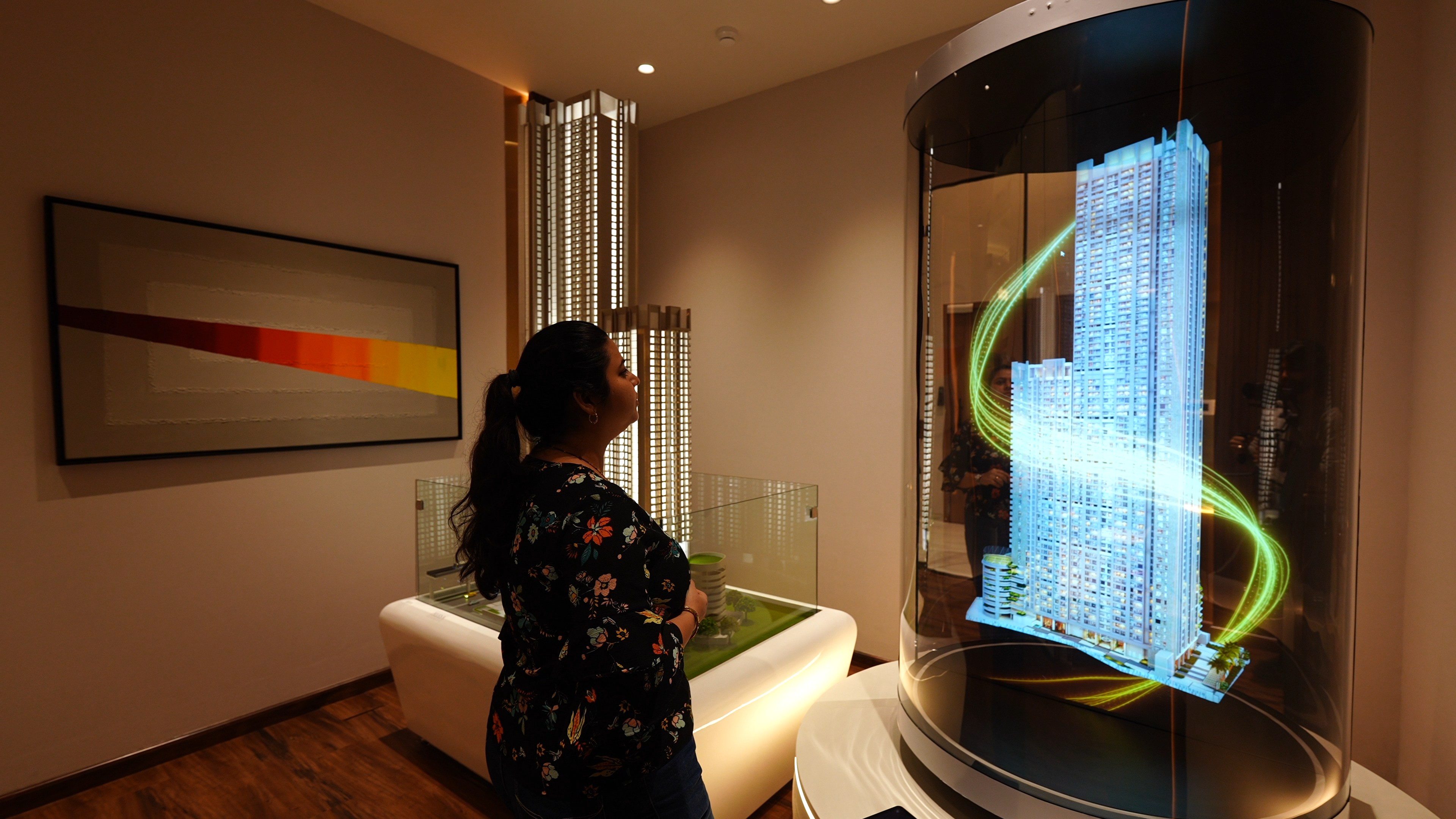
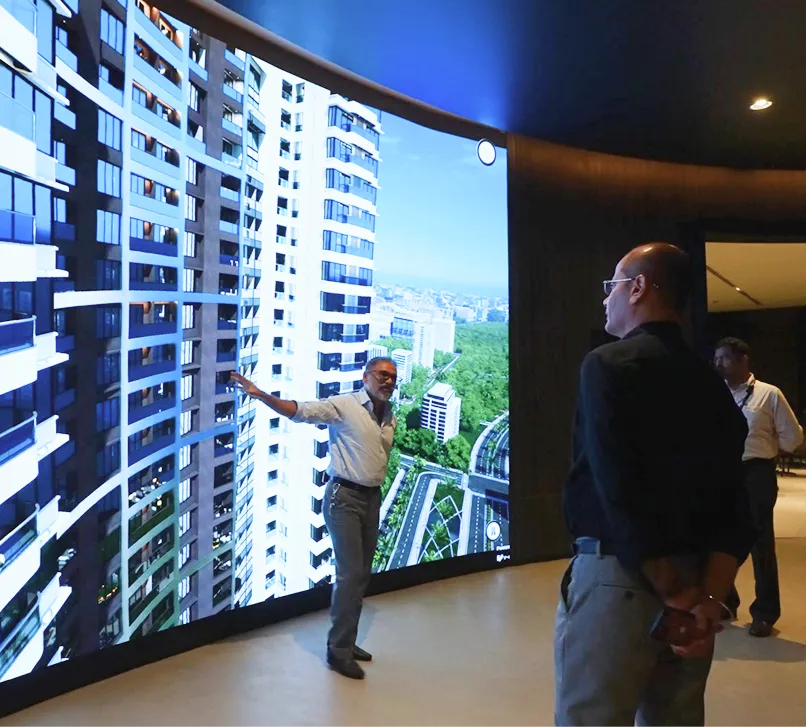
A prospective homebuyer visits a developer’s flagship city-centre office on a Wednesday. They are greeted with a massive physical scale model, an immersive video wall, and a sales executive who guides them through a high-fidelity 3D presentation of the upcoming project. Impressed, the buyer decides to visit the actual construction site that weekend with their family.
However, the site office tells a different story. The physical space is smaller, the physical model is missing, and the sales team relies on a worn-out printed brochure and a standard tablet presentation that lacks the interactive depth of the flagship office. The information is technically the same, but the delivery feels entirely different.
For the buyer, this creates friction. The premium feel of the first visit is replaced by a transactional vibe in the second. For real estate developers and sales heads, this scenario highlights a persistent logistical challenge: maintaining a uniform, high-quality sales narrative across multiple physical locations.
When a developer operates a main headquarters, on-site offices, satellite kiosks in malls, and channel partner spaces, ensuring that every buyer receives the exact same presentation quality is exceptionally difficult. Addressing this inconsistency is critical for protecting the brand and keeping buyer confidence intact.
The Disconnect: Why Multiple Experience Centres Often Tell Different Stories
The root cause of inconsistent sales experiences usually comes down to physical and logistical constraints, paired with human variance.
From the Developer and Sales Perspective: Real estate is inherently spatial. Developers traditionally rely on large physical models, printed collateral, and mock-up apartments to sell an unbuilt vision. However, deploying a $50,000 physical scale model and a high-end mock apartment to every single regional office or channel partner location is financially and spatially impossible. As a result, primary experience centres get the best tools, while secondary locations are left with basic floor plans and standard PDFs. Furthermore, different sales teams naturally develop their own pitching styles, emphasising different amenities or connectivity features based on their personal preferences rather than a unified strategy.
From the Buyer’s Perspective: Property buyers do not view different offices as separate entities; they view them as a single brand. When a buyer encounters mixed signals—whether it is a discrepancy in how a floor plan is explained, a lack of visual aids at a secondary office, or a completely different aesthetic presentation—it introduces cognitive dissonance. They expect the developer to operate with meticulous precision. If the sales presentation feels disjointed depending on which office they walk into, buyers may unconsciously start to question whether the final construction will also suffer from inconsistent quality.
How Inconsistency Impacts Buyer Confidence and Decision-Making
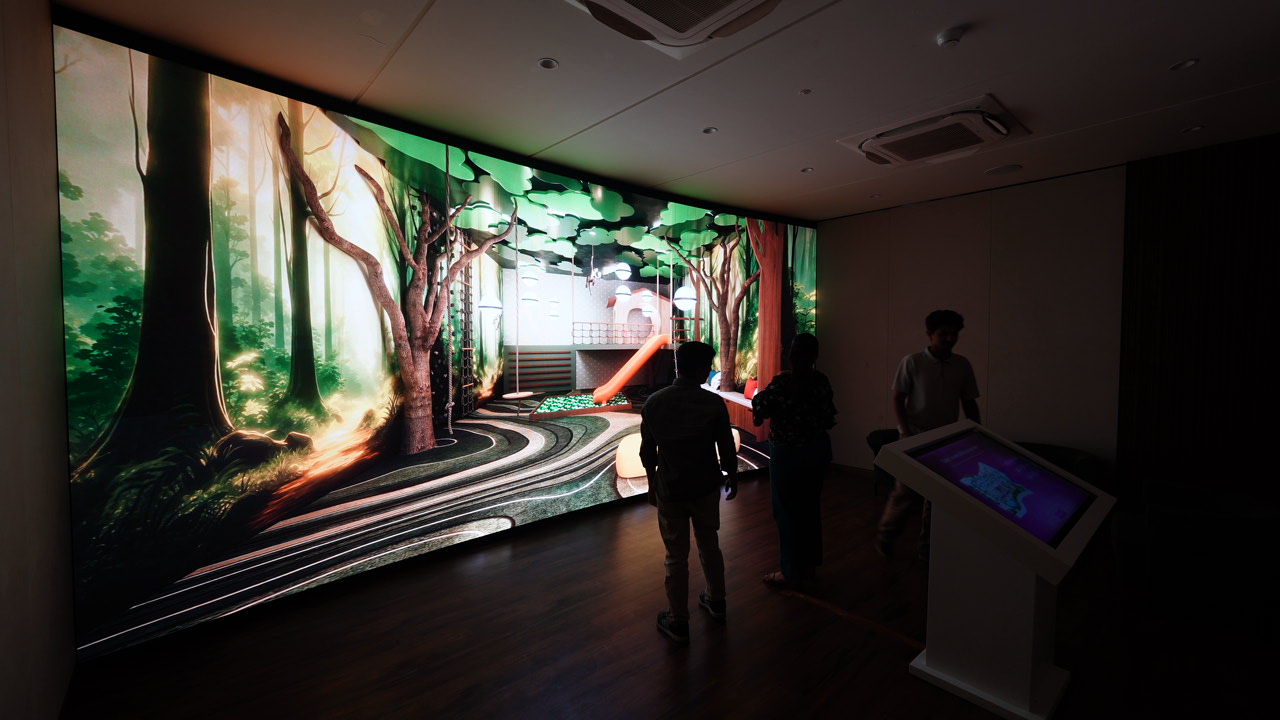
When buyers face a disjointed property buying experience, the impact ripples through the entire sales cycle. Real estate purchases require a massive financial commitment, meaning trust is the most valuable currency in the room.
If a buyer learns about a specific club-house amenity at the flagship office, but the sales executive at the site office cannot visually show it to them or lacks the right interactive presentation to explain its exact location, doubt sets in. This doubt directly affects buyer confidence. Instead of feeling secure in their choice, they begin to second-guess the details.
This lack of confidence immediately stalls decision-making. Real estate sales conversations rely heavily on momentum. If a buyer feels they need to return to the main office to double-check a detail, or if they leave a site visit feeling less impressed than they were initially, the sales cycle extends. They start demanding more documentation, more clarifications, and more time to think. In property sales, time kills deals. A unified, consistent narrative ensures the buyer feels they are in capable, organized hands, regardless of where the conversation takes place.
Moving Beyond Physical Limitations: The Role of Experience Centre Technology
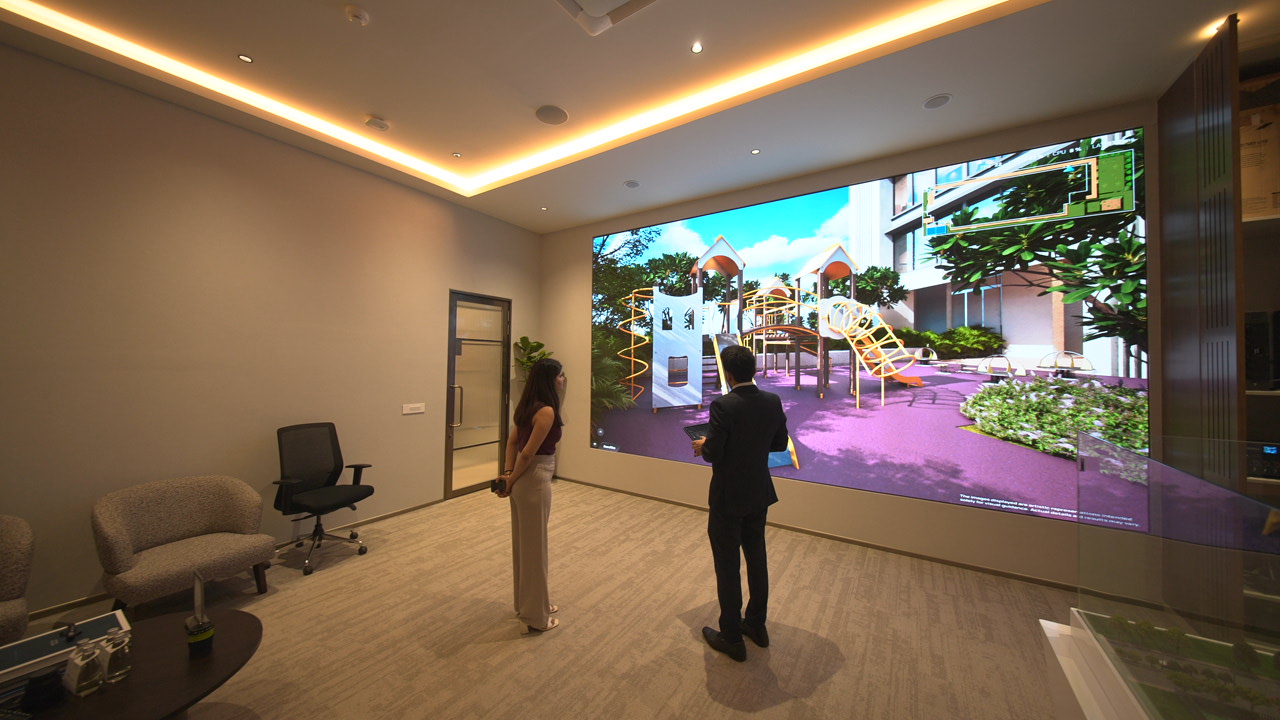
The most effective way to solve the inconsistency problem is to decouple the sales presentation from physical limitations. If a premium experience relies strictly on physical scale models and massive mock-up rooms, consistency will always be restricted by square footage.
This is where experience centre technology steps in to bridge the gap. By digitising the core sales assets, developers can ensure that the exact same property understanding is available in a 5,000-square-foot flagship office and a 200-square-foot satellite kiosk.
Technologies like 3D property visualisation and interactive digital twins allow developers to build a "single source of truth" for the project. Instead of relying on static brochures at smaller offices, sales teams can access interactive property walkthroughs on a standard touchscreen, a tablet, or a TV screen.
When digital assets replace or supplement physical ones, the size of the room no longer dictates the quality of the pitch. An interactive map showing the exact connectivity of the project to local schools, hospitals, and transit hubs can be navigated just as easily on an iPad at a channel partner's desk as it can on a massive interactive table at headquarters.
Practical Steps to Standardize the Property Buying Experience
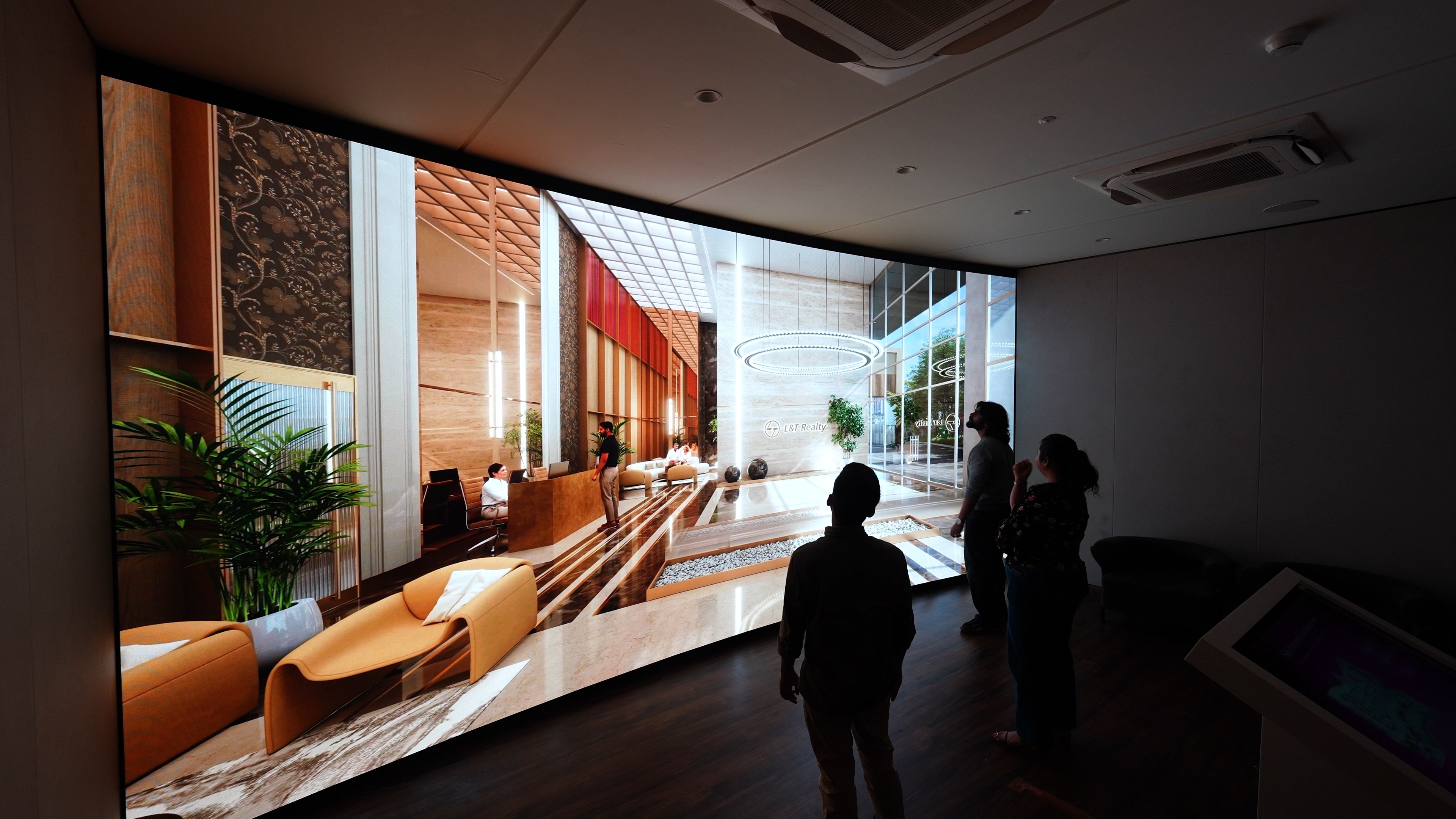
To build true consistency, real estate marketing and sales heads need to implement a structural shift in how their teams access and present information.
Centralise All Sales Assets The first step is moving away from fragmented files stored on individual laptops or local servers. Sales teams should pull from a single, cloud-based platform. Whether it is floor/view visualisation tools, interactive amenities maps, or real-time configuration software, every location must run the exact same version of the presentation. If a floor plan changes or a unit is sold, that update should reflect instantly across all offices.
Implement Interactive Sales Presentations Standardising the pitch does not mean reading from a rigid script. Instead, developers should guide the conversation using interactive sales presentations. When a sales executive navigates a 3D digital twin of the property, the software naturally dictates a logical flow—starting with the macro location, moving to the master plan, zooming into specific towers, and finally exploring the individual unit and its real views. This visual framework keeps the sales conversation structured and consistent, regardless of who is speaking.
Adapt to Different Hardware Consistency does not mean uniformity in screen size. A practical deployment strategy ensures that the visual software is hardware-agnostic. The main experience centre might use immersive projection mapping, while the site office uses a large touchscreen monitor, and brokers use tablets. The underlying software and 3D visualisations must remain identical in quality and functionality across all these devices.
Bringing It Together with Centralised Interactive Platforms
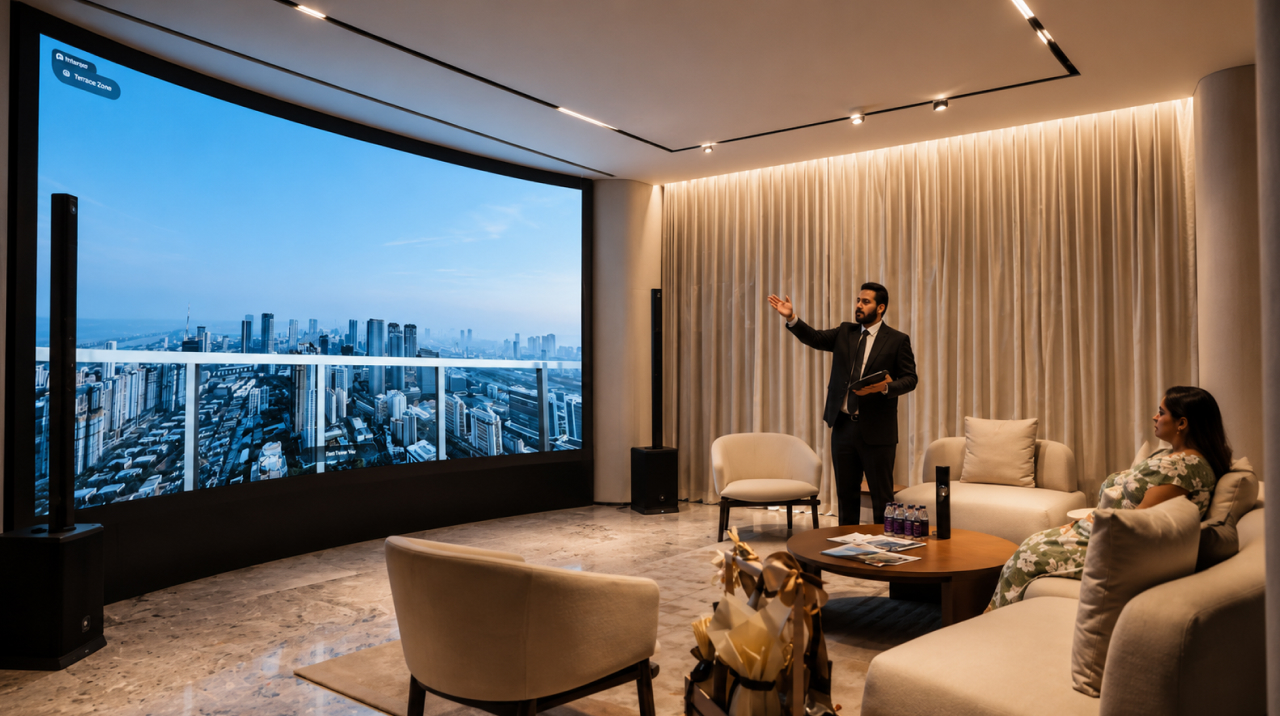
Building a consistent brand experience across multiple touchpoints requires intentional investment in the right digital infrastructure. Developing separate apps or visual tools for different offices creates data silos and updates become a logistical nightmare.
Instead, developers are increasingly turning to unified platforms designed specifically for real estate. Using a solution like V-Estate allows sales and marketing teams to deploy high-fidelity 3D digital twins and interactive presentations across any physical location. Because the platform operates from a centralised system, a developer can ensure that an executive in a remote kiosk is showing the exact same real-time inventory, accurate view mappings, and high-quality walkthroughs as the team in the flagship experience centre. This ensures every buyer receives the same premium standard of information.
Conclusion
A property developer’s brand is only as strong as the buyer's actual experience interacting with it. When a developer operates multiple experience centres, the risk of delivering a fragmented, contradictory sales pitch increases significantly. This inconsistency breeds buyer doubt, delays decision-making, and creates unnecessary friction for sales teams.
By shifting focus from physical constraints to robust experience centre technology, developers can standardise their sales approach. Centralising interactive sales presentations, deploying consistent 3D visualisations, and ensuring all teams work from a single digital source of truth allows the sales narrative to remain premium, accurate, and compelling—whether the buyer is sitting in a downtown high-rise office or walking into a temporary on-site cabin.
If you are looking to standardise how your projects are presented across various physical locations, explore how V-Estate’s interactive real estate platforms can unify your sales presentations and protect your brand experience.
%20(1).jpg)