The buyer walking into your experience centre today is not the buyer of a decade ago.
They have done three hours of research before they arrived. They have watched YouTube walkthroughs of similar projects. They have scrolled through Instagram feeds of completed units in comparable developments. They have read reviews, joined housing forums, and triangulated opinions from people they have never met.
They arrive informed, slightly sceptical, and with a very precise sense of what a premium experience should feel like.
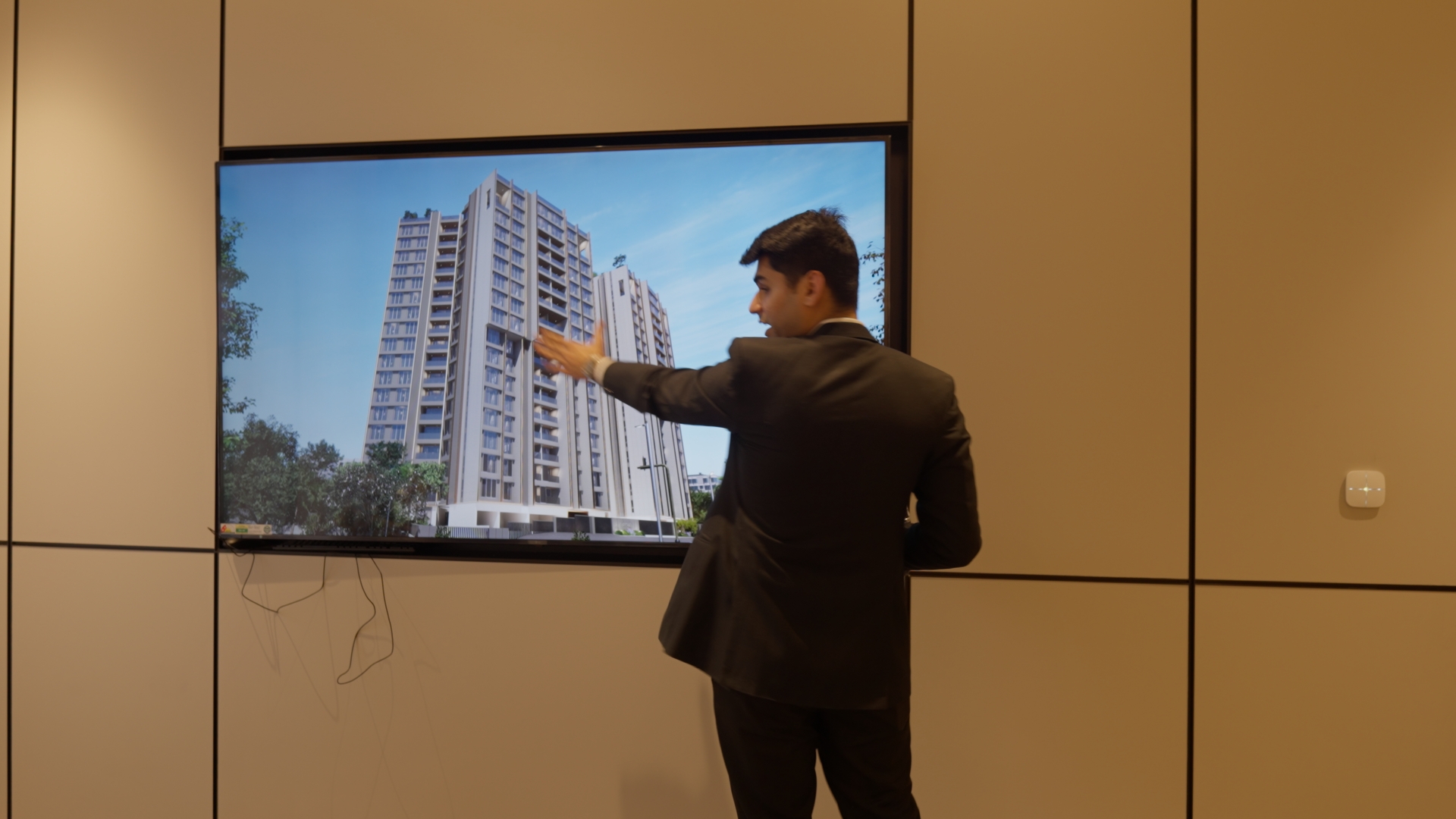
And then too often, what they encounter is a scale model, a set of printed brochures, and a sales executive who begins at slide one.
The gap between what modern buyers expect from a real estate sales experience and what they typically receive is one of the most significant and under-addressed challenges in the industry. Closing that gap is not a luxury. It is a competitive necessity.
What Buyers Actually Want From the Property Sales Process
Ask buyers what they want — and the answers are consistent across income brackets, cities, and project types.
They want to feel the space, not read about it. They want to be shown, not told. They want to understand the full picture — not just the unit, but the building, the neighbourhood, the lifestyle. And increasingly, they want a degree of personalisation — the sense that this purchase is about them specifically, not about a generic buyer profile.
What they do not want is to be presented to. They do not want a one-size-fits-all pitch. They do not want to be handled.
The modern buyer wants to be empowered — to explore, to question, to discover — and to feel that the decision they are making is genuinely informed.
How the Traditional Sales Experience Falls Short
The traditional property sales experience was designed for a different era.
When information was scarce and buyers depended heavily on the developer and sales executive for knowledge, the presentation-led approach made sense. You had what the buyer needed, and the sales interaction was about transferring that information persuasively.
That dynamic no longer exists.
Today's buyer has information. What they lack is the experience — the felt sense of what the completed property will actually be like. And the traditional sales toolkit — brochures, renders, scale models, a single show flat — is simply not equipped to deliver that experience.
Consider the limitations:
A render is static. It shows one angle, one lighting condition, one configuration. It gives the buyer a beautiful picture and leaves the rest to imagination.
A physical show flat shows one unit type, one configuration, staged by the developer's team. A buyer considering a 3 BHK corner unit on the 18th floor cannot extrapolate their actual experience from a ground-floor 2 BHK show flat.
A scale model shows the project in miniature. It communicates layout and massing but conveys no feel for the space, the light, the life.
None of these tools answer the question buyers are actually asking: "What will it feel like to live here?"
Rustomjee's Elevated Sales Experience Through Immersive Technology
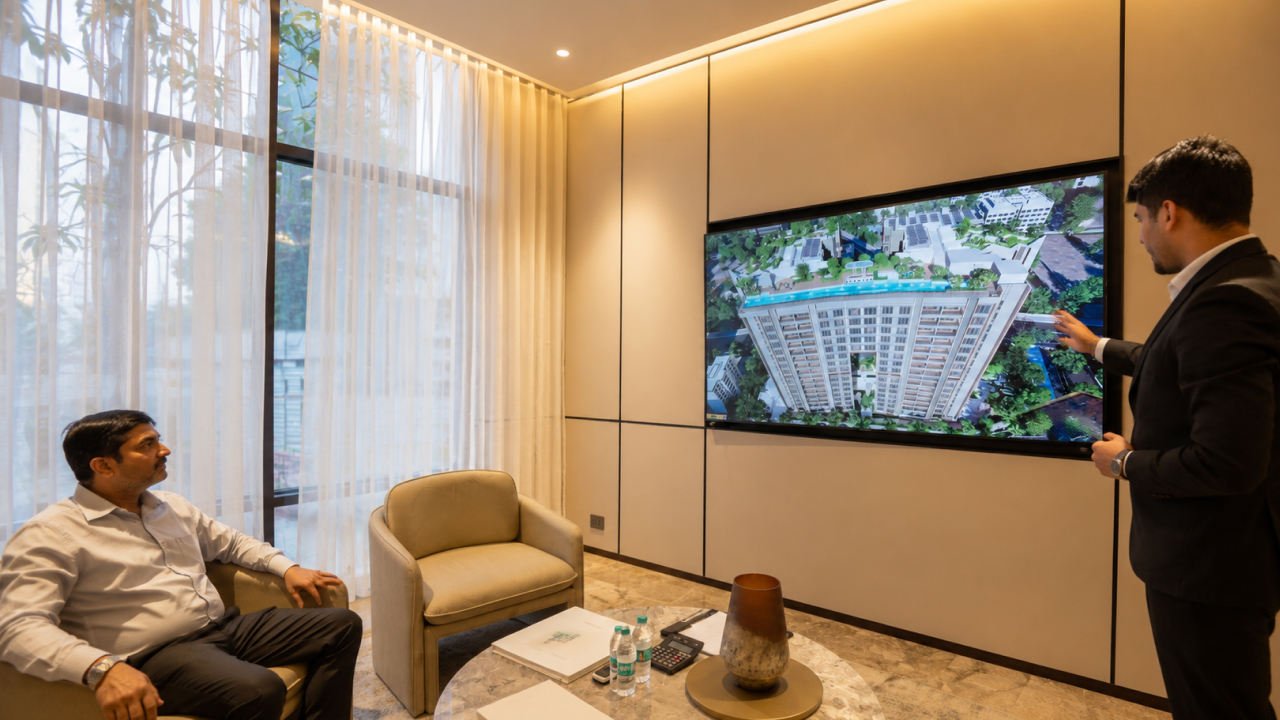
Rustomjee, a premium Mumbai-based developer with a legacy of landmark projects, understood that their buyer profile — discerning, well-travelled, used to premium experiences in every aspect of their lives — demanded a sales experience to match.
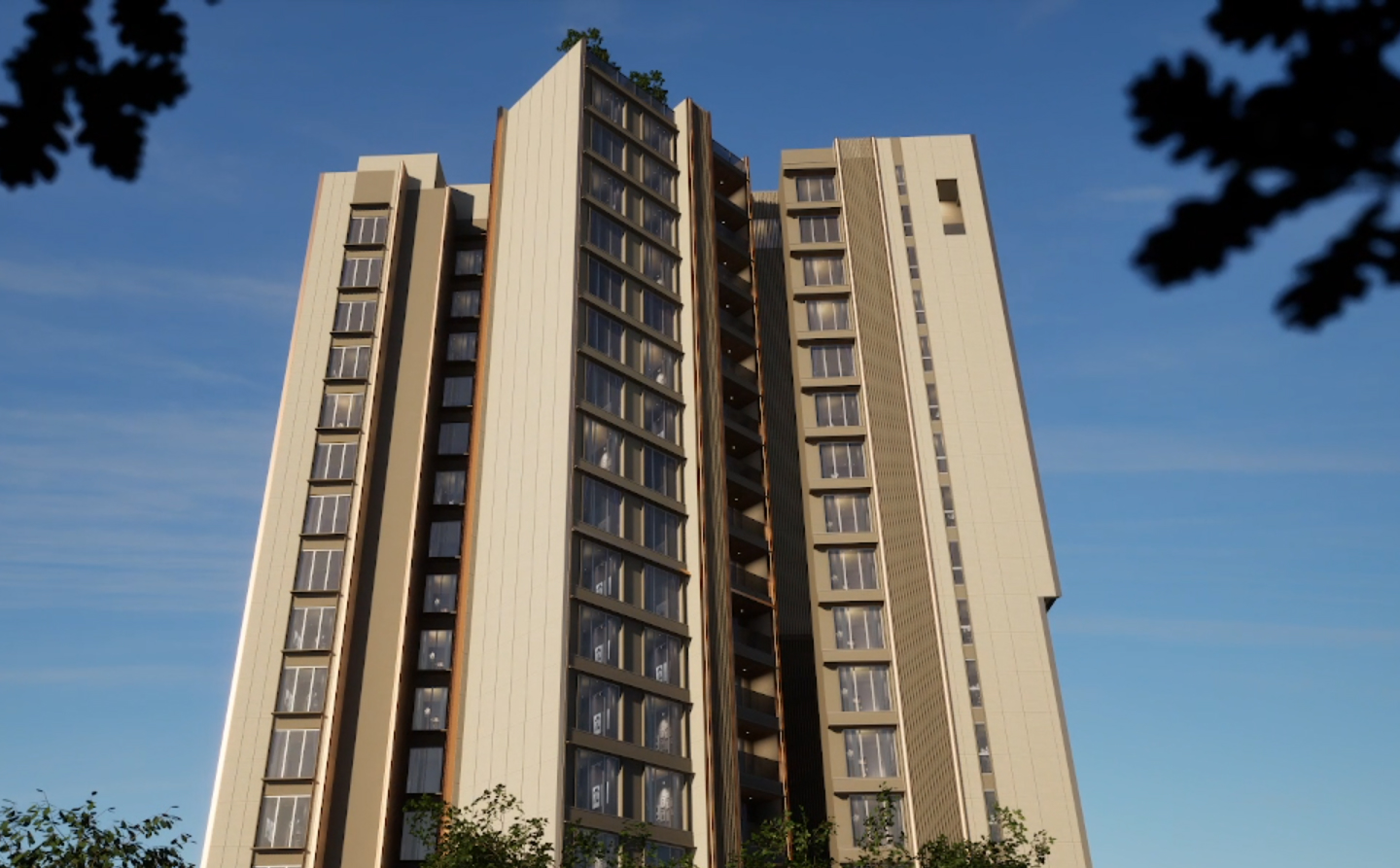
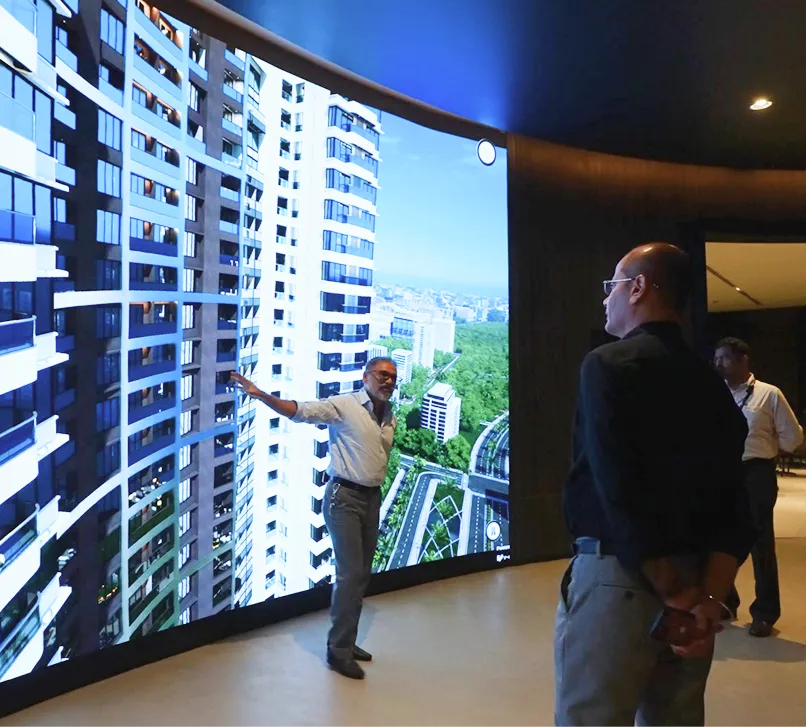
By integrating V-estate's interactive real estate sales tool into their experience centre, Rustomjee was able to offer every prospective buyer a fully personalised property walkthrough — specific to the unit they were considering, with accurate views, dynamic lighting, and interior customisation options.
Rather than asking a buyer interested in a high-floor apartment to extrapolate from a ground-floor show flat, the sales team could walk them through a photorealistic representation of their exact unit, showing them the view from their balcony, the light in their living room at different times of day, and the look of the lobby from their perspective.
The experience matched the premium positioning of the brand. And in premium real estate, when the experience matches the positioning, closing rates follow.
What the New Real Estate Sales Experience Looks Like
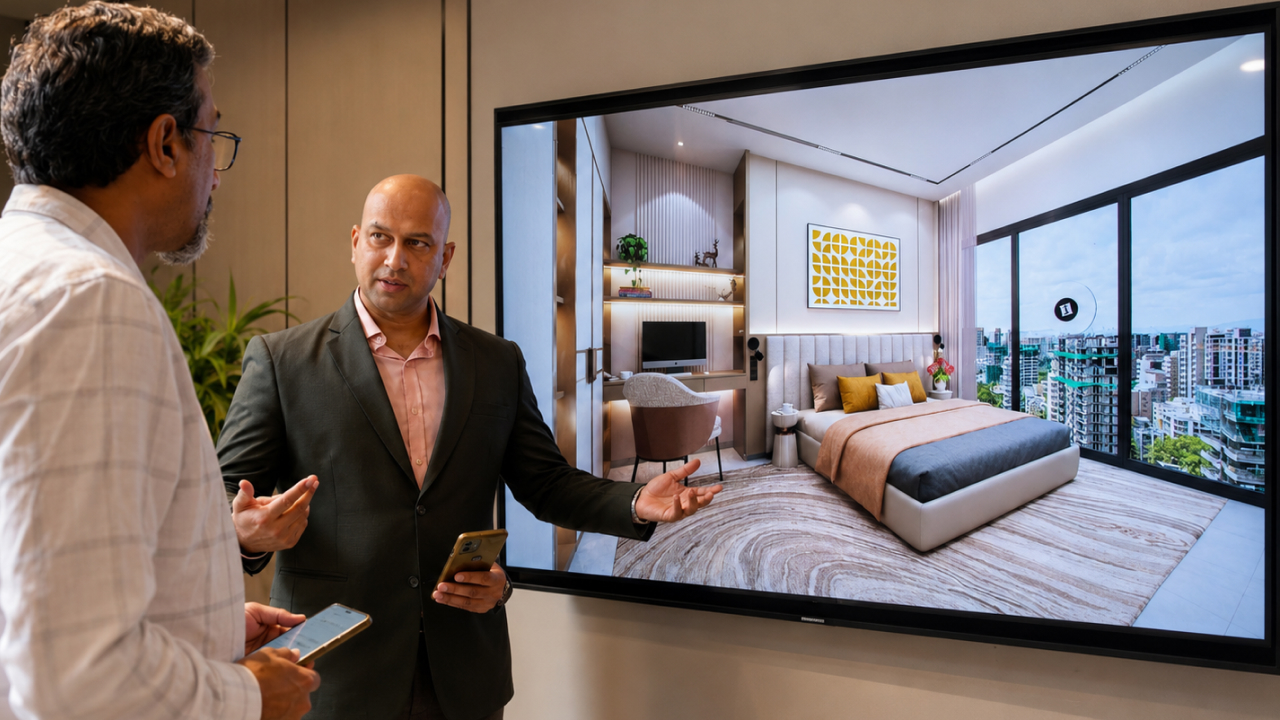
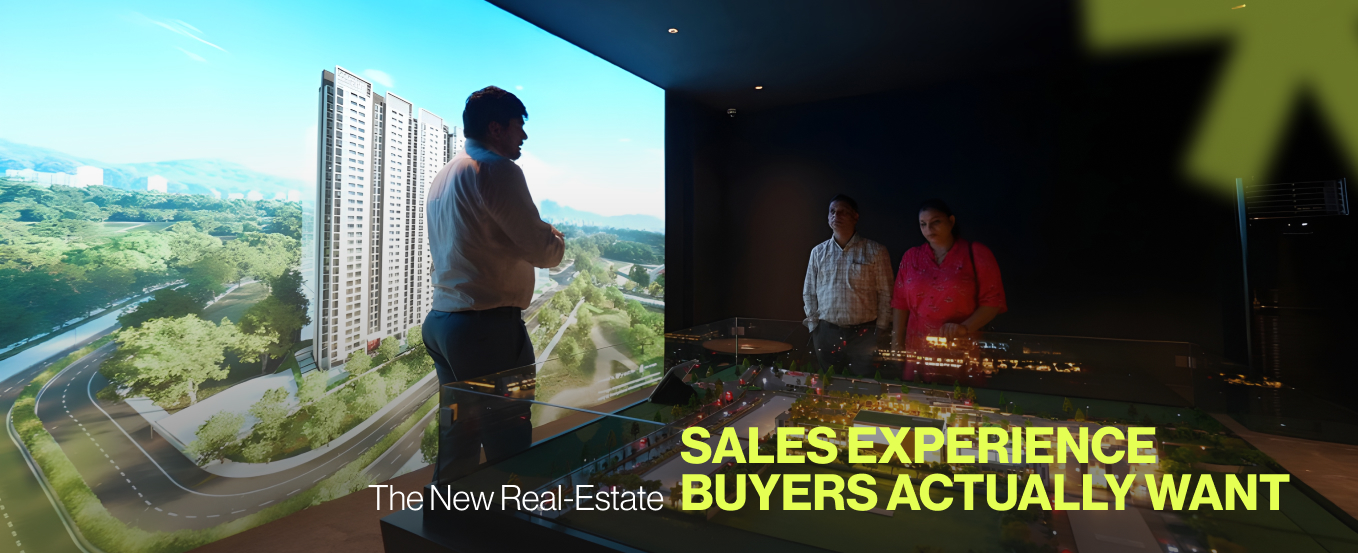
The new sales experience is not built around presenting to the buyer. It is built around taking the buyer on a journey.
It begins with the property in context. Vicinity mapping shows the buyer where the project sits within the city — the proximity to key infrastructure, upcoming developments that will enhance the neighbourhood, lifestyle amenities that define the day-to-day quality of life.
It moves into the project. The masterplan comes alive — not as a flat drawing but as a 3D environment the buyer can explore. Amenity spaces are shown in their full form: the pool, the gym, the landscaped gardens, the community spaces. The buyer begins to form an emotional connection with the development as a whole.
Then it personalises. The buyer moves into their specific unit. They explore every room. They see the view from their window. They adjust the lighting to understand how the space performs across the day. They select wall finishes, experiment with furniture arrangements, and begin to picture their life inside this space.
At every step, the buyer is making decisions, not receiving information. The psychology of this is profound. Every choice the buyer makes — every colour they select, every piece of furniture they position — is a micro-commitment to the space. By the time the formal sales conversation happens, they have already, emotionally, decided.
The Role of the Sales Team in the New Experience
A common concern among sales teams when immersive technology is introduced is that the technology will replace the human element.
The opposite is true.
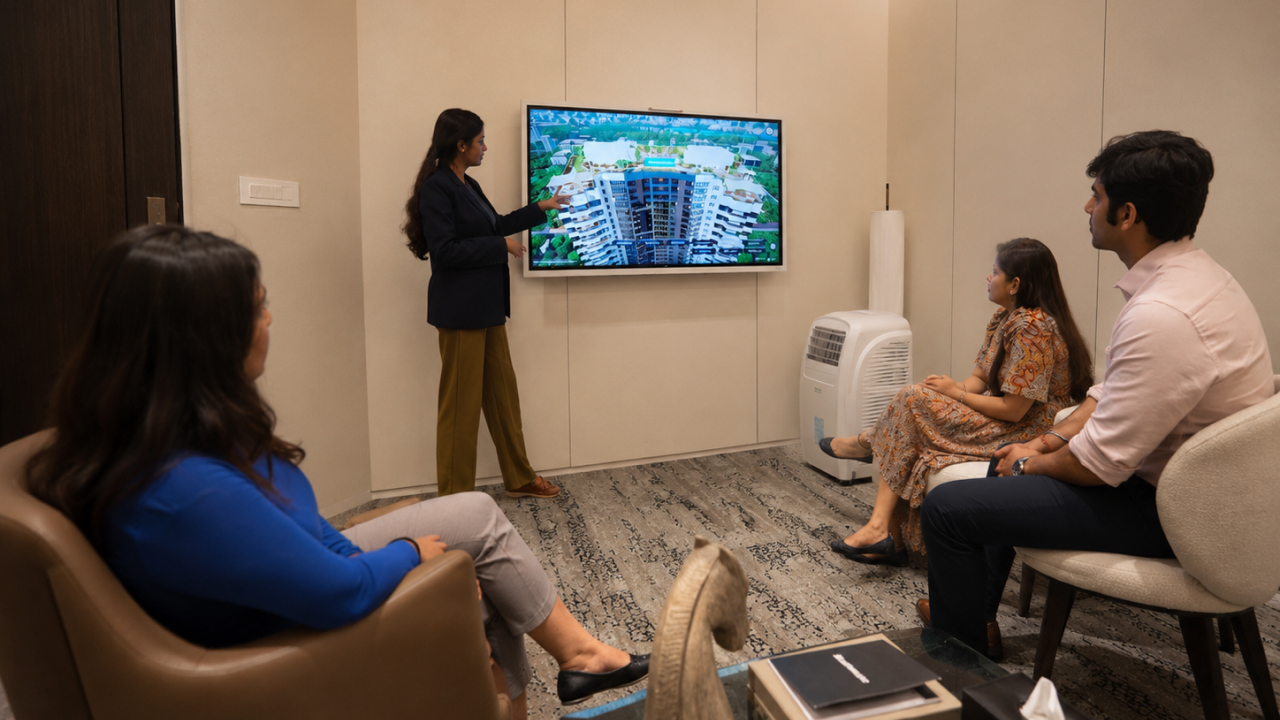
V-estate is a tool for the sales team, not a replacement for it. The technology handles the experiential heavy lifting — the spatial demonstration, the visualisation, the personalisation. This frees the sales executive to do what they do best: read the buyer, answer nuanced questions, build rapport, and guide the decision with empathy and expertise.
Sales teams that use V-estate consistently report that conversations with buyers become more substantive. Because the buyer has already experienced the space, the conversation moves past "tell me about the apartments" to "I noticed the balcony has a north-east facing — what does that mean for winter mornings?" That is a buyer who is engaged, invested, and close to a decision.
The Competitive Reality
In markets where multiple developments are competing for the same buyer, the sales experience is a differentiator. The developer who offers a more compelling, more immersive, more personalised sales experience creates an advantage that no price reduction can replicate.
Because buyers do not just remember the price. They remember how they felt. They remember the experience of discovering their home.
The new real estate sales experience is not a future trend. It is a present competitive requirement.
Give buyers the experience they are looking for — and watch your sales cycle, conversion rate, and buyer satisfaction transform.
Discover how V-estate powers the new sales experience at vestate.io.
.jpeg)