The fundamental nature of property sales has changed. The shift is not gradual anymore. It is decisive and happening now across markets.
For decades, property sales operated on a presentation model. Sales teams presented information. Customers received it. The interaction remained largely one-directional. This approach worked when information was scarce and alternatives limited.
That era has ended. Today's property buyers arrive with research, comparisons, and expectations formed before their first site visit. The presentation model no longer serves their needs or sales objectives.
The Presentation Model's Declining Effectiveness
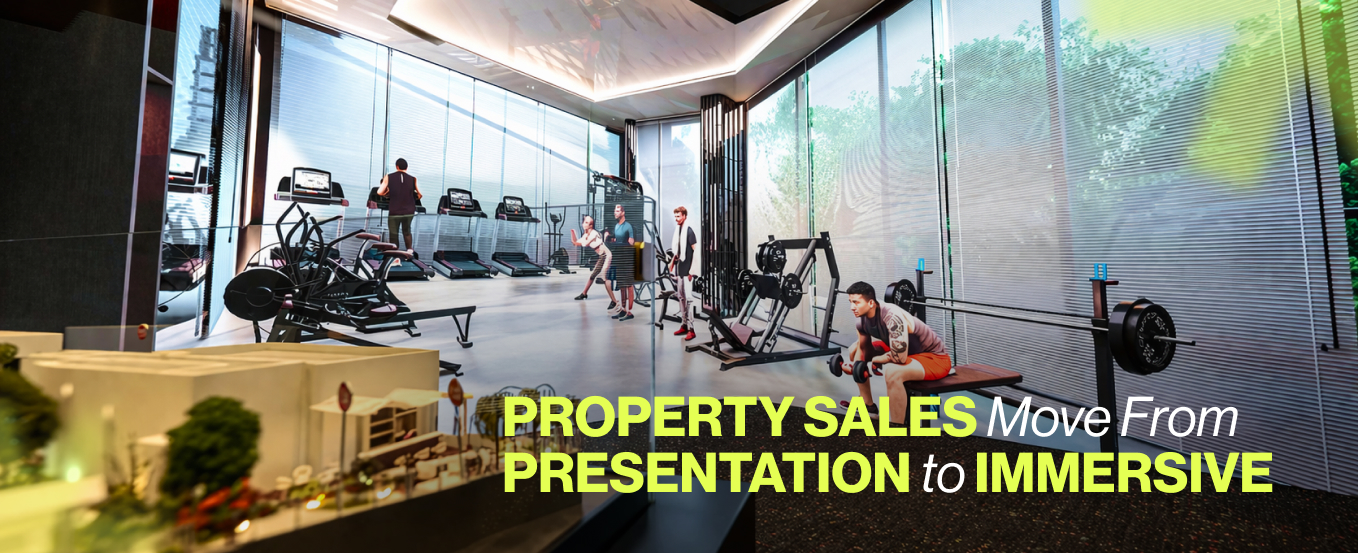
Presentation-based sales follow a predictable pattern. Brochures get distributed. Floor plans get explained. Scale models get pointed at. Show flats get walked through. Sales personnel deliver rehearsed information regardless of customer profile.
The limitations are systemic. Presentations cannot adapt in real-time. They cannot address individual preferences effectively. They struggle to convey spatial experience or lifestyle context.
Customer engagement remains passive. Information flows toward them. Their ability to explore, test, or validate remains constrained. They must accept what is presented or disengage.
This passive engagement creates friction. Customers leave with unanswered questions. They postpone decisions. They seek alternative options elsewhere.
The Immersion Alternative
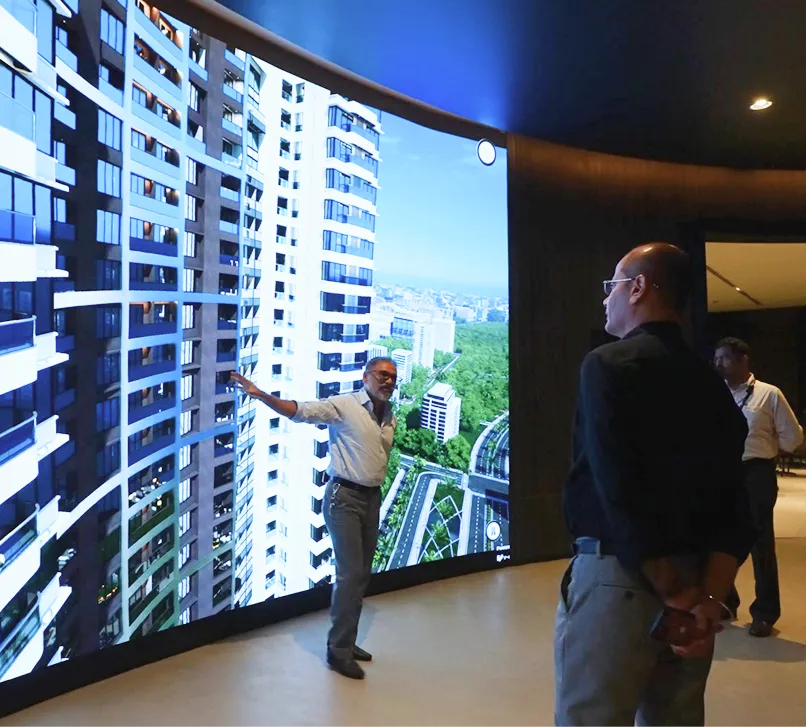
Immersion-based sales flip the dynamic. Customers actively participate in property exploration. They control what they see, how they see it, and for how long. They discover information through interaction rather than receiving it through instruction.
The difference matters. Immersion creates ownership in the exploration process. Customers invest time and attention. They form connections with spaces. They visualize themselves living there.
Immersion does not happen through imagination alone. It requires tools that bridge the gap between representation and reality. This is where technology integrated into physical sales environments creates impact.
How Immersion Changes Sales Conversations
In presentation-based sales, conversations follow standard scripts. Sales personnel highlight features they believe matter. Customers listen, nod occasionally, and ask few questions.
In immersion-based sales, conversations emerge from customer interaction. Questions come from genuine engagement. Objections surface early. Discussions focus on relevant concerns rather than generic features.
Sales teams observe customer behavior. They notice which spaces draw attention. They identify preferences through interaction patterns. They adapt their approach based on real data rather than assumptions.
The conversation becomes consultative. Sales personnel address specific interests. They provide targeted information. They build trust through relevance.
The Technology Behind Immersive Sales
Effective immersion requires specific capabilities. These technologies operate within physical sales environments — experience centers, sales lounges, and site offices.
Photorealistic 3D environments allow customers to navigate spaces naturally. They explore rooms at their own pace. They understand proportions and relationships between areas.
Real-time customization enables experimentation. Customers try different furniture arrangements. They switch between color schemes. They compare material options. They see immediate results.
Dynamic environmental simulation provides context. Customers experience spaces at different times of day. They understand natural light patterns. They assess window views and surroundings.
These capabilities combine to create immersion. They work together seamlessly. The technology remains invisible to the experience.
Real-World Application in Sales Environments
Consider a typical sales lounge scenario. A family enters, interested in a 3-bedroom apartment. In presentation mode, they receive a brochure and floor plan explanation.
In immersion mode, they approach an interactive display. They navigate through the apartment virtually. The father explores the master bedroom. The mother checks the kitchen layout. Children look around the living area.
They discuss what they see. They ask specific questions about spaces they explored. They request changes to see alternatives. They compare different unit configurations within the project.
The sales team observes. They notice the family spends time on the balcony. They focus on kitchen storage. They ask about ventilation in bedrooms.
This information shapes the conversation. Sales personnel focus on features relevant to observed interests. They address concerns that emerged during exploration.
Measurable Impact on Sales Performance
The shift from presentation to immersion delivers measurable results across four key areas.
Sales velocity increases. Customers make decisions faster. The sales cycle shortens from weeks to days. The reduction comes from better understanding and increased confidence.
Conversion rates improve. More site visits convert to bookings. The conversion increase stems from emotional connection and reduced uncertainty.
Customer satisfaction rises. Buyers feel more confident in decisions. They report better understanding of their purchase. Complaints about unmet expectations decrease.
Marketing efficiency increases. Word-of-mouth referrals grow. Positive experiences generate recommendations. Customer acquisition costs decline.
Implementation in Existing Sales Operations
Transitioning to immersion-based sales does not require a complete infrastructure overhaul. The technology integrates with existing sales environments.
Physical adaptations vary based on project scale. Some projects require dedicated experience centers. Others integrate immersion capabilities into existing sales lounges. The scope depends on sales volume and project complexity.
Staff training represents the critical component. Sales teams must shift from presentation to facilitation. They learn to observe customer behavior. They develop skills in interpretation rather than narration.
The transition period typically spans 4–6 weeks. Sales teams adapt quickly once they see the impact on engagement and conversion.
Addressing Common Implementation Concerns
Cost sensitivity represents a common concern. The investment must align with project scale and sales targets. However, the return comes through improved conversion efficiency. Reduced sales cycle duration alone often justifies the investment.
Technology apprehension affects some sales teams. The fear of complexity or obsolescence creates resistance. In practice, well-designed immersion technology is intuitive. Sales personnel become proficient within days.
Customer acceptance questions arise regularly. Will customers engage with technology? Will they prefer traditional show flats? Experience shows customers adapt quickly when the experience delivers genuine value.
The Competitive Landscape
Property markets are evolving rapidly. Presentation-based selling is becoming table stakes. Immersion-based approaches create differentiation.
Developers who implement immersion early gain market advantages. They establish reputations for customer-centric sales. They attract serious buyers who appreciate informed decision-making. They build loyalty through positive experiences.
Those who delay adoption face increasing competition. Traditional presentations lose effectiveness against immersive alternatives. Sales cycles lengthen. Conversion rates suffer. Market share erodes.
The Future of Property Sales
The direction is clear. Property sales will continue moving toward immersion. The technology will become more sophisticated. The implementation more widespread.
Customer expectations will continue rising. They will expect immersion as standard. Presentation-only approaches will seem inadequate.
The transition presents opportunities for developers who act strategically. It allows sales teams to work more effectively. It creates better customer experiences. It improves business performance.
Strategic Implementation Recommendations
For developers considering immersion-based sales:
Start with clear objectives. Define specific metrics — sales cycle duration, conversion rates, customer satisfaction. Measure baseline performance before implementation.
Pilot with select projects. Test the approach with one or two properties before broader rollout. Learn from initial implementation. Refine based on results.
Invest in staff capability. Technology alone is insufficient. Sales teams must understand how to facilitate immersive experiences. Training should focus on observation, interpretation, and adaptive engagement.
Monitor and optimize. Track performance metrics continuously. Gather customer feedback. Iterate based on learnings.