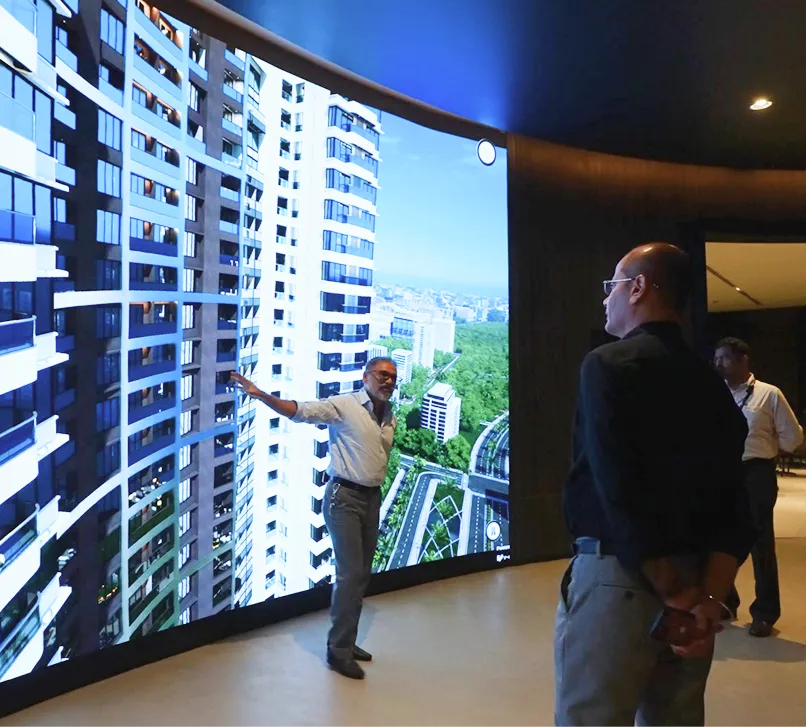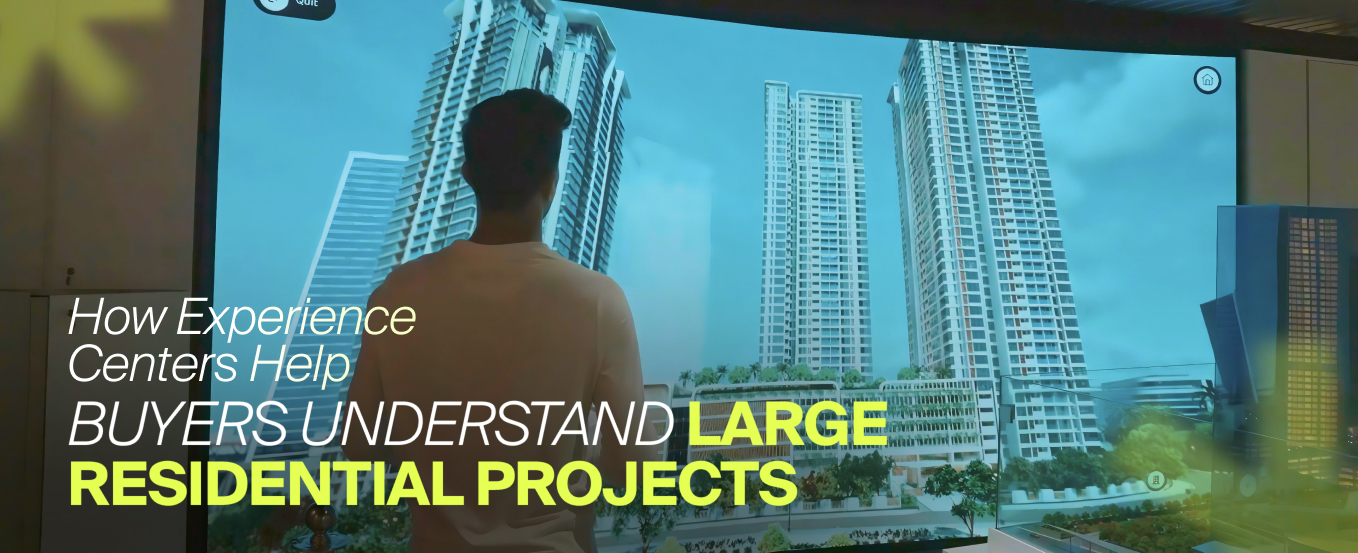
Large residential projects are hard to sell without the right tools.
Not because the product is weak. But because buyers cannot visualise what they are committing to.
A 40-floor tower. Multiple phases. Changing views per floor. Layered amenities. Buyers walk into your sales office, receive a brochure, hear a verbal explanation — and leave confused.
That confusion kills conversions.
The Real Problem Is Clarity, Not Interest
Buyers in large residential projects are not short on intent.
They have budget. They have timelines. They are ready to decide.
What stops them is understanding.
They cannot picture their exact unit position. They do not know how far Tower A sits from Tower B. They have no reference for what the view from the 18th floor actually looks like. The sample flat shows one configuration. Their unit is different.
Sales teams fill this gap with verbal explanations. Repetitive ones.
Every visit becomes a full briefing session.
Conversion timelines stretch. Query volumes rise. Sales resources drain on explanation instead of negotiation.
This is not a sales problem. It is a communication infrastructure problem.
Static Tools Cannot Handle Project Complexity
Most developers still depend on:
Printed master plans
Pre-recorded walkthrough videos
Verbal presentations by the sales team
One or two physical sample flats
These tools work for simple projects.
For large-scale, multi-tower, phased developments — they break down.
A printed master plan cannot show floor-height impact. A video cannot let a buyer compare two units side by side. A sample flat cannot represent every configuration in your inventory.
The buyer leaves with partial information.
Partial information creates doubt. Doubt delays decisions.
Experience Centers Change the Buyer's Role
The shift an experience center creates is fundamental.
It moves the buyer from passive listener to active explorer.
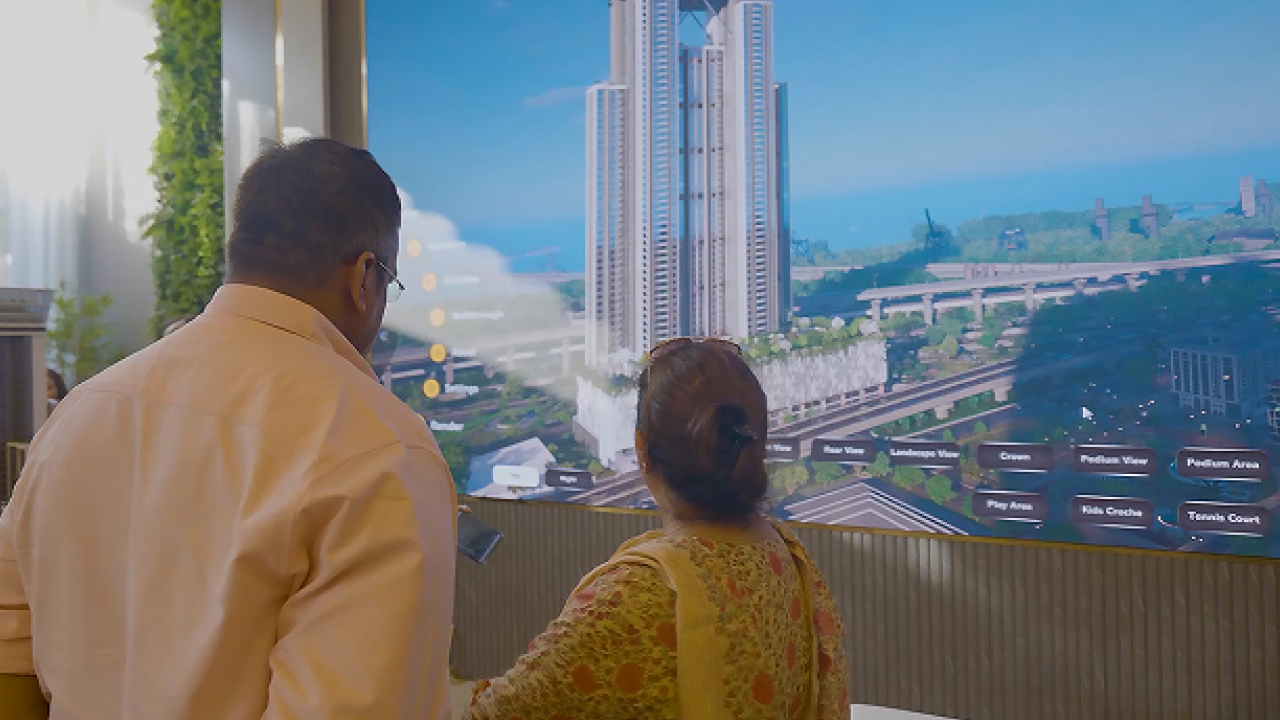
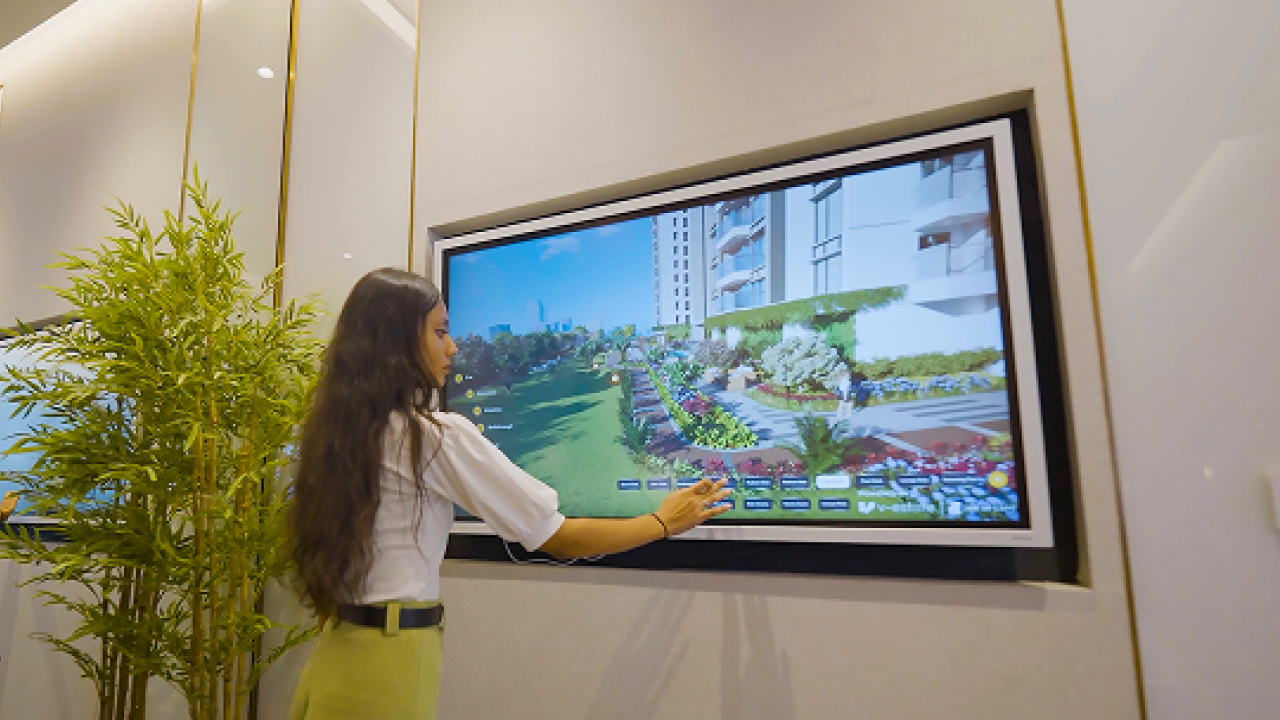
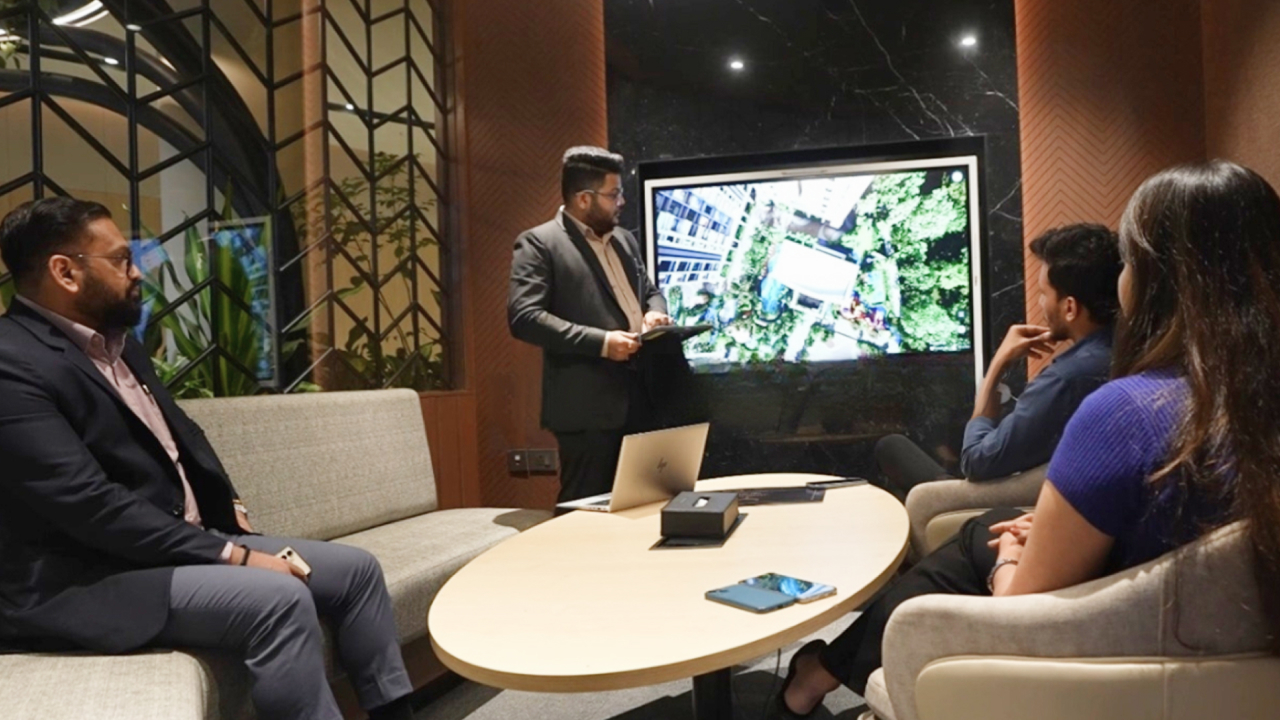
Instead of receiving information, they navigate it. They choose their tower. They select their floor. They step inside their specific unit. They check the window view. They test furniture placement. They see the project surroundings mapped with actual roads, upcoming infrastructure, and nearby facilities.
No explanation required. The system does it.
Sales conversations change completely. By the time a buyer sits with your team, they have already shortlisted. They are ready to discuss pricing and preferences — not project basics.
What a Well-Structured Experience Center Covers
A properly built experience center is not a showroom with screens.
It is a decision support system.
Master plan to unit-level navigation Buyers move from a project overview down to their exact unit. Every layer connects. The transition from macro to micro is seamless.
Real positioning clarity Floor height, tower facing, distance between blocks, open space visibility — all visual, all interactive.
Multiple unit configurations No restriction to one sample flat. Buyers explore any unit type, any floor, any configuration instantly.
Surroundings and connectivity Location confidence comes from seeing actual proximity — schools, roads, metro access, upcoming developments, daily convenience zones.
Customisation depth Wall finishes, furniture layouts, daylight changes across morning to evening — buyers visualise their home, not just a flat.
The Impact on Sales Efficiency
Experience centers are not a marketing luxury.
They are operational infrastructure.
Projects using structured experience centers report:
Shorter decision cycles — buyers arrive at clarity faster
Fewer repetitive queries — sales teams engage at a higher level
Higher intent conversations — discussions start at pricing, not basics
Stronger buyer trust — transparency replaces persuasion
When buyers feel informed rather than pushed, conversion quality improves.
The sales team's time shifts from explaining to closing.
Relevance Across Project Types
Experience centers matter most where complexity is highest.
Township-scale developments. Pre-launch phases with no physical inventory. High-rise clusters with significant view and floor variation. Premium housing where buyer expectations are detailed and specific.
The larger and more complex the project, the more critical the clarity tool.
Without it, confusion compounds at scale. Every additional tower, every new phase, every configuration variant adds to the explanation burden.
V-estate Brings This Infrastructure Offline
V-estate is built specifically for this gap.
It runs entirely in offline environments — no internet dependency, no streaming issues, no lag during live buyer presentations.
It consolidates the entire buyer journey into one immersive platform:
Photorealistic 3D virtual show flats with room-level accuracy
Dynamic lighting and weather controls to show the unit at different times of day and year
Interactive master plan navigation from project level to unit level
Amenity walkthroughs with surrounding infrastructure mapping
Real-time unit customisation — finishes, furniture, window views
Everything a buyer needs to make a confident decision — in one controlled, offline-ready experience.
The Bottom Line for Developers
Large projects demand structured communication.
Buyers are not the problem. The absence of clarity is.
An experience center built on the right platform removes that gap. It reduces friction. It compresses decision timelines. It improves the quality of every sales conversation.
If your project is large, complex, or pre-launch — your communication infrastructure needs to match that scale.
V-estate is designed to do exactly that.