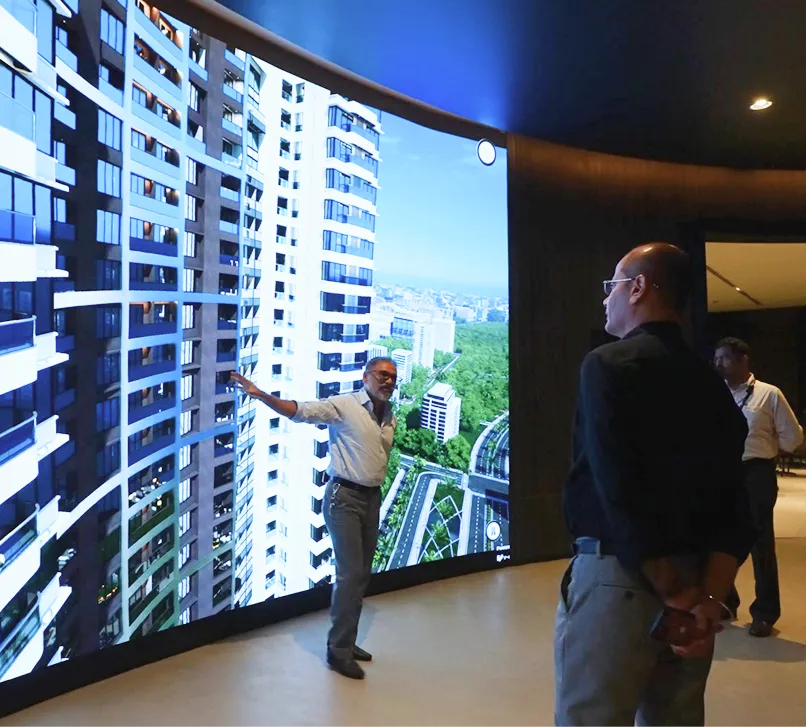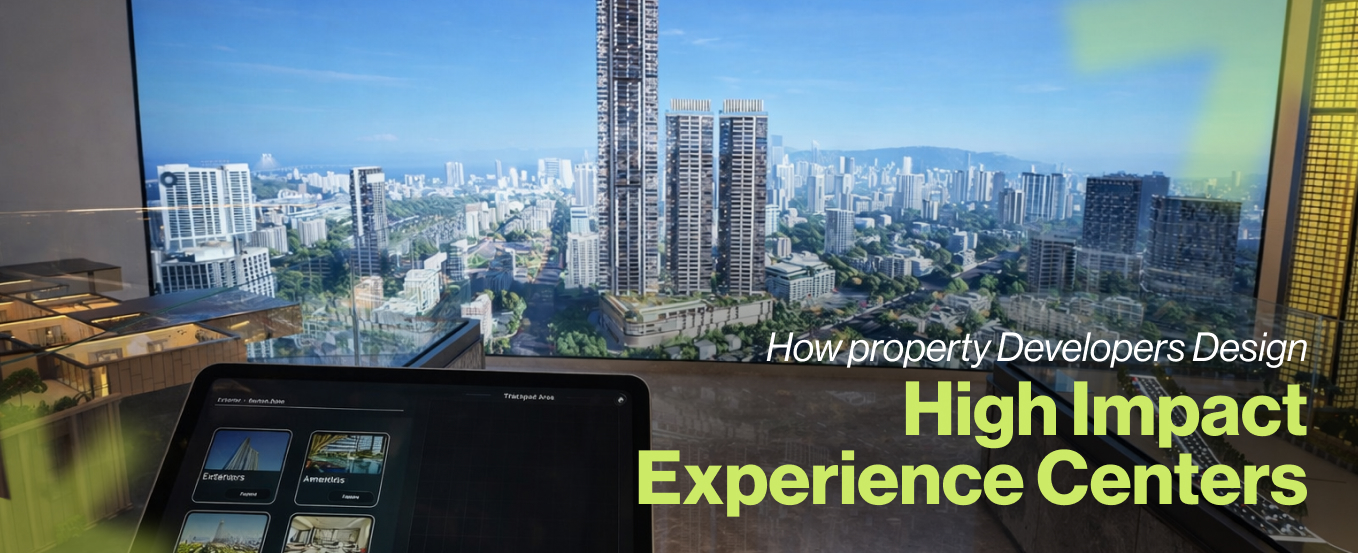
Buyers walk into an experience center with one silent question: "Can I see myself living here?"
If the answer takes too long to arrive, you have already lost the sale.
Most experience centers fail not because of poor design — they fail because they cannot answer that question fast enough. Scale feels abstract. Floor plans look flat. Amenity value gets lost in brochure language. The buyer leaves with interest but no clarity.
That gap between interest and clarity is where sales cycles stretch unnecessarily.
The Real Problem Is Not Awareness — It Is Spatial Confusion
Developers spend heavily on awareness. Hoardings, digital ads, site visits, channel partner activations. Leads come in.
But inside the center, the explanation breaks down.
A physical mock-up shows one unit type. A printed brochure shows the rest. A rendering on a screen looks polished but feels distant. The buyer cannot feel the scale of the terrace, the view from the 18th floor, or how the clubhouse actually connects to the towers.
They leave uncertain. Uncertainty kills decisions.
Premium buyers do not need more information. They need spatial confidence — the ability to see and feel the property before it exists.
Experience Centers Need Structure, Not Just Technology
Adding screens to a sales lounge is not an experience center. It is decoration.
A high-performing experience center is built around the buyer journey, not the project's feature list.
Here is the sequence that works:
Project overview first — orientation, scale, master plan
Unit walkthrough second — floor plan flow, ceiling height, natural light, views
Amenity story third — clubhouse, landscape, recreational facilities in context
Surrounding ecosystem fourth — schools, offices, transit, upcoming infrastructure
Customization last — finishes, furniture, wall colors, lighting conditions
Each stage answers a specific doubt. Move through them in order and the buyer builds confidence progressively.
Skip a stage and the doubt stays unresolved.
What Developers Miss in Under-Construction Project Presentations
Under-construction projects carry the heaviest burden of explanation.
There is no physical product to walk through. There is no lived experience to reference. The buyer is making a multi-crore decision based entirely on what the developer can communicate.
Most teams rely on renders and a physical sample flat. Both have limitations.
A render shows one moment — one angle, one light condition, one staged version of the space.
A sample flat shows one unit type — not the view from the buyer's specific floor, not the actual connectivity of amenities, not how the project sits within the neighborhood.
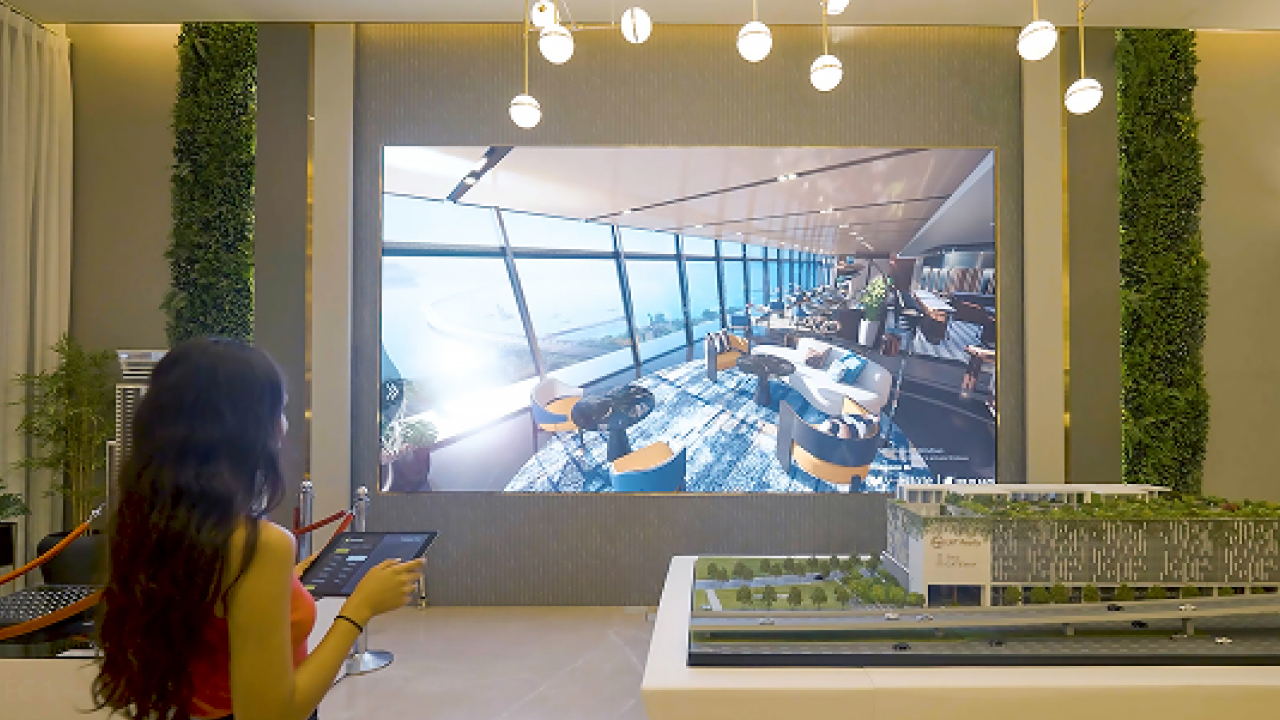
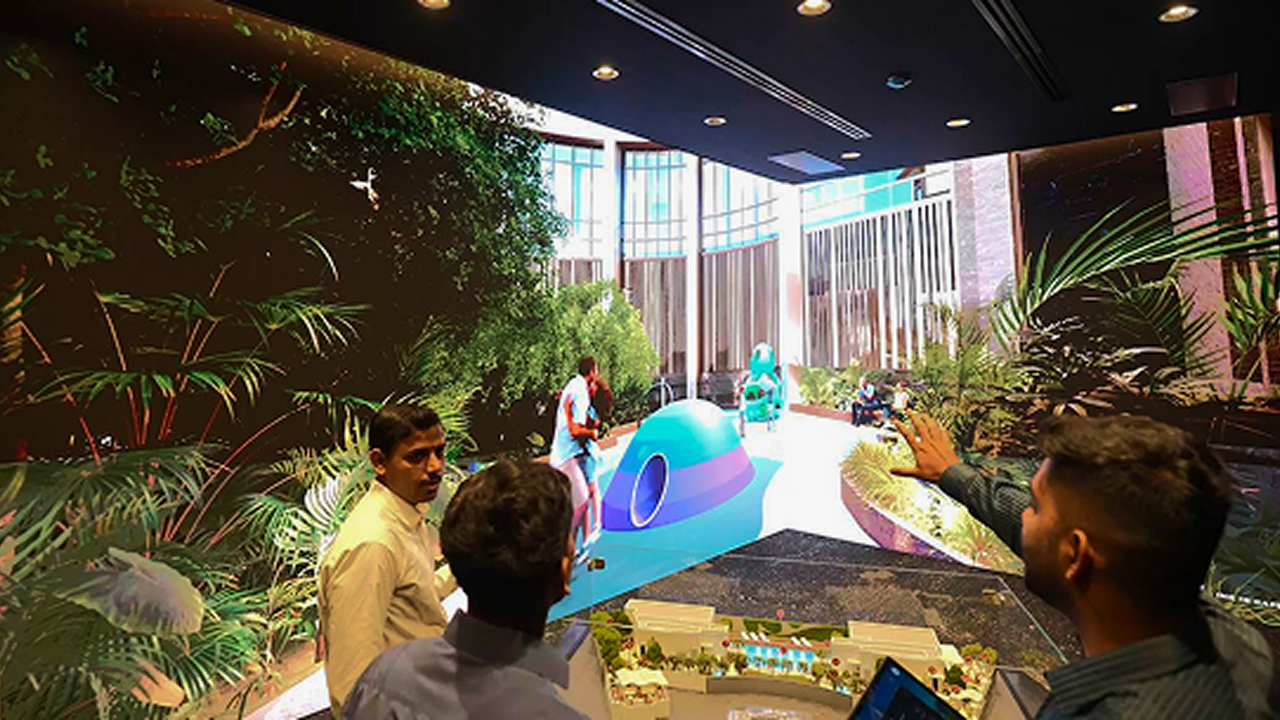
Interactive digital presentations solve this by allowing buyers to explore the property across different floors, times of day, weather conditions, and unit configurations — all in one session. The buyer sees their specific unit, from their floor, with their finishes.
That is a fundamentally different level of certainty.
The Sales Team Problem Nobody Talks About
Experience center design conversations focus on the buyer experience. They rarely focus on the sales team experience.
Sales teams lose control of presentations when tools are complicated, non-intuitive, or built for demo days rather than daily use. The result is inconsistent communication across consultants, channel partners, and site visits.
One buyer gets a full amenity walkthrough. Another gets three static slides.
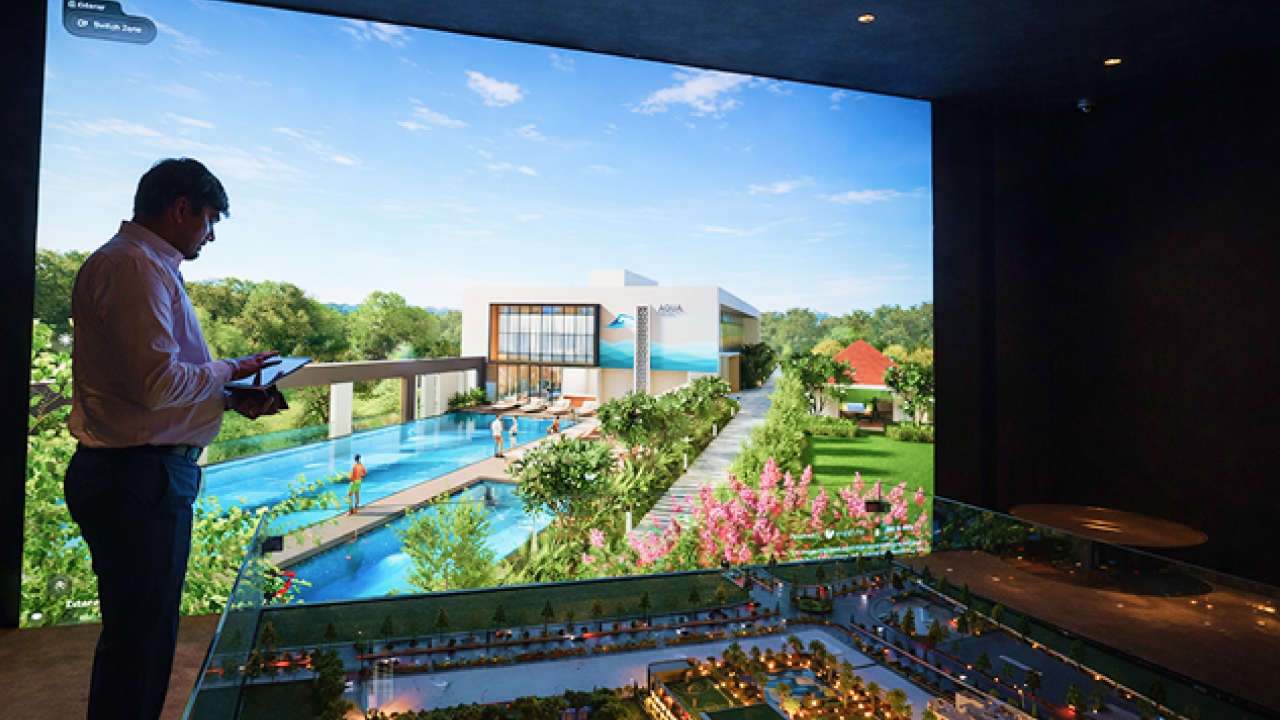
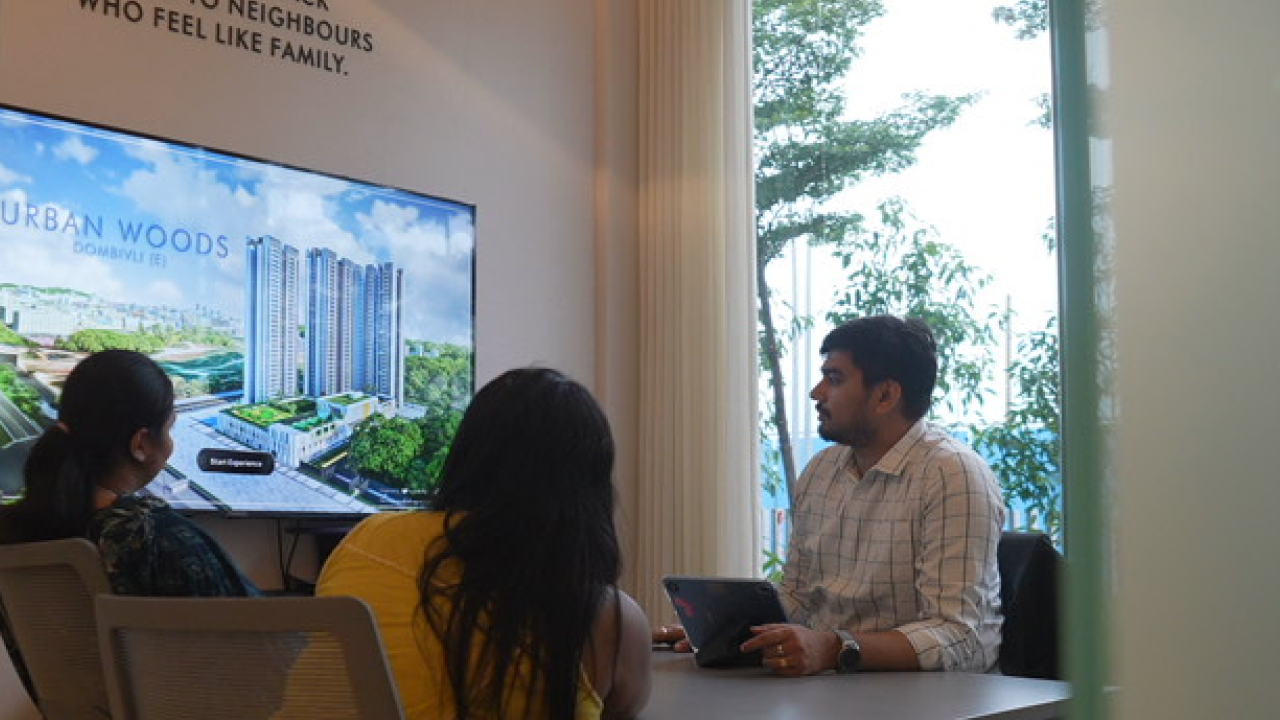
A well-built interactive sales tool solves this by giving the team a guided, structured flow they can adapt without losing the narrative. The platform handles the transitions. The consultant handles the conversation.
Consistency in explanation builds consistency in buyer confidence.
V-estate is built specifically for this use case — an offline, in-center interactive sales tool designed for developers, sales teams, and channel partners. It combines photorealistic 3D virtual show flats, dynamic lighting and weather controls, amenity and vicinity mapping, floor-level view simulation, and real-time customization — wall finishes, furniture, layouts — into one controlled presentation environment.
Everything the buyer needs to decide. Inside one session.
Four Non-Negotiables for a High-Impact Experience Center
These apply regardless of project type, price point, or scale.
Clarity — The project should be fully understood within the first ten minutes.
Buyer control — Prospects should explore what they care about, not sit through what you want to show.
Contextual depth — Unit-level detail plus neighborhood-level perspective. Both matter equally.
Sales team usability — If the tool requires training every time a new consultant joins, it will not be used consistently.
Miss any one of these and the center underperforms.
The Measurable Outcome
Developers who invest in structured, interactive experience centers report shorter sales cycles, fewer follow-up visits required, and higher per-visit conversion rates.
The reason is simple. A buyer who leaves with clarity is closer to a decision than a buyer who leaves with interest.
Clarity is the product of a well-designed experience center. Not ambiance. Not scale. Not awards on the wall.
Planning or upgrading your experience center?
Start with the buyer journey. Map every doubt your buyers typically carry — about scale, views, amenities, connectivity, customization. Then build the presentation around resolving those doubts, in sequence, without friction.
That structure is what separates a high-performing center from an expensive display.