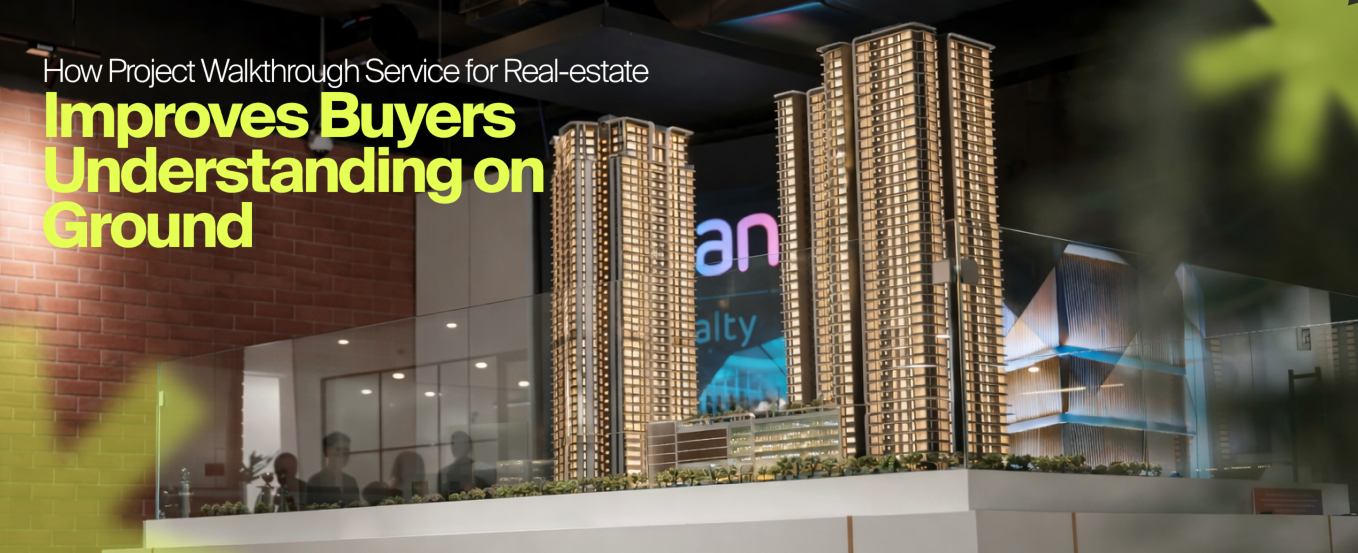
Real Estate is the last industry where buyers expect incomplete information. The property agents could hand out buyers a brochure, present them with floor plans, or even talk about a developer's previous projects and reputation. But if the buyer has to imagine their future home, the chances that they geThus, where a static render would show images of the exteriors from a fixed angle, 3D architectural visualization software lets buyers see what the property's structure looks like from different angles...t a complete understanding of the project come down to luck. But what is sure is that if they have doubts, the sales cycles will increase. Thus, to ensure that the buyers get clarity and the sales cycles shorten while leads close faster, developers have started to use property walkthrough services.
What are Property Walkthrough Services in Real Estate?
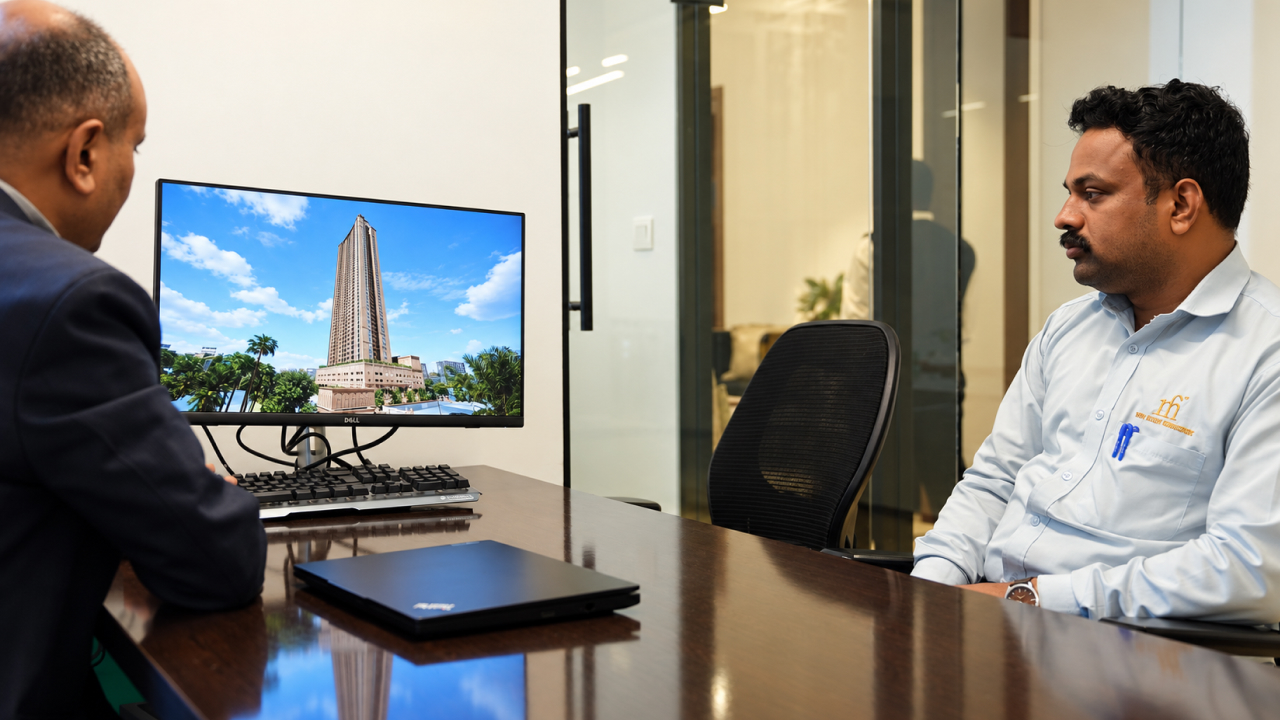
In real estate, property walkthrough services are used by developers to help buyers visualize villas, apartments, buildings, or other types of properties better. These services make use of technologies like 3D visualization, real-time rendering, and interactive interfaces to present the property in a way that gives buyers the ability to engage with it. Thus, leading to them being able to virtually move around the house to check out the different rooms, explore the amenities, get a clear idea of how the property connects to nearby important landmarks, and, in general, get a better understanding of the project.
These services exist because they are capable of providing more than what their traditional counterpart tools have to offer. Thus, where a static render would show images of the exteriors from a fixed angle, 3D architectural visualization software lets buyers see what the property's structure looks like from different angles while giving the ability to zoom in or out to check out the finer details. This is just one example; be it virtual tours, 3D floor plans, or 3D architectural animations, a real estate developer has several options when it comes to selecting a property walkthrough service that they feel is right for their project.
Key Features that Property Walkthrough Services Should Offer
360-degree Exploration
Starting with the most important feature that every property walkthrough service should offer is 360-degree exploration. It basically allows buyers to move the camera around the property to explore it as if they were moving inside the house in real life. This feature isn't just restricted to interiors; buyers could also use this feature to access other zones like exteriors or amenities. For example, if the property lists a gym as one of the amenities, the interested buyer could use 360-degree exploration to virtually walk around the gym and see how big it is, what machines are included, or get an overall feel of what they can expect from the gym.
3D Floor Plans and Units Selection
3D floor plans and unit selection are another set of features that are a must-have in most property walkthrough services. With a 3D Floor plan, a buyer not only gets a top-down dollhouse view of the layout of the unit that they are interested in. It also lets them switch between the different rooms or other areas of the house. Thus, instead of moving the camera all the way back to a room they might have missed. The buyer or salesperson could simply access the 3D floor plan and teleport to the selected area. This ensures not only that the buyer understands the property, but they also don't miss out on anything.
Similarly, tower and unit selection features can also help buyers select the house based on their preferences. Basically, if a property consists of multiple towers, the interested buyer could select the one they want to explore first. Additionally, unit selection would allow them to easily compare the units on different floors or different facing directions.
Window Views and Day-to-Night Simulations
Another feature that seems extra but is actually quite useful is window view simulation. As the name suggests, it lets buyers simulate the weather or time of day outside their window to see how the view looks. Thus, a buyer could simulate different weather conditions to experience a sunny, foggy, rainy, or thundering day. It gives a realistic view based on the floor they are on so that the buyer gets a clear idea of their everyday scenic views. Similarly, day-to-night simulations allow the buyer to see what the view looks like at different times of the day. It also lets them understand how shadows would interact with their windows and balconies or other objects in their room.
Interior Customization
Finally, interior customization is an optional but quite essential feature that most modern property walkthrough services should offer. Here, the buyer gets to virtually change how their house looks. Thus, they could change the orientation of their bedroom, place or remove sofas from the living room, add a chandelier above the dining table, or even change something as simple as the color of wallpaper in their home. The reason this feature is useful is that not only does it help buyers customize their future home as per their liking, but it also helps them form an emotional connection with their creation. Thus, increasing the chances of them going ahead with the purchase.
How Our Client Benefited from Property Walkthrough Services
Hiranandani Belicia
When it comes to India's most prestigious real estate developers, Hiranandani is a name that has established itself since 1978. They are known for their neoclassical architecture and high-quality construction standards. And with Hiranandani Belicia in Thane, they wanted to move beyond traditional brochures to ensure that their buyers could explore these features in a way that gave them a clear idea of what all they were offering.
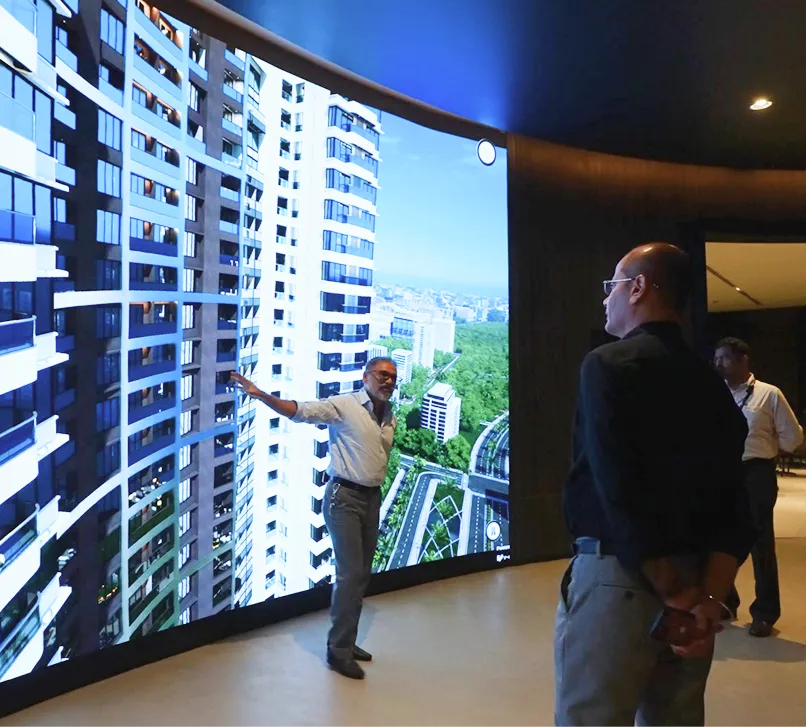
We came up with a solution that divided the experience into 3 different zones, where through a property walkthrough software they could learn about the project's architecture, landscape, amenities, and more. Here is what each zone had to offer:
- Zone 1 - Architectural 3D Visualization: The buyers could check out Belicia's detailed structures like pediments, pilasters, cornices, jalis, grooves, nibs, grooving panels, and railings.
- Zone 2 - Interiors, Landscape, & Amenities: Belicia had over 15 amenities like a yoga deck, games room, mini party hall, and more. For the landscape, one of the project's major highlights included Yeoor Hills and the city-facing skyline for its views. Thus, through the property walkthrough sales tool, they could explore the amenities, check out the landscape, and also get a 360-degree view of their interiors.
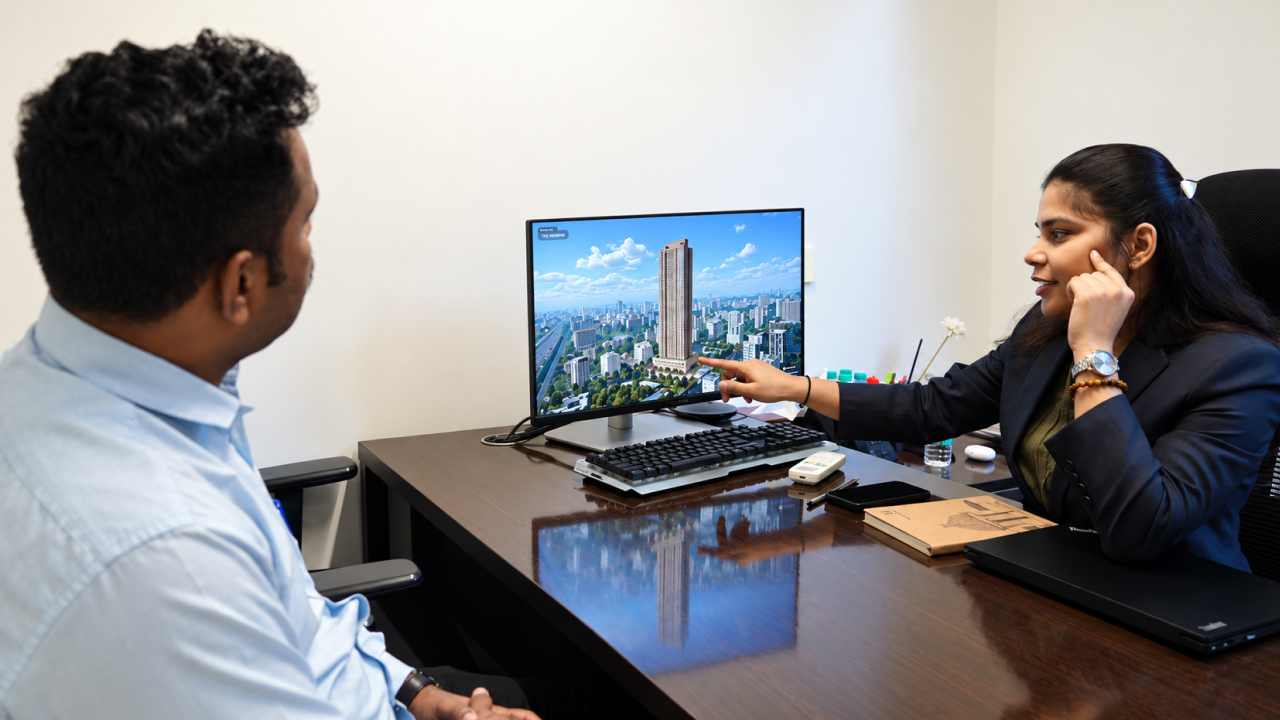
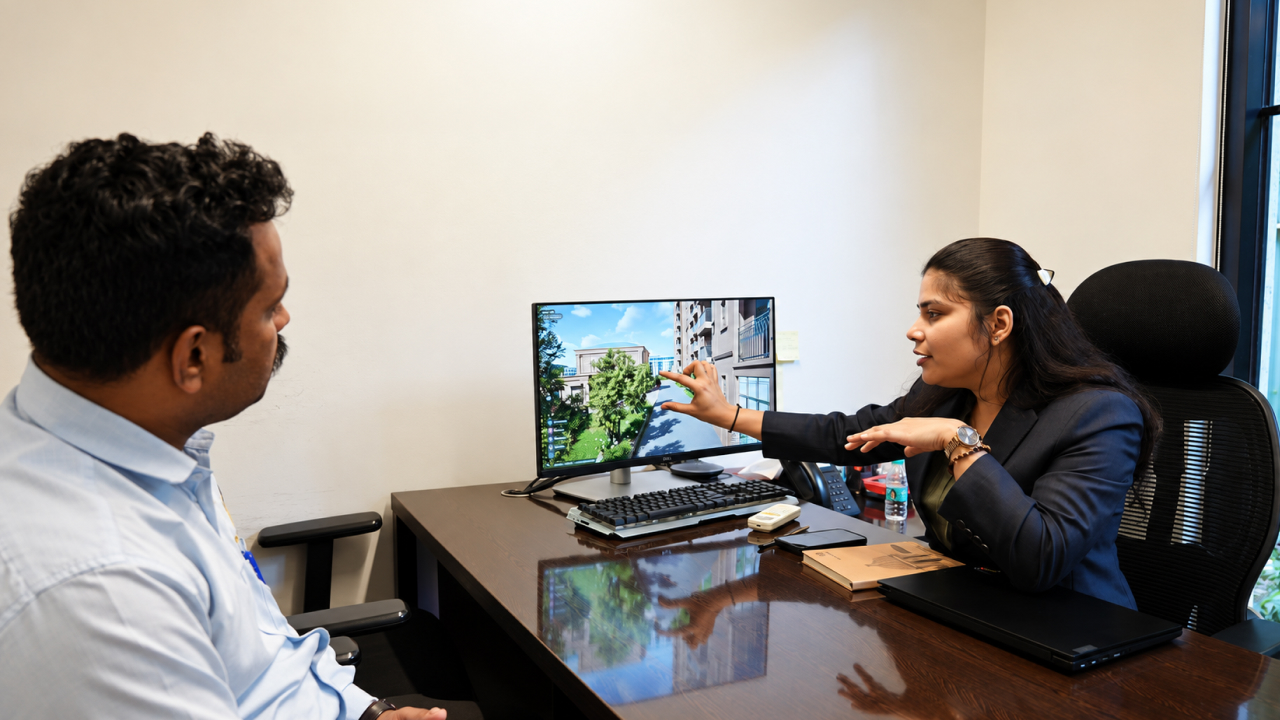
- Zone 3 - Interactive Sales Pod: This zone is where the buyers could sit with the sales team for discussion about the units they are interested in. The salesperson could use the property walkthrough software to answer all of their queries and close the deals.
Through the use of these services, Hiranandani saw the following results:
- 30% increase in sales conversion. The industry average is 5% - 10%.
- The sales team has been utilizing the software more extensively than traditional sales tools.
In conclusion, present-day real estate sales need a lot more, like architectural visualization, interactive technologies, and immersive experiences, to convince buyers. Fortunately, property walkthrough services provide software that takes care of all of these buyers' needs. It helps developers present the property to buyers no matter if the project hasn't started, is under construction, or is ready.
Looking for a Property Walkthrough Service for Your Next Project?
With V-Estate, your search for a property walkthrough service ends here. We bring you Spaci, an interactive digital twin sales tool that gives your buyers an accurate representation of your projects. From photorealistic 4K renders to 360-degree exploration, our tool has all the resources that your sales team needs. Book a demo now, and our team of experts will reach out to you; together, let's give your buyers a property walkthrough that they have never experienced before!