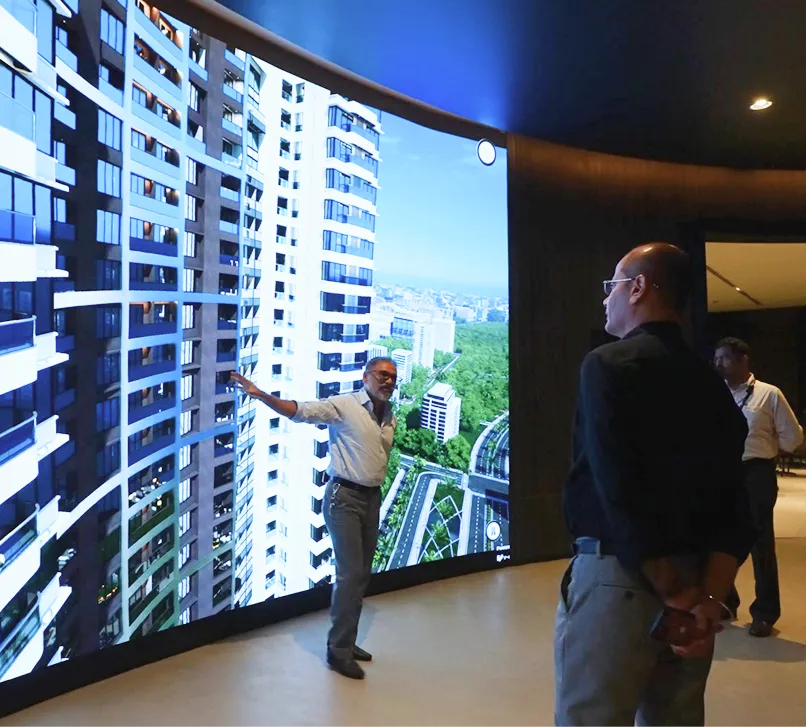
India's residential real estate market crossed a decade-high in unit launches. Competition among developers has never been more intense. Buyers have never had more options.
In this environment, the developer who can make their property feel most real — before construction is complete — holds a decisive advantage.
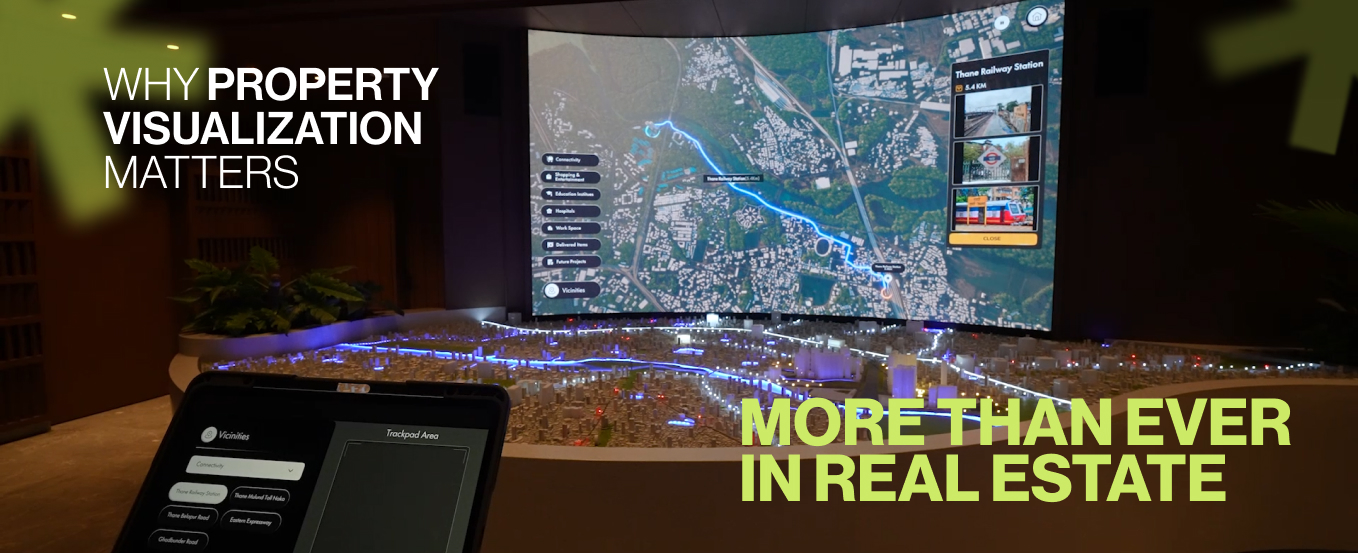
Property visualization has always mattered in real estate. But the nature of that visualization has undergone a fundamental shift. The question is no longer whether to visualize — it is how richly, how accurately, and how interactively you do it.
The Evolution of Property Visualization
Cast your mind back to how real estate projects were presented a decade ago.
A handful of external renders. A basic floor plan. A physical scale model if the developer was investing significantly. The quality of the visualization was largely a function of the marketing budget — and even high-budget projects were limited to static images and basic walkthroughs.
Then came 3D rendering software. Then photorealistic rendering. Then virtual tours.
Each evolution moved the needle — but each also introduced a new ceiling. Better renders created buyer expectations that static images couldn't sustain. Virtual tours created immersion that flat renders couldn't match but also exposed the gap between a scripted tour and a truly interactive experience.
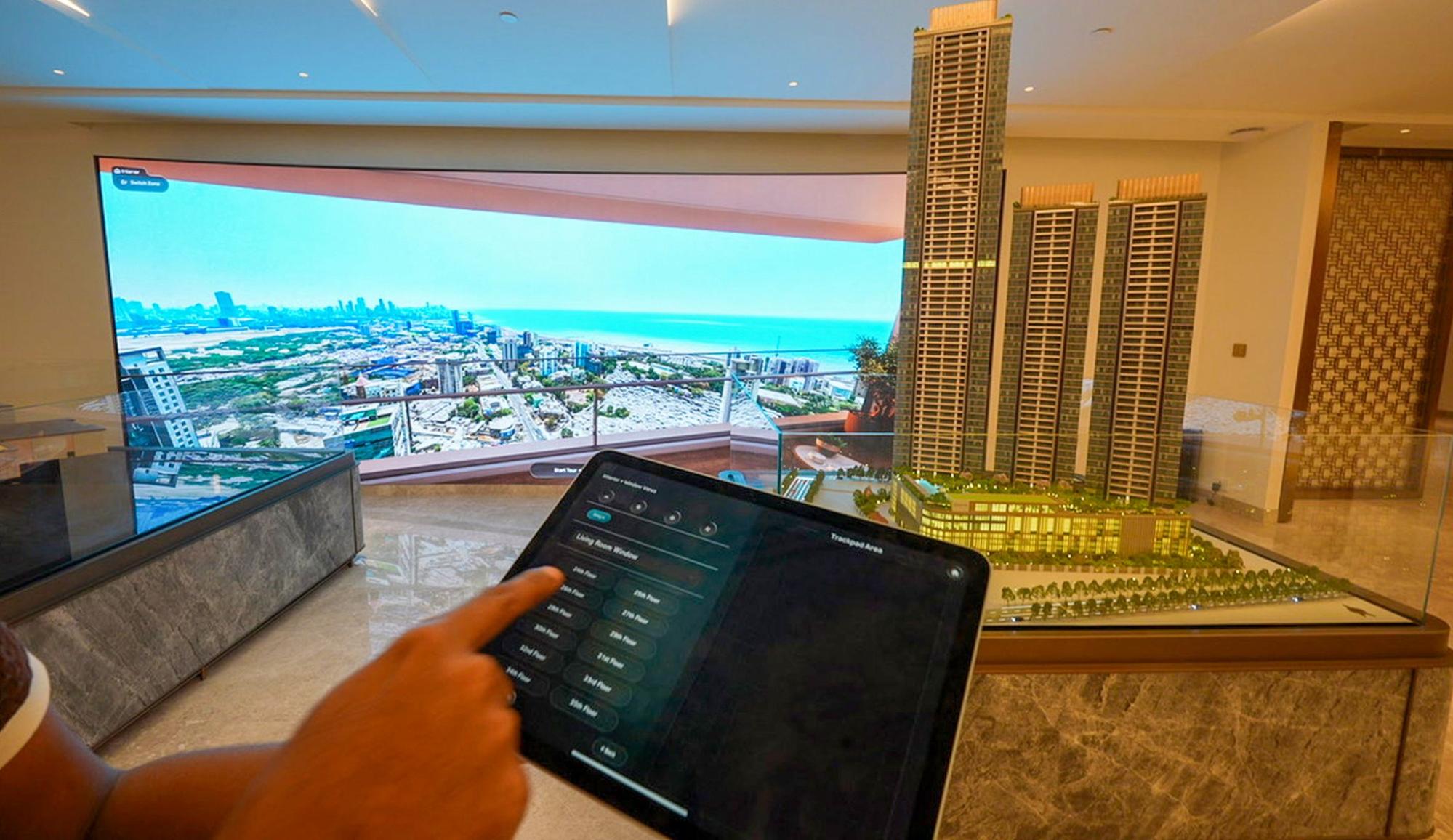
The current frontier is interactive property visualization — where the buyer is not a passive viewer but an active explorer. Where the experience is not curated for the buyer but navigated by the buyer. Where the visualization responds to choices, questions, and curiosity in real time.
This is precisely where V-estate operates.
Why Photorealistic 3D Visualization Builds Conviction
There is a critical difference between a good render and a photorealistic 3D environment.
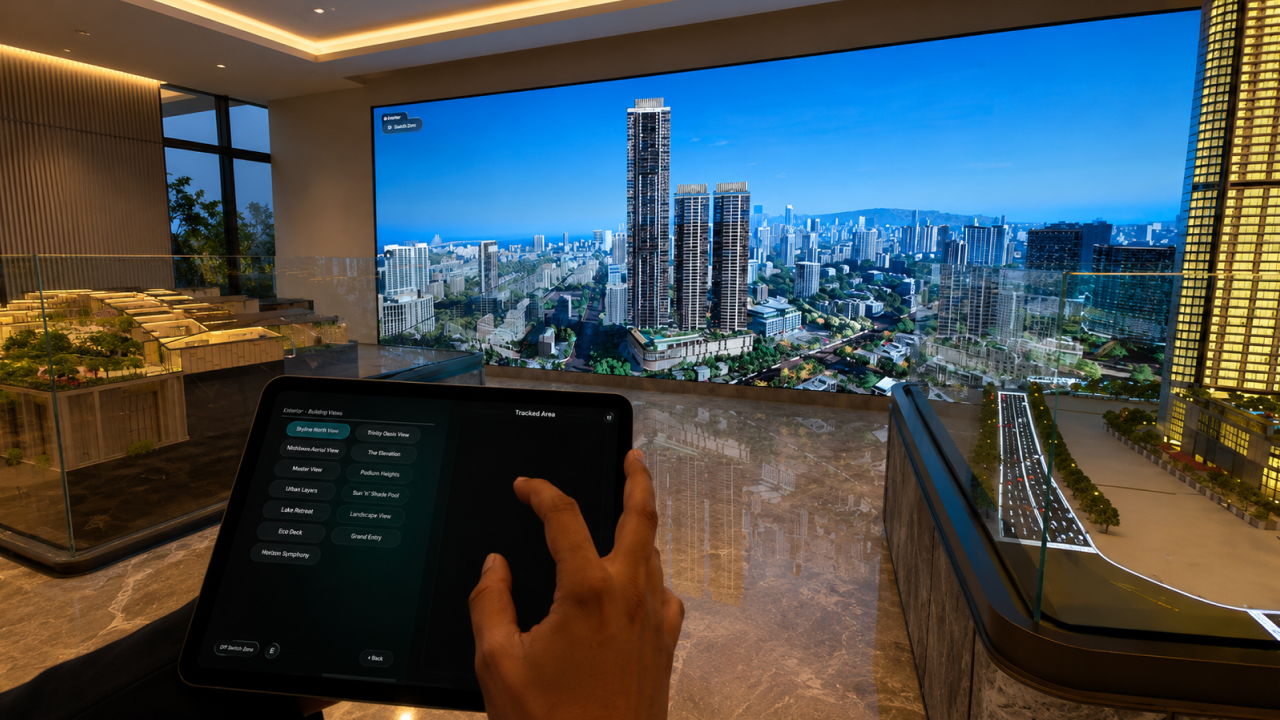
A good render is a picture. It shows you what the developer wants you to see, from the angle they want you to see it, in the lighting they chose that morning.
A photorealistic 3D environment is a space. You can look left. You can look right. You can walk to the window and look out. You can sit in the chair and see what the room looks like from that perspective. The space responds to you — because you are, to every meaningful degree, inside it.
This difference is not merely aesthetic. It is the difference between information and conviction.
When a buyer navigates through a photorealistic 3D representation of their specific unit — with their specific floor-level views, their specific aspect, their specific layout — their brain processes the experience as spatial reality. The emotional response is authentic. The conviction that forms is genuine.
Kalpataru and the Detail That Closes Deals
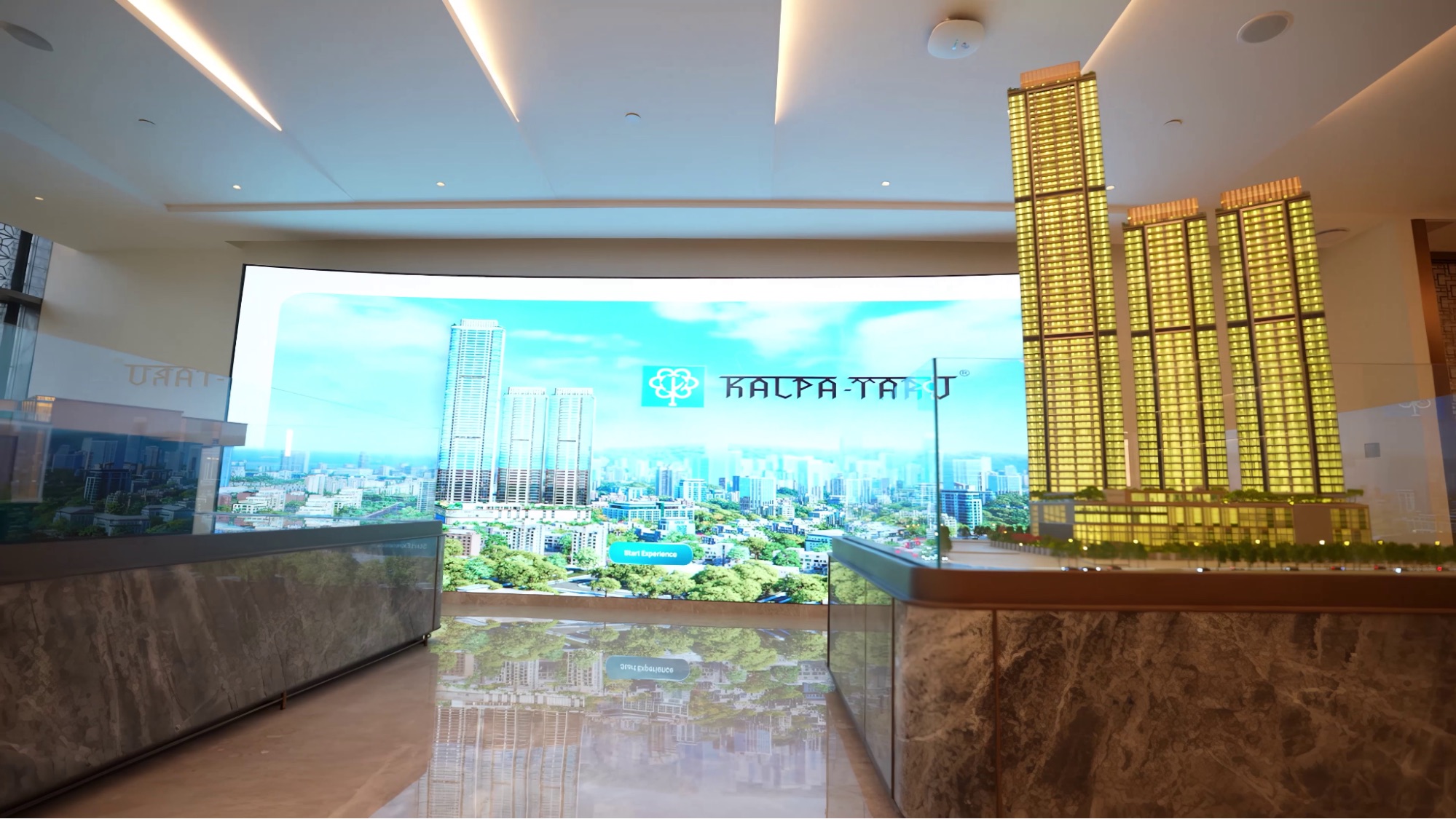
Kalpataru Group, one of India's most trusted real estate brands with a 50-year legacy, understands that its buyers are making discerning decisions. They are not buying a flat. They are buying into a standard of living, a quality of craft, and a brand promise.
V-estate's deployment for Kalpataru allowed the team to demonstrate exactly that standard of living — not through aspirational language, but through the granular, precise visualization of what Kalpataru delivers.
Buyers could see the specific marble finish in the lobby. They could examine the quality of the cabinetry in the kitchen. They could stand at the window and see the landscaped gardens below, rendered with the kind of botanical accuracy that communicates genuine attention to detail.
When a premium brand can show its premium quality at scale — for every unit, every buyer, every visit — the brand promise becomes tangible, not just verbal. Kalpataru's use of V-estate is a case study in how visualization technology reinforces brand equity at the point of sale.
The Strategic Value of Property Visualization in Pre-Launch Sales
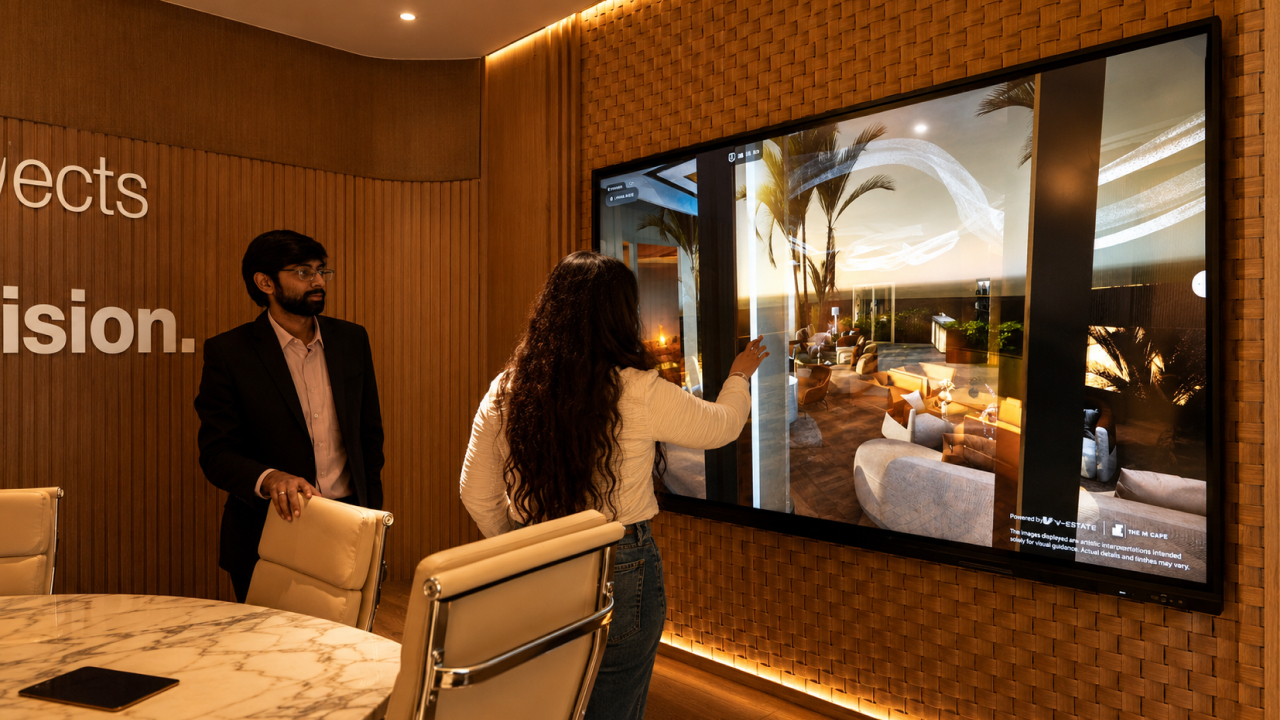
Pre-launch sales — where buyers commit before construction is complete, often before it has even begun — are the highest-value and highest-risk moment in the real estate sales cycle.
High-value because pre-launch buyers typically receive the best pricing and developers need early sales to unlock project financing.
High-risk because the buyer has the least information and the highest degree of uncertainty.
Property visualization technology is most strategically valuable precisely at this moment. When there is no physical asset to show, the quality and richness of the visualization is the only tangible experience the buyer has.
Developers using V-estate in pre-launch settings are able to take a buyer through a photorealistic walkthrough of a project that exists only as a design file. The buyer sees the finished unit, the amenity spaces, the views, the neighbourhood context. The pre-launch uncertainty gap closes dramatically.
This translates directly into pre-launch conversion rates that are measurably stronger — and into buyer confidence that sustains through the construction period, reducing cancellations and generating referrals.
Digital Twins: Property Visualization Beyond the Sale
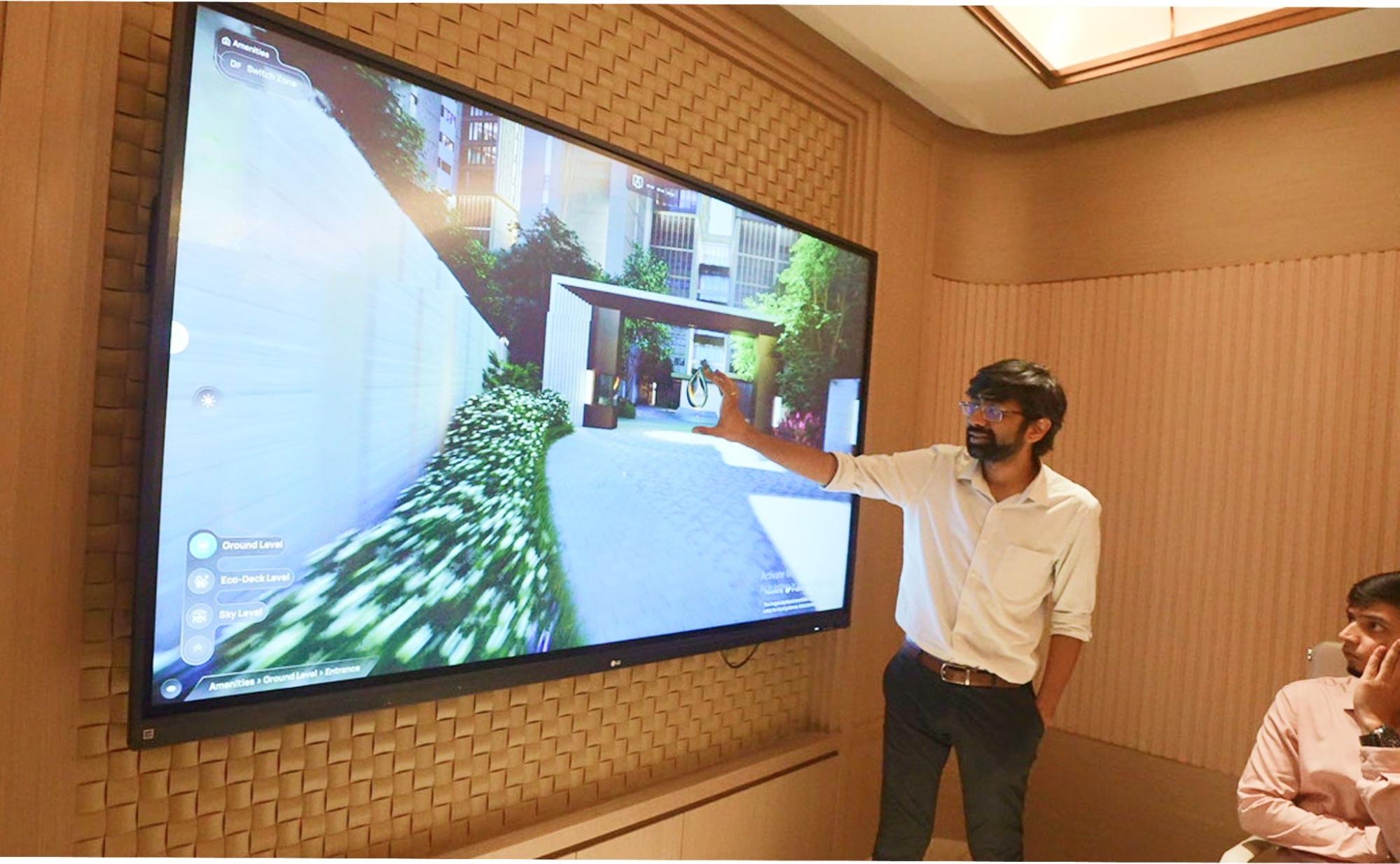
The application of rich 3D property visualization does not end at the point of sale.
V-estate's digital twin technology creates a persistent, accurate 3D model of the development that remains useful through the construction phase, at handover, for ongoing estate management, and for future resale.
A digital twin is a living, interactive replica of the property — updated as construction progresses, accurate to the actual specifications of the delivered asset.
For the developer, this is a planning, communication, and quality-control tool. For the buyer, it is a continuously relevant reference point — a way to track progress, plan their interior design, and understand their new home in detail before they take possession.
The visualization does not end at the sale. It evolves with the relationship.
%20(1).jpg)
.jpg)