Real estate sales conversations often stall at a very specific, predictable moment. The buyer is sitting in the experience centre, looking at a beautifully designed brochure, and holding a cup of coffee. The sales professional has just explained the pricing for a premium 18th-floor apartment. The buyer pauses, points to the 2D master plan, and asks, "But what will I actually see from my balcony? Will the building next door block my sunlight?"
The sales professional replies, "The 18th floor is high enough to clear the neighbouring tower. You will have a clear view."
The buyer nods, but the hesitation is palpable. Without visual proof, the buyer is being asked to make one of the most expensive financial commitments of their life based entirely on trust and imagination. For many buyers, this is a leap they are simply not ready to take. They delay the decision, ask for more time to think, or decide to wait until the superstructure is built so they can see the view for themselves.
The inability to accurately convey floor height and property views is a significant point of friction in selling under-construction real estate. Resolving this ambiguity is entirely about building the confidence required to book.
The Imagination Gap: Understanding the Buyer’s Hesitation
From the buyer’s perspective, purchasing an off-plan apartment requires absorbing a massive amount of abstract information. They have to interpret floor plans, understand site layouts, and visualize spatial dimensions. However, the most difficult element to mentally construct is the view from a specific elevation.
When buyers evaluate a high-rise property, they are not just buying square footage; they are buying the living experience. The view outside the window dictates the quality of natural light, privacy levels, and the daily atmosphere of the home. A buyer looking at a 5th-floor unit facing a main road has entirely different concerns than a buyer considering a 25th-floor unit facing a park.
When a buyer cannot accurately visualize what they will see when they look out of their future living room, anxiety sets in. They worry about potential blind spots. Will they be staring directly into a neighbour's bedroom? Will a future commercial development block their promised sea view? Will the lower floor they are considering be too close to the noise of the podium amenities?
This "imagination gap" directly erodes buyer confidence. If a buyer feels they might be unpleasantly surprised when they finally receive the keys, their natural defense mechanism is to pause the transaction. They will either seek out a ready-to-move-in property where the view is a known variable, or they will negotiate aggressively on price to offset their perceived risk.
The Cost of Ambiguity for Real Estate Sales
For real estate developers and sales teams, the inability to showcase accurate property views creates immediate commercial challenges. The most direct impact is felt in the justification of premium pricing.
Developers structure their pricing using floor rise premiums (Floor Space Index/Premium) and view-based premiums (e.g., pool-facing, park-facing, or ocean-facing units). These premiums can add a substantial amount to the total ticket size of the property. However, when sales teams cannot visually prove the value of that premium, the conversation devolves into a negotiation over price rather than a discussion about value. If a buyer cannot clearly see the difference between the view on the 8th floor versus the 14th floor, they will naturally resist paying the floor rise premium for the higher unit.
Furthermore, this ambiguity extends the sales cycle. Sales heads frequently see highly qualified leads remain in the pipeline for months simply because the buyer wants to wait for the building to reach a certain height before committing. This slows down inventory liquidation and impacts cash flow for the developer.
In competitive markets, brokers and channel partners also struggle with this limitation. When they are presenting multiple projects to a client, the project that offers the most transparency and clarity will almost always win the buyer's trust. If your sales presentation relies on asking the buyer to "trust the architect's vision," you are operating at a distinct disadvantage.
How Property View Visualization Influences Decision-Making
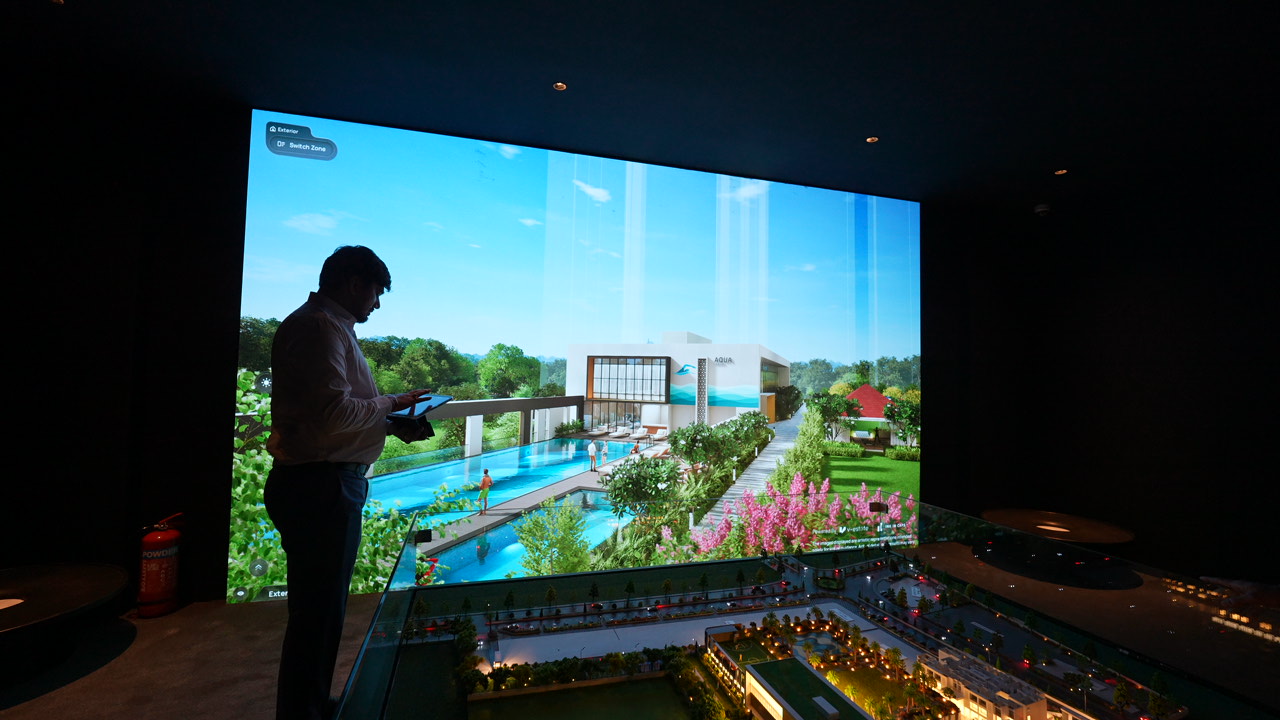
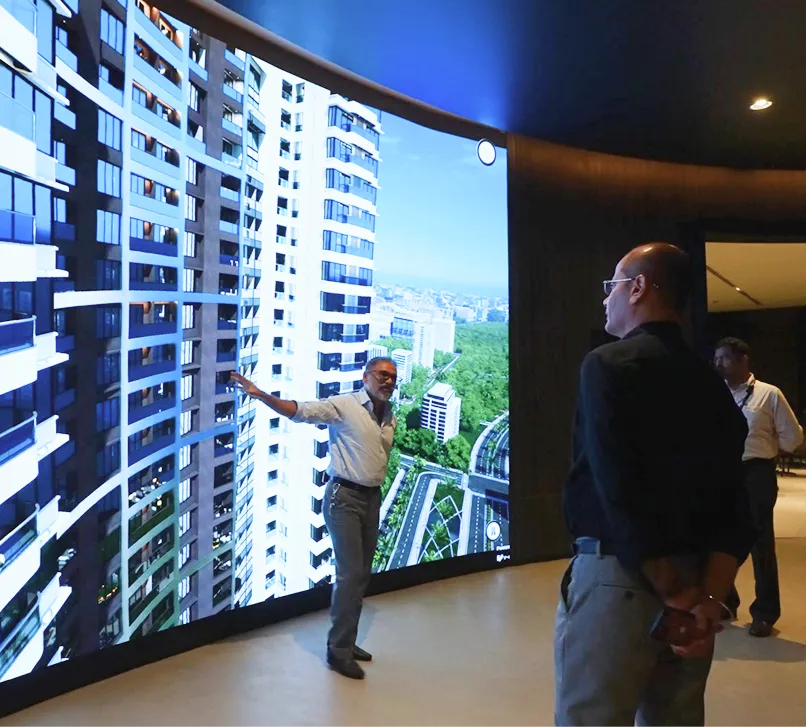
To remove hesitation, real estate professionals must shift the sales process from a state of imagination to a state of observation. The moment a buyer can look at a screen and see exactly what their view will be, the conversation changes fundamentally.
When a buyer can stand in an experience centre and interact with a screen that shows the exact sightlines from their specific unit, their posture relaxes. They no longer have to worry about whether the adjacent tower will block their morning sun, because they can see the gap between the buildings for themselves. They can verify that the 12th floor does, in fact, clear the tree line, justifying the extra cost.
This level of transparency builds immense trust between the developer and the buyer. It signals that the developer is confident in their product and respects the buyer's need for certainty. Consequently, the decision-making process accelerates. Buyers who feel informed and secure are far more likely to issue a booking cheque on the spot or shortly after the site visit, rather than delaying the decision indefinitely.
Bridging the Gap with Floor Height Visualization Technology
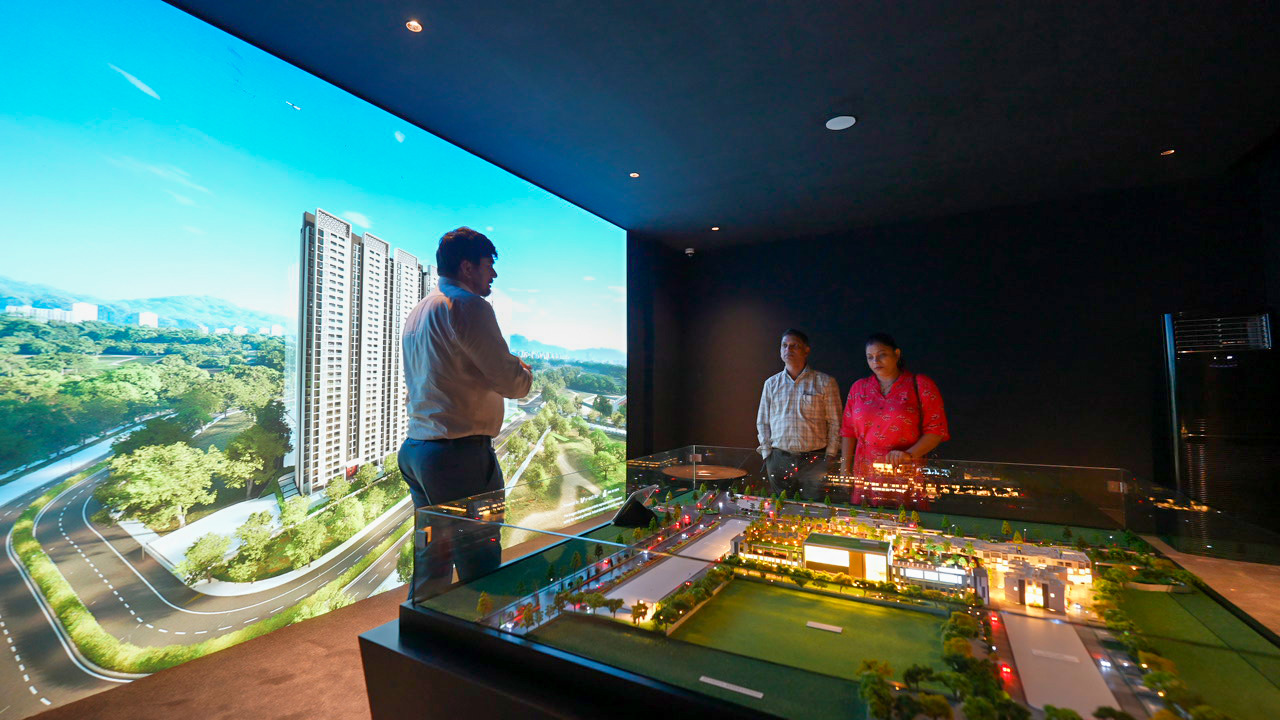
Addressing this problem practically requires adopting tools that replace static brochures with dynamic visual evidence. Modern real estate technology allows developers to capture and present accurate floor height visualizations, completely removing the guesswork for the buyer.
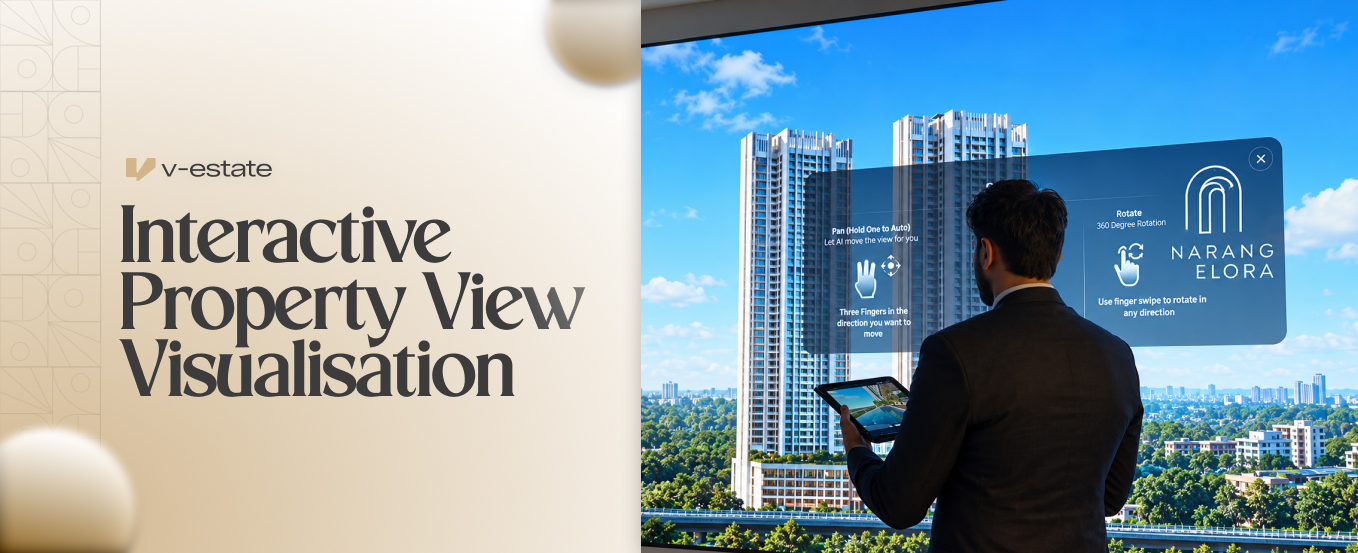
The most effective approach involves integrating actual drone panoramic photography with interactive 3D digital twins of the project. Developers can map high-resolution, 360-degree drone captures to specific elevations within the 3D model. When a buyer selects an apartment on the 10th floor using an interactive property map, the software automatically retrieves the exact view from that specific altitude and orientation.
This technology allows buyers to easily compare units. A buyer torn between a 6th-floor unit and a 15th-floor unit can simply toggle between the two and immediately understand the visual difference. They can look down at the podium amenities, look straight ahead at the city skyline, and look left or right to assess privacy from neighbouring towers.
By integrating these property view visualizations into interactive sales presentations, experience centre teams are equipped with an objective tool that answers the buyer's most pressing questions instantly. The sales professional no longer has to make promises; they simply have to facilitate the demonstration.
Equipping Teams to Sell the Value of the View
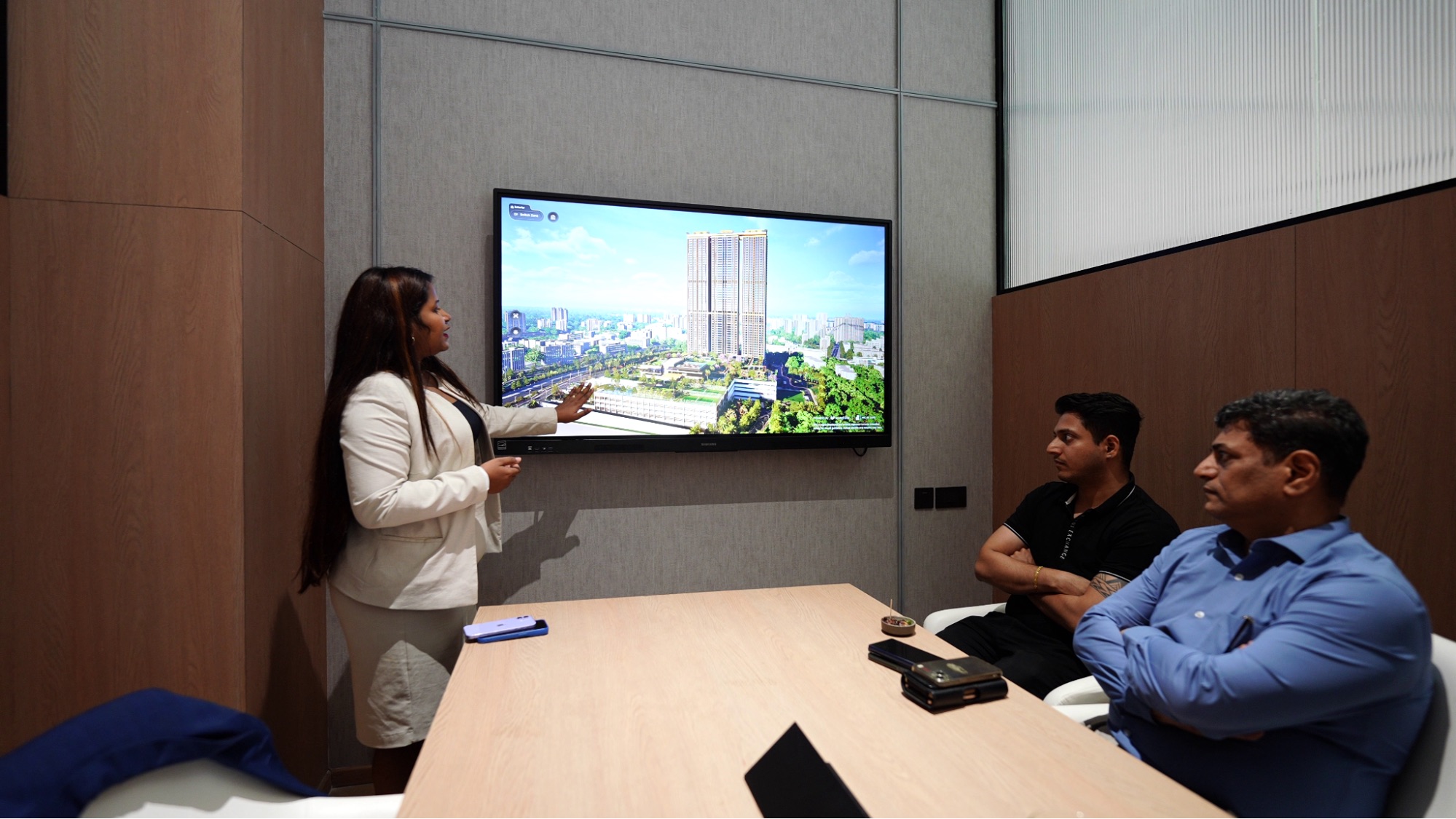
Implementing this level of visual clarity requires a structured approach to presentation. Sales teams and channel partners must be able to access and display these views smoothly during a live conversation.
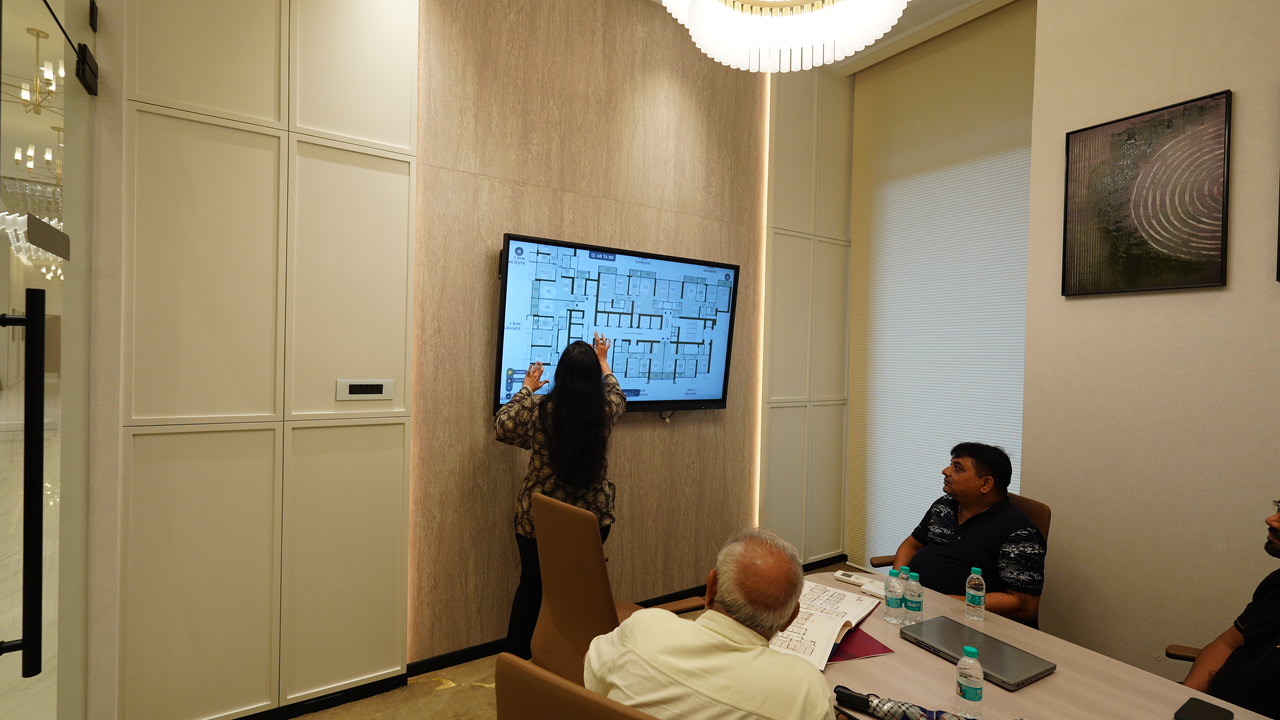
Platforms like V-Estate enable developers to house all of these visual assets—digital twins, interactive maps, and floor-specific view visualisations—within a single, unified presentation interface. Instead of switching between a physical brochure for the floor plan, a laptop for a rendered video, and a tablet for a generic gallery, the sales executive can guide the buyer through a logical, connected journey. They can start at the master plan, narrow down to a specific tower, filter for available units within the buyer's budget, and immediately load the exact view from the balcony of that specific unit.
This approach empowers sales teams to confidently defend premium pricing. When the buyer questions the floor rise cost, the sales professional can visually demonstrate the exact moment the view clears the surrounding obstacles, proving the tangible value of moving three floors higher. It turns an abstract premium into a visible, highly desirable feature.
Conclusion
The confidence to book a high-value real estate asset requires absolute clarity. When buyers are left to guess about critical daily experiences like natural light, privacy, and their balcony view, they will inevitably hesitate. For developers and sales heads, overcoming this hesitation is a matter of providing objective visual proof.
By implementing accurate property view visualization and allowing buyers to explore specific floor heights, real estate teams can eliminate the imagination gap. This transparency not only accelerates the decision-making process but also naturally defends the premium pricing associated with better views and higher floors. Providing a clear, undeniable picture of the future home is the most practical way to secure a buyer's trust and close the sale.
If your team is struggling to communicate the value of off-plan units, explore how V-Estate can integrate precise floor height and view visualizations into your interactive sales presentations to drive faster, more confident bookings.