Real estate sales are under pressure.
Buyers arrive informed. They compare aggressively. They demand clarity before commitment.
Traditional sales tools don't match this intensity. Brochures fade into generic promises. Floor plans confuse more than they clarify. Physical show flats cost millions and showcase only one configuration.
Developers lose conversions not from lack of interest—but from lack of understanding.
This is where property technology steps in. Not as a marketing gimmick. As a sales infrastructure upgrade.
Digital real estate growth now depends on one thing: making complex properties simple to understand, fast.
Offline Sales Environments Are Changing
Site visits still matter. Trust still builds face-to-face.
But what happens inside those sales offices has shifted completely.
Buyers no longer arrive blank. They've researched layouts online. They've compared pricing across projects. They walk in expecting immediate answers to specific questions.
Sales teams are under time pressure.
Explaining spatial flow takes too long. Describing views from each unit stretches patience. Clarifying amenity access requires repetitive walkthroughs.
Static tools can't keep up with informed buyer expectations.
The gap between what buyers need to see and what traditional materials can show is widening. Developers who bridge this gap faster close deals faster.
Core Sales Friction Points in Real Estate
Most conversion delays trace back to three problems.
Visualization failure Buyers can't mentally convert floor plans into lived experiences. They struggle with scale, light, proportions.
Repetitive explanations Sales teams waste hours clarifying the same details across multiple site visits.
Decision hesitation Uncertainty around fit, view, or amenities delays purchase decisions. Buyers want confirmation before commitment.
These aren't marketing problems. These are operational sales inefficiencies.
Fixing them requires a shift from static presentation to interactive demonstration.
Property Technology as Sales Enablement Infrastructure
Modern property technology doesn't replace human interaction. It amplifies sales team effectiveness.
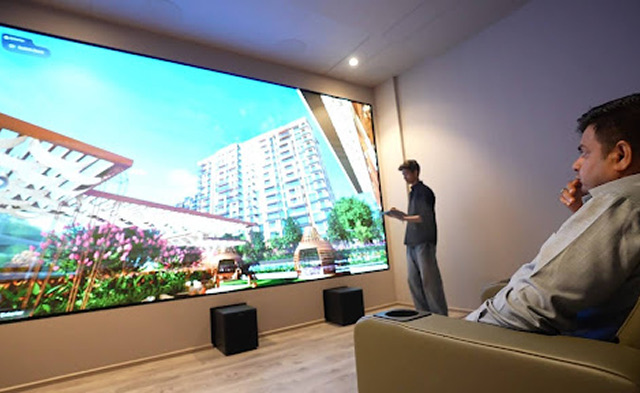
Instead of explaining, teams demonstrate. Instead of describing, buyers explore independently.
This changes the sales conversation entirely.
Buyers engage deeper. Questions become specific rather than general. Decision cycles compress because comprehension happens faster.
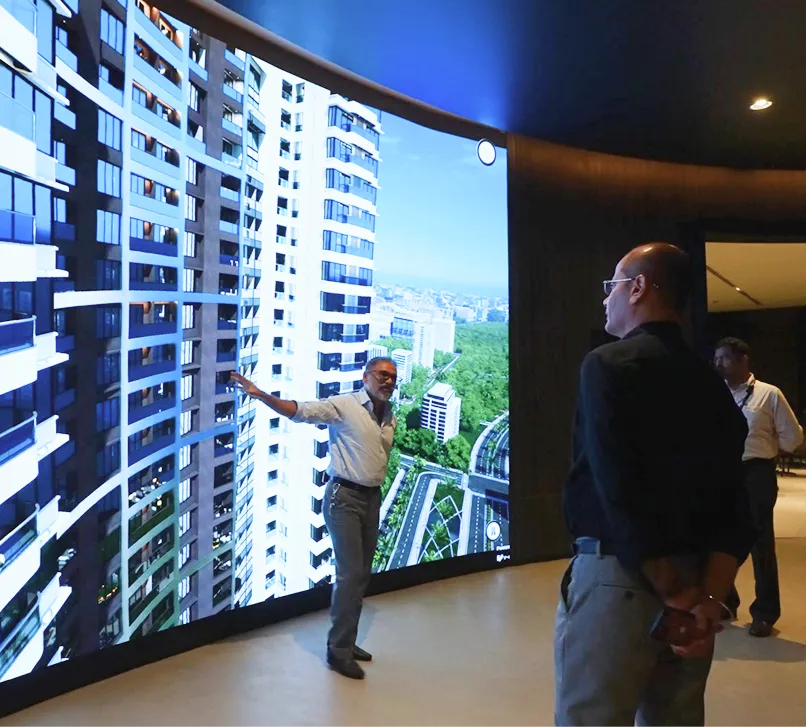
The technology works offline—inside experience centers, developer galleries, and project launch events. V-estate operates exactly in this space.
It's not remote selling. It's offline activation with digital depth.
Integrated Virtual Property Experience Framework
V-estate consolidates fragmented sales tools into one unified environment.
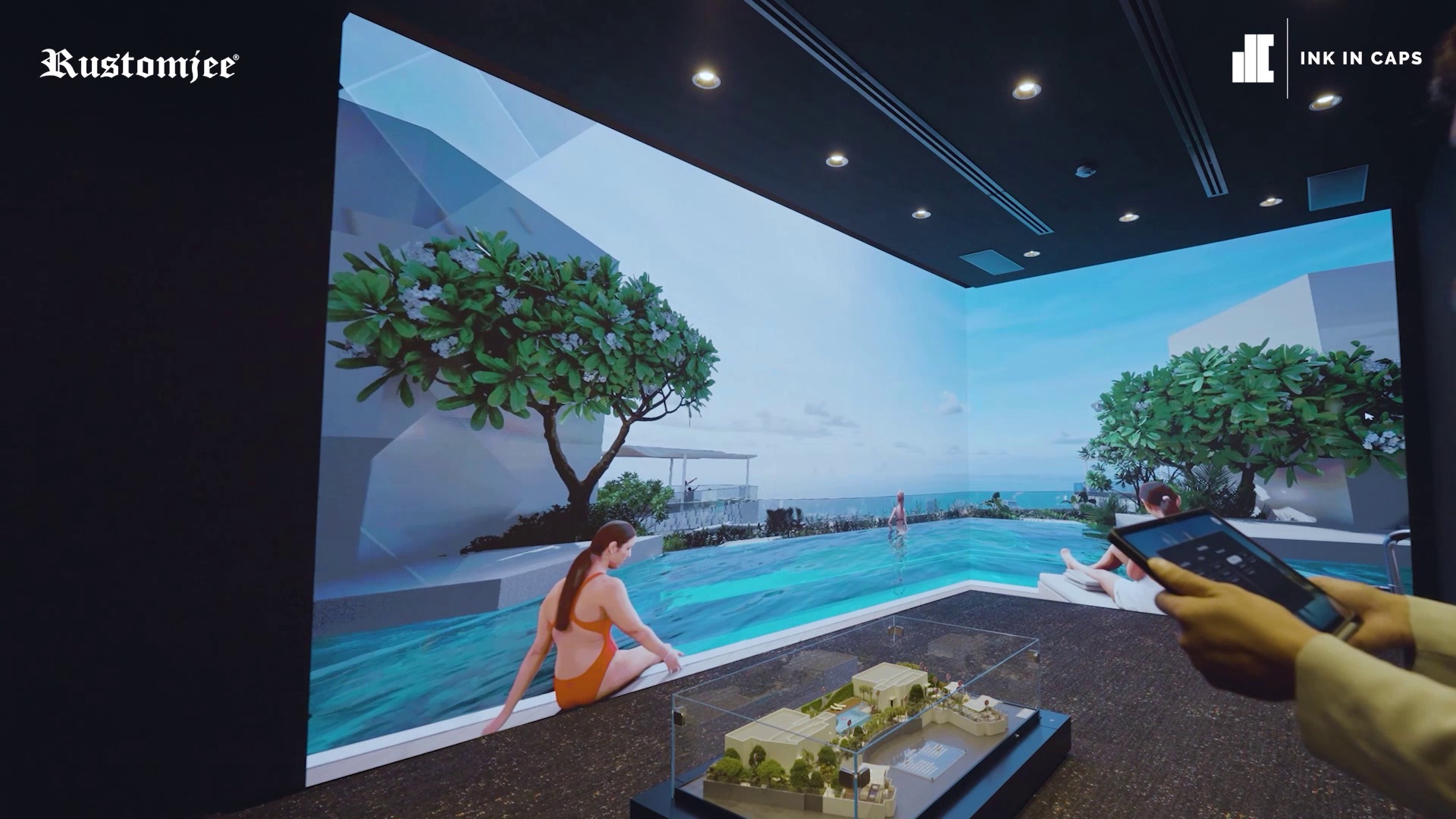
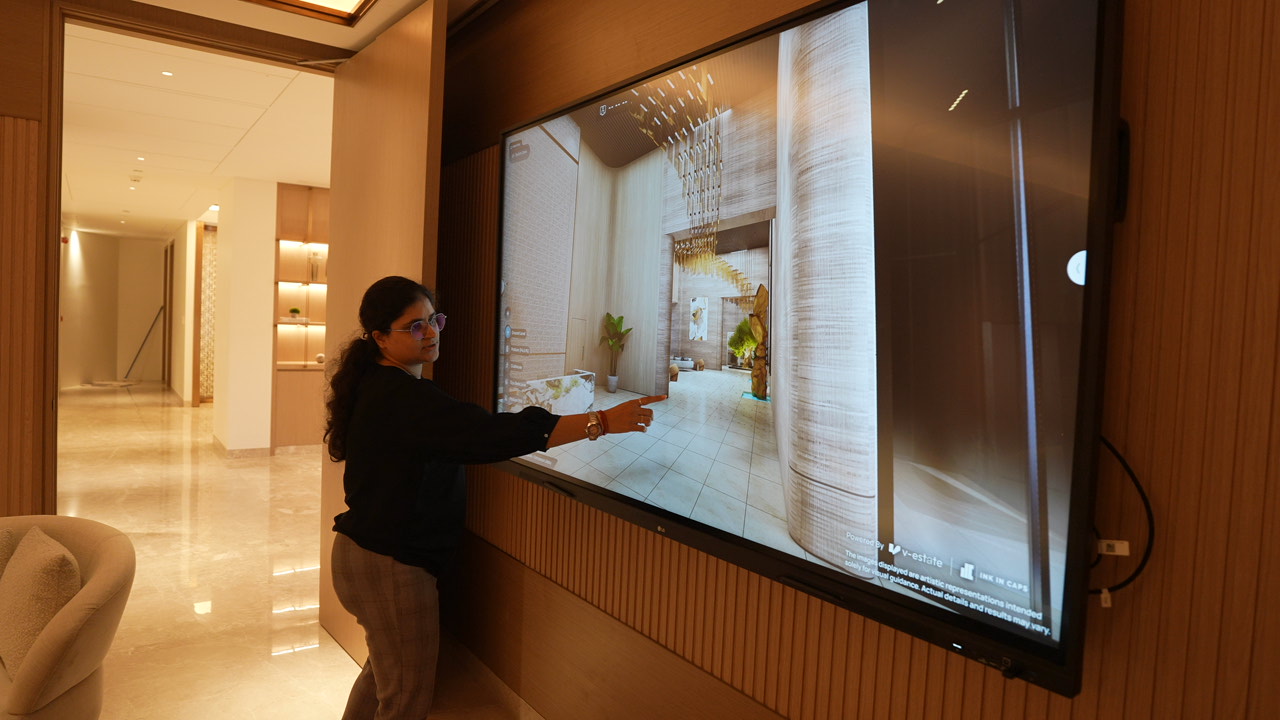
Photorealistic 3D virtual show flats Accurate spatial representation at true scale. Material textures match final delivery. Lighting behaves realistically.
Self-guided unit exploration Buyers navigate rooms independently. They observe proportions naturally without guided narration.
Dynamic window and view simulations External views shown from actual unit perspectives. Day and evening conditions visible on demand.
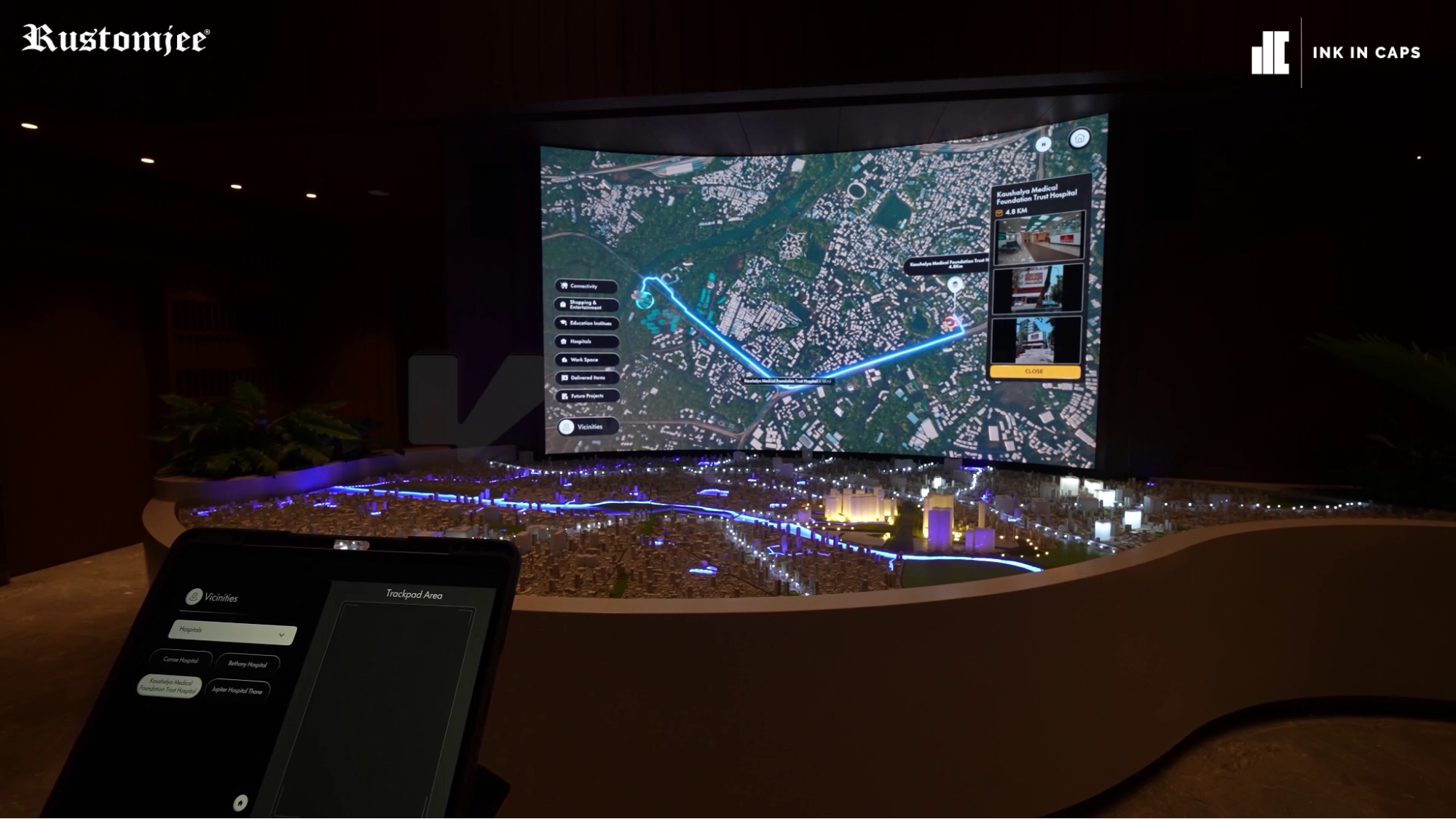
Amenity and infrastructure mapping Lifestyle facilities visualized in context. Surrounding connectivity made tangible through immersive mapping.
This isn't a video walkthrough. It's a controllable environment where buyers make their own observations.
Sales teams hand over the remote control. Buyers explore at their own pace. Understanding builds naturally.
Customization Drives Decision Confidence
Personalization isn't decoration. It's validation.
V-estate allows buyers to customize interiors before construction begins. Paint colors. Furniture placement. Lighting intensity. Seasonal ambiance.
This shifts buyer psychology from possibility to ownership.
When prospects see their preferences applied in real time, hesitation reduces. They begin mentally inhabiting the space.
Sales discussions move from explaining features to confirming preferences. This accelerates conversion.
Sales Team Productivity and Consistency
Property technology directly improves team performance.
Standardized presentations Every prospect receives identical clarity. Messaging stays consistent across multiple sales agents.
Reduced verbal dependency Visual understanding replaces lengthy explanations. High-intent buyers self-engage deeper.
Faster new hire onboarding Sales staff rely on system-guided demonstrations rather than memorizing complex details.
This matters during high-volume project launches. Efficiency scales without quality loss.
Cost Optimization for Developers
Physical show flats are expensive. Construction costs. Maintenance burden. Space constraints. Limited configuration flexibility.
V-estate significantly reduces this dependency.
Multiple unit types showcased without additional physical space. Design revisions updated digitally without rebuild cycles. Marketing investments shift from static assets to scalable systems.
Developers recover capital faster. Operational flexibility increases. Cost per conversion drops.
Buyer Confidence and Retention Impact
Clear visualization minimizes post-booking doubts.
Expectations align accurately with final delivery. Buyers feel informed, not persuaded. This reduces cancellation risk and misinterpretation disputes.
Post-sale satisfaction improves. Referral rates increase. Brand perception strengthens long-term.
V-estate creates informed buyers who stay committed. This is retention through clarity, not through pressure.
Strategic Relevance for Marketing and Development Leadership
For marketing heads, V-estate ensures message consistency and controlled experience flow. Engagement data becomes trackable and actionable.
For development teams, it ensures accurate representation and reduced miscommunication. Buyer alignment improves before construction begins.
This is strategic sales infrastructure, not a campaign tool.
It's foundational to scalable digital real estate growth.
Future-Ready Real Estate Sales Operations
The industry is moving toward experience-led selling. Visualization-first conversations. Informed buyer journeys.
Developers adopting integrated property technology position themselves ahead. Not through novelty. Through operational clarity.
V-estate supports this shift. It simplifies complexity. It reduces friction. It enhances offline sales environments with digital precision.
Closing Perspective
Real estate decisions require certainty wrapped in emotion.
Property technology like V-estate supports this balance. It doesn't replace human trust. It removes the barriers to understanding that delay trust.
For developers seeking sustainable digital real estate growth, structured visualization systems are no longer optional. They are foundational.
Explore V-estate's interactive property technology framework that enhances offline sales environments, improves decision confidence, and accelerates conversions through immersive, customer-controlled exploration.