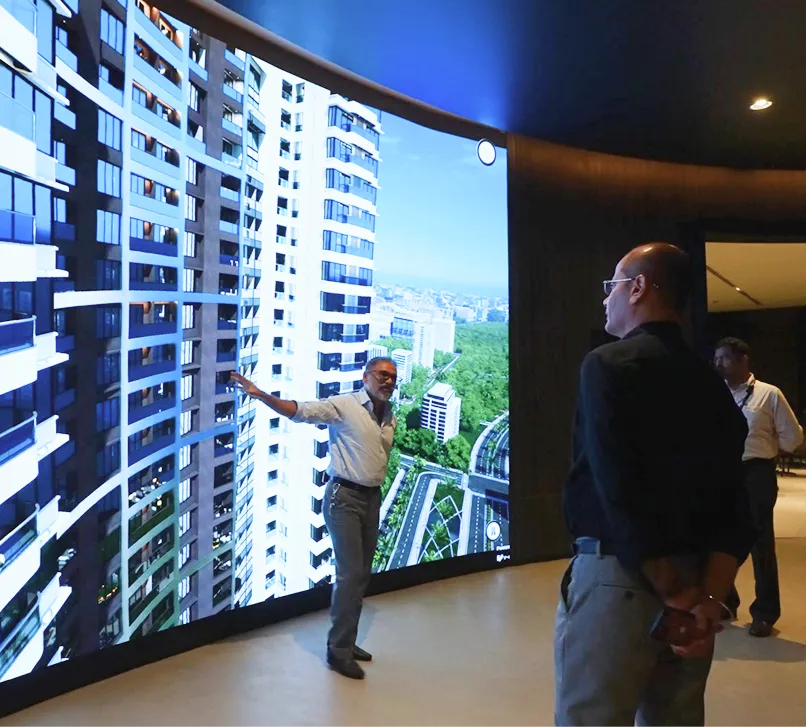
Most township sales happen before construction completes. Buyers visit experience centers looking at flat land. Nothing physical exists to show scale, layout relationships, or amenity positioning.
Sales teams work with floor plans, site models, and verbal descriptions. Buyers struggle to translate 2D drawings into spatial understanding. They cannot judge unit efficiency, view corridors, or orientation advantages from paper alone.
This comprehension gap creates decision delays. Buyers hesitate because they don't fully understand what they're purchasing. They wait for construction progress before committing. Sales cycles extend unnecessarily.
Pre-construction sales require structured visualization systems that bridge the gap between design intent and buyer understanding.
Rustomjee Urban Woods addressed this by implementing a pre-visualization platform that translates unconstructed design data into clear visual experiences before any physical construction exists.
The Clarity Problem in Unconstructed Property Sales
Buyers Cannot Interpret Unbuilt Spaces from Drawings
Floor plans show room dimensions and layouts. Site plans indicate tower positions. Elevation drawings depict building facades.
Most buyers cannot convert these technical documents into mental models of livable space. They don't understand how rooms connect. They can't judge furniture placement potential. They struggle to visualize natural light patterns.
First-time buyers face this challenge most acutely. They lack experience reading architectural drawings. They cannot assess whether a unit meets their functional needs without seeing physical space.
Sales Teams Interpret Drawings Differently
Without standardized visualization, sales staff explain layouts verbally. Different team members describe the same unit differently.
One executive emphasizes living room size. Another highlights bedroom positioning. A third focuses on balcony orientation.
These interpretation differences create confusion when buyers return with family members who hear different explanations. Inconsistency reduces confidence during decision-making windows.
Scale and Orientation Remain Abstract Concepts
Buyers need to understand:
Distances between towers
View corridors from specific floors
Sunlight direction at different times
Proximity of units to amenity zones
Access paths from parking to towers
2D plans cannot communicate these spatial relationships effectively. Buyers cannot judge whether a unit on the 8th floor faces east or northeast. They don't know if their tower sits near the clubhouse or far from it.
These unknowns prevent confident decision-making.
Multiple Configuration Variations Increase Complexity
Volume housing projects offer several variations of each unit type. Type A comes in three layouts. Type B has four floor-wise options. Type C includes balcony variations.
Explaining each version manually during consultations slows the sales process. Buyers cannot compare configurations easily without structured visual tools.
Remote Buyers Face Amplified Challenges
NRI and outstation prospects cannot visit sites repeatedly. They rely on PDFs, phone calls, and video tours.
Traditional materials fail to provide the spatial clarity they need. Static documents don't show how units relate to the broader project. Video walkthroughs lack the flexibility for buyers to explore specific details at their own pace.
Remote buyers delay decisions because they lack confidence in their understanding.
Decision Delays Come from Incomplete Comprehension
Most booking hesitations stem from visualization gaps, not price objections. Buyers cannot confirm whether the unit meets their needs. They don't understand how amenities integrate with residential zones. They cannot visualize daily living patterns in unconstructed spaces.
They wait for physical construction to progress before committing. This extends sales cycles and reduces pre-launch conversion rates.
What Pre-Visualization Systems Accomplish
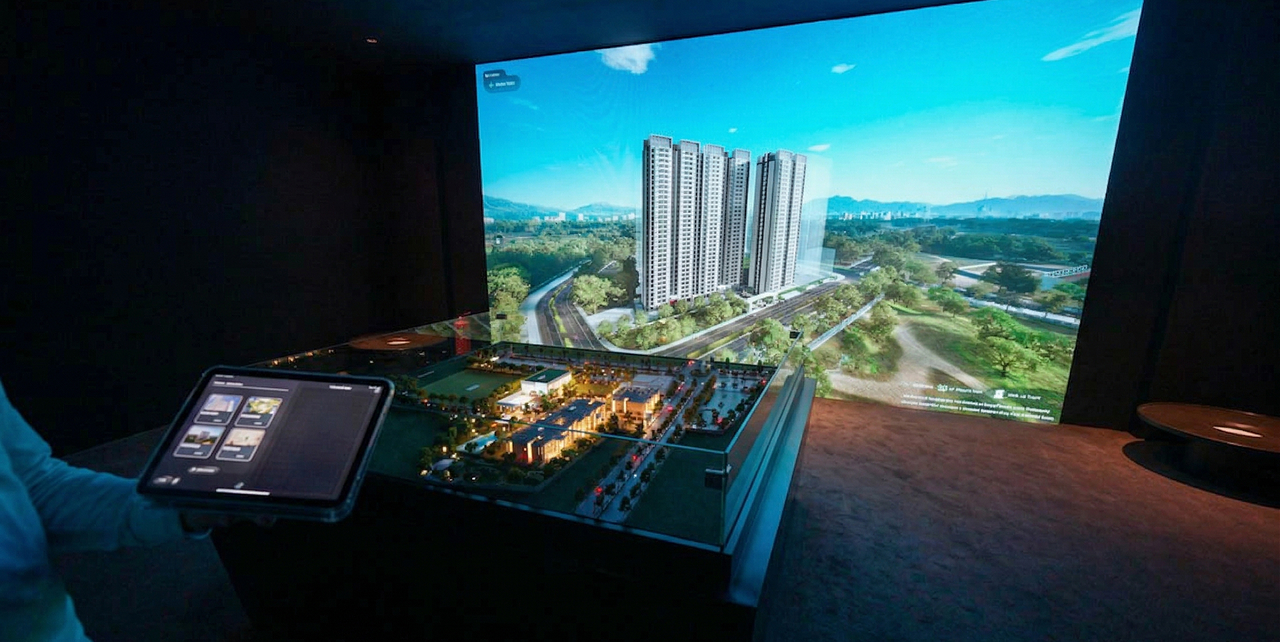
The solution is a platform that translates design data into structured visual experiences. It centralizes layouts, masterplans, amenities, and tower configurations into accessible modules that buyers can explore systematically.
It Creates Macro-Level Project Understanding
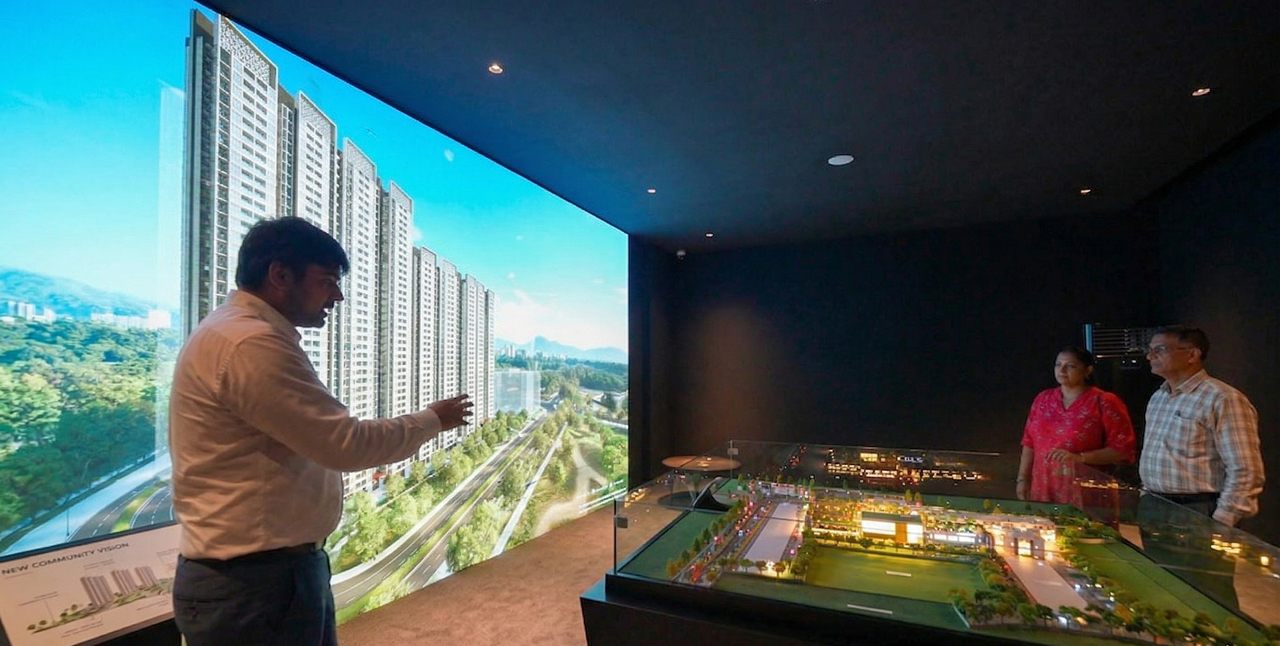
3D masterplans show the full township layout. Buyers see tower placements, entry points, circulation paths, and amenity distribution immediately.
This establishes design intent before diving into unit-level details. Buyers understand how the project fits together spatially.
It Provides Tower-Specific Clarity
Each tower receives individual visualization showing floor breakdown, orientation, unit stack distribution, and lobby positioning.
Buyers understand tower-specific differences early. They identify which towers align with their preferences based on location within the masterplan.
It Resolves Unit-Level Comprehension Gaps
Units are visualized with layout flow, room proportions, window placements, circulation paths, and functional zones clearly shown.
Buyers see how spaces connect. They judge furniture arrangement potential. They understand which rooms receive natural light at different times.
This addresses the biggest clarity gap in unconstructed sales—translating floor plans into livable space understanding.
It Simulates View and Orientation Context
The system shows directional exposure, cross-ventilation potential, proximity to amenities, and neighborhood views from specific units.
Buyers understand what they'll see from their balcony. They know which direction their living room faces. They can assess privacy and ventilation advantages.
This builds confidence in unit selection before construction provides physical verification.
It Previews Amenity Experience
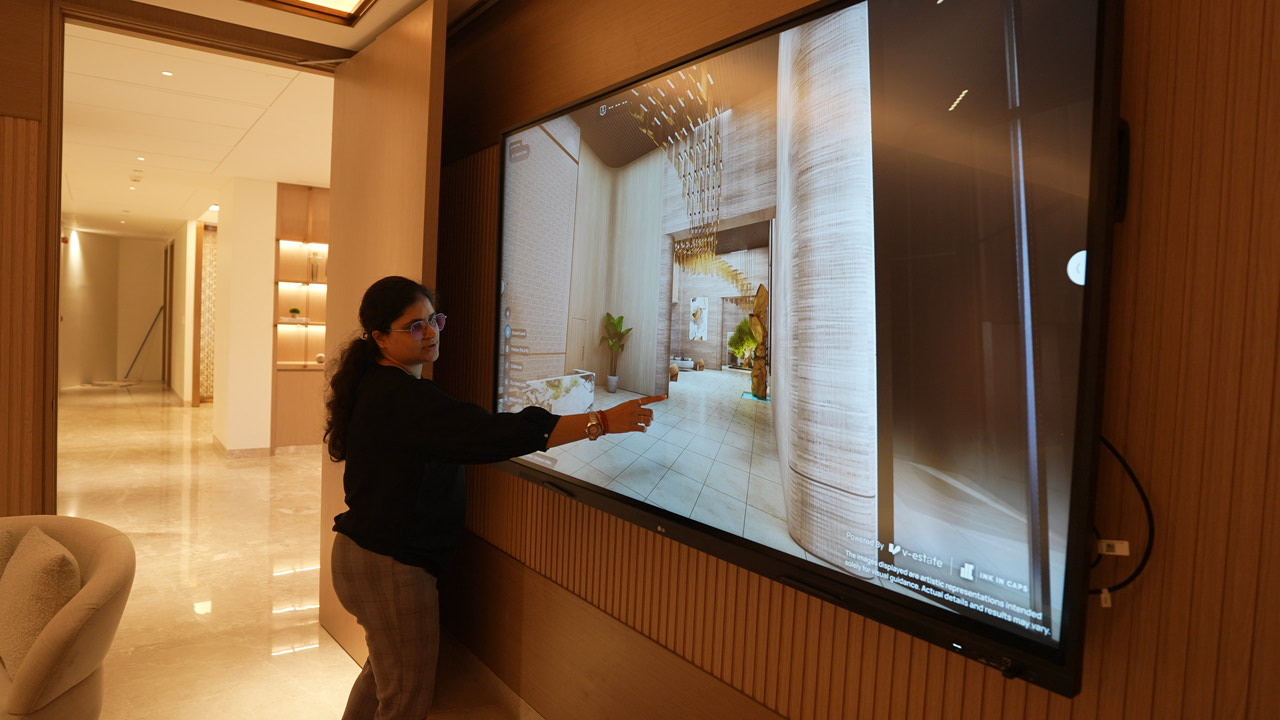
Key amenities receive visual showcases: clubhouse layouts, landscape zones, sports areas, kids' play spaces.
Buyers understand value beyond the unit itself. They see how amenities integrate with residential areas. They assess whether lifestyle offerings match their needs.
How the System Handles Pre-Construction Requirements
Structured Navigation Flow
Every module follows logical sequence: Overview → Towers → Units → Amenities → Connectivity.
Sales teams follow consistent paths through the presentation. Buyers receive information in digestible progression from macro context to specific details.
Fast Configuration Comparison
Buyers switch quickly between unit variations to compare plan efficiency and layout differences. The system loads configurations instantly.
This matters in volume housing where small layout variations significantly impact perceived value. Buyers exploring multiple options don't wait for manual presentation adjustments.
Design Accuracy Alignment
Visuals align with approved architectural drawings. Representations stay consistent with design documentation and regulatory approvals.
This ensures buyers see accurate spatial relationships, not artistic interpretations that diverge from final construction.
Remote Presentation Continuity
The same pre-visualization journey transfers directly to screen-shares for remote buyers. NRI and outstation prospects explore the project structure identically to on-site visitors.
Sales teams don't create separate documentation or custom presentations for remote channels. The platform delivers consistent experiences across buyer types.
Offline Operational Reliability
All visuals operate without internet dependency. The system remains fully functional during high-traffic periods when network stability becomes unpredictable.
Experience centers cannot afford presentation failures during peak footfall. Offline architecture ensures consistent performance.
Why Developers Need Pre-Visualization Infrastructure
It Enables Early-Stage Conversion
Pre-visualization removes the primary barrier to pre-launch and under-construction sales: buyer uncertainty about unbuilt spaces.
Clear visualization allows confident decision-making before physical construction provides verification. This accelerates cash flow and reduces dependency on construction completion for sales velocity.
It Standardizes Sales Communication
When every sales member uses identical visualization systems, communication becomes uniform. Buyers receive consistent information regardless of which executive manages their consultation.
This reduces confusion. It maintains messaging integrity across large teams and multiple sales channels.
It Increases Buyer Confidence During High-Risk Purchase Windows
Purchasing unconstructed property involves significant perceived risk. Buyers commit capital before seeing the product.
Clear pre-visualization reduces this risk perception. It provides tangible understanding of unbuilt spaces. Confidence increases when buyers can mentally inhabit spaces before construction.
It Improves Sales Center Productivity
Teams spend less time translating floor plans verbally. More time focuses on qualification, financial planning, and decision facilitation.
Sales conversations shift from information interpretation to solution matching earlier in the buyer journey.
It Enhances Value Perception in Competitive Segments
Premium visualization approaches elevate mid-income projects without increasing construction costs. Buyers associate presentation quality with execution capability.
Projects delivering clear pre-visualization differentiate themselves in competitive micro-markets where multiple launches compete simultaneously.
It Accelerates Decision Timelines
Clarity shortens the gap between first visit and shortlisting. Buyers understand design intent immediately instead of needing multiple visits or construction progress.
Faster comprehension compresses sales cycles. Conversion rates improve within critical launch windows.
It Supports Multi-Configuration Complexity
Township projects with multiple towers, phases, and unit variations benefit from structured visual navigation. Buyers compare options systematically instead of getting overwhelmed by verbal explanations.
The platform organizes complexity without overwhelming buyers or sales staff.
It Strengthens Remote Sales Channels
Outstation buyers and NRI prospects receive clarity equivalent to on-site visits. Remote sales pipelines convert more efficiently when visualization quality matches in-person experiences.
This expands addressable market reach beyond local micro-market boundaries.
What Developers Should Evaluate in Pre-Construction Sales
If you're selling unconstructed township units in competitive markets, assess your current visualization infrastructure:
Can buyers understand unbuilt spaces from your current materials? Floor plans and verbal descriptions leave comprehension gaps that delay decisions.
Does your sales team explain layouts consistently? Interpretation differences reduce buyer confidence and create confusion.
Do buyers understand scale, orientation, and spatial relationships clearly? Abstract concepts need visual translation for confident decision-making.
Can you demonstrate configuration differences efficiently? Multiple variations require structured comparison tools.
Do remote buyers receive the same clarity as site visitors? NRI and outstation segments need equivalent visualization quality.
How many decision delays stem from incomplete spatial understanding? Most hesitations come from visualization gaps, not price objections.
Does your experience center investment accelerate pre-construction conversion? Physical spaces need functional visualization to deliver ROI during early sales phases.
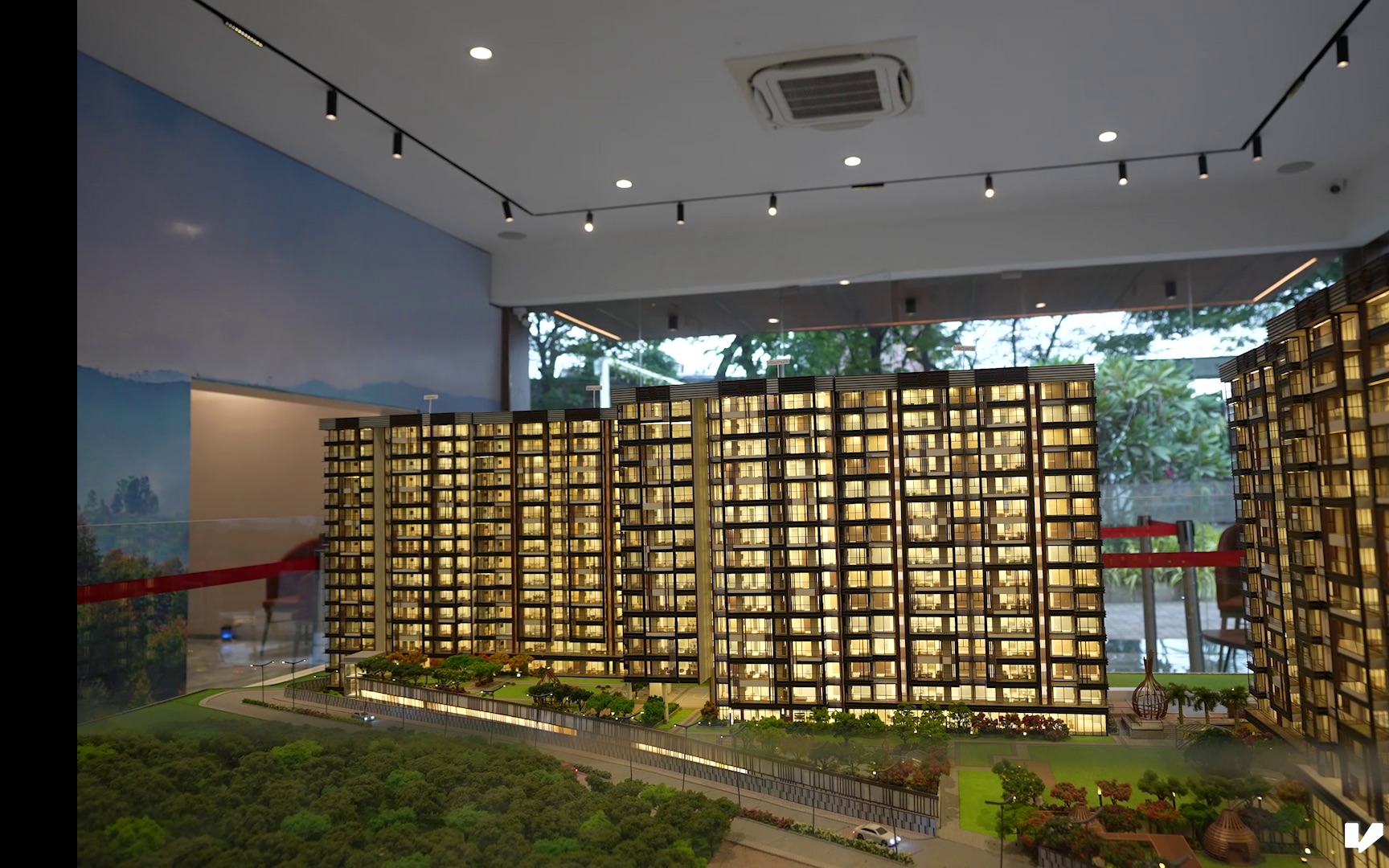
The Infrastructure Requirement for Unconstructed Sales
Pre-construction sales face a fundamental challenge: buyers must commit before seeing what they purchase. Traditional tools—floor plans, site models, verbal descriptions—cannot bridge the comprehension gap effectively.
Structured pre-visualization systems translate design data into clear spatial experiences. They show unbuilt spaces with sufficient detail for confident decision-making. They standardize communication across sales teams. They enable remote buyers to receive equivalent clarity.
At Rustomjee Urban Woods, pre-visualization infrastructure allowed buyers to understand unconstructed units with clarity that previously required physical construction. First-time buyers interpreted layouts confidently. Upgraders assessed efficiency accurately. Remote prospects made decisions without repeated site visits.
For developers managing pre-construction sales in township projects, the requirement is operational: visualization infrastructure that removes uncertainty from unbuilt property decisions.
The platform functions as pre-construction clarity infrastructure—not promotional content. It enables buyers to make informed decisions earlier in development cycles.
Developers selling unconstructed units should evaluate whether their visualization systems provide spatial understanding equivalent to completed construction, support consistent communication across teams, and enable confident decision-making before physical verification exists.