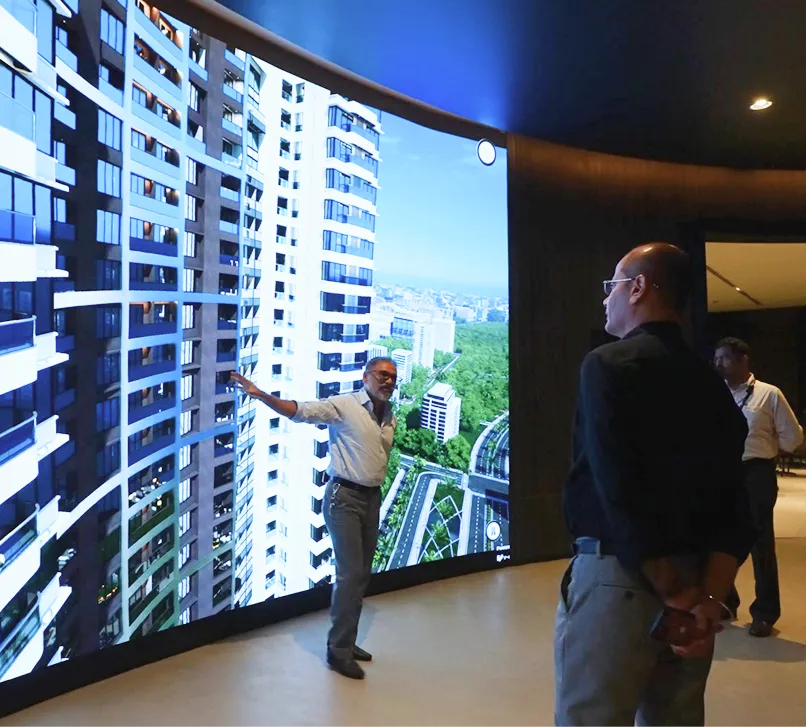
Pre-booking conversions stall when buyers cannot visualize the lived experience. Floor plans clarify layout. Renderings show design intent. Neither answers the critical question: what will I see from my window? That uncertainty creates hesitation. Hesitation stretches sales cycles. Extended cycles erode margins and reduce inventory velocity.
Photoreal window views eliminate this gap. They provide verifiable, objective visuals of the exact outlook from living rooms, master bedrooms, and balconies. Sales teams spend less time clarifying sightlines. Buyers gain confidence faster. Decision paths shorten.
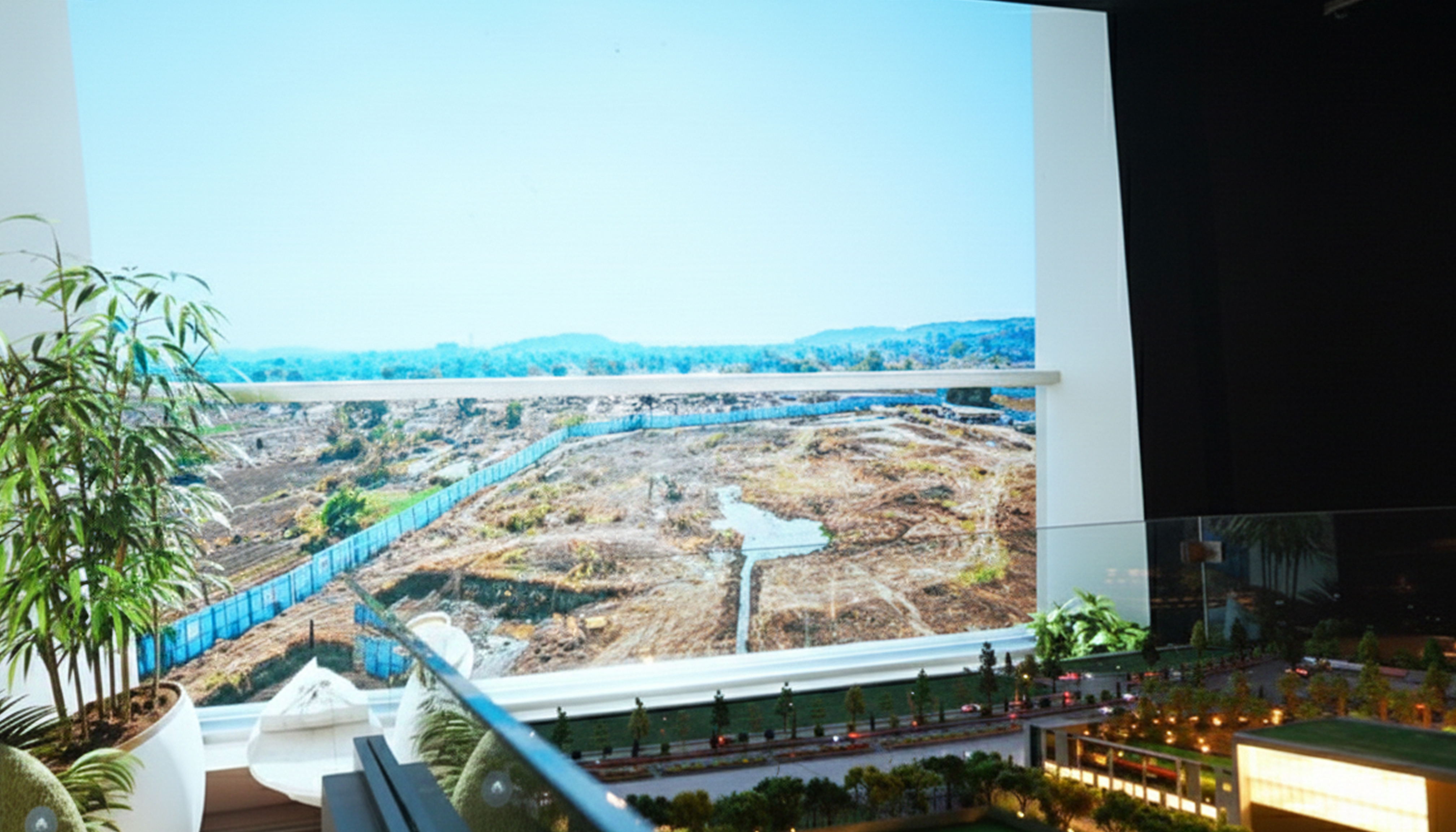
Pre-Booking Uncertainty Costs Developers Real Money
Buyers hesitate because they lack proof of the external environment. They ask repetitive questions about light quality, neighboring buildings, and future construction. Sales advisors answer the same queries across multiple touchpoints. This repetition wastes time and signals weak collateral.
Ambiguous renders fail to address buyer concerns. Generic skyline views do not match actual sightlines. Buyers sense the gap between marketing imagery and reality. That gap breeds doubt. Doubt delays bookings.
The cost is measurable. Longer decision cycles mean higher holding costs. Reduced conversion rates mean lower revenue per sales event. Query volume consumes advisor capacity that could close more deals.
Exact Sightlines Build Immediate Trust
Photoreal window views recreate the actual outlook from specific room positions. Buyers see what they will see. The visual is anchored to architectural data and site surveys. Distance, scale, and surrounding context are accurate.
This removes speculation. Buyers stop imagining. They start verifying. Verification shortens the path to deposit.
Key elements buyers need to confirm:
Exact view angle from named room positions
Distance and scale of surrounding buildings and landscape
Amenity proximity and transit access
Future site developments that may alter sightlines
Each element must be visible in the photoreal capture. Label assumptions clearly. If a future project will block part of the view, state the timeline and source.
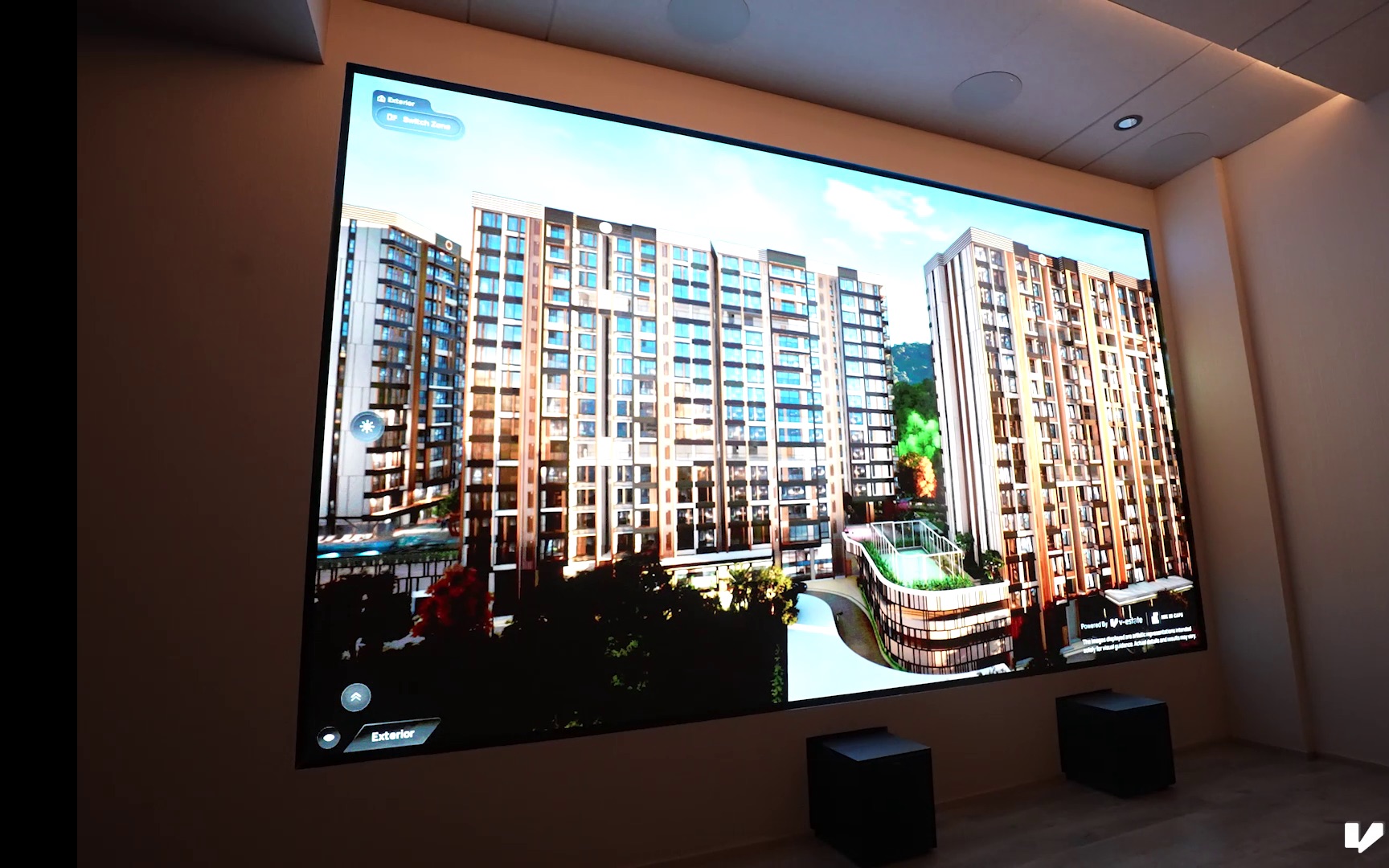
Dynamic Lighting Reveals Real Living Conditions
Morning light differs from evening light. Buyers need to see both. Dynamic time-of-day controls simulate real conditions. Show how natural light enters the space at 8 AM, noon, and 6 PM.
Seasonal variants matter for certain projects. Winter sun angles differ from summer. Shadow patterns change. If the project has high solar exposure or shading concerns, provide seasonal comparisons.
This feature reduces post-booking complaints. Buyers know what to expect. Expectations aligned with reality mean fewer escalations and higher satisfaction.
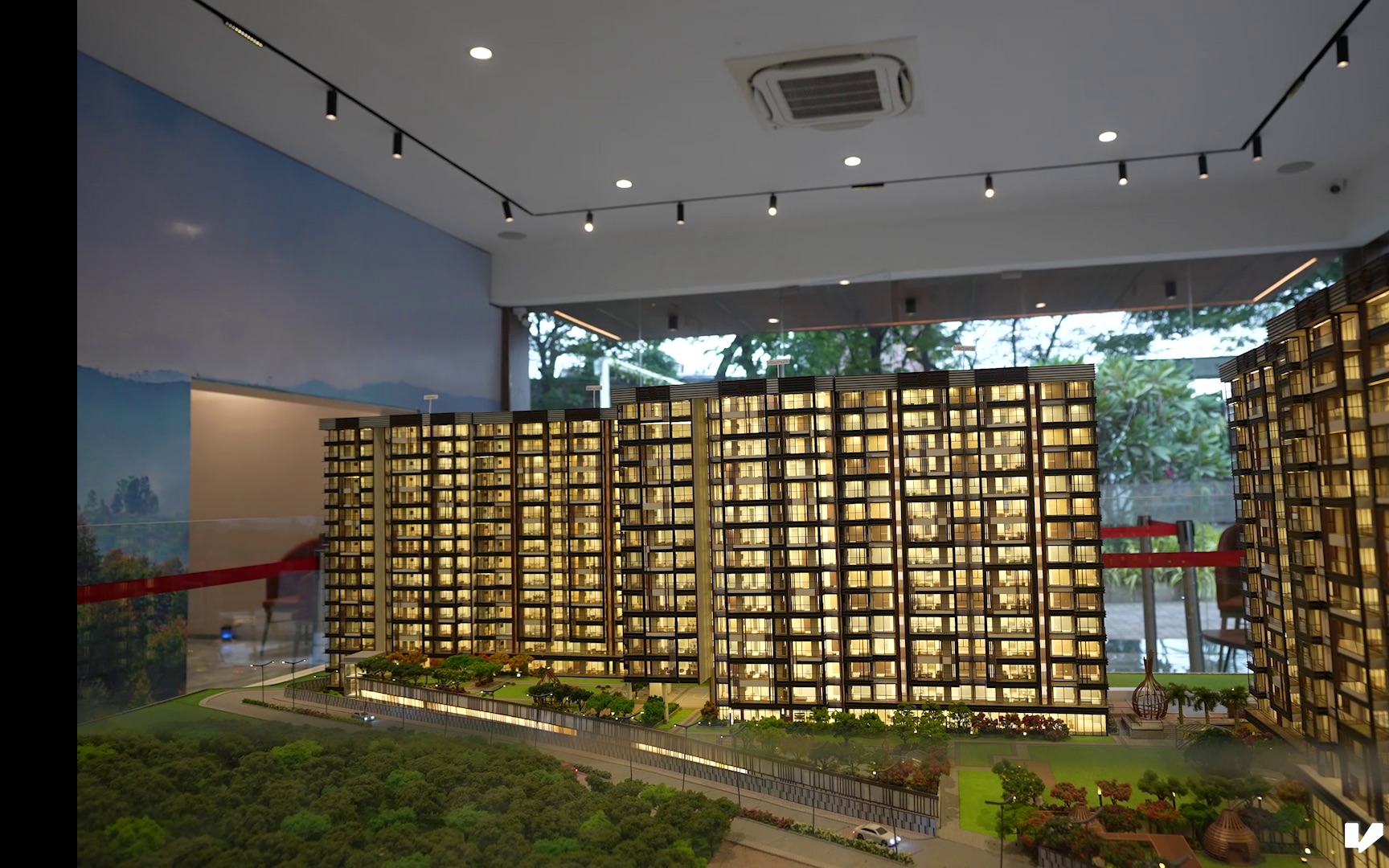
Context Overlays Clarify Lifestyle Fit
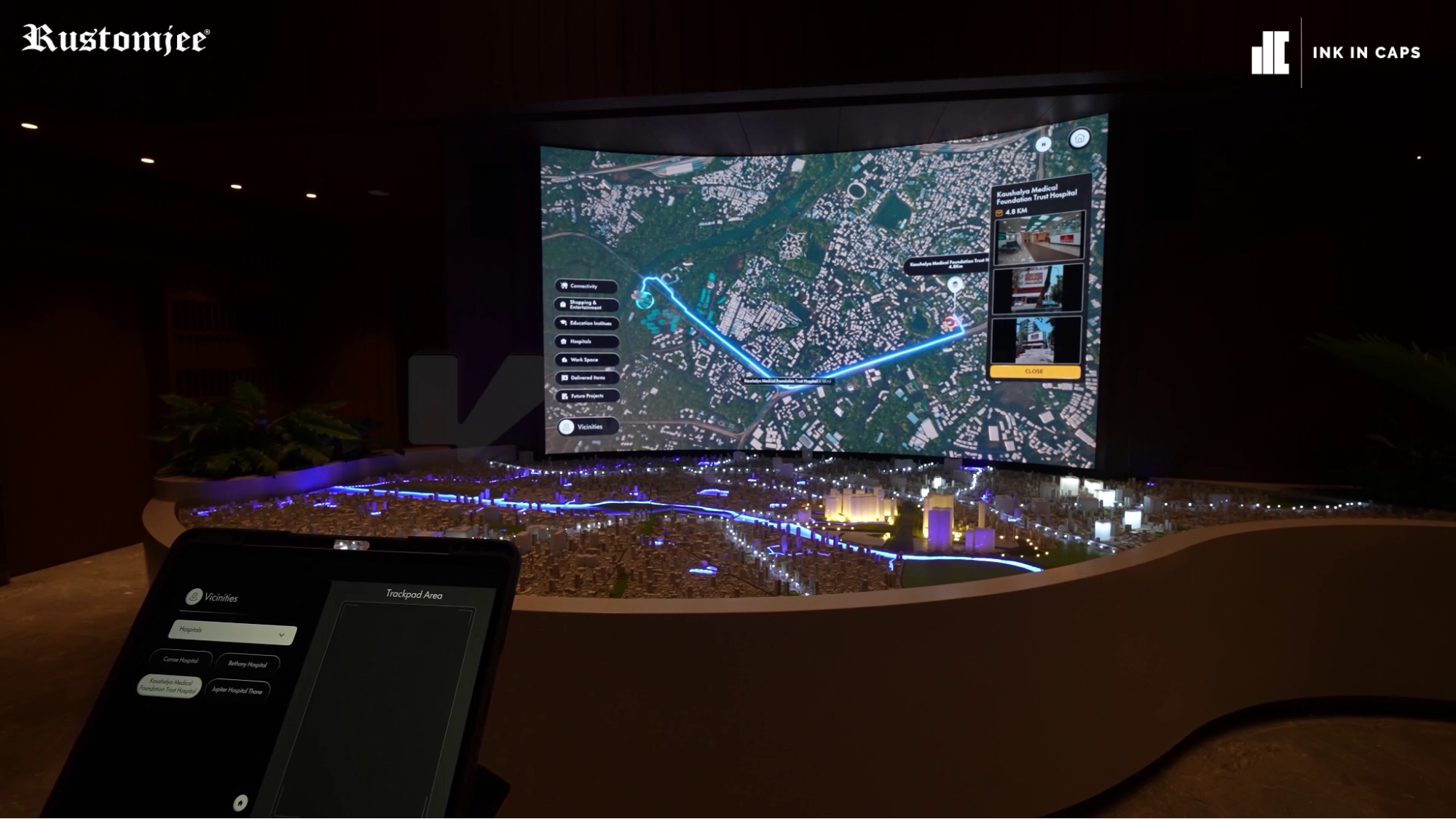
Context matters as much as the view itself. Buyers want to know what is nearby. Overlay labels for schools, transit stations, hospitals, parks, and retail clusters directly onto the photoreal window view.
Include current and upcoming infrastructure projects. If a metro line extension or highway expansion is planned, mark it. Buyers assess convenience and future appreciation potential. Clear context accelerates their internal decision process.
Avoid promotional language in overlays. Use factual labels. Example: "Metro Station — 1.2 km" instead of "Minutes from Metro Connectivity."
Custom Scene Configurations Let Buyers Personalize
Buyers want to see how the view complements their interior choices. Allow customization of finishes, furniture, and fixtures within the photoreal environment. This creates ownership before signing.
V-estate enables this through its interactive platform. Buyers adjust wall colors, select furniture layouts, and see how those choices work with the actual window view. Personalization builds emotional connection. Emotional connection drives commitment.
This is not a gimmick. It is a conversion tool. When buyers configure their own space, they move from evaluation to visualization of ownership.
Offline Activation in Sales Suites Drives Conversion
V-estate is an offline sales activation tool, not an online marketing layer. Deploy photoreal window views in presales kiosks, sales suites, and printed collateral. Train advisors to guide buyers through the interface during site visits.
Setup requirements:
Touchscreen kiosk per sales advisor
Guided script for common buyer objections
Printed annotated close-ups for tactile reference
Two-hour training session focused on view interpretation
Replace ambiguous renders in brochures with photoreal captures. Swap generic imagery for exact sightline visuals in spec sheets. Buyers trust what they can verify.
Implementation Checklist for Marketing Heads
Start with priority units. Focus on high-variance façades and premium inventory. These benefit most from differentiation.
Rollout steps:
Identify target units. Select 3–5 units with the highest value uplift potential.
Produce photoreal captures. Use architectural elevations, site photos, and survey data.
Install sales suite kiosk. One touchscreen with tabbed modules: View, Amenities, Light.
Train sales team. Equip advisors with concise rebuttals for sightline objections.
Update collateral. Replace all generic renders with photoreal window views.
Track baseline metrics. Measure lead-to-site, site-to-booking, and time-to-decision.
Keep iterations quick. Update captures when site conditions change or when nearby projects are announced.
Measurable Impact on Sales Velocity
Track these KPIs to quantify impact:
Pre-booking resolution time: Target 20–40% reduction in time from first visit to deposit.
Conversion uplift: Aim for 5–15% increase in site-visit-to-booking ratio for units with photoreal views.
Query volume: Reduce repetitive sightline and outlook questions by 30–50%.
Sales cycle length: Shorten average time from lead qualification to booking.
Use A/B tests in the sales suite. Compare interactions with photoreal views versus standard renders. Keep sample sizes and time frames consistent. Measure conversion variance.
Budget and Resource Allocation
This is focused spend, not branding theatre. Allocate budget to units with the highest margin and velocity potential. Minimal disruption to construction. Data comes from existing elevations, site surveys, and local photography.
Timeline: A staged rollout delivers early wins in 4–6 weeks for the initial cluster. Scale after measurable impact is confirmed.
Resource requirements are lean. V-estate handles the technical integration. Your team provides architectural data and sales suite access.
Practical Next Step for Developers
If pre-booking doubt is slowing your pipeline, integrate photoreal window views as an offline sales activation. Start with a pilot on 3 priority units. Set up a sales suite kiosk, train advisors, and measure conversions over two weeks.
Prove impact before scaling. Use baseline KPIs to compare performance before and after deployment. If the pilot delivers measurable uplift, expand to additional units and sales centers.
V-estate provides the platform. You provide the architectural data and sales process. The result is faster conversions, reduced query volume, and shorter sales cycles.
Photoreal window views convert uncertainty into visible fact. Buyers stop guessing. They start confirming. Use them in the sales suite to remove doubt before booking.