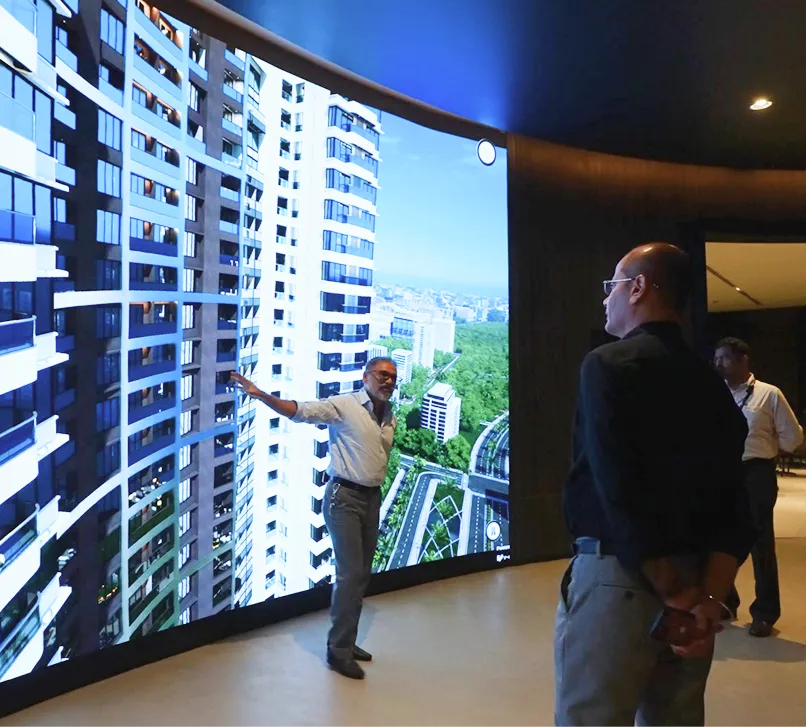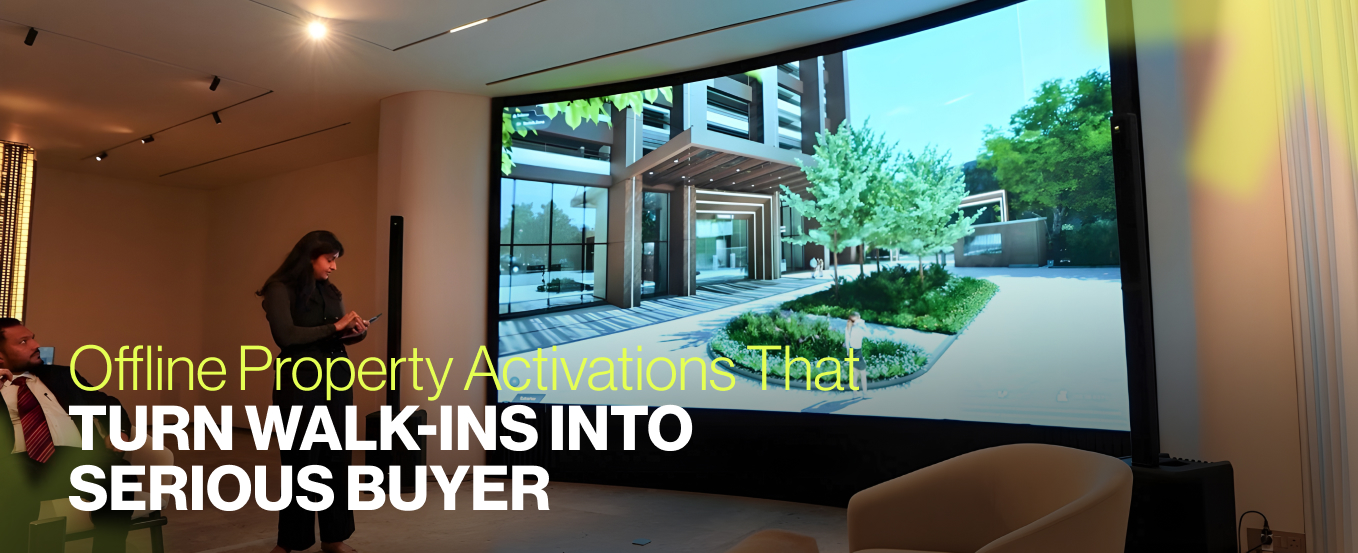
Showroom traffic data reveals a persistent industry problem: conversion rates remain stuck below 5% across most real estate projects. Walk-in visitors browse brochures, nod at floor plans, and exit without commitment. This leakage drains marketing budgets and extends sales cycles beyond profitability thresholds.
The issue isn't foot traffic. It's engagement depth.
The Walk-in Conversion Gap in Modern Real Estate
Buyers cannot visualize effectively from 2D assets. Brochures flatten spatial dimensions. Static models don't answer critical questions about natural light, window views, or neighborhood connectivity. Sales teams spend hours repeating explanations, answering identical queries across different prospects.
No-show rates on site visits compound the problem. Prospects book tours but cancel after initial hesitation. Showroom staff chase unqualified leads. CRM systems fill with low-intent contacts. Marketing dashboards flag declining pipeline quality despite rising foot traffic.
Data points paint a clear picture:
70% of walk-in visitors disengage within minutes
45% cancel scheduled site visits before viewing the property
Customization queries overwhelm available staff capacity
Sales cycles stretch 8-12 months due to extended decision periods
These aren't training issues. They're structural gaps in how prospects experience properties.
Why Static Showrooms Lose Qualified Buyers
Lack of buyer control kills momentum. Traditional showrooms force prospects into passive viewing modes. They follow predetermined paths. They accept standard narration. Individual preferences remain unaddressed.
Fragmented information creates decision friction. Floor plans sit in one corner. Amenities hang on walls. Neighborhood maps exist separately. Buyers piece together scattered data mentally, introducing errors and doubt.
Physical limitations restrict scenario testing. How does afternoon light affect the master bedroom? What's the actual 10-minute walkability radius to transit? Which sofa dimensions fit the living room? These scenarios require expensive, time-consuming site visits.
Staffing costs escalate without conversion gains. More model units, more brochure prints, more repetitive conversations—none significantly improve qualified lead quality.
The Real Estate Professional's Dilemma
Marketing heads face segmentation challenges. High-net-worth buyers demand precision and customization. Young families need lifestyle verification. First-time buyers require confidence building. One-size-fits-all activations serve nobody well.
Developers operate on compressed margins. Extended sales cycles tie up capital. Unsold inventory becomes liability. Rework on customization requests delays closures. Opportunity costs compound monthly.
Lead quality metrics deteriorate. Quantity inflates artificially. Intent signals remain unclear. Sales teams waste cycles on tire-kickers. True conversion opportunities get lost in noise.
Offline Activation: Shifting the Dynamic
Immersive offline tools eliminate engagement friction. These systems run locally on tablets or kiosk displays—no internet dependency, no latency issues. Prospects control their journey completely. Sales teams transition from narrators to closing specialists.
Photorealistic 3D environments provide genuine visualization. Buyers see actual window views, material finishes, spatial proportions. They observe evening light pouring across kitchen counters. They assess balcony railing heights against neighboring buildings. Abstract floor plans transform into comprehensible spaces.
Interactive customization builds purchase confidence. Prospect selects wall paint color and observes immediate rendering. Tests furniture placements. Adjusts architectural elements. Documents preferred configurations for future reference. This creates psychological ownership before purchase.
Amenity mapping contextualizes location value. Interactive overlays show current neighborhood facilities—retail, schools, healthcare. Future metro lines, upcoming commercial hubs appear on timelines. Connectivity metrics become tangible. Lifestyle appeal translates to concrete data.
Environmental controls demonstrate year-round appeal. Dynamic lighting shifts from sunrise to sunset. Weather modes cycle through clear skies and monsoon conditions. Prospects assess property value across seasons without temporal constraints. Seasonal concerns resolve through visualization rather than speculation.
Implementation Framework for Developers
Placement strategy matters. Position kiosks near showroom entrances where traffic concentrates. Target zones where visitors naturally pause. Design 10-15 minute exploration loops that maintain attention without exhaustion.
Asset preparation requires systems thinking. Pre-install complete 3D models with full texture detail. Load neighborhood maps with current and planned facilities. Build customization libraries matching project specifications. Test performance on mid-range devices to ensure smooth operation.
Staff transition focuses on qualification, not explanation. Sales teams need quick-reference guides for upselling post-exploration. Training emphasizes handling closing conversations, not technical support. This repositions staff capacity toward revenue-generating activities.
Measurement creates optimization feedback. Track session duration by prospect type. Log which customizations save most frequently. Document contact capture rates post-exploration. These metrics reveal genuine interest signals versus casual browsing.
Iteration cycles align with project phases. Weekly reviews of heatmap data show which features drive engagement. Popular customizations guide inventory planning. Feedback loops connect prospect behavior to development decisions.
Quantifiable Shifts in Market Performance
Projects deploying offline interactive systems report consistent improvements:
Walk-in conversion lifts 15-25% within first quarter
Average session duration extends to 10+ minutes (from baseline 3 minutes)
Site visit no-show rates drop 30-40%
Sales cycle compression reaches 38-40% (8 months compressed to 5)
Qualified lead ratios improve 125% (20% baseline to 45% post-deployment)
Staff productivity gains enable 2x deal closure per representative
A Mumbai-based developer tracked specific outcomes post-implementation:
Qualified leads doubled within 90 days
Site visit cancellations dropped 30%
Staff handled 50% fewer basic information requests
Operational costs declined 25% on model maintenance and print materials
Marketing attribution improved—prospects cited specific customizations in negotiation conversations
These gains emerged without additional marketing spend or expanded sales teams.
Strategic Relevance for Decision-Makers
For Developers: Compress timelines. Reduce physical model investments. Scale across multiple projects without proportional staff increases. Improve cash flow through faster closures.
For Marketing Heads: Deploy precise targeting based on interaction behavior. Segment follow-up campaigns using customization preferences. Feed CRM systems with measurable intent signals. Optimize campaign ROI through better lead scoring.
For Sales Teams: Shift from information delivery to consultative closing. Reduce repetitive conversations. Handle more prospects in compressed timeframes. Improve job satisfaction through higher-value interactions.
Universal Access: Offline functionality works in gated communities, remote sites, events, and basements. Zero connectivity requirements ensure inclusive reach across all prospect segments.
Making the Shift Immediate
The infrastructure exists. Offline interactive tools are production-ready. Implementation timelines measure in weeks, not months.
The evidence accumulates. Industry benchmarks consistently show conversion improvements and cycle compression.
The competitive advantage materializes quickly. Early adopters in markets capture lead flow from competitors still relying on traditional showroom models.
The path forward is clear. Developers and marketing heads ready to reduce sales friction should evaluate offline activation systems that combine photorealistic visualization, real-time customization, and neighborhood context mapping.
The showroom experience remains the critical conversion touchpoint in residential real estate. Making that experience immersive, controllable, and data-rich directly impacts bottom-line sales performance.