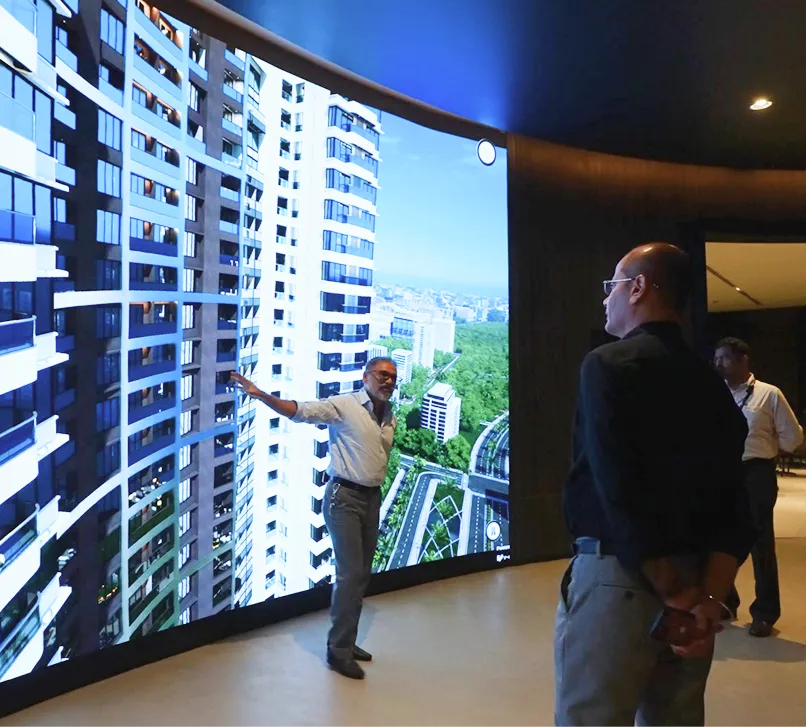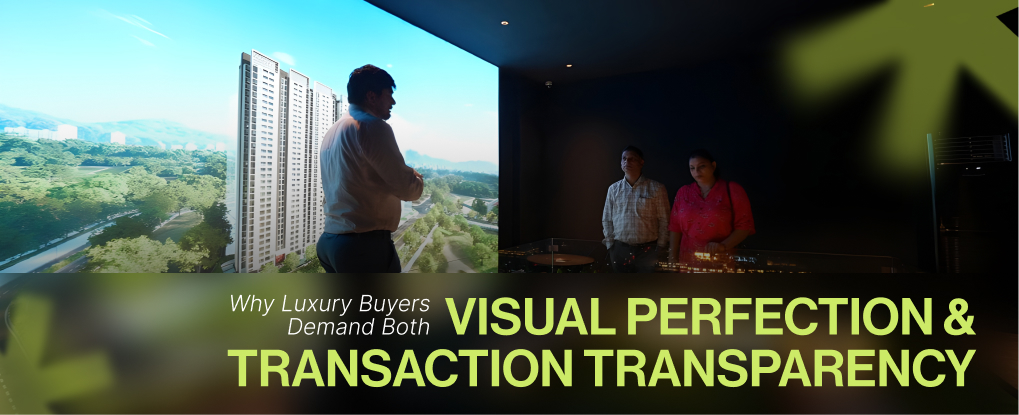
Buyers walk away from property deals because they can't confirm what they're actually getting. Marketing shows glossy renders. Site visits reveal bare concrete. The disconnect kills conversions before contracts get signed.
This mismatch costs developers time and money. Sales cycles drag. Buyers book multiple site visits. Decision-making stalls. Post-handover complaints spike when delivered units don't match marketed visuals.
The root problem: marketing creates expectations that physical walkthroughs can't validate early enough in the sales process.
Property Marketing Faces a Verification Crisis
Prospects see staged photography and aspirational renders. They imagine finishes that never materialize. External views get obscured or misrepresented. Amenity proximity feels abstract until buyers stand on-site.
The result: extended sales cycles and eroded buyer confidence.
Traditional showflats help but they're expensive to build and limited in scope. You can't show every unit configuration. You can't demonstrate views from different floors. You can't let buyers test finish combinations in real-time.
Digital tools tried to solve this with online tours and augmented reality apps. Most failed because they relied on home internet connections and smartphone screens. The experience felt detached from the buying decision.
Developers need something different. A tool that provides verification, not just visualization. A system that works offline at the sales center where serious buyers make actual purchase decisions.
Offline Activation Changes the Verification Model
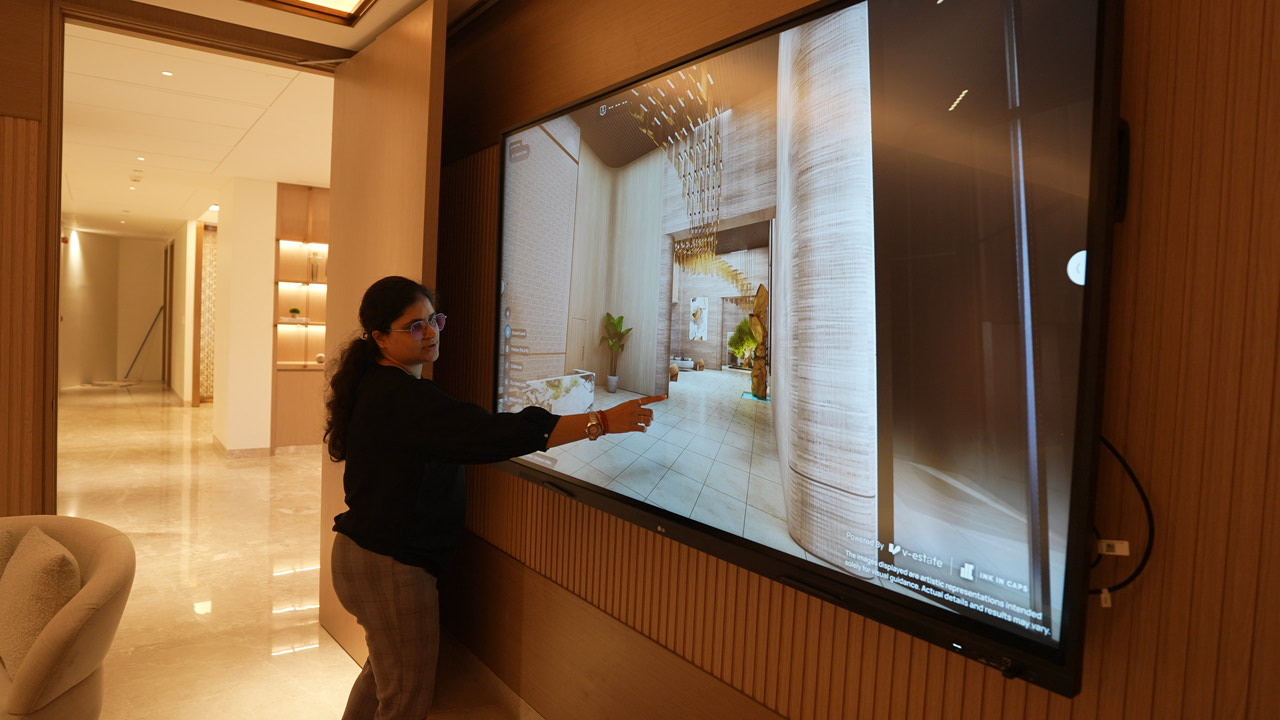
V-estate operates as an offline interactive sales tool deployed directly at your sales center or exhibition booth. Buyers control the experience themselves. They inspect photorealistic 3D virtual show flats that match final construction specifications.
This isn't online software. It's a dedicated setup that runs independently of network connectivity. Your sales team presents it during face-to-face consultations when buyer intent is highest.
The system delivers photorealistic unit representations with accurate material finishes, furniture placement, and lighting conditions. Buyers see exactly what they'll receive at handover.
Accurate Window Views Solve the Sightline Problem
One of the biggest sources of post-handover disputes involves views. Buyers expected clear sightlines. They discover neighboring structures or blocked vistas after moving in.
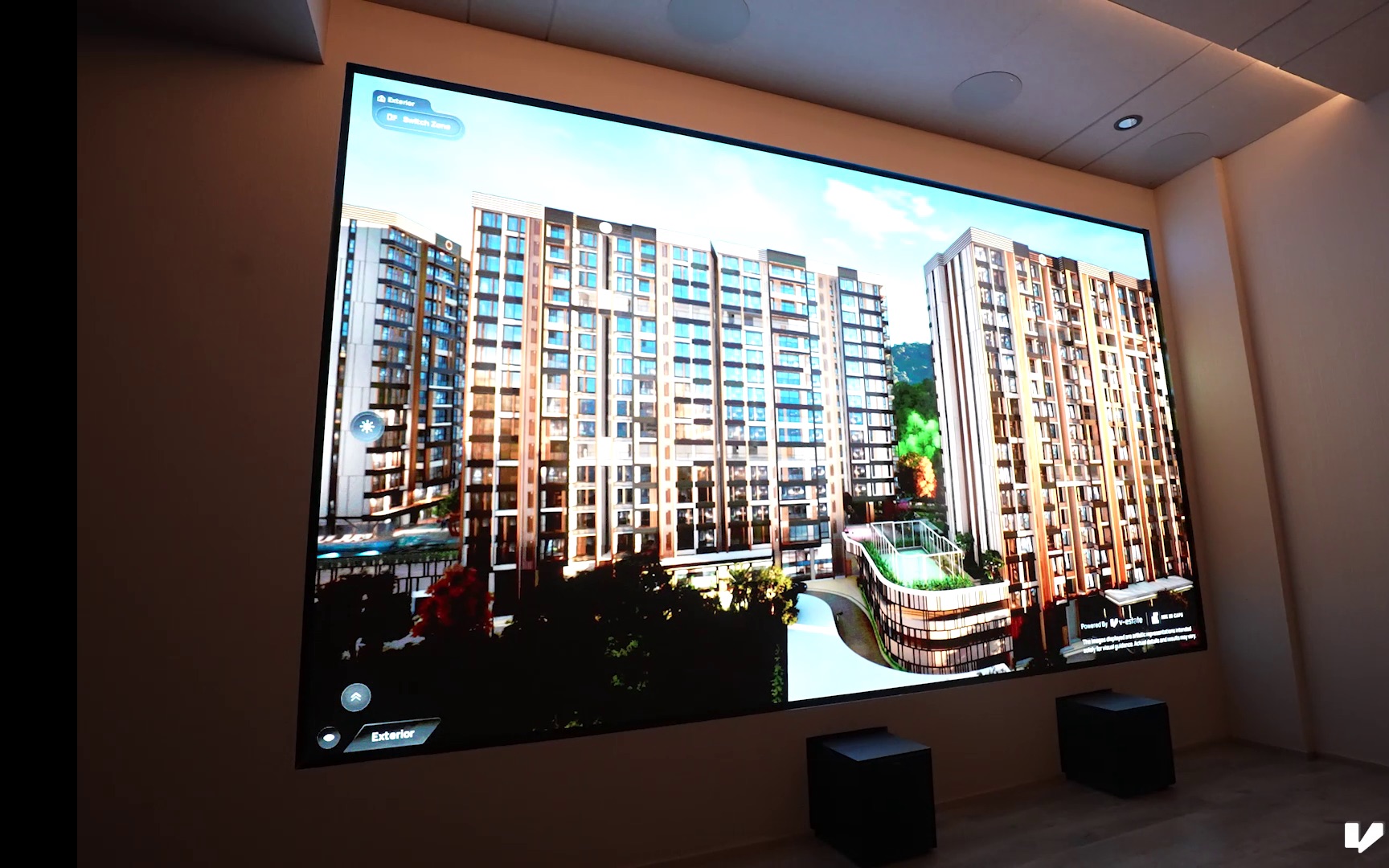
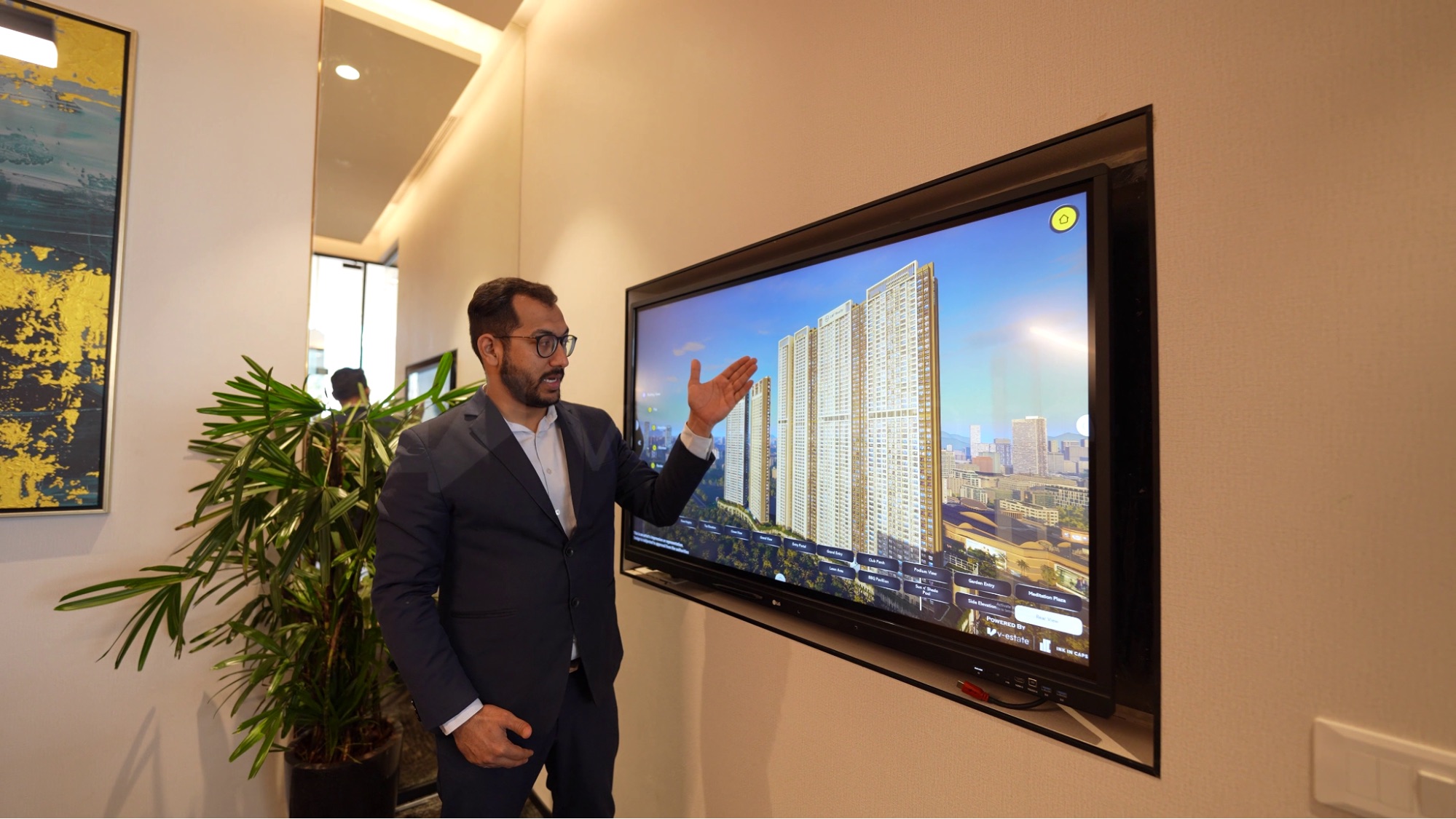
V-estate provides detailed window and view verification from each unit. Buyers inspect the external context as it will actually appear from their living room, bedroom, or balcony. They see surrounding buildings, planned infrastructure, and natural features positioned accurately.
This transparency eliminates expectation gaps. Buyers commit based on verified information, not assumptions.
Dynamic Controls Let Buyers Test Real Conditions
Properties look different at dawn versus dusk. Weather changes how facades appear. Buyers need to evaluate these variations before signing contracts.
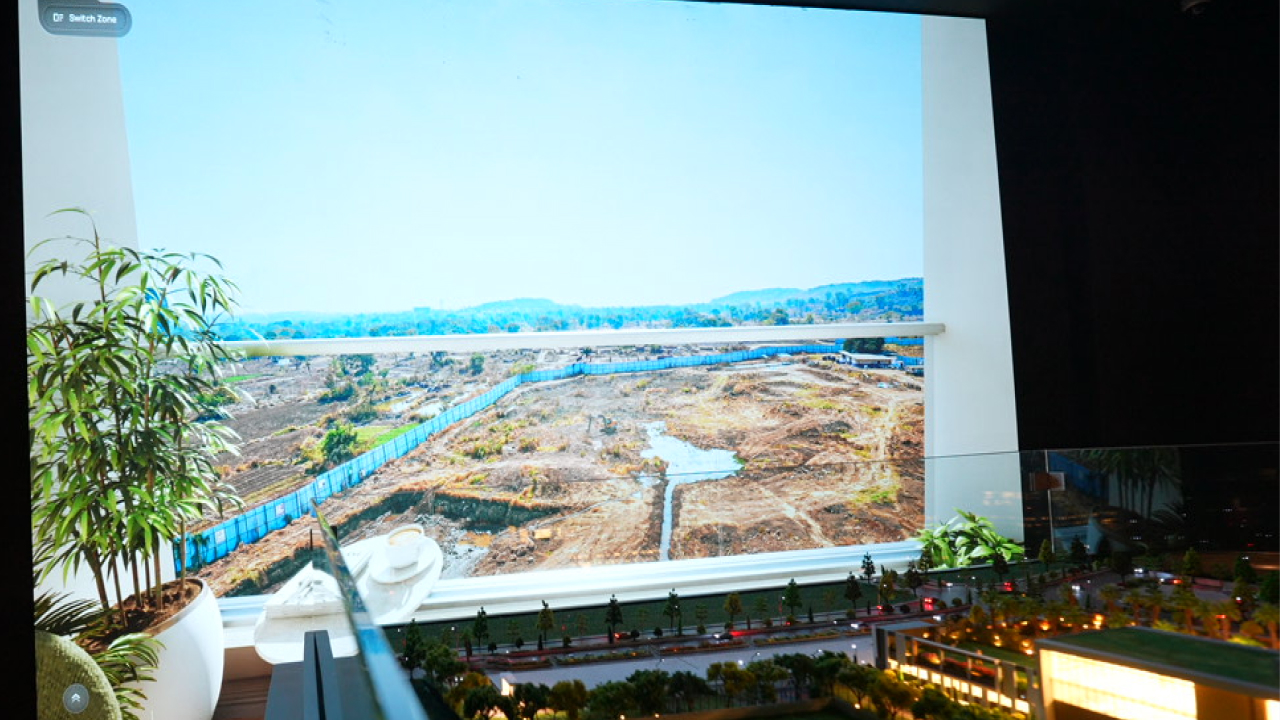
The platform includes dynamic lighting and weather controls. Buyers adjust time of day and seasonal conditions to inspect daylight patterns, shadow coverage, and external visibility across different scenarios.
This functionality answers unspoken buyer questions before they become deal-breakers.
On-Demand Customization Accelerates Decision-Making
Buyers struggle to visualize finish options when looking at sample boards. They can't picture how paint colors work with flooring choices or how furniture arrangements affect room flow.
V-estate enables instant customization of wall colors, furniture layouts, and material finishes. Buyers toggle between options during the sales consultation. They make finish selections immediately instead of requesting follow-up meetings.
The outcome: fewer decision delays and higher on-the-spot conversion rates.
Practical Implementation for Sales Centers
Deploying V-estate requires minimal physical footprint within your existing sales environment. The setup integrates into current consultation workflows without disrupting operations.
Hardware requirements stay simple. Your team operates the system during buyer meetings. No complex technical training needed.
Content accuracy drives results. Use final construction drawings and finish schedules to ensure the virtual representation matches delivery specifications. This alignment protects your brand reputation and reduces handover complaints.
CRM integration captures buyer preferences during the session. Sales teams follow up with verified visuals that reference specific choices buyers made during their consultation.
Measurable Impact on Sales Performance
Track these metrics to quantify return on investment:
Lead-to-sale conversion time drops when buyers verify details early in the process. Compare cycle length before and after implementation.
Site-walk-to-deposit conversion rates improve because buyers arrive at purchase decisions during the initial consultation instead of requesting multiple site visits.
Post-handover complaint volume decreases when delivered units match verified expectations set during the sales process.
Cost per qualified lead improves as your team focuses on serious buyers who've already completed detailed property verification.
Strategic Applications Across Sales Scenarios
New launch presentations replace static mockups with interactive verification that lets buyers inspect any unit configuration.
Upgrade campaigns for existing customers become more effective when buyers visualize premium finish options applied to their specific unit.
Investor presentations benefit from verified sightlines and amenity context that support yield projections.
Off-plan exhibition sales bring complete project context into temporary event spaces without depending on unreliable venue internet connections.
Address Common Procurement Objections Directly
"Virtual tools create unrealistic expectations that lead to handover disputes."
Use actual specification data. Present verified views and material samples that match construction documentation. The system shows delivery reality, not aspirational marketing.
"Hardware and setup costs don't justify the investment."
Calculate setup cost against reduced holding costs from faster unit turnover. Measure the cost of one extended sales cycle versus the price of verification infrastructure.
"Buyers prefer physical site visits to virtual experiences."
V-estate reduces visits needed, not eliminates them. Use virtual verification to pre-qualify serious buyers who then take a single decisive site visit instead of multiple exploratory trips.
Marketing Alignment Creates Attribution Clarity
This approach connects marketing promises directly to delivered product reality. You replace speculative renders with buyer-driven verification sessions that create documented proof of what buyers saw and approved.
Marketing attribution improves because you can link specific activation sessions to closed sales. You finally measure which presentation elements actually drive purchase decisions.
Implementation Checklist for Procurement Teams
Confirm these capabilities before deployment:
Photorealistic unit engine with material finish library
Environmental control system for lighting and weather variation
Viewline module with accurate external context
Offline operation with local data processing
CRM data capture and analytics export
Intuitive interface for buyer self-navigation
Next Steps for Your Sales Operation
Start with a focused pilot on two show units at your primary sales center. Use verified finish schedules and accurate sightlines. Track conversion metrics and handover complaints for ninety days.
Scale implementation based on measured results. Deploy across additional projects once you've documented performance improvement.
Book a pilot activation for your next project launch. Equip your sales team with verified visual content that closes the gap between marketing and delivery.
The market rewards developers who eliminate uncertainty. Buyers pay premiums for confidence.