.jpg)
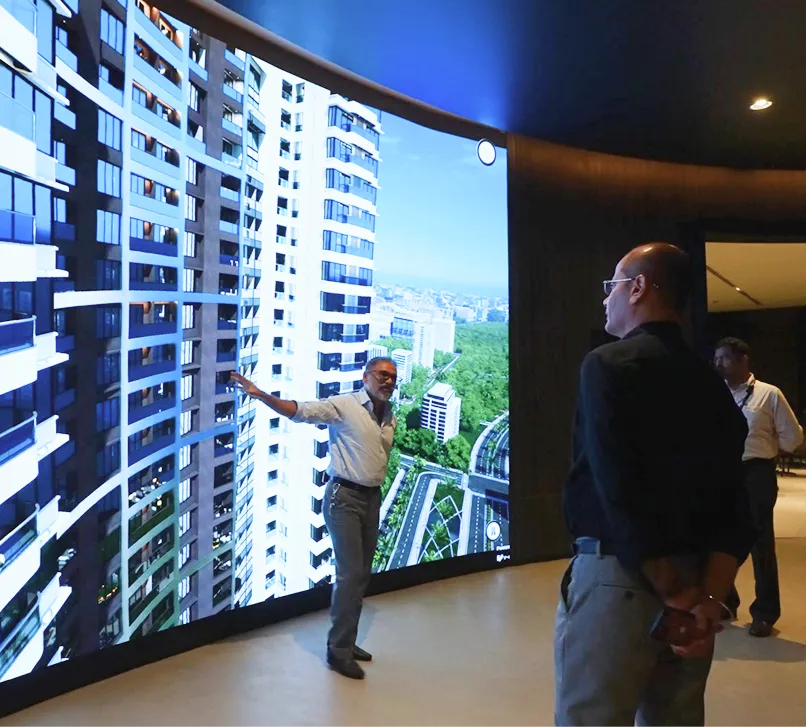
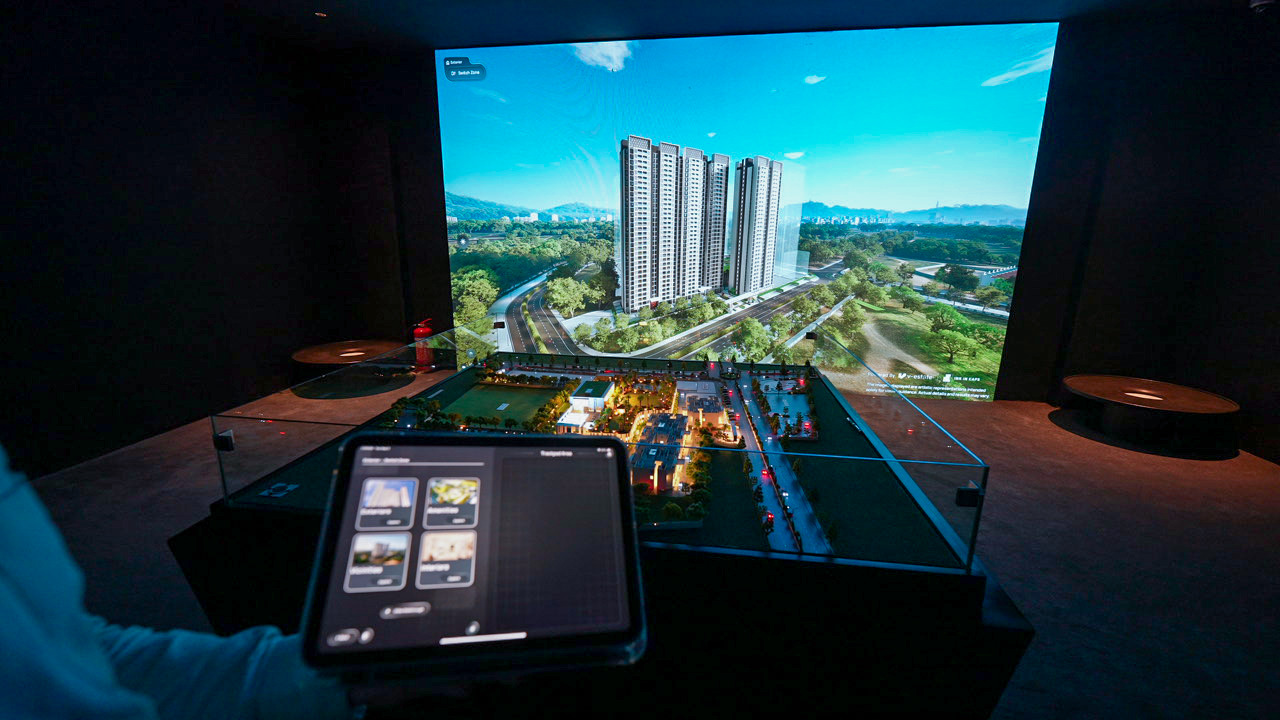
Experience centers in the Dombivli competitive real estate landscape face a recurring operational crisis. Weekend campaigns draw 150+ families through LED walls, interactive tables, IoT-enabled scale models, tablets, and self-service kiosks. Most developers install these components without connecting them, and each display runs independent software, managed separately by sales teams.
This fragmentation works during low footfall. During peak hours, it collapses.
Solutions Implemented at Rustomjee Urban Woods
V-estate deployed a unified architecture that connects every display, device, and model to one content backbone. The Rustomjee Urban Woods case study demonstrates how integrated systems transform operational capacity in high-volume township markets.
The Breaking Points We Identified
1. Information Chaos Across Zones
Large display walls displayed one masterplan version while tablets showed updated configurations. Scale models highlighted outdated cluster arrangements. Buyers noticed inconsistencies before the sales teams did, signaling operational weakness in competitive markets.
2. Coordination Overhead Multiplying During Peak Hours
One executive handled large display presentations, another navigated scale models, and a third explained unit options on tablets. Without synchronized systems, teams waited for hardware availability while prospects left before completing walkthroughs.
3. Buyers Restarting Conversations at Every Touchpoint
Families moved from LED wall to scale model to interactive table, repeating which cluster interested them, what configuration they needed, and which amenities they'd already seen. The inefficiency was visible and frustrating.
4. Presentation Gaps from Hardware Juggling
Executives toggled between tablets, LED remotes, kiosk controls, and scale model interfaces. Each device required separate navigation knowledge. Zone transitions created awkward pauses that impacted comparison rankings against competitors.
The Architecture V-estate Deployed
1. Single Content Backbone with Consistent Navigation
Our multi-touchpoint system connects all displays to a single content backbone with consistent navigation across zones. Updates distribute simultaneously to every touchpoint. Version control becomes automatic.
2. Parallel Buyer Management Without Conflicts
One family explores the masterplan on LED walls while another compares towers at the scale model and a third reviews floor plans on tablets. The system supports independent navigation, eliminating hardware queues and increasing peak-hour capacity without additional staff.
3. Context Preservation Across Movement
Large display walls establish project scale, scale models clarify cluster positioning, interactive tables show unit configurations, and tablets enable detailed comparisons. Teams continue from where the previous zone ended instead of restarting conversations.
4. Unified Hardware Control
Teams manage LED walls, tables, kiosks, and scale models from one interface using identical navigation commands. Presentation momentum stays consistent without device switching or manual synchronization.
5. Digital-Physical Integration
Selecting a tower on tablets highlights the corresponding section on physical scale models. Choosing a cluster on kiosks updates LED displays immediately. Buyers understand spatial relationships by combining digital detail with physical scale in real-time.
.jpg)
Operational Performance Under Pressure
1. Offline Architecture for Reliability
All content runs without internet dependency during high-traffic periods. Visuals, 3D assets, and animations load from local systems. Experience centers cannot rely on network stability when managing weekend footfall
2. Remote Access Mirroring On-Site Walkthroughs
Site-visit presentations transfer directly to screen-shares for NRI and outstation buyers. Teams deliver identical structured experiences without creating separate remote materials.
3. Role-Based Access Control
Sales staff navigate buyer-facing content, managers update backend data, and CRM teams analyze interaction patterns. Access controls prevent accidental changes across large teams.
The Infrastructure Requirement for Dombivli Developers

1. Structured Presentation Logic for Township Projects
Township projects with multiple clusters, phases, and unit types require structured presentation logic. Fragmented systems leave hardware investments underutilized. Connected architecture ensures LED walls, scale models, interactive tables, and kiosks function as an integrated system.
2. Compressed Sales Cycles
Sales cycles compress when buyers understand project fundamentals within one comprehensive walkthrough. Fewer follow-up visits. Fewer clarification calls. Teams address buyer-specific queries instead of repeating project basics at each zone.
3. Actionable Interaction Data
Interaction data reveals which zones generate longest engagement, which unit types receive most exploration time, and which clusters drive inquiry volume. This intelligence shapes planning decisions for future phases.
The Infrastructure Requirement
At Rustomjee Urban Woods, V-estate unified architecture allowed sales teams to handle weekend footfall without operational breakdown. Buyers transitioned between zones smoothly. Teams managed concurrent conversations efficiently. Remote follow-ups replicated on-site walkthroughs exactly.
The platform functions as operational infrastructure, not presentation software. It connects hardware investments into a working sales system that supports parallel demos and maintains information consistency across all buyer touchpoints.
Evaluation Framework
Evaluate your current infrastructure:
Does data stay uniform across displays?
Can your team handle multiple buyer groups during peak hours?
Do buyers restart conversations when moving between zones?
How quickly do changes reach all touchpoints?
The Bottom Line
Township developers in competitive markets like Dombivli manage operational complexity that fragmented tools cannot address. Connected architecture reduces coordination overhead, improves efficiency, and maintains control across diverse buyer paths. If your experience center struggles with information inconsistencies across zones, hardware coordination bottlenecks during peak hours, or buyers restarting conversations at every touchpoint, unified multi-touchpoint architecture solves these operational breakdowns and transforms hardware investments into integrated sales infrastructure that handles high-volume operations without compromise.
Book a Strategy Session | Explore More Projects