.jpg)
In residential real estate marketing, generating leads is no longer the biggest challenge. Converting those leads into confident buyers is.
Buyers today compare multiple projects online, understand pricing benchmarks, and arrive at the sales gallery with detailed questions. When those questions are answered clearly in a single visit, conversions accelerate. When they are not, follow-ups multiply and momentum drops.
This is why the experience centre has become one of the most important marketing investments in real estate.
A well-designed real estate experience centre, powered by immersive proptech software and interactive property walkthroughs, helps buyers understand location context, project scale, and unit experience before construction even begins.
The following guide draws from real deployments for Rustomjee Verdant Vista, Suraj Developers Suraj Tower, and L&T Realty Island Cove, built using V-Estate.
Define the Role of Your Experience Centre in the Buyer Journey
The first step in real estate experience centre design is clarity of purpose.
An experience centre should answer specific buyer decision questions, not just showcase visuals.
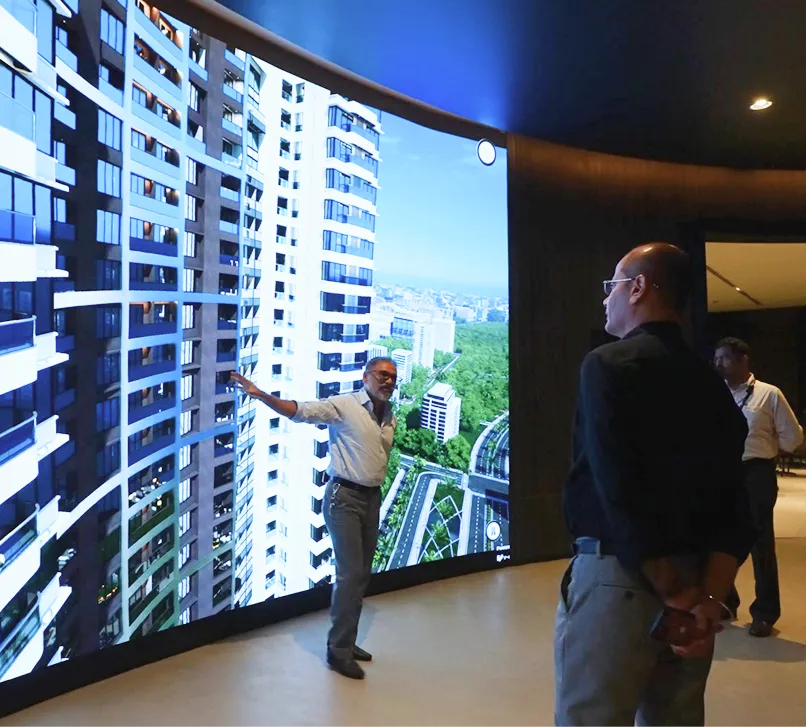
At Rustomjee Verdant Vista, the objective was to communicate location advantages across a 25 km catchment area and explain more than 75 amenities in a structured way. The experience centre became an interactive sales gallery where buyers could explore commute routes, landmarks, and amenity distribution through immersive proptech software.
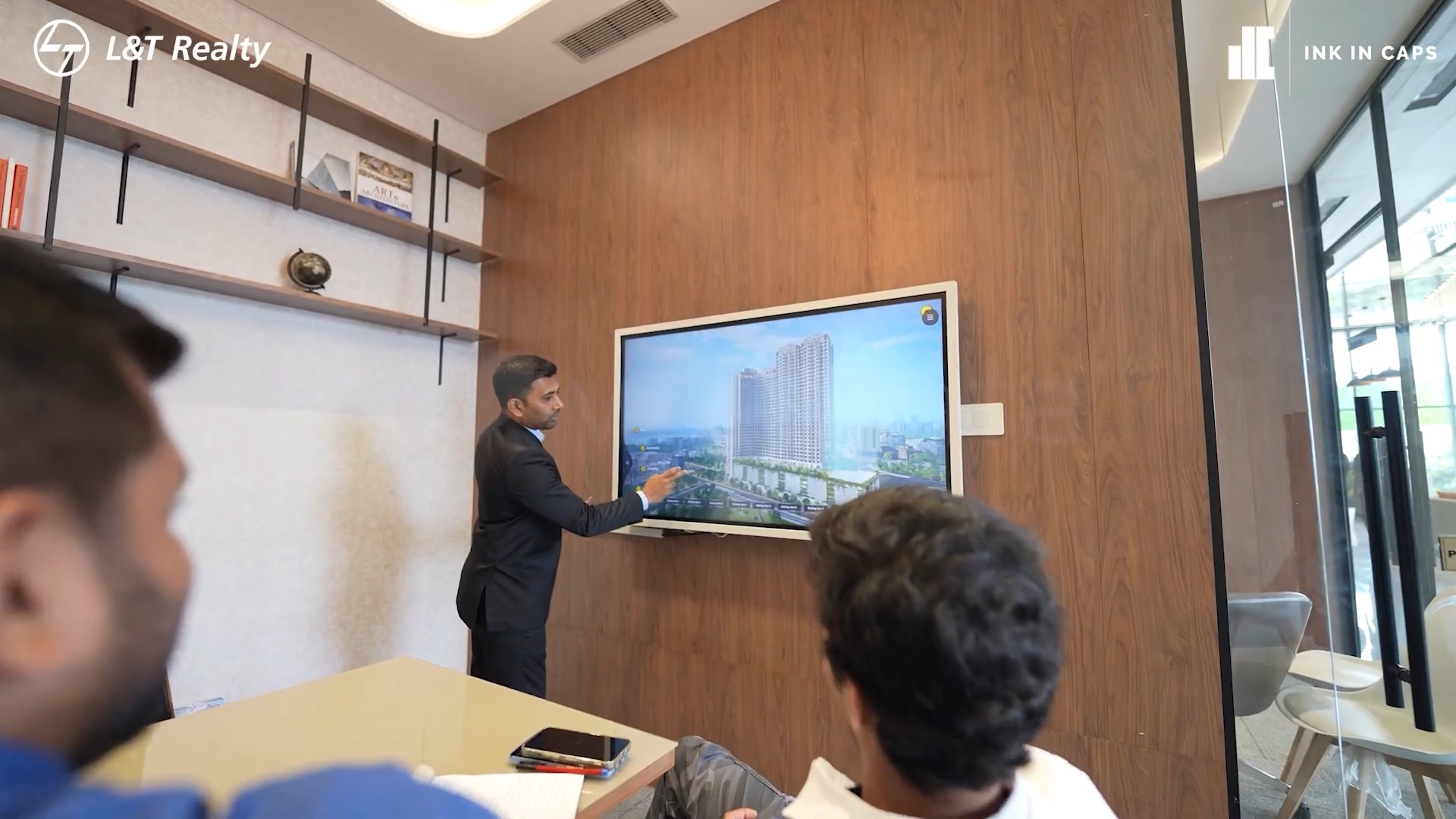
At L&T Island Cove, the focus was different. The project’s value came from Sea Link and mangrove views. The experience centre therefore emphasized immersive property walkthroughs showing real window perspectives from different floors and times of day.
For marketers, the lesson is simple: define whether your experience centre is meant to explain location, masterplan scale, lifestyle positioning, or unit experience. Then design technology around that purpose.
Use Immersive Proptech Software to Explain Location Context Clearly
Location is the strongest selling point in most residential projects, yet it is often explained through static maps.
A high-impact experience centre should use digital twin visualization and interactive vicinity mapping to make connectivity measurable.
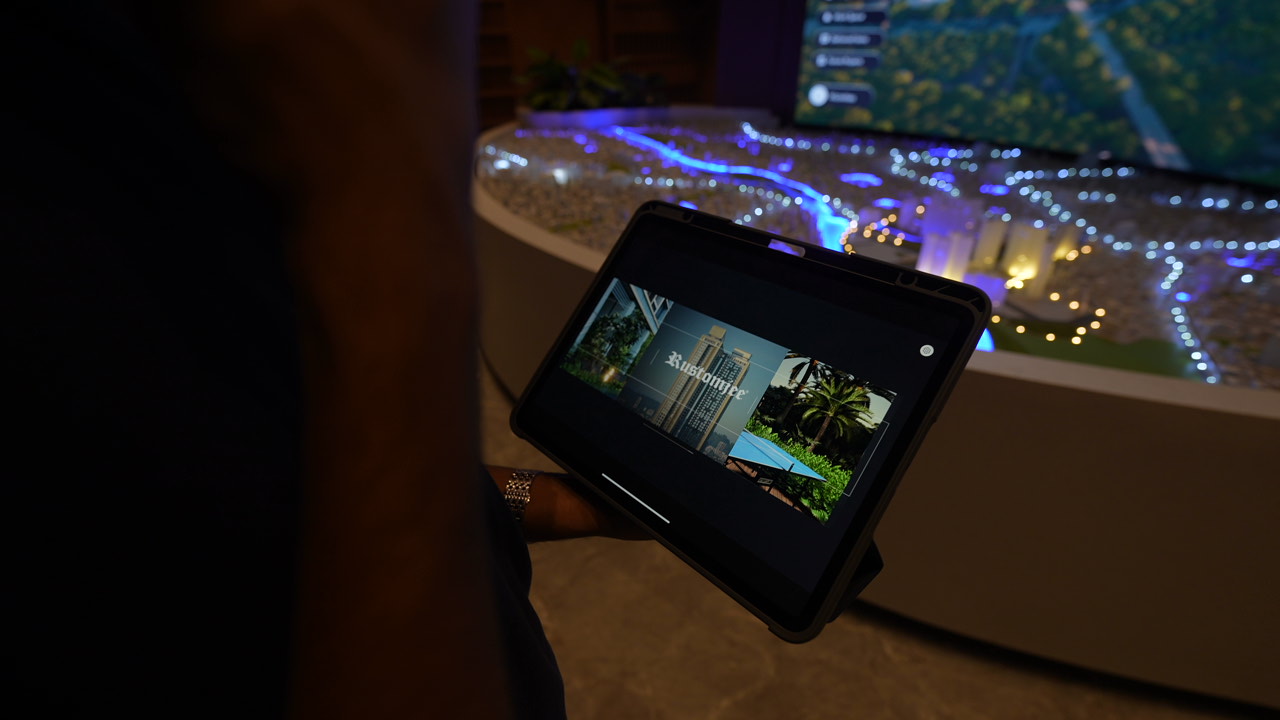
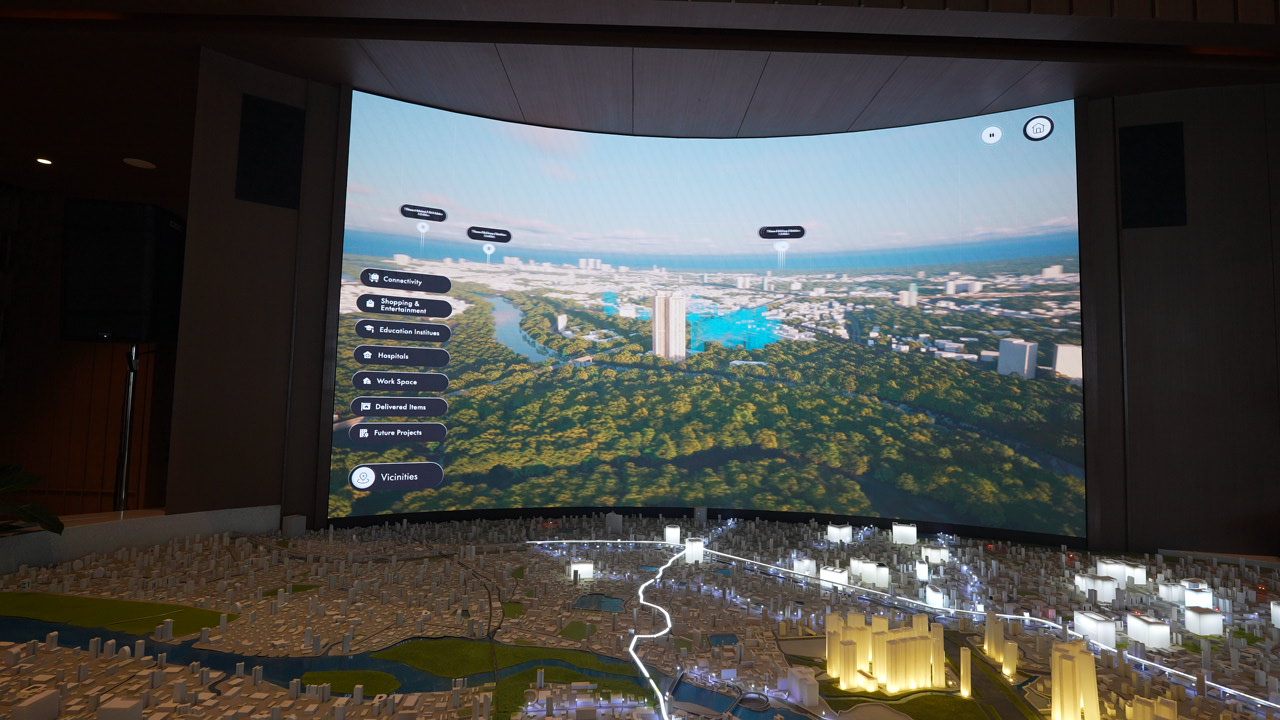
At Verdant Vista, a vicinity scale model with IoT integration and immersive proptech software showed:
Major highways and railway routes
Corporate and education hubs
Transit connectivity with real travel-time animations
Landmarks within a 25 km radius
This transformed location marketing into an interactive experience centre module where buyers could explore commute paths visually.
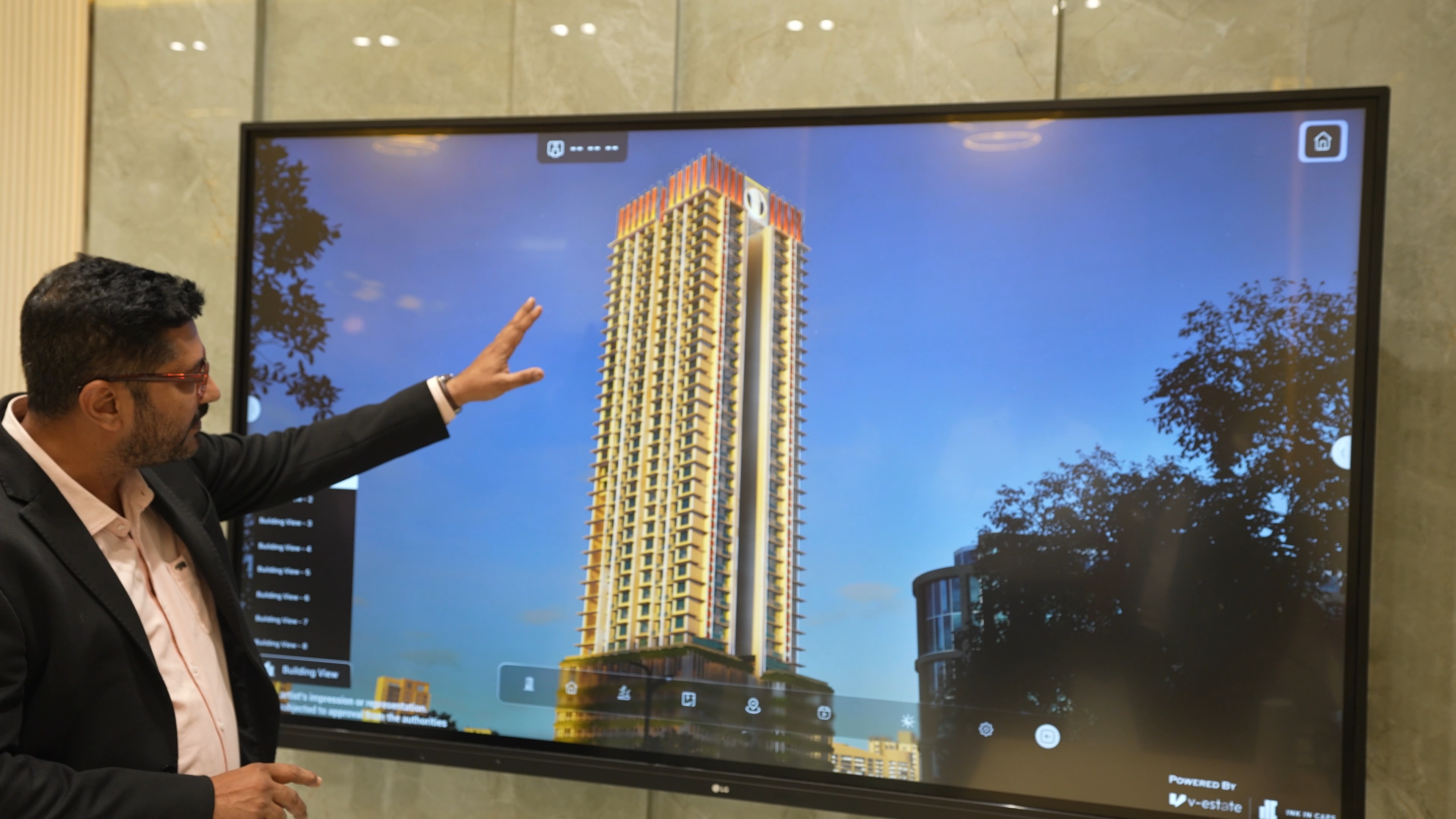
At Suraj Tower, immersive visualization highlighted views of Shivaji Park and the Arabian Sea, making location advantages emotionally tangible rather than abstract.
When location is demonstrated through immersive property walkthroughs, buyer trust increases significantly.
Make Masterplan Understanding the Core of Your Interactive Sales Gallery
Many residential projects struggle to communicate masterplan logic. Buyers see tower names and amenity lists but cannot understand how the project functions as a living environment.
A high-quality interactive sales gallery should use IoT-enabled scale models and real-time 3D visualization to explain:
Tower orientation and spacing
Amenity placement and accessibility
Podium and parking circulation
Landscape integration
At Verdant Vista, 75+ amenities were mapped interactively so buyers could navigate through recreation zones, clubhouse areas, and open spaces. Instead of reading lists, buyers experienced lifestyle planning visually.
At Island Cove, immersive proptech software modules allowed exploration of exteriors, amenities, vicinity, and interior units. This modular approach improved the depth of sales conversations and reduced repeated explanations.
For marketers, masterplan clarity is often the biggest conversion driver.
Bring Unit-Level Experience Into the Experience Centre
Buyers ultimately decide based on how their home will feel.
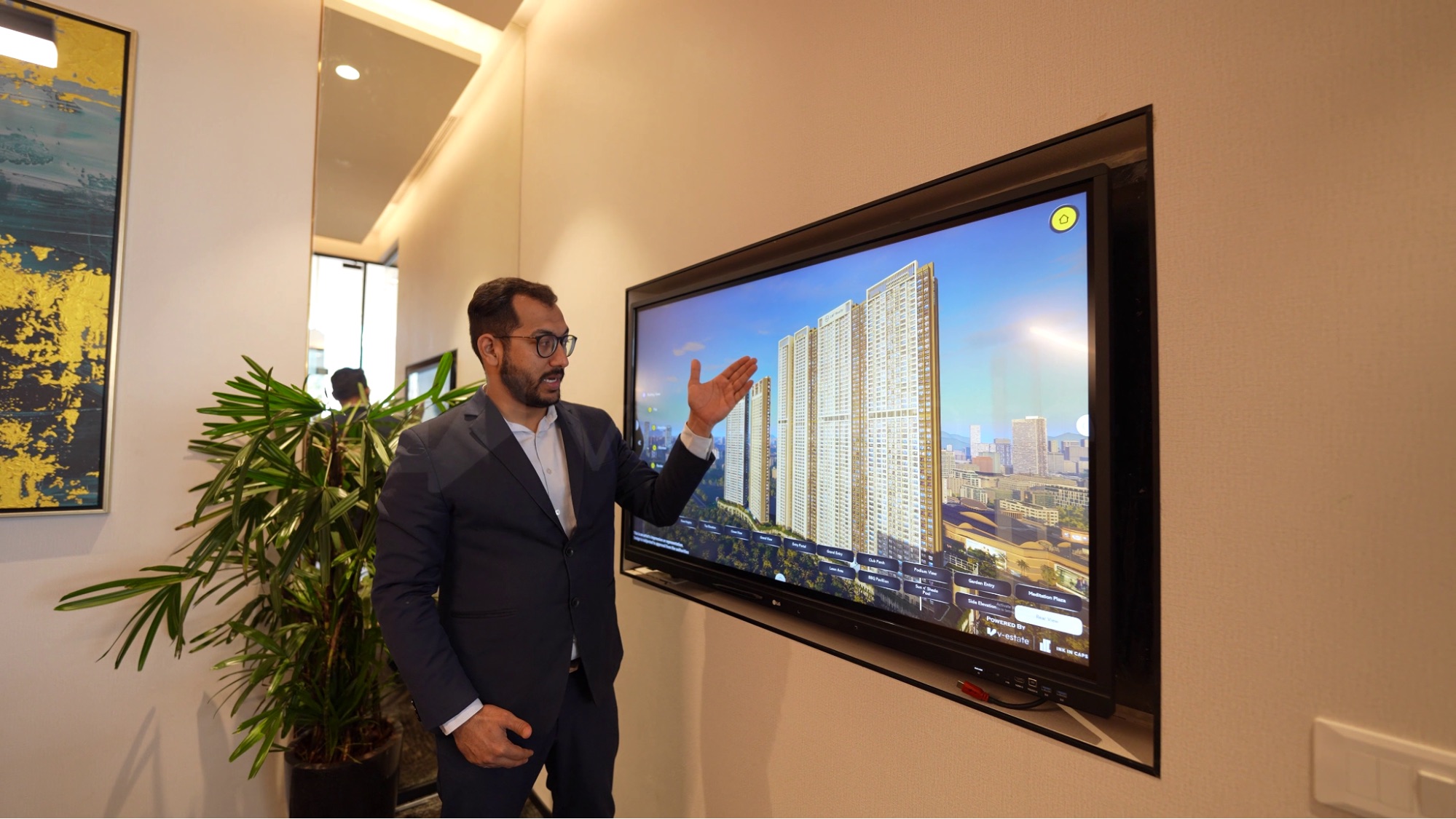
This requires immersive property walkthroughs powered by real-time digital twin visualization.
At L&T Island Cove, interior walkthrough modules allowed buyers to explore apartment layouts with real window views toward the Sea Link and mangroves. Lighting variations across different times of day helped buyers understand real living conditions.
At Verdant Vista, three interior unit walkthroughs were created to show layout usability and spatial flow before construction completion.
At Suraj Tower, immersive visualization explained compact yet premium layouts by combining interior walkthroughs with exterior context.
A strong real estate experience centre should always include unit-level immersive visualization to reduce uncertainty.
Structure the Experience Centre Flow for Consistent Storytelling
High-impact experience centres are designed as journeys, not as collections of displays.
A structured experience centre typically includes:
• Context Zone – Location and infrastructure storytelling • Masterplan Zone – IoT scale model and interactive visualization • Unit Zone – Immersive property walkthroughs • Discussion Zone – Detailed conversations and closing
At Verdant Vista, this structured flow helped the experience centre handle high visitor volumes while maintaining clarity.
At Suraj Tower, launching the experience centre ahead of construction helped build early engagement and strong recall value in a competitive Dadar micro-market.
Structure ensures that every buyer receives consistent information and that immersive proptech software is used effectively.
Ensure Sales Team Adoption and Technical Reliability
Even the best experience centre fails if sales teams do not use it consistently.
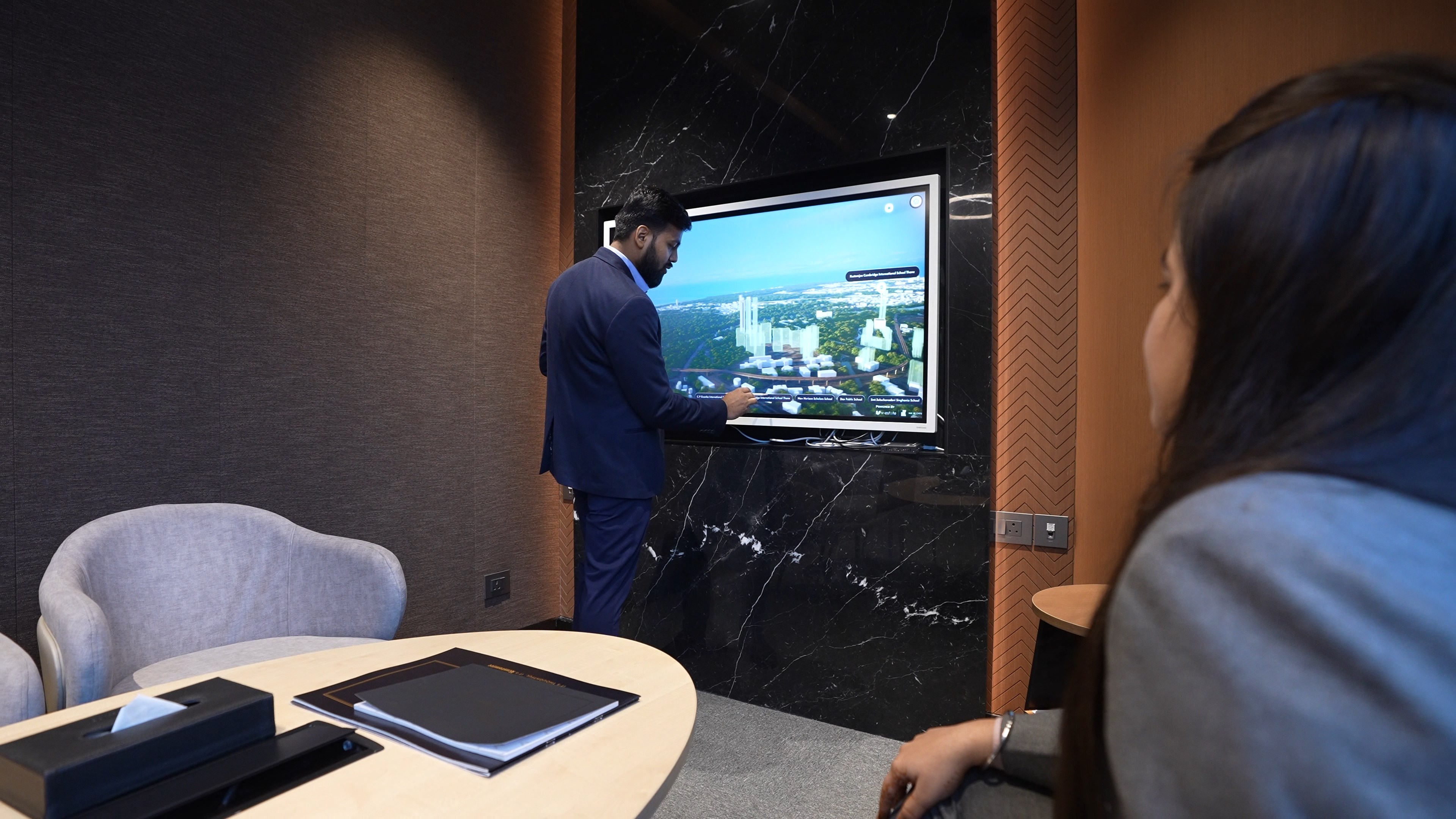
Across these projects, adoption improved when the interactive sales gallery tools were simple:
Touchscreen displays connected to real-time rendering systems
iPad-controlled immersive proptech software
LED display integration in waiting areas
Web-based versions for remote buyers
At Verdant Vista, the experience centre improved conversion ratios by around 30% because sales teams relied on the interactive software in every conversation.
At Island Cove, the success of the immersive property walkthrough platform led to its adoption for future project launches.
Reliability and usability are critical for any real estate experience centre design.
Conclusion
Experience centres are no longer optional marketing showcases. They are decision-making environments powered by immersive proptech software that help buyers understand location, masterplan logic, and unit experience clearly.
When marketers integrate interactive sales galleries, IoT scale models, and immersive property walkthroughs into a structured journey, experience centres become one of the strongest drivers of conversion in residential real estate.