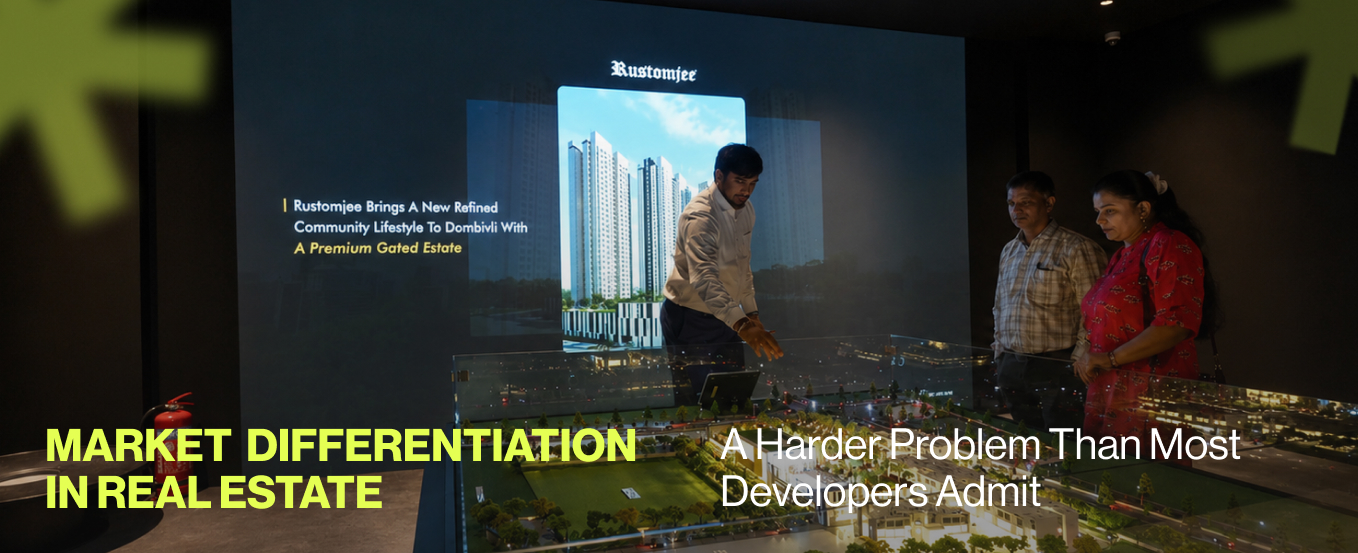
Every developer believes their project is different. Most buyers cannot tell the difference.
This is not cynicism. It is a structural reality of how real estate marketing has evolved — or rather, failed to evolve — over the past two decades.
Brochures look the same. Taglines sound the same. Model apartments are staged the same way. And buyers — making one of the largest financial decisions of their lives — are expected to see through the sameness and find a reason to commit.
Most do not. They delay, compare endlessly, and often buy from whoever follows up most persistently.
The Differentiation Problem Is Not About the Product
Here is an uncomfortable reality for most developers: your project may genuinely be better than the competition. Better construction quality, better design, better location advantages. But if the buying experience feels identical, the product quality becomes invisible.
Buyers do not have X-ray vision. They experience what you put in front of them. If what you put in front of them looks like every other developer's presentation, you are competing on price. That is a race with uncomfortable margins.
Purvankara Purva Panorama, Thane
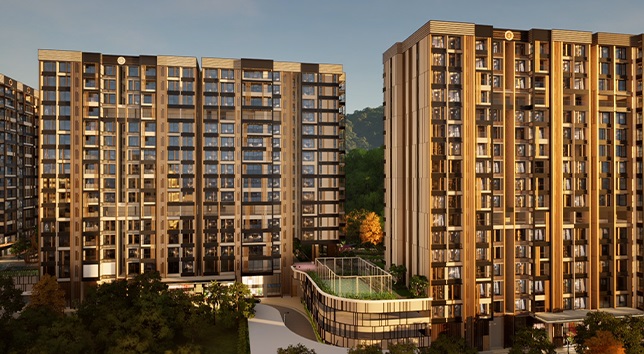
Puravankara | Purva Panorama | 12.75-acre luxury residential development | 3 towers, 55 floors | 90,000 sq. ft. landscaped podium | Thane
Puravankara — one of South India's most established developers — was making a strategic entry into Mumbai's highly competitive luxury residential market with Purva Panorama. Entering an established micro-market as a newer name in Mumbai requires more than product quality. It requires the ability to communicate that quality credibly and experientially — in a market where buyers are already familiar with established Mumbai developers.
V-Estate was brought in to help Puravankara establish an experiential foothold and project differentiation within Mumbai's rapidly evolving luxury residential landscape.
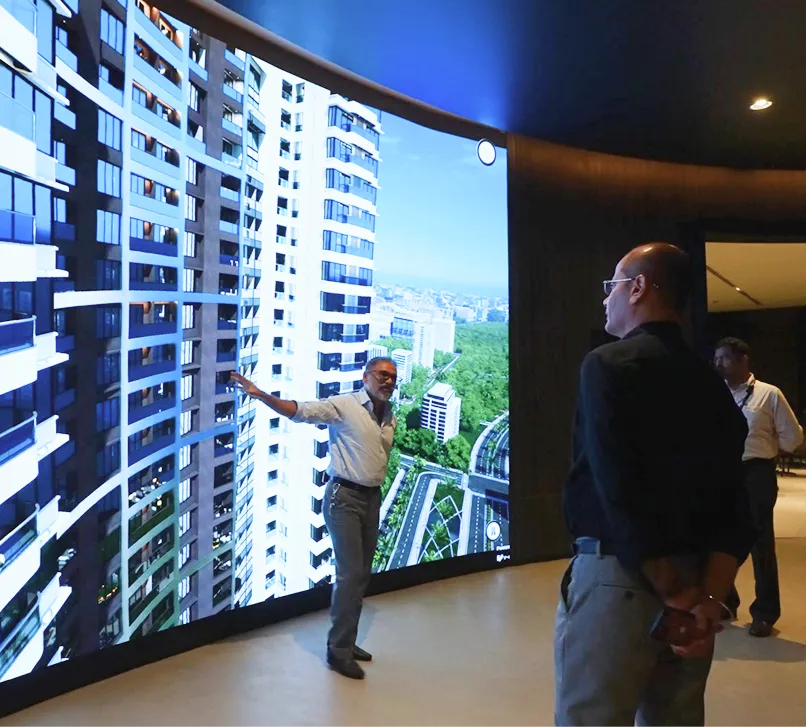
Landscape-Led Luxury Visualization: A central differentiation point was Purva Panorama's integration of the site's heritage banyan tree ecosystem within the podium planning. V-Estate's immersive visualization communicated how sustainability, landscape, and luxury living were seamlessly connected — a narrative that brochures could describe but never deliver.
Amenities and Openness Experience: Buyers could experience the 90,000 sq. ft. landscaped podium, heritage banyan plaza, infinity pool with mountain-facing views, elevated leisure decks, sports amenities, and outdoor event spaces through photorealistic real-time environmental visualization.
Retail and Lifestyle Visualization: The project's four-level retail high street was showcased through immersive visualization — including premium golden façade accents and reflective materiality recreated through advanced photorealistic texture workflows.
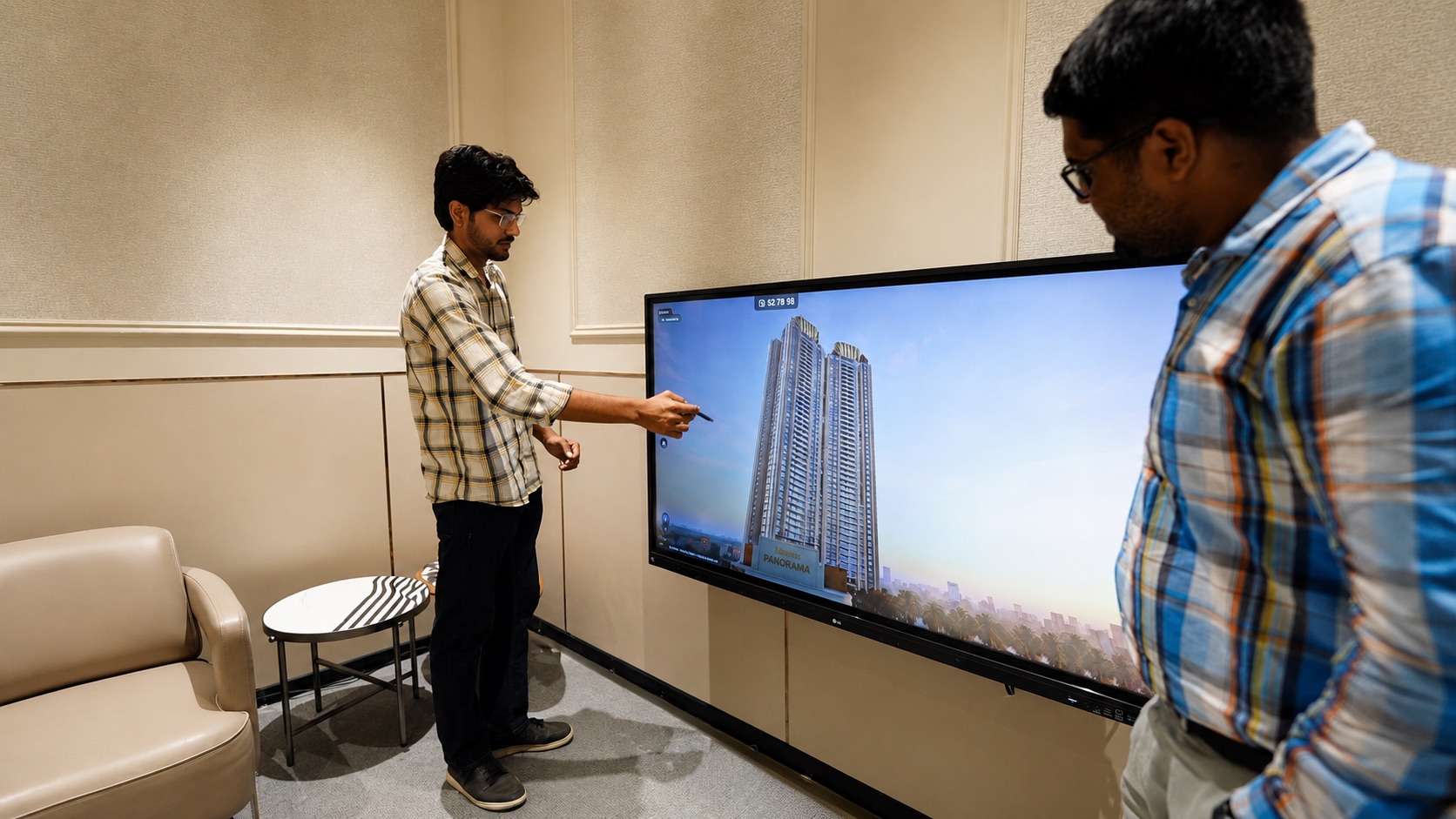
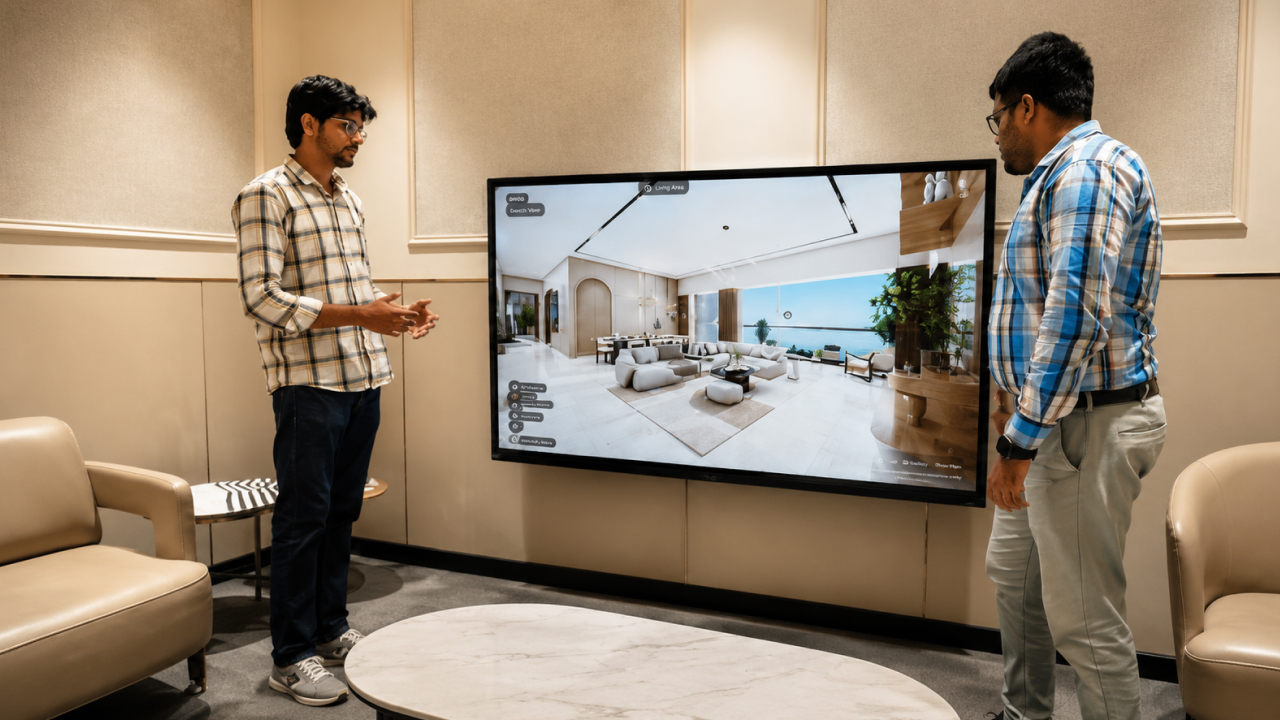
Interactive Sales Pod: A 65-inch touch-enabled display system enabled seamless navigation across architecture, landscapes, amenities, retail zones, and panoramic viewpoints during buyer presentations.
The complete immersive ecosystem was developed on Unreal Engine 5.7 with advanced Nanite and PCG workflows — and delivered within an accelerated 1.5-month turnaround timeline.
Results:
- Helped Puravankara establish a stronger experiential foothold within Mumbai's luxury residential landscape during their strategic expansion
- The immersive sales platform is actively driving 35+ high-intent interactive customer demonstrations daily
- Strong value communication of podium planning, retail integration, panoramic landscapes, and luxury lifestyle for prospective buyers
- Full photorealistic visualization, implementation, and deployment delivered within 1.5 months — critical for the market entry timeline
Location Context — The Most Undersold Differentiation Lever
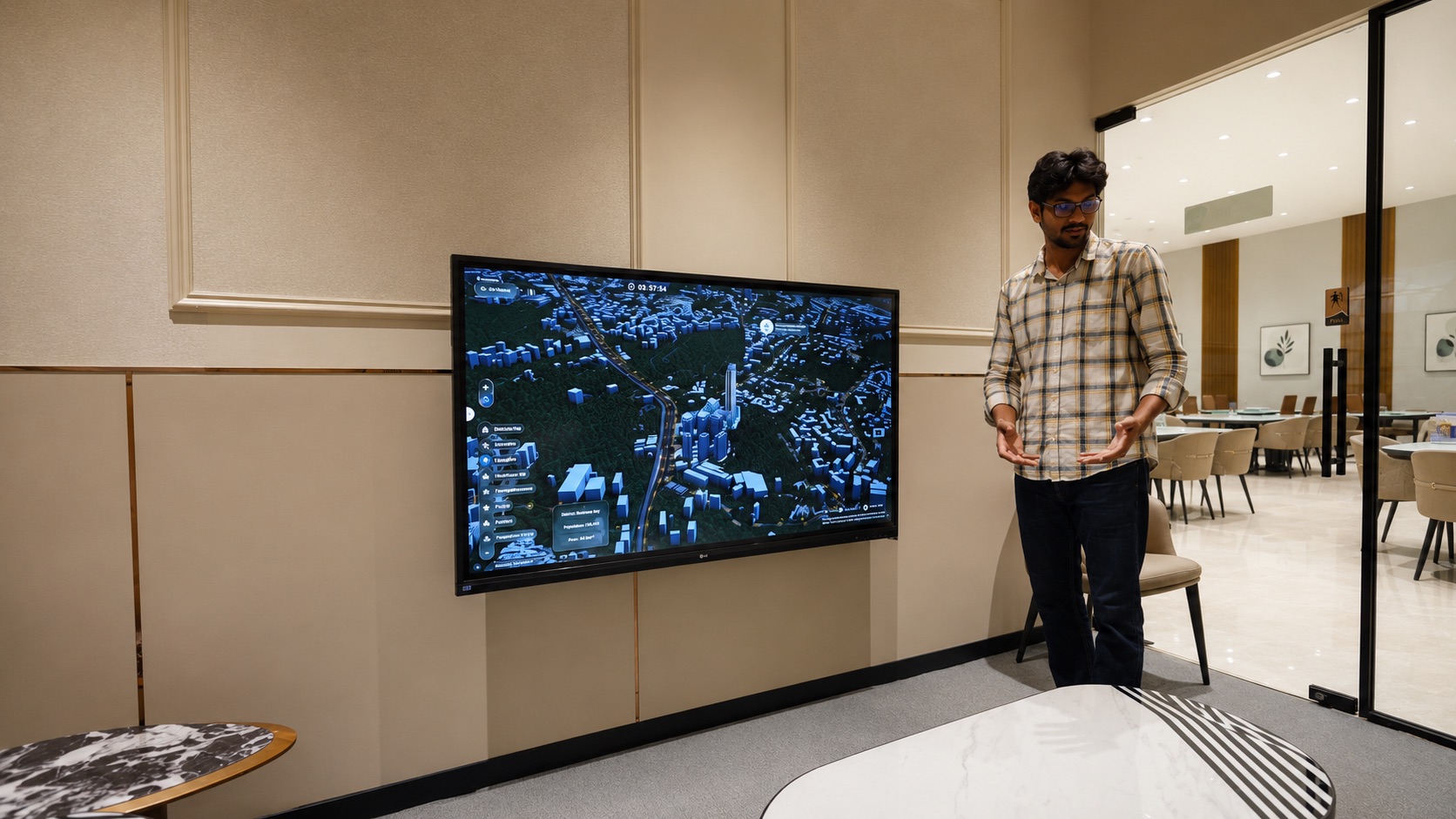
One of the most consistent gaps in real estate marketing is location storytelling. Developers invest heavily in the product. They rarely invest in communicating the ecosystem surrounding the product.
Connectivity. Upcoming infrastructure. Nearby facilities. Schools, hospitals, transit links — current and planned. Buyers are not just purchasing an apartment. They are buying into a neighborhood, a commute pattern, a lifestyle radius.
The developer who communicates this context clearly builds a level of buyer confidence that competitors showing only floor plans cannot match.
For projects like Purva Panorama — where mountain-facing views and landscape integration are core value propositions — visual proof of that context is not optional. It is the sale.
Amenity Communication Beyond the Checklist
Most developers communicate amenities as a list. Sometimes with renders. Rarely with any sense of lived experience.
A buyer reading an amenity list is not feeling the lifestyle. They are reading a checklist.
The project that wins is the one that communicates not just which amenities exist, but what life feels like with them. What does the infinity pool with a mountain view actually look like at 7 AM? How does the heritage banyan plaza function as a community space? These are questions that require visual experience — not bullet points.
What Genuine Differentiation Requires
Real differentiation in competitive real estate markets requires three consistent elements.
First: The ability to show more than what is physically finished. Pre-launch projects cannot rely on a completed show flat. The developer who delivers a photorealistic, experiential presentation during early sales has a significant advantage.
Second: Making the buyer a participant, not an observer. Differentiation happens when buyers feel engaged — when they are making choices and exploring, not passively absorbing information.
Third: Consistency between the sales experience and the product. When a buyer can see actual quality in detail before committing, the trust gap closes — and so does the price gap.
The Bottom Line for Developers and Marketing Heads
Differentiation is not a design problem. It is a communication problem.
Your project's genuine advantages — landscape integration, view quality, architectural identity, lifestyle planning — mean nothing if the buyer cannot experience them during the sales visit.
If your sales environment looks and feels like every competitor's, your product's quality is invisible. The developers winning in competitive markets are the ones who make their differentiation experiential — not just descriptive. Evaluate your current sales environment against that standard. The gap is where your conversion improvement lives.
.jpg)