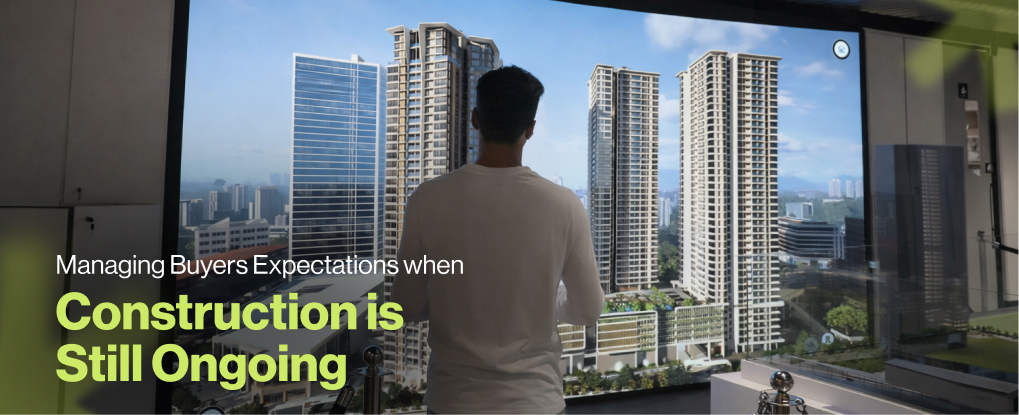
Buyers hesitate when they cannot see what they are paying for. Construction timelines shift. Site conditions change. Marketing promises clash with ground reality. The result is delayed decisions, canceled bookings, and eroded trust. Real estate developers need structured methods to bridge the gap between incomplete structures and buyer confidence.
Off-plan property sales, construction progress tracking, buyer visualization tools, sales centre activation, real estate lead conversion, immersive property presentation, site update communication, developer sales strategy.
%20(1).jpg)
The Core Problem Facing Developers Today
Visualization failure kills conversions. Buyers cannot judge space, light, or finish quality from floor plans. They imagine one thing. Reality delivers another. That mismatch triggers disputes, refunds, and reputational damage.
Communication inconsistency weakens trust. Sales teams provide different answers. Updates arrive sporadically. Buyers sense disorganization. They pull back or demand discounts to compensate for perceived risk.
Decision paralysis extends sales cycles. Uncertainty breeds delay. Buyers postpone deposits. They wait for construction milestones that may shift. Revenue forecasts miss targets. Cash flow suffers.
Structured Solution Framework for Developers
Adopt an offline immersive activation strategy combined with transparent progress documentation. Control the buyer experience inside the sales centre. Eliminate dependency on internet connectivity or third-party platforms. Provide buyers with agency over customization while maintaining contractual clarity.
Offline Immersive Visualization in Sales Centres
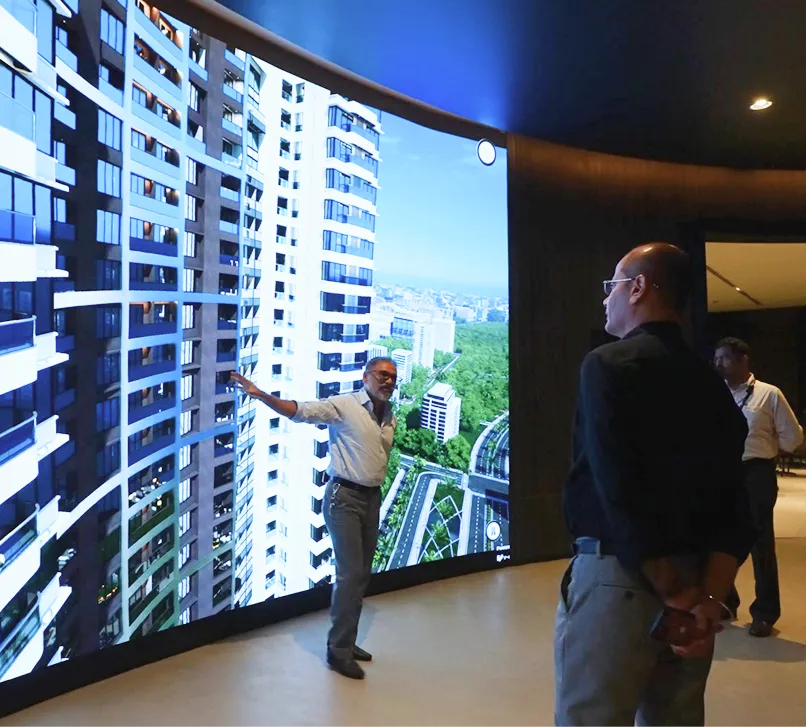
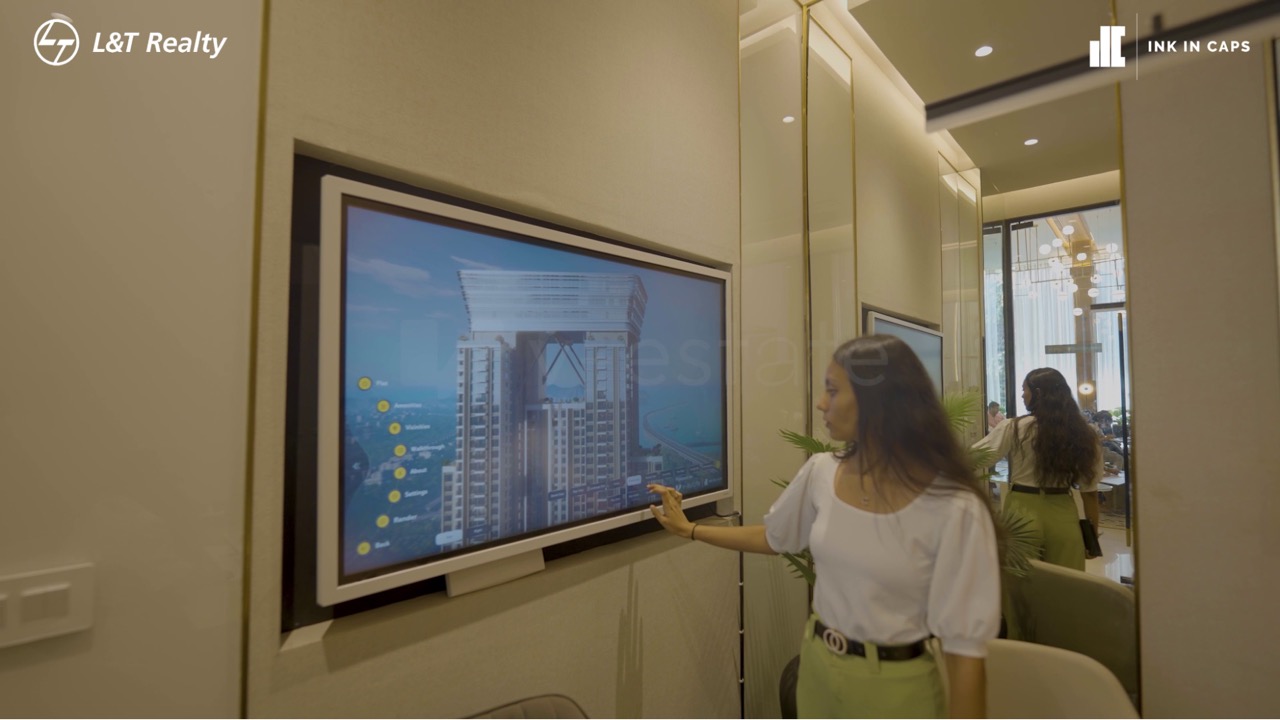
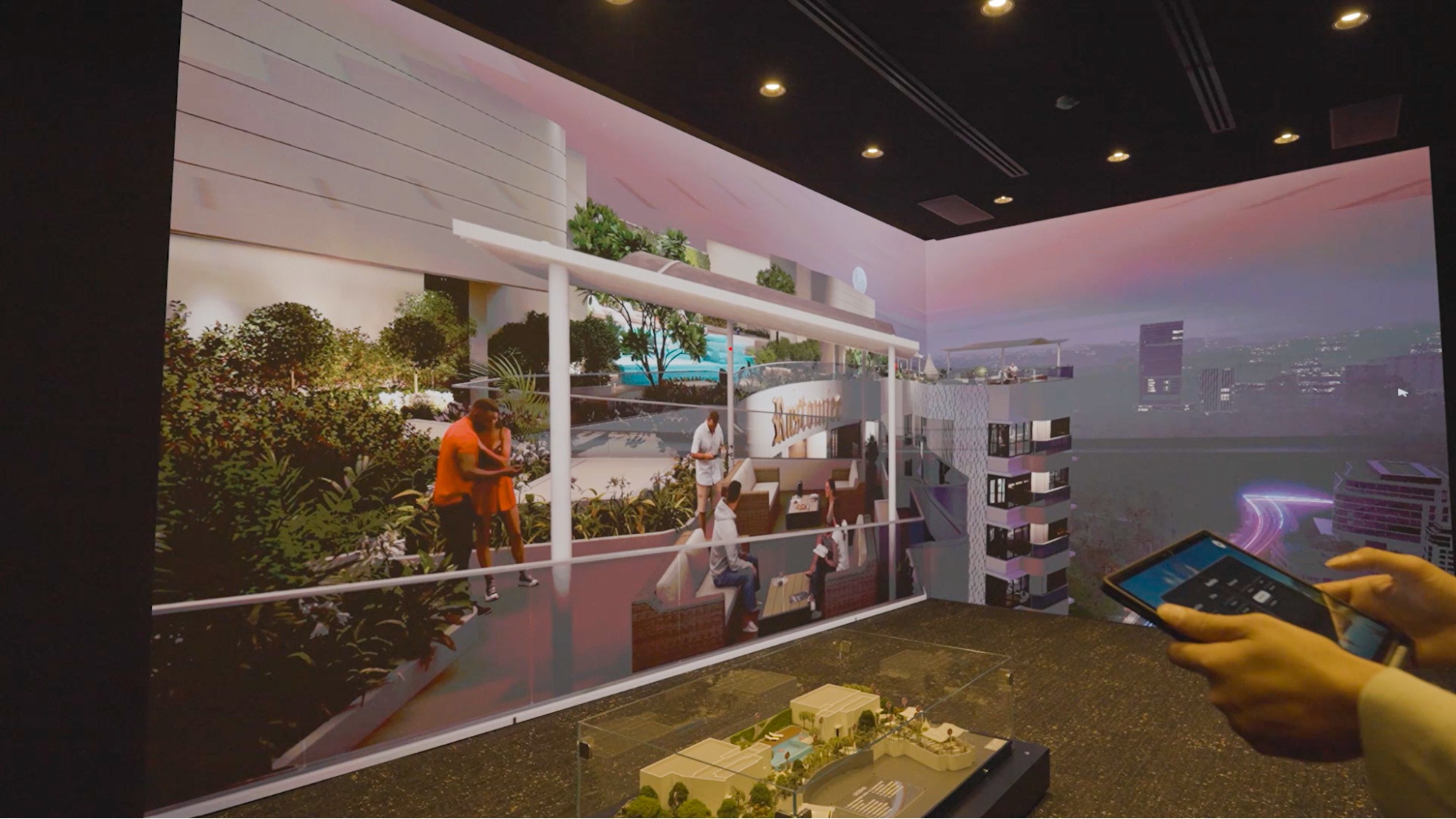
Deploy photorealistic 3D environments at the sales centre. V-estate delivers offline interactive show flats with complete control over finishes, furniture, lighting, and external views. Buyers explore properties without construction completion. They test configurations in real time.
Buyers operate the interface themselves. They select wall colors, flooring types, and furniture layouts. They adjust lighting to simulate morning sun or evening ambiance. They view window perspectives that reflect actual site surroundings. This hands-on control converts abstract promises into tangible decisions.
Offline operation removes technical barriers. No buffering. No internet dependency. No login friction. The experience runs smoothly during peak sales centre traffic. Buyers focus on the property, not the technology.
Standardized Site Progress Reporting
Create a fixed-format update template. Every report includes milestone name, completion percentage, dated photographs, and next milestone timeline. Keep the format consistent across all projects. Distribute updates weekly or bi-weekly.
Photographed evidence builds credibility. Date-stamped site images prove progress. Buyers see structural completion, glazing installation, and finishing work. Visual proof reduces perceived developer risk.
Predictable timing establishes reliability. Buyers expect updates on specific days. Consistency signals organization. It reassures buyers that the project is monitored and controlled.
Buyer Expectation Documentation
Issue a one-page signed expectation summary after every sales centre visit. Document unit finishes, handover date ranges, customization options, and unresolved items. Require buyer initials. Store the signed copy in CRM.
This document becomes a contractual reference. It limits scope for future disputes. It clarifies what was promised versus what was inferred. It protects both developer and buyer.
CRM integration ensures accessibility. Sales teams retrieve expectation sheets during follow-up calls. Legal teams reference them during contract finalization. Post-handover teams use them for quality verification.
Sales Team Playbook for Consistent Messaging
Equip sales teams with scripted responses for three scenarios: on-schedule progress, minor delays, and major delays. Train teams to use neutral language. Avoid promises beyond signed contractual clauses.
Neutral language example: "Current structural completion stands at 52%. Blockwork is scheduled for next month, subject to material delivery timelines."
Specific commitment example: "We will provide updated photographs of completed glazing on March 15."
Run weekly role-play sessions. Test team responses to common buyer objections. Reinforce the playbook through repetition. Measure adherence through mystery shopping.
Physical Progress Validation at Sales Centres
Install a progress board displaying current site photographs. Update the board weekly with dated images. Position it prominently in the sales centre lobby. Buyers see tangible evidence before entering sales discussions.
Calibrated photo journals support the board. Use consistent angles and lighting for comparative clarity. Show the same site view across multiple weeks. Progression becomes visible and measurable.
On-Site Customization Control
V-estate enables real-time finish selection inside the sales centre. Buyers choose tile patterns, cabinetry styles, and paint shades. The system generates instant visual previews. Selections export directly into contract addendums.
This reduces post-handover disputes. Buyers see their choices before committing. They understand finish limitations. Expectations align with deliverables.
Dynamic lighting and weather simulation add depth. Buyers view properties under morning sun, afternoon shade, or monsoon cloud cover. They assess natural light penetration and view quality across seasons.
Metrics for Measuring Impact
Track these conversion indicators monthly:
Lead-to-site-visit conversion rate
Site-visit-to-deposit conversion rate
Average decision time from first visit to deposit
Buyer satisfaction scores at 30 and 90 days post-handover
Dispute frequency related to expectation mismatch
Adjust update frequency and visualization depth based on observed trends.
Relevance to Marketing and Development Leadership
Marketing heads reduce funnel leakage. Clear visualization and structured communication improve campaign ROI. Lead quality rises. Cost per acquisition drops.
Developers minimize legal exposure. Documented expectations and signed acknowledgments reduce contractual disputes. Photographic logs provide warranty defense.
Sales leaders compress decision cycles. Standardized tools and scripts reduce sales training time. Forecast accuracy improves. Revenue predictability increases.
Common Implementation Pitfalls
Sporadic updates erode credibility. Solution: Automate the weekly report template. Assign ownership to a project coordinator.
Overpromising finishes triggers disputes. Solution: Tie all buyer selections to signed expectation sheets attached to contracts.
Outdated sales centre content confuses buyers. Solution: Sync V-estate configurations with available construction options monthly.
Start Small and Scale Based on Data
Pilot the offline immersive activation in one sales centre. Deploy V-estate's photorealistic 3D show flats. Implement weekly progress reports. Run the pilot for three weeks. Measure conversion lift and decision time reduction. Use results to scale across remaining sales centres.
Buyers decide faster when they control the experience. Offline immersive visualization removes uncertainty. Structured progress reporting builds trust. Documented expectations reduce disputes. Implement the system. Measure the impact. Scale the results.
Evaluate your current sales centre setup. Identify one project launching in the next quarter. Deploy an offline immersive experience with structured progress reporting. Track conversion metrics. Use the data to inform rollout decisions across your portfolio.