Luxury real estate has entered a new phase of evolution, where perception is no longer driven by static imagery or verbal persuasion but by immersive clarity.
Today’s buyer does not rely on imagination to interpret a space. They expect to experience it.
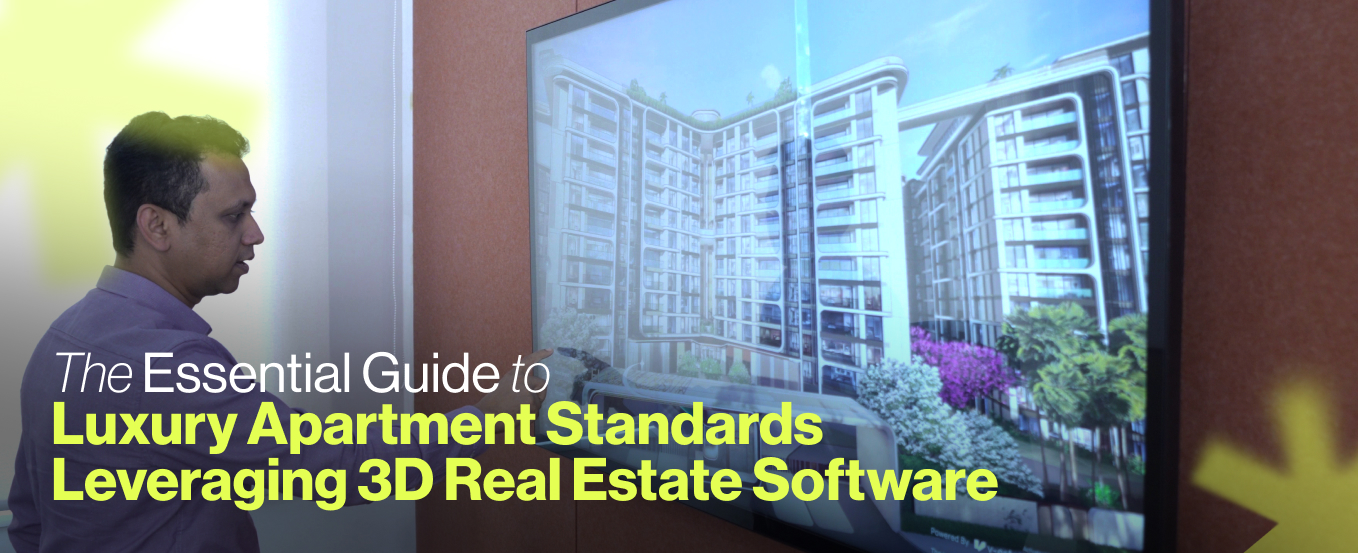
This shift has led to the rapid adoption of virtual luxury home tours, where high-fidelity environments allow buyers to navigate, evaluate, and validate properties before they are built. What began as a visualization layer has now become a decision-making environment.
From 3D virtual luxury home tours to full-scale 3D real estate software ecosystems, the industry is moving toward a model where every detail can be explored, understood, and experienced in real time.
And in this environment, the definition of luxury itself has changed.
The New Framework of Luxury Living
Luxury today is not defined by individual features. It is defined by how seamlessly multiple layers come together to create a cohesive living experience.
At its core, modern luxury operates across three interconnected dimensions.
The Home
Premium finishes are no longer just visual upgrades but are engineered for long-term durability, tactile richness, and consistent performance across everyday use
Smart home systems are deeply integrated into the architecture, enabling centralized control over lighting, temperature, and security without disrupting the aesthetic of the space
Appliances and fixtures are selected not only for design harmony but for operational efficiency, ensuring that daily routines feel effortless rather than mechanical
The Community
Wellness infrastructure such as gyms, yoga studios, and recovery spaces is designed to function as an extension of the home rather than a secondary amenity
Social environments like lounges, rooftop decks, and clubhouses are structured to encourage organic interaction without compromising privacy
Shared spaces are curated with intentionality, ensuring that every zone serves a distinct purpose within the larger residential ecosystem
The Service Layer
Concierge systems are designed to handle both routine and complex requests, reducing cognitive load for residents and enhancing overall convenience
Security frameworks combine controlled access, surveillance systems, and smart entry solutions to create a seamless yet highly secure environment
Logistics infrastructure such as package management and service coordination ensures that daily operations within the building remain frictionless
Luxury, in its modern form, is the synchronisation of these layers.
The Foundation of Experience: Architectural Precision
The quality of a luxury residence begins with its design intelligence.
Spatial Planning and Flow
Open floor layouts are designed to maximize flexibility, allowing spaces to adapt to different use cases without structural constraints
High ceilings amplify spatial perception, creating a sense of openness that directly impacts how a home is experienced over time
Large-format windows are strategically positioned to enhance natural light penetration, reducing dependency on artificial lighting while improving overall ambience
Material and Finish Quality
Flooring materials such as hardwood or engineered planks are selected for their durability, texture, and ability to age gracefully over time
Kitchen and bathroom surfaces use high-performance materials like quartz or stone, combining resilience with refined visual appeal
Every edge, joint, and finish is executed with precision, ensuring that craftsmanship is visible in both macro- and micro-details.
Integrated Storage Solutions
Walk-in closets are designed to optimize accessibility, organization, and spatial efficiency without compromising aesthetics
Built-in storage systems are seamlessly integrated into the architecture, eliminating the need for aftermarket solutions
Design is no longer about appearance. It is about performance.
Engineering Everyday Functionality
A luxury home must operate with precision in everyday use.
Kitchen Performance Systems
Fully integrated stainless steel appliance suites ensure consistency in design while delivering high-performance functionality across cooking, storage, and cleaning
Layouts are engineered to minimize movement inefficiencies, allowing for a smoother and more intuitive cooking experience
Cabinetry and storage are designed to conceal complexity while maintaining accessibility
Cleaning and Maintenance Systems
High-efficiency dishwashers and cleaning systems are embedded within cabinetry, ensuring that utility does not disrupt visual continuity
Surfaces are selected for low maintenance without compromising on premium appearance
Laundry Integration
In-unit washer and dryer systems are designed to deliver full-scale functionality while occupying minimal visual footprint
Placement and accessibility are optimized to ensure convenience without interrupting spatial flow
Functionality in luxury living is invisible yet essential.
Smart Living and Controlled Comfort
Modern homes are designed to respond to their residents.
Intelligent Technology Integration
Smart thermostats adapt to usage patterns, optimizing energy consumption while maintaining comfort
Centralized control systems allow residents to manage multiple aspects of the home from a single interface
Access and Climate Systems
Keyless entry solutions provide seamless access while enhancing security
Central air conditioning systems deliver precise climate control across different zones within the home
Spaces for Relaxation
Deep soaking tubs are designed to support physical recovery and relaxation
Private balconies extend the living space outdoors, offering a transition between interior comfort and external views
Comfort is now an actively managed experience.
Wellness as a Built-In System
The modern luxury buyer expects wellness to be embedded into daily life.
Fitness Infrastructure
State-of-the-art gyms are equipped to support both strength training and functional fitness routines
Dedicated yoga and movement studios enable holistic wellness practices within the residential environment
Aquatic and Leisure Environments
Resort-style pools are designed for both leisure and performance, accommodating a wide range of user needs
Recovery and Restoration
Spa facilities, saunas, and steam rooms provide structured environments for recovery and relaxation
These spaces are designed to complement daily routines rather than function as occasional luxuries
Wellness is no longer an amenity. It is infrastructure. Social and Leisure Ecosystems
Luxury living extends into how people connect and interact.
Outdoor Social Spaces
Rooftop decks and open-air lounges are designed for both intimate gatherings and larger social interactions
Features like fire pits create focal points that naturally encourage engagement
Indoor Community Zones
Resident lounges are structured to support informal interactions, meetings, and shared experiences
Clubhouses act as central nodes within the community, bringing together multiple functions under one roof
Entertainment Infrastructure
Screening rooms provide cinematic viewing experiences within the residential environment
Dedicated refreshment areas such as coffee bars enhance usability and convenience
The design of social spaces directly influences community experience.
The Rise of the Residential Workspace
The integration of work into residential environments has become essential.
Professional Coworking Spaces
High-quality coworking environments replicate the functionality and design of premium office spaces
These spaces support productivity without requiring residents to leave the building
Privacy and Focus Systems
Dedicated meeting rooms provide environments for calls, presentations, and focused work
Acoustic and spatial design ensure minimal distractions
Business Support Infrastructure
Fully equipped business centers enable residents to manage professional tasks efficiently
These facilities support hybrid and remote work models without compromise
The home is now a workplace.
Sustainability and Specialized Living
Modern luxury integrates responsibility alongside comfort.
Pet-Friendly Infrastructure
Dedicated pet parks provide safe and engaging environments for exercise
Grooming and washing stations simplify maintenance for pet owners
Eco-Conscious Systems
Electric vehicle charging stations support the transition to sustainable mobility
Rainwater harvesting systems optimize resource utilization
Solar lighting solutions reduce energy consumption across shared spaces
Sustainability is embedded into the living experience.
Service Systems That Enable Peace of Mind
The most impactful aspects of luxury are often invisible.
Concierge and Support
On-site and virtual concierge services manage daily requirements, from bookings to logistics
These systems reduce the operational burden on residents
Security Frameworks
Controlled access points ensure that entry is both seamless and secure
Surveillance systems provide continuous monitoring without intrusion
Logistics and Package Management
Secure handling systems ensure that deliveries are managed efficiently
Smart lockers and coordinated services eliminate inconvenience
Convenience is engineered, not assumed.
Seamless Mobility and Accessibility
Mobility has become a defining aspect of residential experience.
Structured Parking Systems
Controlled-access garages ensure security and ease of use
Layouts are designed to minimize congestion and improve flow
Electric Mobility Infrastructure
EV charging systems are integrated into the building infrastructure
This supports long-term sustainability goals
Alternative Transport Systems
Designated zones for rideshare pickups streamline movement
Bicycle storage and sharing systems promote flexible mobility options
Mobility is now part of the luxury equation.
Lifestyle Curation Beyond Infrastructure
Luxury today extends into curated experiences.
Integrated Retail and Dining
In-building cafés and restaurants reduce dependency on external infrastructure
Retail spaces provide convenience without compromising exclusivity
Community Engagement
Planned events create opportunities for interaction and connection
These initiatives strengthen the social fabric of the community
Enrichment and Culture
Workshops, classes, and curated installations enhance everyday living
These elements transform residential spaces into cultural environments
Luxury is increasingly experiential.
Why Traditional Sales Cannot Keep Up
Despite the sophistication of these developments, most sales processes remain outdated.
Buyers are still expected to:
Interpret floor plans without spatial context
Imagine lighting conditions without real validation
Understand lifestyle ecosystems through static descriptions
This creates friction. And friction delays the decision-making process.
From Visualization to Validation with 3D Luxury Home Tours
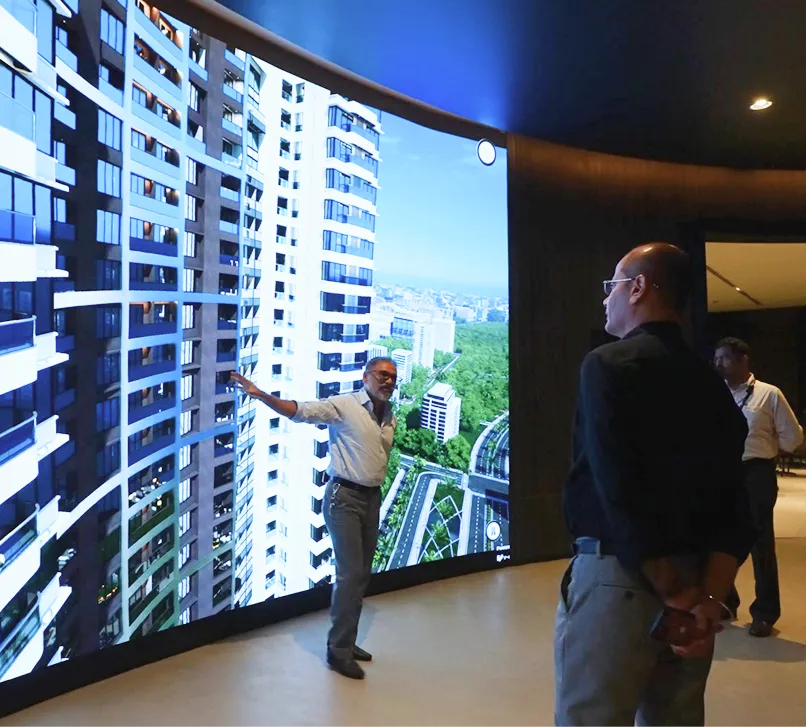
This is where 3D luxury home tours and VR tour real estate experiences are transforming the industry.
Instead of explaining, developers can now demonstrate.
Buyers can navigate entire developments using 3D virtual home tour environments
Lighting, views, and spatial relationships can be validated in real time
Layouts and configurations can be explored interactively
The entire ecosystem can be experienced as a unified system
This is why luxury homes' 3D tours are becoming the new standard.
The Role of Advanced 3D Real Estate Software
The effectiveness of these experiences depends on the technology powering them.
The best 3D tour software today, like V-Estate’s Spaci enables the following:
Real-time rendering of high-fidelity environments without latency
Accurate simulation of natural light, materials, and spatial proportions
Seamless navigation across units, amenities, and surrounding infrastructure
Integration across multiple platforms, including experience centres, web, and remote versions.
This is not just visualization. It is infrastructure.