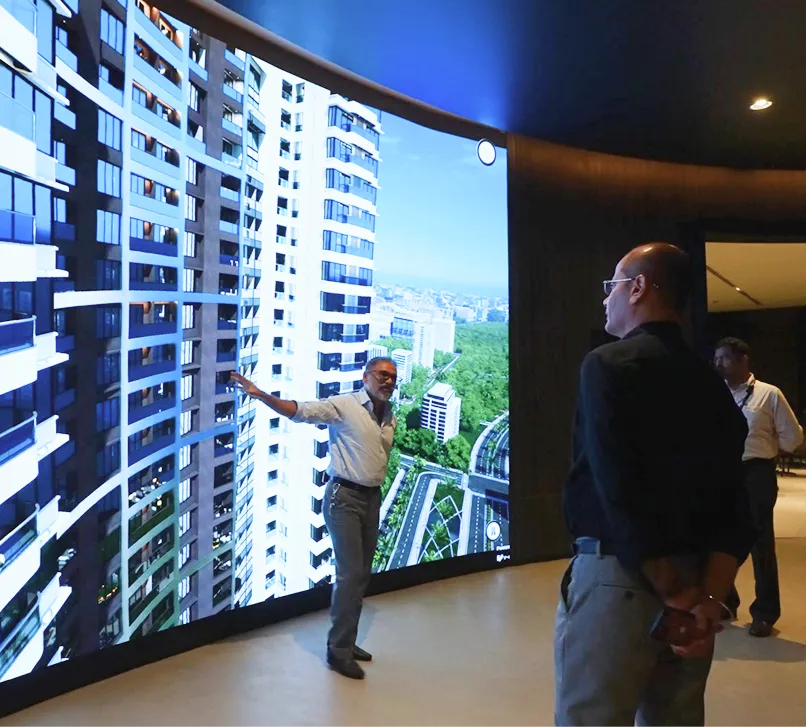
Buyers hesitate when they cannot picture their future home. This visualization gap costs developers weeks of extended sales cycles and lost leads to competitors. Offline interactive 3D visualization bridges this gap directly.
The problem is straightforward: static renderings and floor plans fail to convey the tactile reality of living in a space. Prospects cannot assess furniture scale, window light quality, or how their personal aesthetic choices translate into the actual property. This uncertainty delays purchase decisions and weakens conversion rates.
V-estate addresses this with offline activation—immersive, photorealistic 3D environments that let prospects customize interiors in real-time without internet dependency. No guesswork. Just tangible, interactive previews that build buyer confidence at the moment it matters most.
The Real Cost of Visualization Uncertainty
Developers face measurable friction in the current sales process:
Buyers cannot visualize personal fit. Floor plans show dimensions, but dimensions alone tell an incomplete story. Prospects need to mentally occupy the space—to imagine their sofa against a wall, their morning coffee by the window, their evening light quality as the sun sets.
Physical mockups drain budgets. Sample flats require construction, maintenance, and staffing. A single display unit across multiple project phases represents significant capital expenditure with declining ROI as the project matures.
Site visits generate low conversion output. Marketing teams invest heavily in scheduled tours. Many attendees lack serious purchase intent. Even serious prospects often forget spatial details between the site visit and decision-making conversations with family.
Sales cycles stretch unnecessarily. Marketing handoff to sales is inefficient when prospects carry incomplete mental models of the property. Follow-up communications rehash basic visualization questions instead of progressing toward close.
These gaps create predictable losses: extended decision timelines, higher customer acquisition costs, and leads captured by developers offering clearer, faster visualization pathways.
Offline Activation: Core Mechanics and Differentiation
Offline systems operate independently of internet connectivity. This distinction matters operationally.
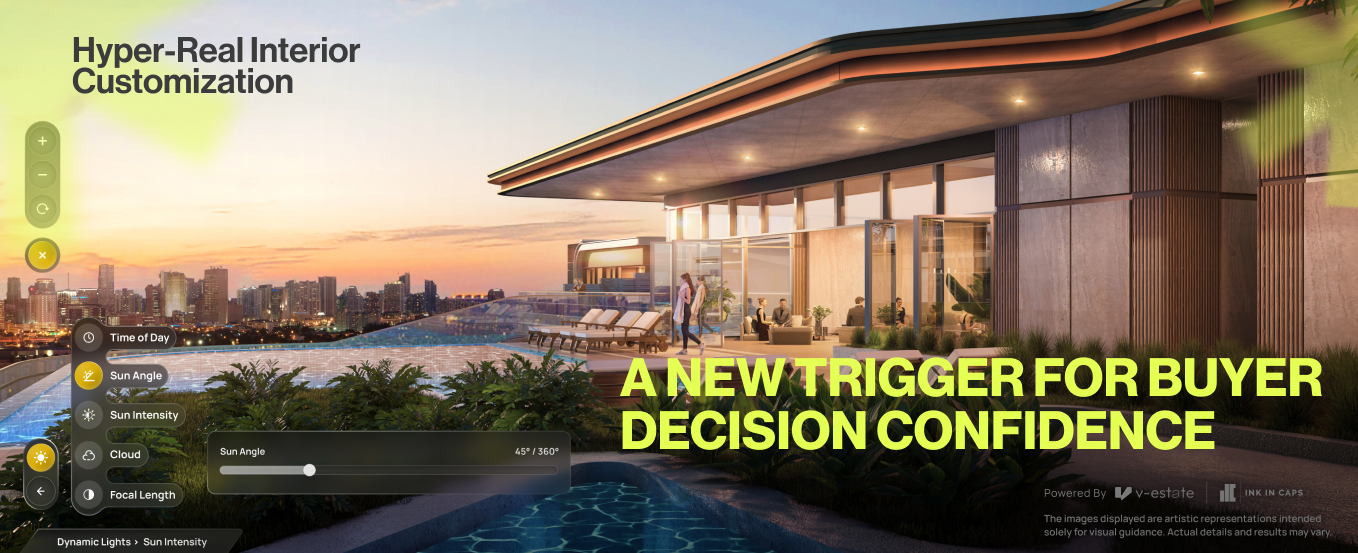
Photorealistic rendering creates lifelike 3D show flats. Textures match real materials. Lighting reflects actual physics. Prospects see minute details: how afternoon sun streams across the living room floor, how reflective finishes catch light on kitchen surfaces, the exact color saturation of wall paints under different times of day.
Interactive customization layers let prospects adjust four critical dimensions:
Interior finishes. Paint colors shift in real-time across walls and reflect appropriately on adjacent surfaces. Flooring materials change texture and color. Prospects compare schemes instantly without relying on paint chips or imagination.
Furniture placement and scale. Sofas, dining tables, and decor elements populate the space. Prospects verify proportions against actual room dimensions. They test multiple layouts, identify traffic flow challenges, and confirm aesthetic cohesion.
Dynamic lighting controls. Morning sunlight, midday brightness, golden-hour warmth, and evening ambient lighting each transform the space differently. Weather simulations show how the property performs during rain, overcast conditions, and clear skies. Prospects experience the property's actual light behavior across time.
Amenity mapping with context. The tool integrates nearby schools, retail, healthcare, and transit connectivity into an interactive map overlay. Prospects zoom into specific neighborhoods, identify walkability distances, and see upcoming developments that affect future property value and lifestyle convenience.
All elements render on dedicated tablets or large displays at the sales site. Staff guide prospects through customization in live, real-time sessions. No loading delays. No internet interruptions.
How Offline Activation Reshapes Sales Workflows
Deployment is straightforward. Load the project 3D model on offline hardware before the sales session begins. During client meetings, guide prospects through an amenity walkthrough, then enable customization controls. As prospects adjust paints, furniture, and lighting, they see changes update across all interior views simultaneously. Export their personalized render as a PDF or image file for their records—a tangible takeaway that reinforces emotional purchase intent.
Training requirements are minimal. Sales teams learn the tool in under one hour. No technical expertise needed. The interface follows intuitive principles: tap a color swatch to change paint, drag furniture to reposition, slide lighting controls to simulate time of day. Integration with existing CRM systems captures prospect preferences for follow-up conversations.
Marketing metrics reveal decision patterns. Time spent in customization correlates strongly with purchase probability. Prospects who linger on furniture selection and lighting adjustments progress to close at measurably higher rates than those who skip customization. This data informs follow-up strategy and identifies high-intent leads.
Measurable Business Impact for Developers
Real estate professionals report consistent outcomes after implementation:
Conversion acceleration. Lead-to-sale timelines compress from weeks to days in many cases. Prospects who customize interiors demonstrate clear purchase signals. Sales teams close deals 25-40% faster compared to floor-plan-only presentations.
Cost reduction across marketing. Sample flats can be decommissioned after the initial sales phase. Physical staging needs drop by 70%. Staff time spent on repetitive site explanations decreases substantially. These reductions compound across multiple projects.
Lead quality improves. Prospects who invest time customizing interiors tend to be serious buyers. Tire-kickers and looky-loos self-filter. Conversion from qualified lead to closed deal strengthens noticeably.
Customer retention and referral potential increase. Post-sale, share customized renders with owners for their records. These tangible visualizations of "their" property—with their chosen colors, their selected furniture, their preferred lighting—create emotional artifacts that prompt organic referral activity. Satisfied owners become natural promoters.
Implementation: From Launch to Scale
Phase one establishes the foundation. Develop a comprehensive 3D model of your project, including accurate floor plans, ceiling heights, and material specifications. Load this onto offline devices deployed in your primary sales location.
Phase two integrates sales processes. Train your team. Create a script for the customization walkthrough. Identify which prospect segments benefit most from extended customization sessions versus quick-view tours. Establish CRM protocols for capturing customization preferences.
Phase three scales across portfolio. Once proven at one location, replicate the system across additional projects and sales sites. Customize models for each property's unique architecture, neighborhood context, and target buyer profile.
Relevance to Current Buyer Expectations
Urban property buyers increasingly demand personalization options. Post-pandemic purchasing patterns show clear priority shifts: lifestyle fit and space customization outrank square footage as decision drivers. Buyers expect technology-enabled previews to be standard practice, not premium differentiators.
Pressure mounts to reduce physical visit friction. Prospects prefer concentrated, efficient sales interactions over multiple site visits. Offline visualization delivers complete property comprehension in single sessions, respecting buyer time constraints.
Preference data drives competitive advantage. Developers who capture customization preferences gain actionable insights into buyer aesthetics, spatial priorities, and lifestyle preferences. This intelligence strengthens future marketing, product development, and architectural decision-making.
The Competitive Advantage
Hyper-real interior customization removes a fundamental friction point from modern real estate sales. It translates uncertainty into confidence. It transforms abstract possibilities into tangible, personalized previews.
For developers and marketing leaders, this represents a direct lever on the metrics that matter most: conversion velocity, customer satisfaction, cost efficiency, and market differentiation.
The buyers who visualize themselves in a space—not in a generic unit, but in their customized space—close deals faster and remain more satisfied through the ownership journey.
Ready to implement offline activation in your next sales launch? Explore how photorealistic 3D customization transforms buyer confidence and accelerates your closing timelines. The competitive window favors developers who adopt now.