Real estate developers face a critical challenge in today's market: how do you capture and maintain buyer attention when everyone's constantly on their phones? The answer lies in understanding that modern property seekers aren't just browsing—they're actively seeking experiences that help them envision their future homes.
The Mobile-First Reality of Property Buying
This shift represents more than just changing preferences; it's a fundamental transformation in how people make one of life's most significant purchasing decisions. Buyers no longer want to wait for weekend open houses or schedule multiple site visits just to understand whether a property might suit their needs.
Why Traditional Marketing Falls Short
Standard property marketing materials create a disconnect between expectation and reality. Static photographs, no matter how professionally taken, can't convey the flow of natural light throughout the day or help buyers understand how their furniture might fit in the living room. Video tours, while better than photos, still leave viewers as passive observers rather than active explorers.
This gap becomes particularly problematic when dealing with off-plan properties or trying to reach buyers from different cities or countries. How do you help someone fall in love with a space they can't physically visit? How do you build confidence in a purchase decision when buyers can only rely on their imagination?
The Power of True Interaction
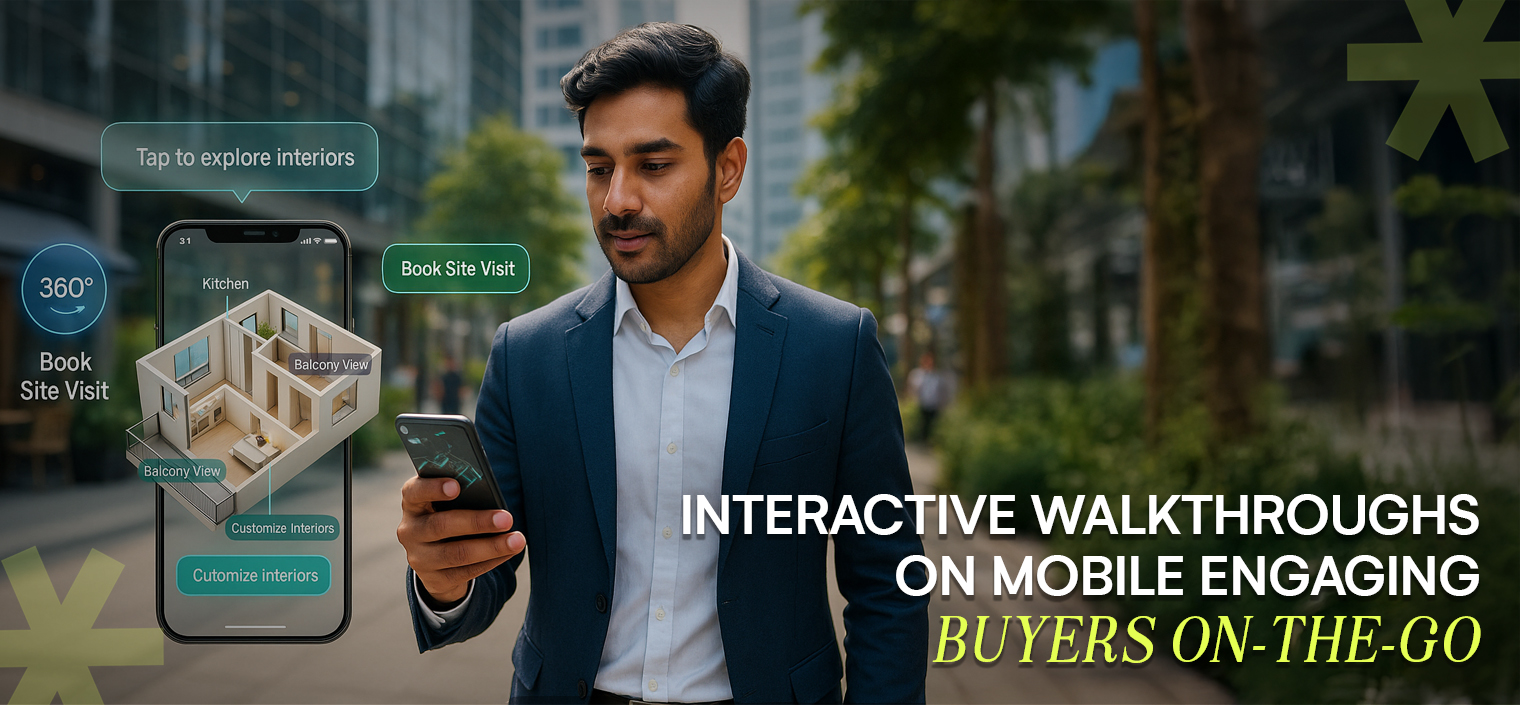
Interactive mobile walkthroughs solve these challenges by putting control directly in buyers' hands. Instead of passively viewing predetermined content, buyers become active participants in their property exploration journey. They can choose which rooms to visit first, spend extra time in spaces that matter most to them, and truly understand how different areas connect.
Creating Realistic Spatial Understanding
One of the biggest challenges in property marketing is helping buyers understand space and scale. Photographs can make small rooms appear larger or cause spacious areas to seem cramped. Interactive walkthroughs eliminate this guesswork by allowing buyers to navigate through properties naturally, developing an intuitive sense of room sizes, ceiling heights, and overall flow.
When buyers can virtually walk from the kitchen to the dining area, or understand how the master bedroom connects to the en-suite bathroom, they develop genuine spatial awareness that static images simply cannot provide. This understanding becomes crucial when they're trying to envision their daily routines in the new space.
Addressing Distance and Time Constraints
Modern buyers often face geographical and scheduling limitations. Young professionals might be relocating for work, investors could be considering properties in different cities, or families might have limited time for multiple site visits. Interactive mobile walkthroughs bridge these gaps by providing comprehensive property experiences that buyers can access anytime, anywhere.
This accessibility proves particularly valuable for international buyers or those in different time zones. A buyer in another country can thoroughly explore a property at 2 AM their local time, developing genuine interest and understanding before making travel arrangements for a physical visit.
Building Emotional Connections
Successful property sales often depend on emotional connections. Buyers need to imagine themselves living in the space, hosting dinner parties in the dining room, or relaxing in the bedroom after long days. Interactive walkthroughs facilitate these emotional connections by allowing buyers to spend time in virtual spaces, exploring details that matter to them personally.
When buyers can virtually experience how morning sunlight fills the kitchen or understand the view from their potential home office, they begin developing the emotional attachment that drives purchase decisions. This connection becomes even stronger when they can visualize different furniture arrangements or imagine how they might personalize various spaces.
Streamlining the Decision-Making Process
Traditional property buying involves multiple site visits, scheduling coordination, and significant time investment from both buyers and developers. Interactive walkthroughs streamline this process by enabling buyers to conduct thorough initial evaluations on their own schedule.
Buyers who arrive for physical property visits after experiencing interactive walkthroughs come better prepared with specific questions and clearer understanding of their interests. This preparation leads to more productive site visits and faster decision-making processes.
The Future of Property Marketing
Interactive mobile walkthroughs represent more than just a technological advancement—they're becoming essential tools for developers who want to remain competitive. As buyer expectations continue evolving, developers who embrace interactive experiences will find themselves better positioned to engage serious buyers and convert interest into sales.
The most successful developers will be those who recognize that modern property marketing isn't just about showcasing features—it's about creating experiences that help buyers envision their futures and build confidence in their decisions, all while accommodating their mobile-first, on-demand lifestyle preferences.