Luxury real estate buyers are not passive. They ask hard questions. They want specifics — not brochures.
Yet most experience centres still rely on printed materials, passive AV screens, and verbal explanations. The gap between what a developer builds and what a buyer actually understands remains wide.
The Real Problem in Luxury Sales Floors
A ₹5 crore apartment carries a dozen invisible engineering decisions. Waterproofing systems. Fire-rated shafts. Wind-resistant glazing. Seismic reinforcement.
None of this is visible in a show flat.
Sales executives describe these features verbally. Buyers nod — but rarely retain the depth. The result? Prolonged decision cycles. Price sensitivity. Comparison shopping with competitors who may not even match the construction standard.
The product is strong. The communication is weak.
This is not a sales problem. It is a product communication problem.
The Godrej Trilogy Approach
Godrej Trilogy, Worli faced this exact challenge during their luxury launch.
The project had genuine engineering depth — dual-layer waterproofing, CPVC plumbing, wind-tunnel-validated structure, FRLS wiring. Features that matter. Features that justify the price point.
The decision was straightforward: stop telling buyers. Start showing them.
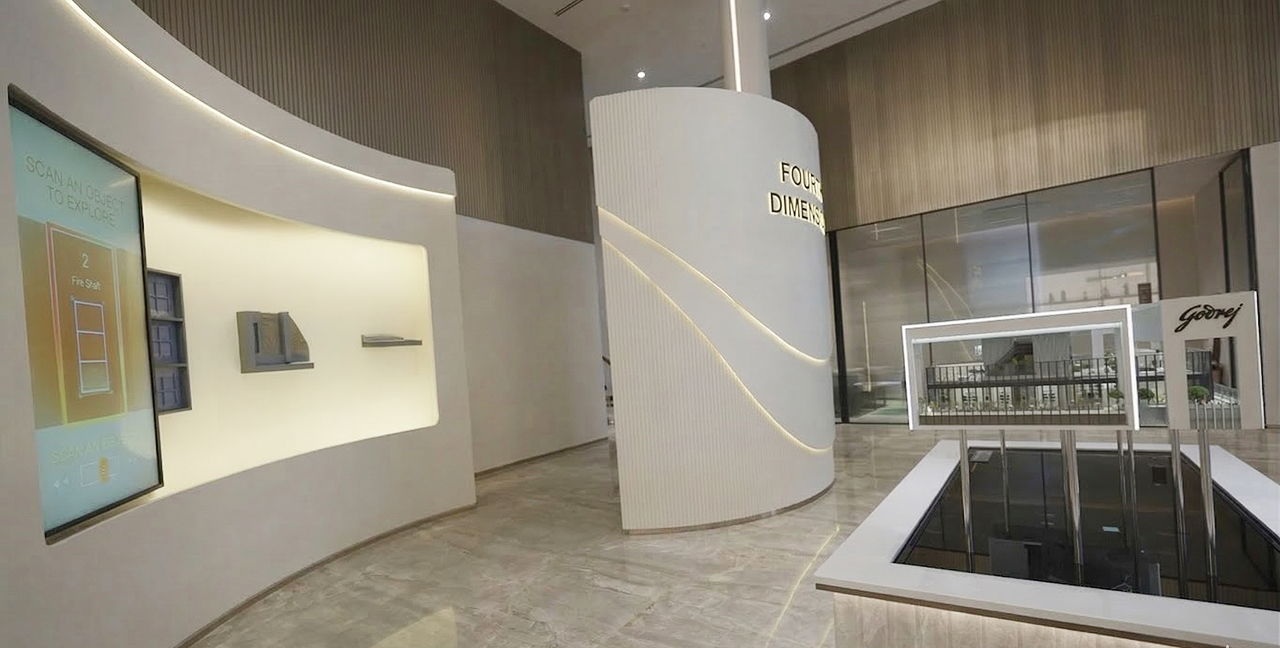
The result was the Fourth Dimension Experience Centre — an offline, walk-through sales environment built around two experiential technology zones arranged in a continuous S-shaped pathway.
Zone One — The Curved Rotoscopic Wall
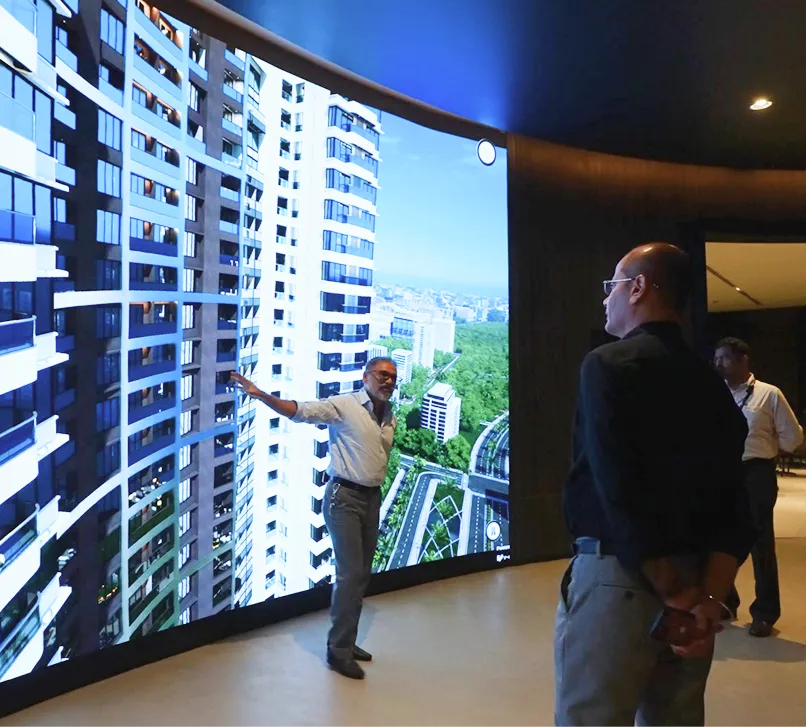
The first zone: a 10-foot-high curved rotoscopic wall, sensor-driven, converting construction specifications into visible, animated sequences.
No narration script. No passive video loop.
Buyers walk toward it. Motion sensors trigger the content. Engineering stories play — the double-glazed windows, the high-speed elevator systems, the fire-rated shaft design — each rendered as a clear visual sequence.
Average engagement: 15 minutes per visitor.
Buyers paused. Discussed. Asked questions mid-animation. The wall created the first layer of technical trust before any pricing conversation began.
This mattered enormously. Sales executives no longer had to introduce engineering credibility verbally from scratch. The wall did it first.
Zone Two — The Interactive Touchscreen Wall
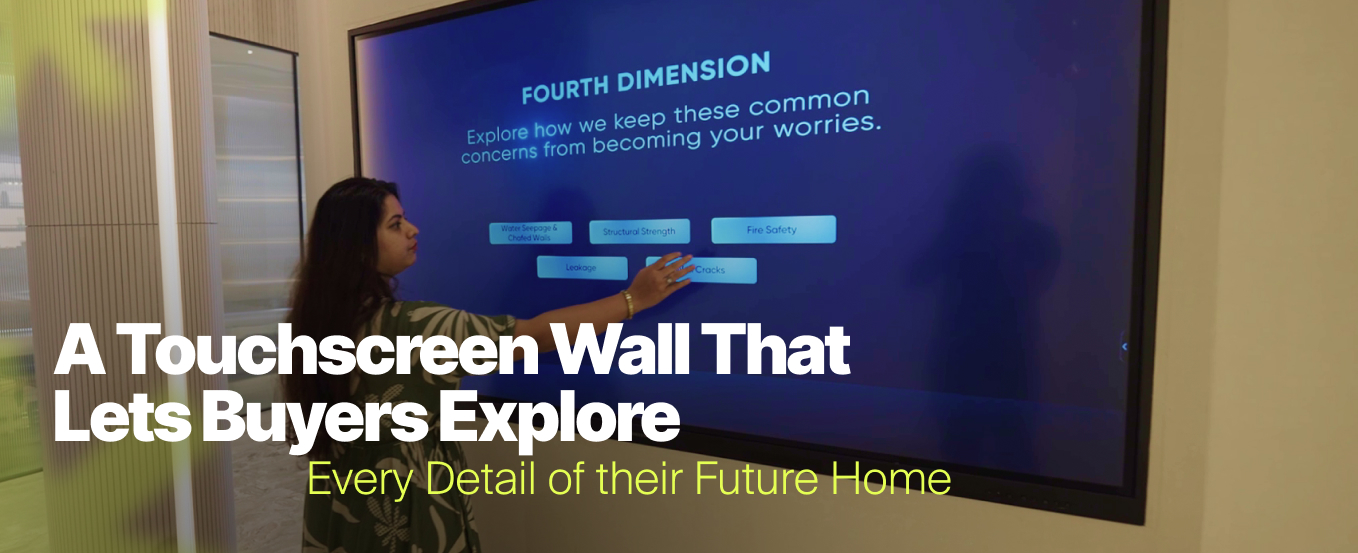
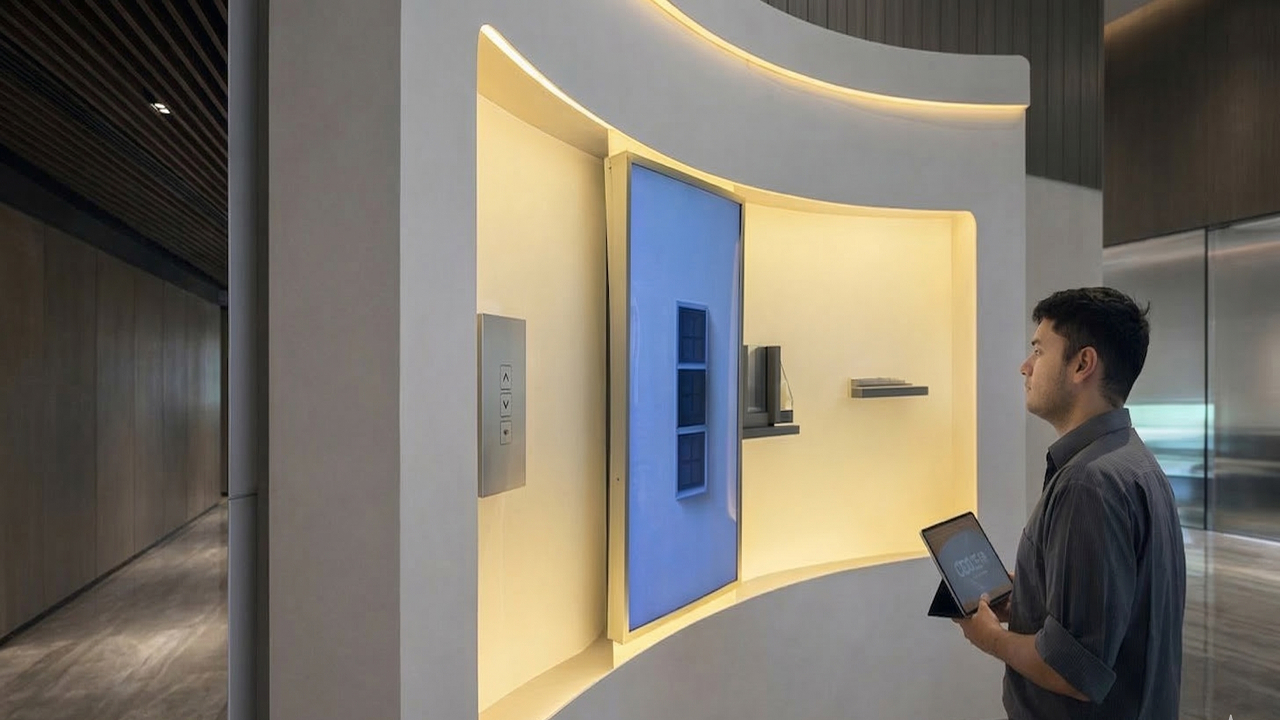
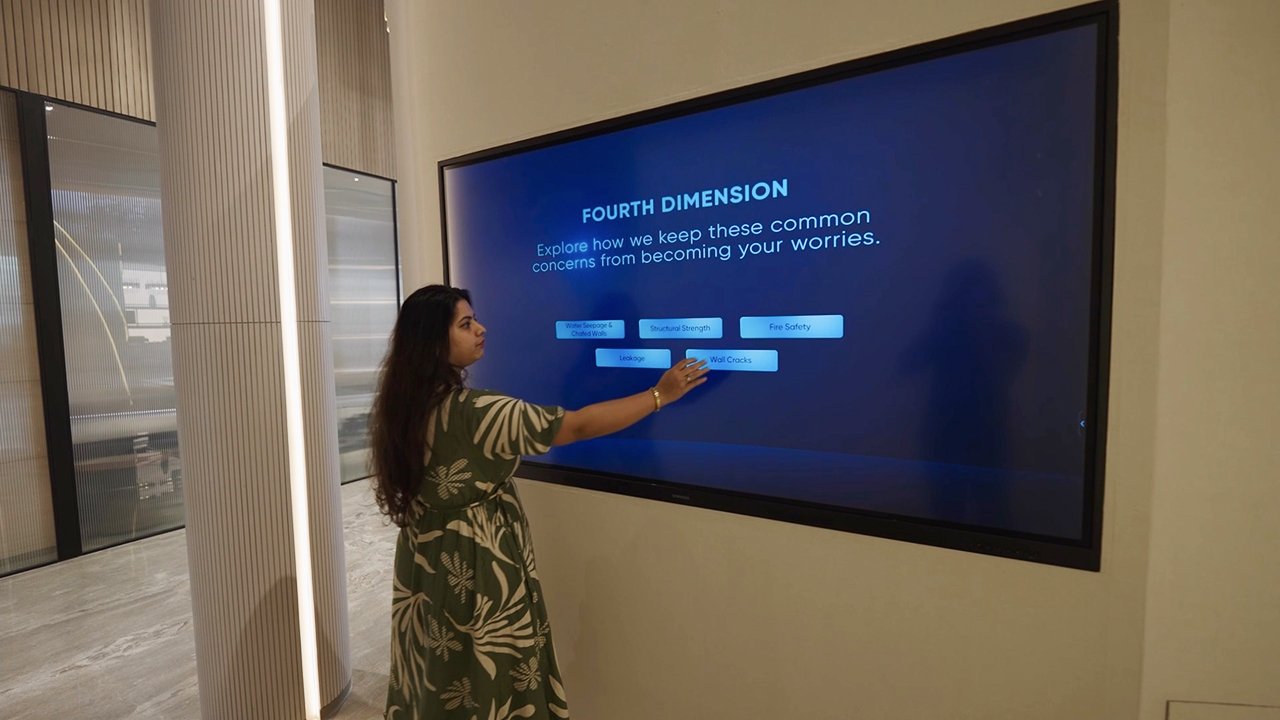
The second zone: an 86-inch Samsung interactive touchscreen, integrated directly into the walk-through flow.
Each tap opened a 30–50 second animated explainer — precise, visual, and designed for a non-technical buyer to understand immediately.
Topics covered:
Anti-capillary waterproofing preventing seepage migration through walls
Earthquake-compliant structural reinforcement across load-bearing systems
CPVC plumbing engineered for long-term leakage prevention
PU foam crack-prevention technology reducing structural stress
FRLS wiring minimising smoke and heat risk in fire scenarios
Wind-tunnel structural validation by global engineering consultants
Average buyer engagement on the touchscreen: 5 minutes of active exploration.
That is five minutes of a buyer independently investigating build quality — guided by the sales executive, not led by them. The difference in buyer conviction is measurable.
The Structured Sales Journey
The experience centre was not a walk-in gallery. It was a sequenced trust-building pathway.
Step 1 — Orientation: Brief introduction to the experience format before entering.
Step 2 — Rotoscopic walkthrough: Engineering USPs communicated through motion and animation.
Step 3 — Touchscreen deep dive: Buyers explore build assurances at their own pace.
Step 4 — Q&A with sales executive: Conversations anchored by visual proof already seen.
Step 5 — Pricing and unit discussion: Only after engineering clarity is established.
This sequence changed the entire dynamic of the sales conversation. Buyers arrived at the pricing table already convinced of the product's depth.
What Changed on the Sales Floor
The outcomes were not abstract.
Buyer engagement time increased by approximately 20 minutes per visit
Technical questions increased — indicating genuine understanding, not passive acceptance
Sales executives used the rotoscopic wall and touchscreen as their primary sales tools, not supplementary aids
Consistent delivery across every buyer interaction — no variation based on individual sales executive experience
Modular content architecture allowed updates without replacing hardware
One critical detail: this was a fully offline activation. No app downloads. No QR codes. No dependency on internet connectivity. Buyers walked in and the experience worked — reliably, every time.
The Broader Lesson for Real Estate Developers
Luxury buyers are researched. They have seen multiple projects. They have heard every sales pitch.
What they have not experienced — in most projects — is a developer willing to show them the engineering behind the walls.
That transparency is itself a differentiator.
Touchscreen walls, rotoscopic installations, and structured walk-through journeys are not expensive additions to a sales office. They are replacements for the communication tools that no longer work — brochures, passive screens, verbal assurances.
The developer who can prove quality — visually, interactively, before the pricing conversation — holds the room.