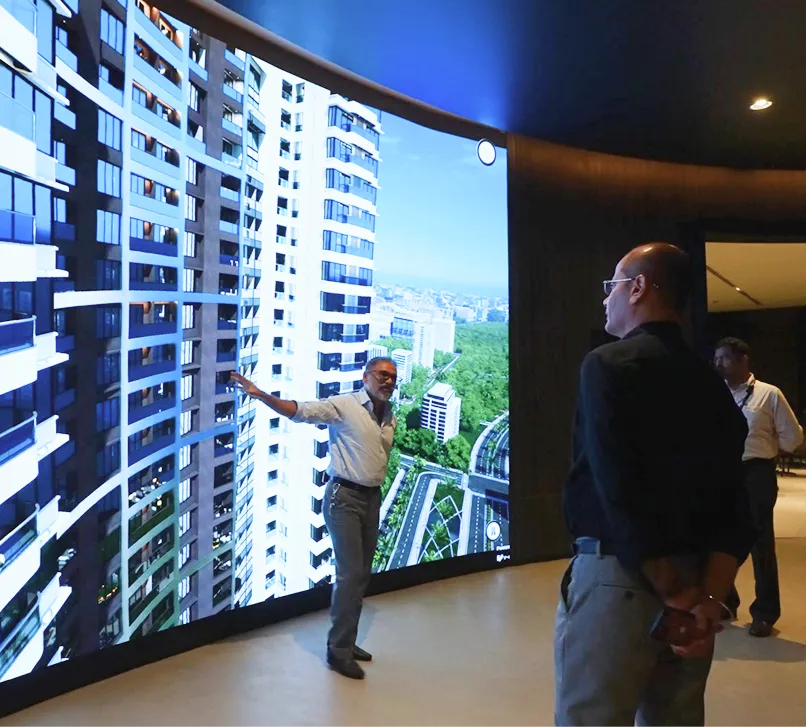
Buyers no longer accept approximation.
They do not want to decode brochures, interpret floor plans, or imagine how a home might feel years later. They expect clarity before commitment. When sales environments fail to deliver that clarity, hesitation replaces momentum.
Across Indian real estate launches—affordable, premium, and ultra-luxury—the shift is unmistakable. Interactive real estate has replaced static marketing because it helps buyers understand faster and enables sales teams to close decisively.
This is not a design trend. It is a sales operating shift.
Traditional Property Marketing Breaks Buyer Understanding
Static property marketing struggles under today’s buyer expectations.
Brochures fragment information. Floor plans explain dimensions but not livability. Sample flats lock developers into fixed narratives while buyers seek flexibility. The result is a sales journey filled with assumptions, repeated explanations, and delayed decisions.
At Rustomjee Urban Woods, traditional tools would have collapsed under scale. The project launched without physical construction and had to manage 190–210 families per day. Printed material could not deliver clarity at that volume.
Static marketing does not fail because buyers lack interest. It fails because buyers lack understanding.
Buyer Expectations Have Shifted to Interactive Real Estate Control
Modern buyers expect agency.
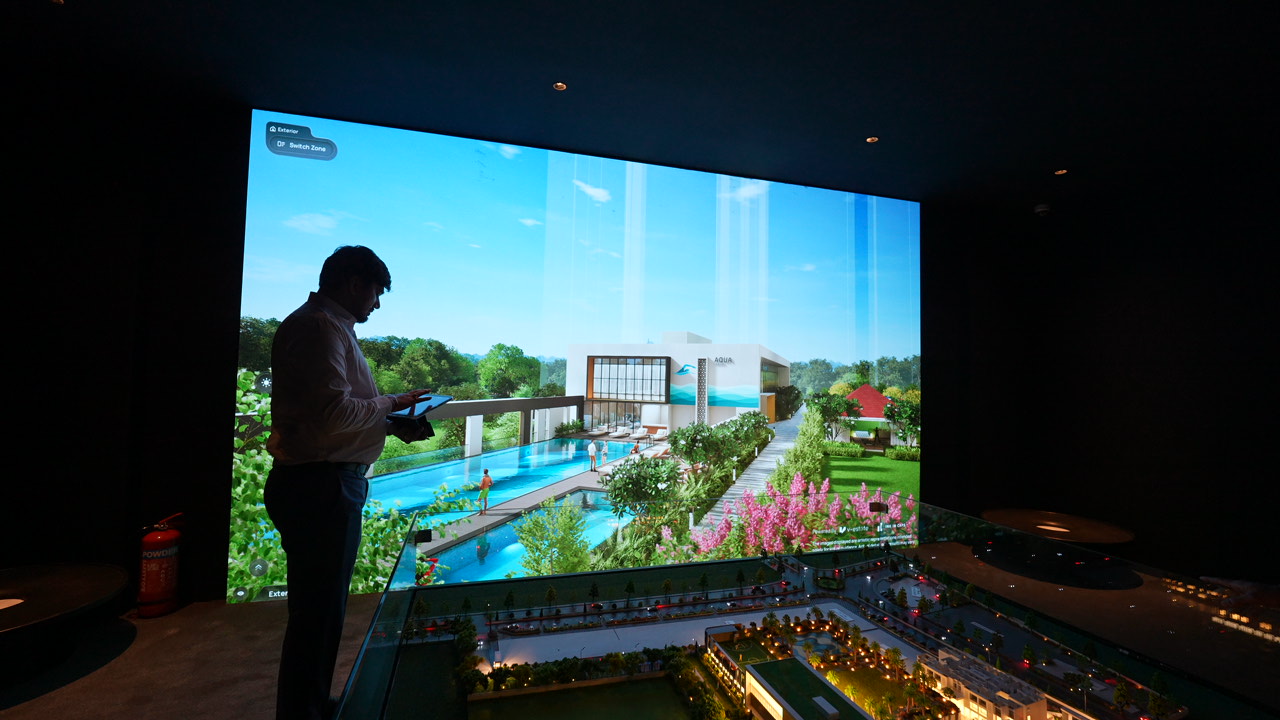
They want to explore spaces independently, compare options visually, and validate decisions without relying on verbal explanations. This shift is visible across segments.
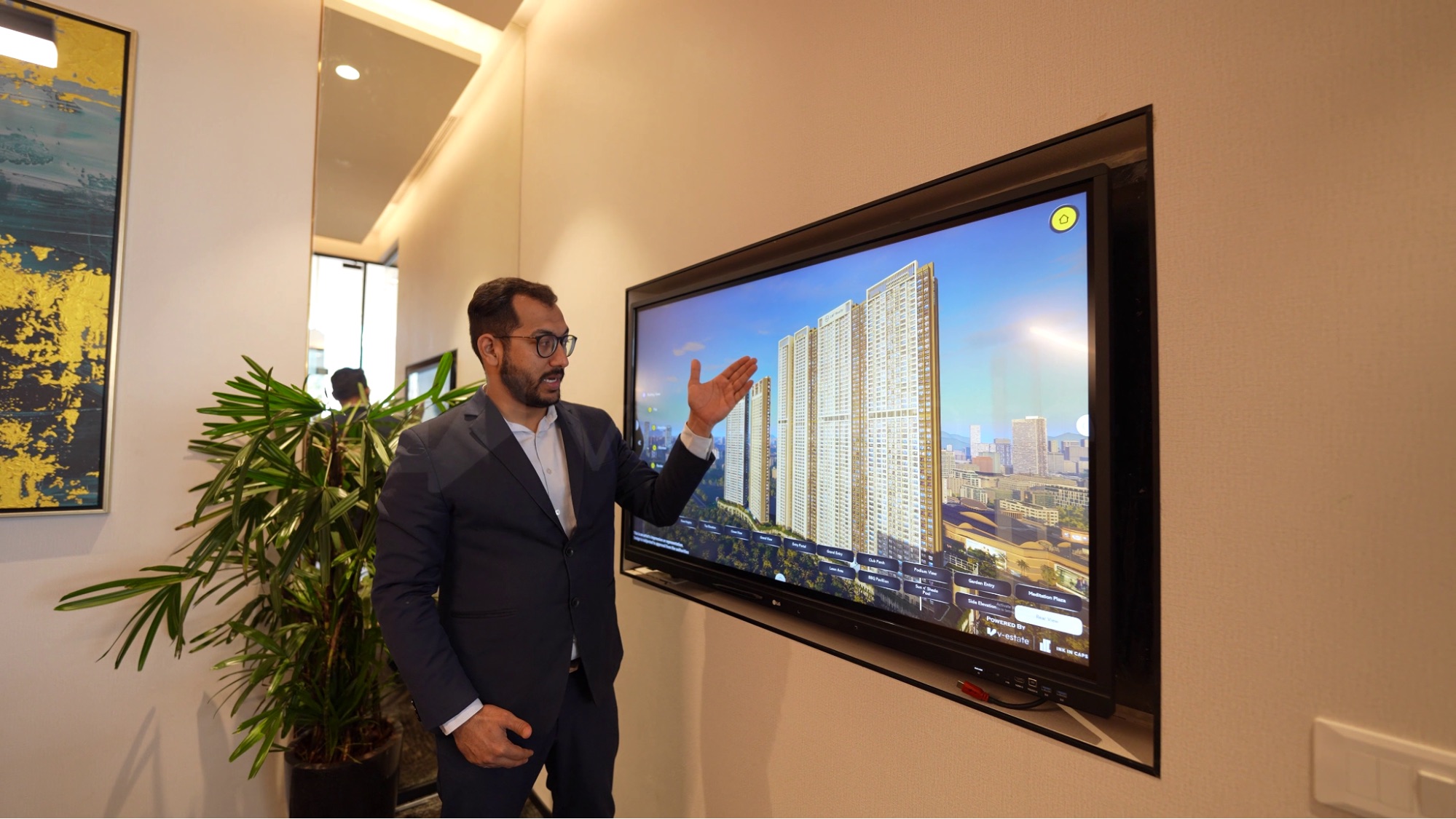
At Nahar Chandivali Valley, buyers needed to understand complex terrain, elevation shifts, and the relationship between residences and a Miyawaki forest. Static visuals flattened that story. Interactive exploration delivered immediate comprehension.
Interactive real estate gives buyers:
Control over pace and sequence
Context across layout, location, and lifestyle
Conviction built through visual verification
When buyers control exploration, hesitation reduces.
Interactive Real Estate Technology That Removes Decision Friction
The most effective sales environments today are powered by real estate interactive content designed for daily operations, not one-time launches.
Key components driving results:
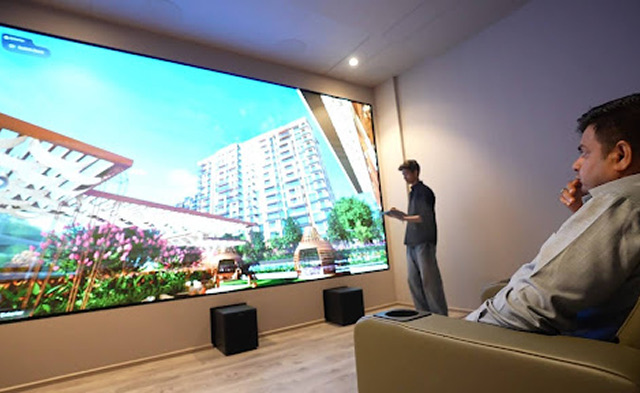
Interactive walkthrough real estate experiences Buyers navigate homes freely, understand circulation, and evaluate spatial comfort without interpretation.
Interactive real estate project models IoT-enabled scale models and digital twins provide instant orientation to plans, towers, and amenities.
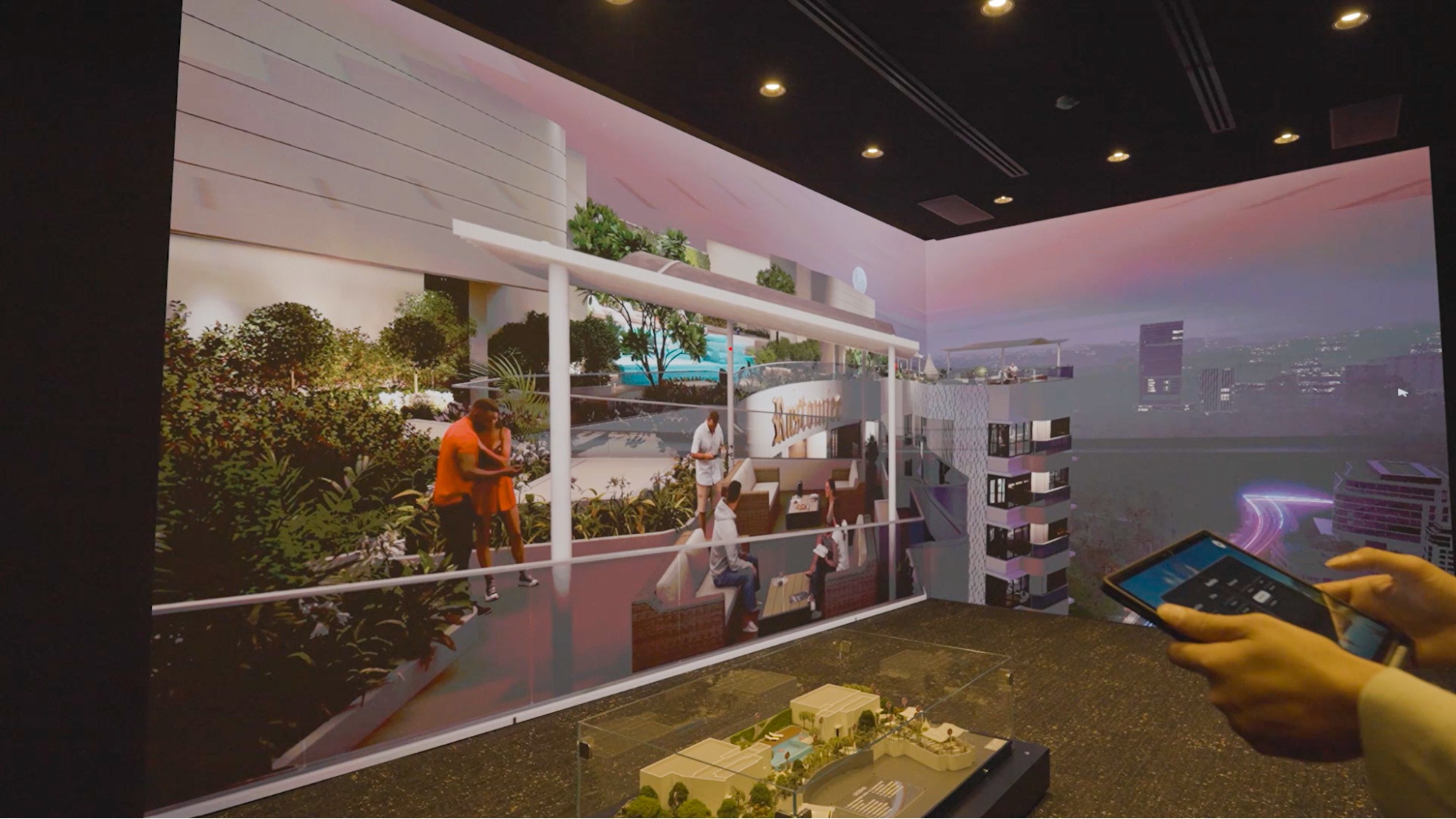
At Runwal Raaya, a 2,000+ diode interactive scale model paired with immersive screens helped buyers understand podium landscapes, amenity zoning, and tower placement within minutes.
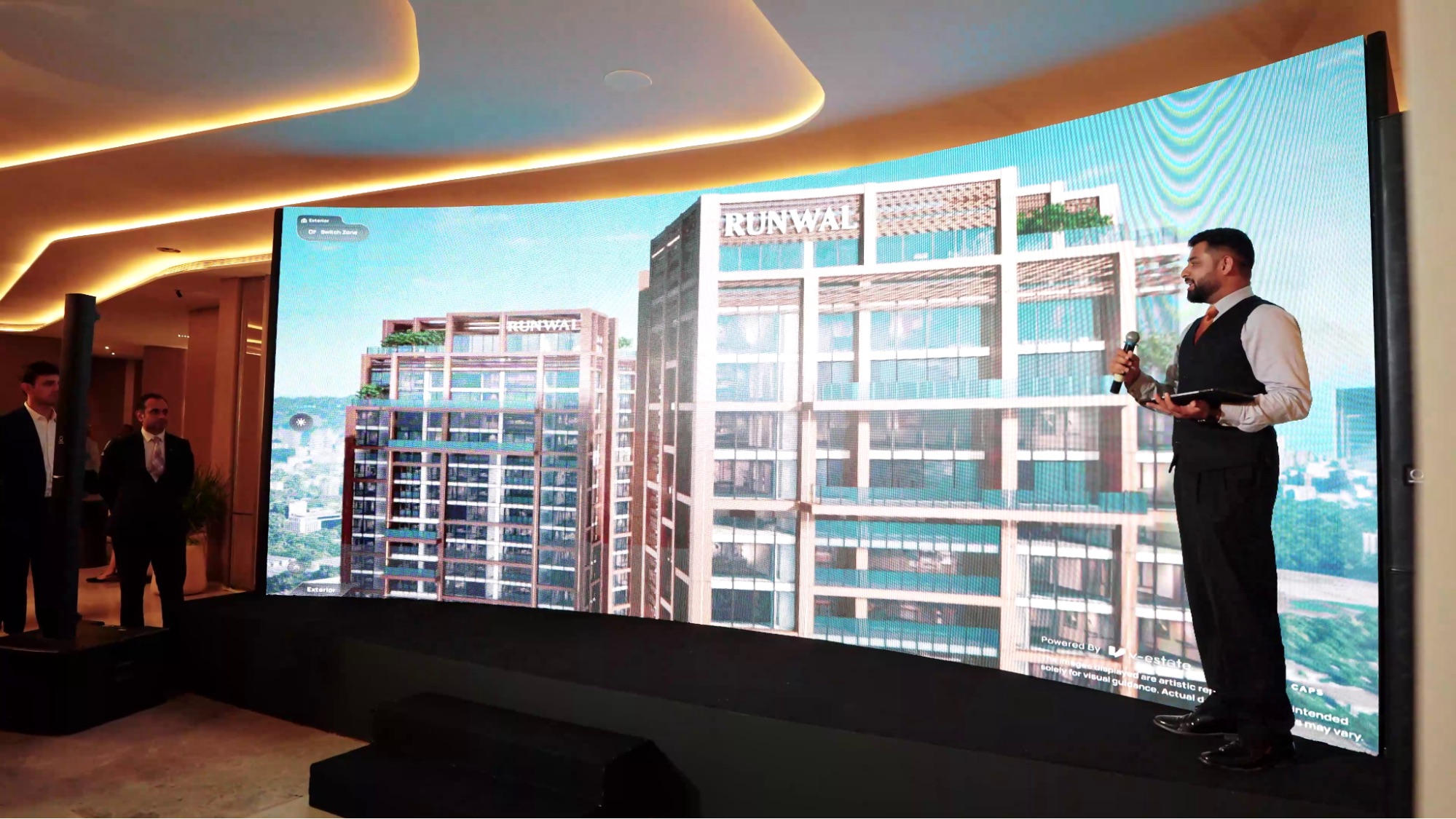
Real-view and light simulation Accurate window views and time-of-day visualization eliminate uncertainty around openness, privacy, and daily usability.
This technology does not impress buyers. It removes friction from decisions.
V-Estate Rewires Sales Operations Around Interactive Control
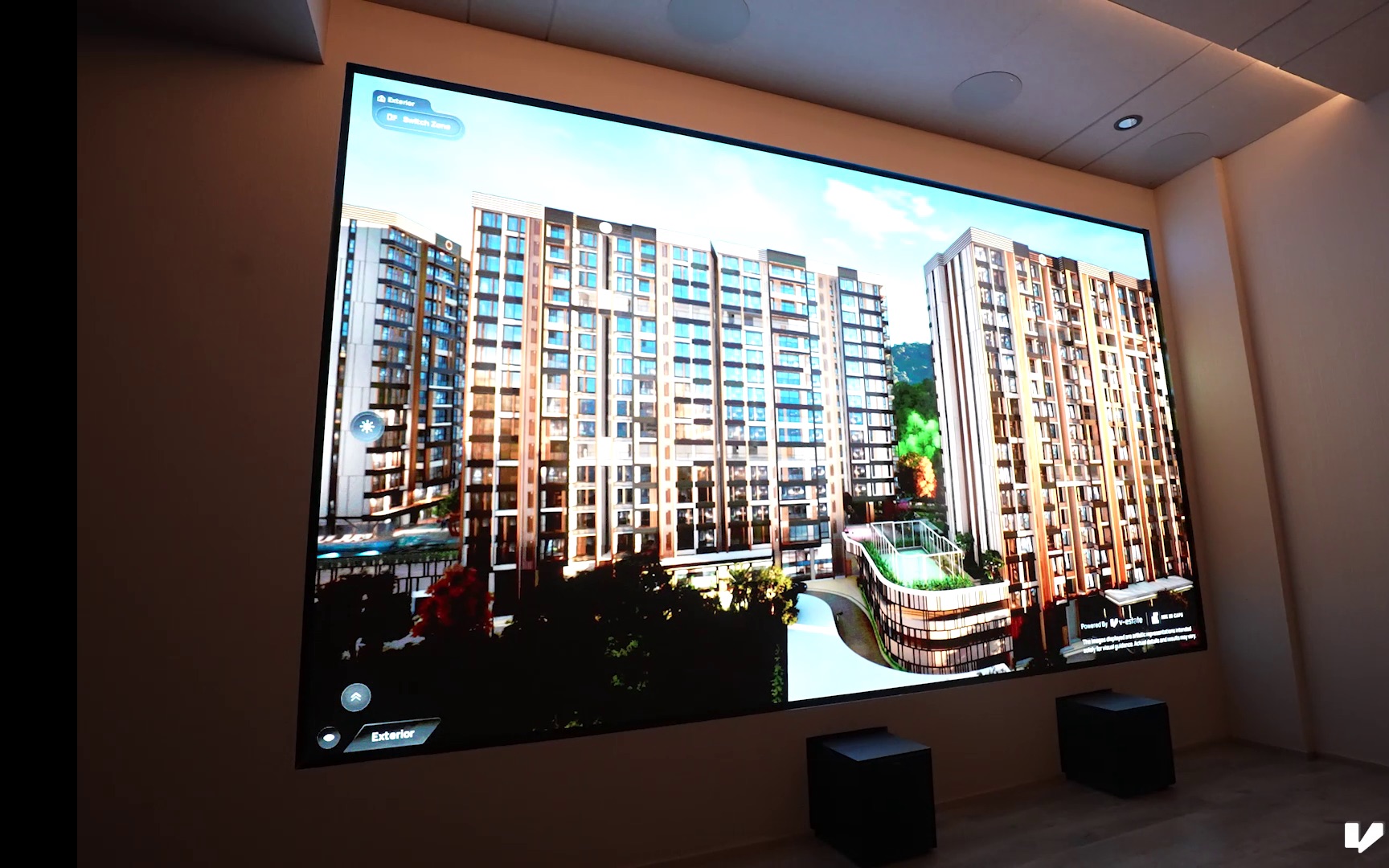
V‑Estate operates as an interactive sales solution for real estate, built specifically for experience centers and site offices.
Its impact is operational, not cosmetic.
Single-journey sales systems Interiors, amenities, views, and location context exist within one interface. Sales teams no longer switch between brochures, plans, and explanations.
Buyer-driven exploration Sales teams guide intent instead of pitching features. Buyers explore, validate, and align visually.
At Rustomjee Urban Woods:
~30 families per hour were handled across parallel discussion rooms
Repeat visits for clarification reduced significantly
Sales conversations moved faster into commercial closure
Sales enablement at scale Over 25 sales professionals were trained, leading to 100% adoption during live operations.
When tools are intuitive, sales teams trust them—and performance follows.
Measurable Sales and Operational Gains for Developers
Across deployments, outcomes are consistent and quantifiable.
Shorter decision cycles Interactive walkthrough real estate tools resolve layout, view, and amenity doubts early, compressing time to booking.
Higher operational efficiency
Reduced dependency on physical mock-ups
Lower print and collateral costs
Structured handling of peak footfall
At Urban Woods, the system delivered zero downtime across 6+ months of continuous operation.
Stronger buyer conviction When buyers understand exactly what they are committing to, cancellations reduce and post-sale dissatisfaction declines.
Experience Centers Built to Convert, Not Just Showcase
Experience centers should not exist to display information. They should exist to enable decisions.
With interactive sales solutions in real estate, experience centers become:
Conversion environments, not showrooms
Exploration spaces, not presentation halls
Decision systems, not marketing exhibits
Buyers remember experiences. They trust what they can verify.
The New Sales Baseline in Interactive Real Estate
Brochures slow decisions. Experiences accelerate them.
Interactive real estate—powered by walkthroughs, project models, and real estate interactive content—removes ambiguity from the buying journey and replaces it with clarity-driven momentum.
Developers adopting interactive sales solutions for real estate are not following trends. They are building sales systems that close faster and scale better.
If your sales journey still depends on static materials, it is time to upgrade the experience—not the brochure.
Let’s talk to build an interactive sales environment that helps buyers understand clearly and decide decisively.
Real estate sales need clarity, not creativity
Buyers don't want marketing stories. They want to understand properties completely before committing. Developers who provide that clarity win.
V-estate solves the visualization problem that brochures can't. It gives buyers control. It reduces decision friction. It accelerates conversions.
If your current sales process still depends on printed materials and verbal explanations, you're leaving revenue on the table.
Interactive property exploration isn't optional anymore. It's operational.