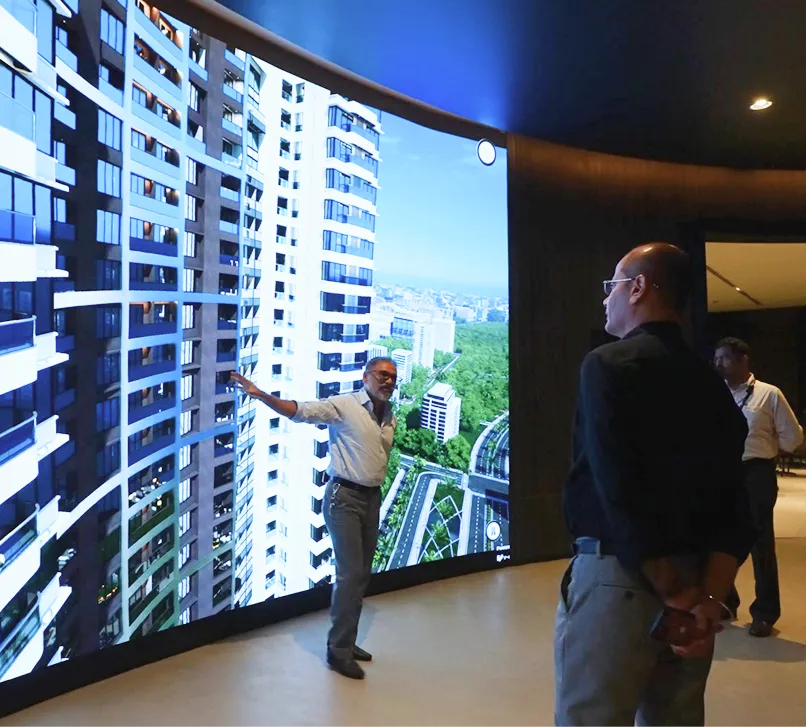
Premium real estate sales are breaking down. Buyers expect clarity. Developers face pressure. Traditional tools no longer close the gap between interest and commitment.
The core issue is not marketing visibility. It is experiential certainty.
High-ticket property buyers walk into experience centers with informed expectations. They compare units across developers. They evaluate floor heights, natural light angles, surrounding infrastructure, and long-term neighborhood development. Static brochures and partial sample flats cannot answer these questions with precision.
Sales cycles extend. Decision friction increases. Conversion rates plateau.
This is where interactive sales technology becomes a necessary infrastructure—not a digital add-on, but an offline sales enabler built into the experience center itself.
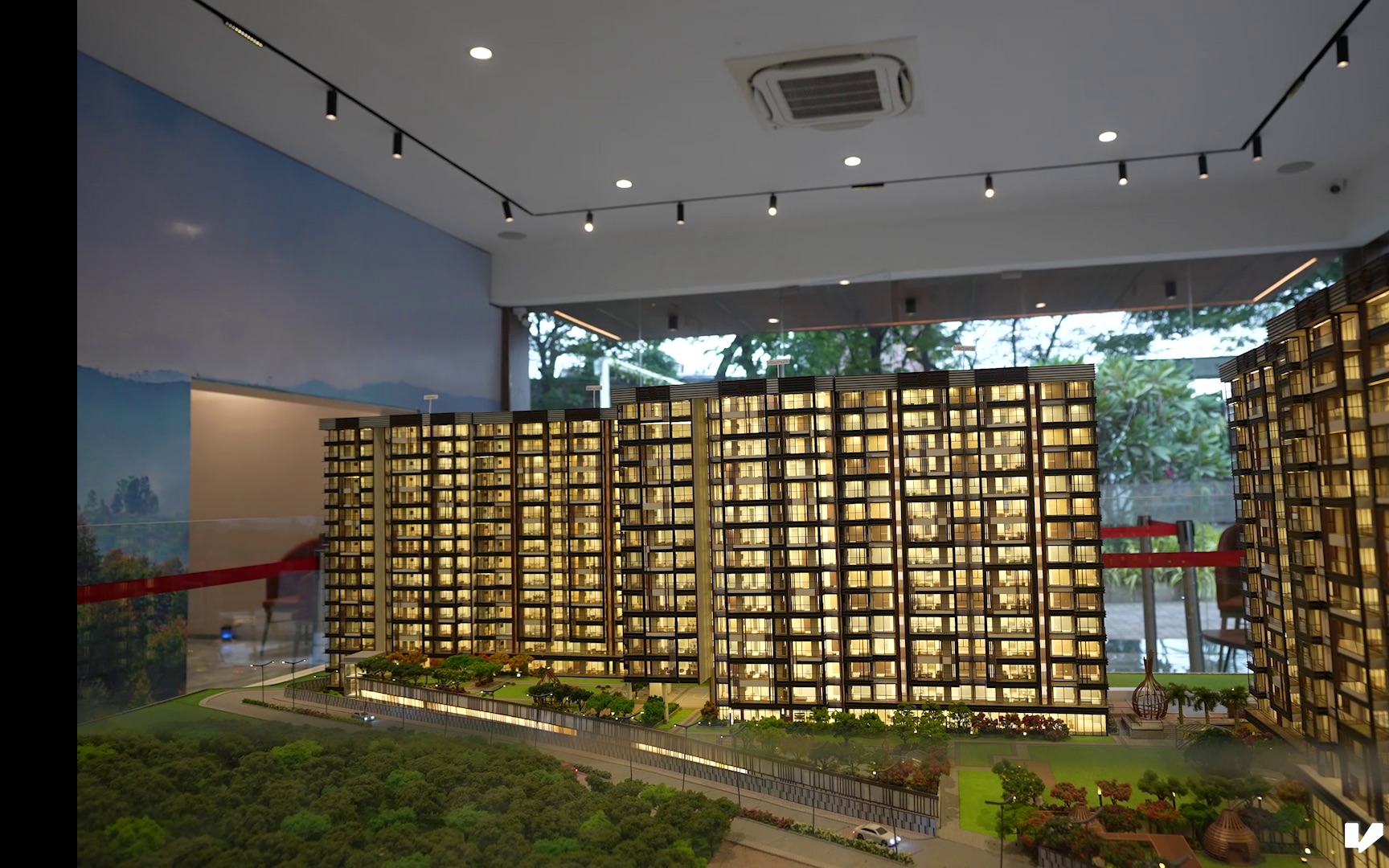
Real Problems Developers Face in Premium Property Sales
Complex inventory with variable pricing. Multiple unit types. Different floor levels. Orientation-based views. Each combination requires separate explanation.
Buyer imagination gaps. Buyers cannot visualize finished interiors from bare construction sites. They struggle to assess natural light penetration. They misjudge spatial flow from floor plans alone.
Heavy dependency on physical infrastructure. Building sample flats is expensive. Only one or two configurations can be displayed. Weather and construction timelines limit site visit effectiveness.
Repetitive sales conversations. Buyers revisit with new questions. Sales teams repeat explanations. Clarification requests slow momentum. Follow-up meetings multiply without resolution.
These are not solved by better brochures or faster approvals. They require structured experiential infrastructure inside the sales environment.
Why Traditional Sales Tools Cannot Scale Premium Sales
Printed materials lack depth. Scale models lack interactivity. Sample flats lack variety. Site visits lack control.
Buyers leave with partial understanding. Sales teams lose narrative control.
For properties priced above mid-market segments, ambiguity directly impacts closure velocity. Developers cannot afford prolonged decision timelines when land carrying costs remain high.
Interactive Sales Platforms as Offline Enablers
Interactive sales technology shifts the experience from passive observation to guided exploration.
It does not replace sales teams. It strengthens their capability.
Inside experience centers, these platforms consolidate property information into a single controlled interface. Buyers explore. Sales teams guide. Conversations remain structured and fact-based.
This is not virtual reality for spectacle. This is decision-support infrastructure designed for offline sales environments.
V-estate: Built for Real Estate Sales Operations
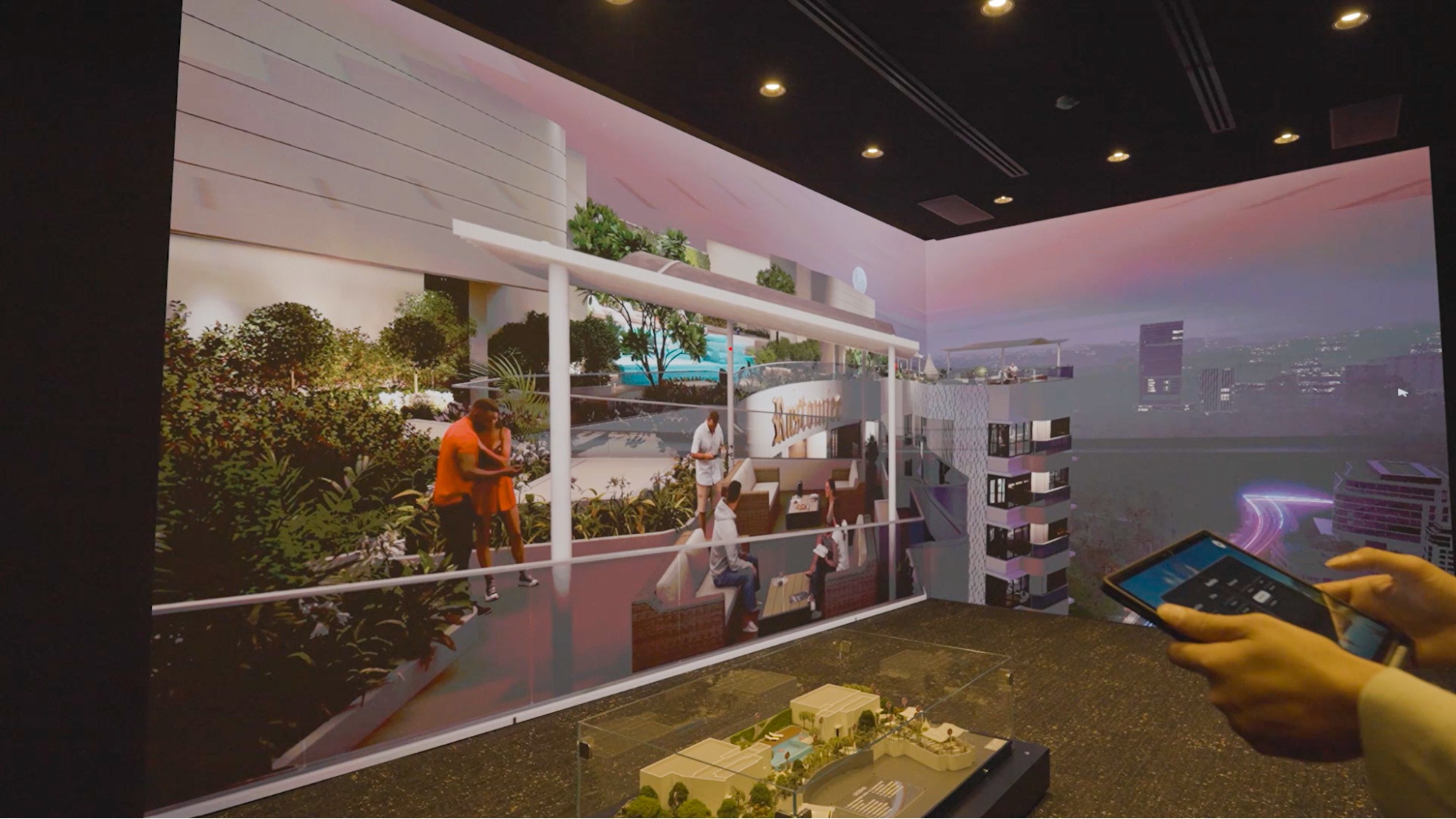
V-estate operates as an immersive sales platform deployed in developer experience centers.
It addresses specific sales friction points through visual precision and interaction control. Buyers receive the remote control. Sales teams retain narrative direction.
.jpg)
Photorealistic Virtual Show Flats Replace Physical Dependency
Virtual show flats replicate real materials, accurate dimensions, and design finishes.
Buyers walk through full-scale 3D environments. They examine textures, spatial proportions, and finish quality without relying on imagination or verbal description.
This reduces dependency on constructing multiple physical sample units. Developers save on fitout costs while offering broader unit variations.
Lower infrastructure cost. Higher presentation flexibility.
Window Views From Actual Floor Heights
The view outside the window directly influences purchase decisions.
V-estate displays actual external views from selected floor levels. Buyers see skyline exposure, surrounding development density, and open space availability based on their chosen unit.
This transparency matters for:
High-rise apartments
View-premium pricing tiers
Projects surrounded by future construction
Buyers assess value accurately. Sales teams avoid over-promising.
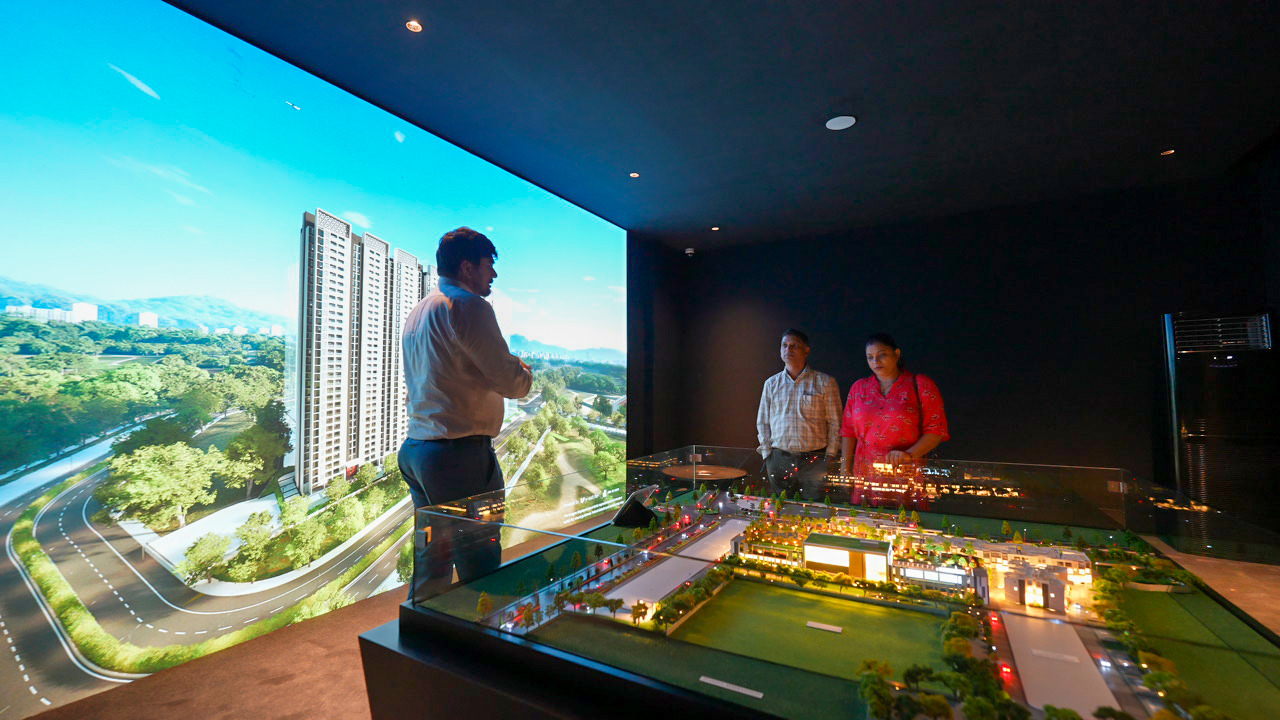
Amenity and Infrastructure Mapping for Lifestyle Clarity
Location context shapes long-term value perception.
V-estate integrates nearby infrastructure, upcoming projects, connectivity routes, and lifestyle amenities into the visualization.
Buyers understand convenience without abstract explanations. Sales teams present facts visually. Discussions remain grounded in reality.
This prevents post-booking dissatisfaction from location mismatches.
.jpg)
Controlled Customization Without Operational Chaos
Customization discussions typically slow sales momentum.
V-estate allows instant visual customization within controlled parameters:
Wall color options
Furniture layout changes
Interior finish variations
Lighting conditions
Seasonal and time-of-day views
Buyers explore preferences immediately. Sales teams avoid repetitive back-and-forth. Expectations align early in the conversation.
Faster clarity. Fewer post-booking change requests.
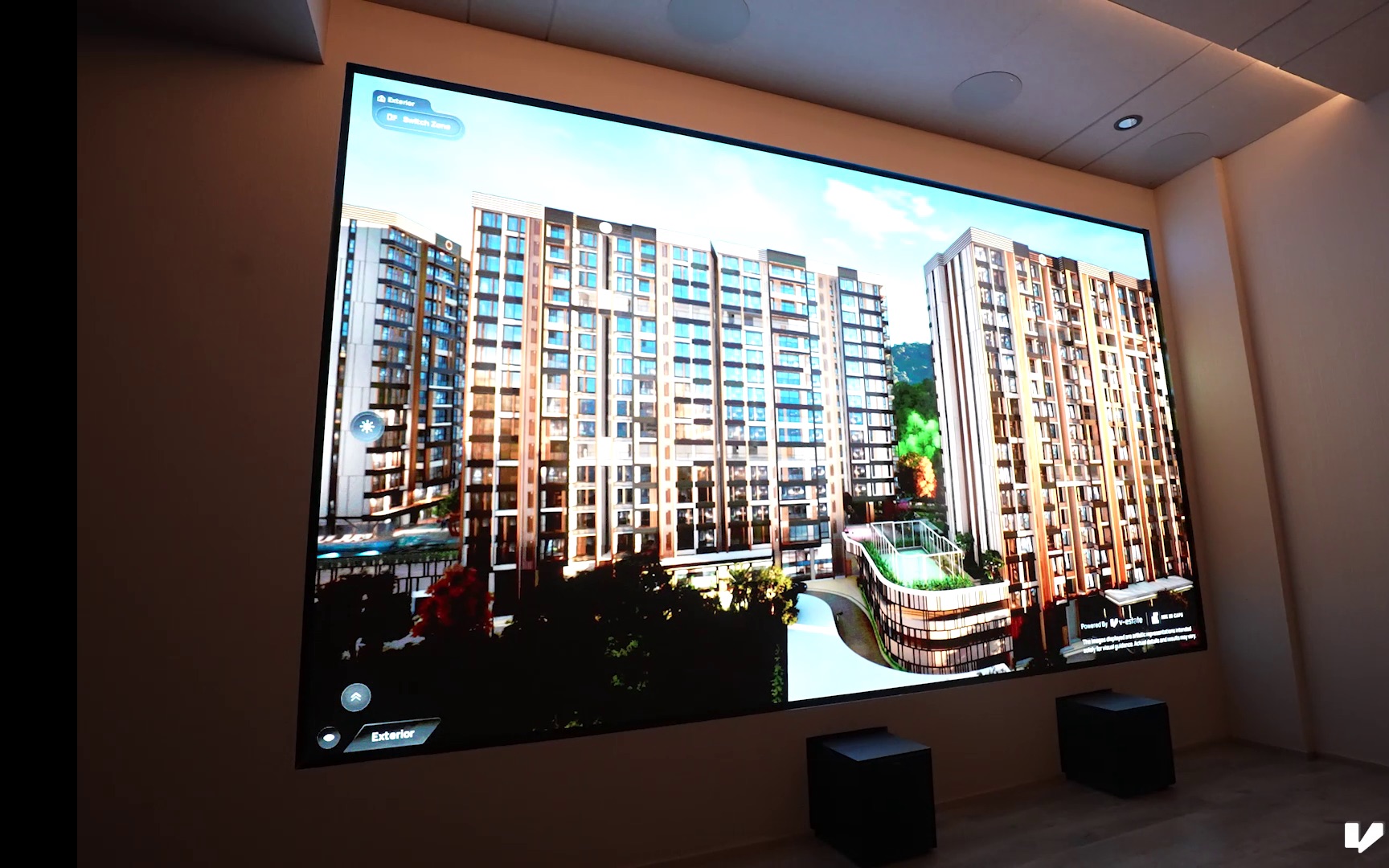
Dynamic Lighting and Environmental Context
Light changes perception. Weather affects emotional response.
V-estate enables buyers to visualize:
Morning versus evening natural light
Seasonal ambiance shifts
Shadow movement across rooms
These subtle factors influence emotional assurance in premium buyers. Addressing them upfront reduces post-visit doubts.
Sales Team Efficiency and Performance Standardization
Interactive platforms improve internal sales operations.
Consistent narrative delivery. Every buyer receives the same structured explanation regardless of individual sales rep skill.
Reduced training time. New team members adapt faster with system-supported conversations.
Higher meeting engagement. Buyers remain actively involved instead of passively listening to pitches.
Predictable performance across teams. Sales quality becomes less dependent on individual variation.
This operational consistency directly impacts conversion predictability.
Measurable Impact on Developer Outcomes
From a business perspective, interactive sales technology delivers:
Faster decision cycles. Buyers gain clarity in fewer meetings.
Higher lead quality. Serious prospects self-filter through detailed exploration.
Reduced physical infrastructure costs. Fewer sample flats required across large projects.
Lower repeat visit requirements. Comprehensive first-visit experience reduces follow-up needs.
Improved post-booking confidence. Aligned expectations reduce cancellation rates.
These outcomes improve cost per acquisition, sales velocity, and customer satisfaction simultaneously.
Where Interactive Sales Technology Fits Best
This infrastructure delivers maximum value for:
Luxury residential developments
High-rise and mixed-use projects
Large-scale townships with phased delivery
Projects targeting informed, high-expectation buyers
It supports clarity without pressure. Understanding without exaggeration.
Solution Architecture: Problem to Outcome
The Problem: Buyers cannot visualize complex offerings with confidence using traditional tools.
The Solution: An immersive, offline interactive platform that consolidates exploration into a controlled, guided experience.
The Result: Clear understanding, confident decisions, shorter sales cycles, and stronger closures.
This alignment is essential for sustainable premium sales growth.
Final Perspective
High-value real estate demands clarity, control, and credibility in the sales process.
Interactive sales technology delivers all three when implemented as core sales infrastructure—not marketing spectacle.
It does not replace sales expertise. It amplifies team capability and standardizes quality across all buyer interactions.
For developers managing premium projects, platforms like V-estate represent a structured, measurable improvement in offline sales operations.
Better understanding creates better decisions. Better decisions drive stronger outcomes.
That is the operational value of interactive sales technology in modern real estate sales environments.