Experience centers fail when they deliver confusion instead of clarity. Buyers walk in expecting certainty. They leave with brochures and open questions. Leads go cold. Decisions stall. Sales cycles stretch.
Developers need systems that close the gap between interest and commitment during the first visit. Interactive sales tools built for offline activation turn experience centers into decision engines. They eliminate guesswork. They accelerate conversions. They prove value at the point of contact.
%202%20(3).jpg)
The Current Gap in Developer Sales
Traditional sales setups rely on static show flats and brochures. Sales staff explain. Buyers imagine. Gaps widen.
Customers cannot validate views. They struggle to picture finishes in context. They compare options based on memory, not reality. This creates friction at every stage.
High-ticket property purchases demand tangible certainty. Buyers expect to see exact window views, test finish options, and confirm lifestyle fit before signing. The traditional model cannot deliver this. It adds cost, slows decisions, and weakens conversions.
Effects of Poor In-Person Activation
Static setups create measurable operational problems:
Misaligned expectations. Buyers picture finishes and views differently from reality. Post-sale disputes rise. Customization requests surge.
High time cost. Repeated site visits consume sales resources. Staff explain the same details multiple times. Productivity drops.
Low lead velocity. Leads cool between first interest and site visits. Marketing generates curiosity. Sales must recreate clarity from scratch.
Inefficient handoffs. Context gets lost between marketing touchpoints and in-person conversations. Quality suffers.
These are not soft problems. They translate directly into longer sales cycles, higher acquisition costs, and lower conversion rates. Each gap costs revenue.
Interactive Sales Systems for Offline Activation
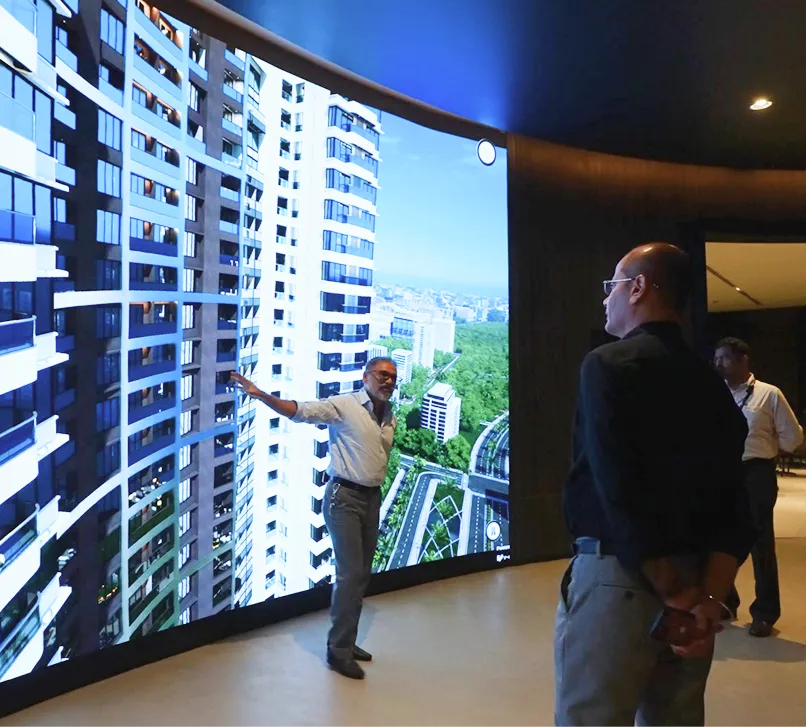
An interactive sales system transforms the experience center from a showroom into a conversion tool. It combines photorealistic 3D show flats, dynamic environmental controls, and amenity mapping in a guided, in-person setting.
The system operates offline. It performs reliably during peak visitor hours without constant internet dependency. This ensures consistent delivery.
Core outcomes include:
Faster decisions. Buyers see true-to-life views and customizations immediately. Questions get answered in real time.
Higher quality leads. Conversations shift from hypothetical to specific. Intent signals strengthen.
Lower cost per conversion. Fewer repeat visits. Shorter sales cycles. Better resource allocation.
.jpg)
What the System Must Include
Use this feature list to design or evaluate any vendor:
Photorealistic 3D show flats. Accurate material textures, correct scale, and window views. No stylized renders. No exaggerated lighting.
Customization controls. Paint, furniture, and fixture options selectable in seconds. Buyers test choices instantly.
Dynamic lighting and weather simulation. Day, night, seasonal variations validate natural light and ambiance. Buyers see properties under real conditions.
Amenity and neighborhood mapping. Nearby services, current projects, and planned infrastructure mapped visually. Context becomes tangible.
Offline performance mode. Full functionality when network connectivity is limited or intentionally offline. No buffering. No delays.
Intuitive operator interface. Sales staff guide, bookmark, and capture buyer preferences without technical friction. Tool amplifies expertise.
Lead capture and handoff. Exportable preference reports, images, and walkthrough notes for CRM integration. Context transfers seamlessly.
.jpg)
Relevance for Decision-Makers
Marketing heads gain measurable campaign attribution. Visitors who interact with immersive tools show higher intent signals. Lead quality improves.
Sales leaders achieve shorter conversion timelines and better-quality handoffs. Sales effort shifts from explanation to negotiation. Close rates rise.
Project teams reduce rework from incorrect buyer expectations. Misunderstandings about finish or view are minimized. Delivery becomes smoother.
Finance stakeholders see improved unit sell-through and lower holding costs. Inventory moves faster. Capital efficiency increases.
.jpg)
Operational Notes for Implementation
Prioritize offline reliability. Experience centers must function consistently during peak visitor hours. Design the system to run locally with sync capabilities.
Train staff for guided activations. The tool amplifies human expertise. Operators should be briefed on scenarios, bookmarks, and how to extract buyer insights.
Standardize template libraries. Maintain build-accurate materials and furnishing packs. Avoid overpromising. Deliver what you show.
Integrate minimal data capture. Capture only what is necessary for follow-up: unit interest, finish choices, and contact details. Respect time. Avoid friction.
Pilot with a single project. Validate mapping accuracy, viewpoint fidelity, and conversion impact before scaling. Measure before committing.
Measurement and ROI
Define simple metrics. Measure consistently.
Time-to-offer. Track the average time from first visit to formal offer. Expect meaningful reduction.
Lead-to-visit ratio. Monitor how many marketing leads convert to experience-center visits after interactive touchpoints.
Conversion rate per visit. Compare traditional visits against interactive-enabled visits. Quantify lift.
Average deal size and retention. Note upsell of finishes or upgrades driven by visual confirmation.
Operational efficiency. Sales hours per closed unit and repeat-site visits avoided. Resource allocation improves.
These indicators translate user experience into predictable financial impact.
Practical Examples of Use at the Center
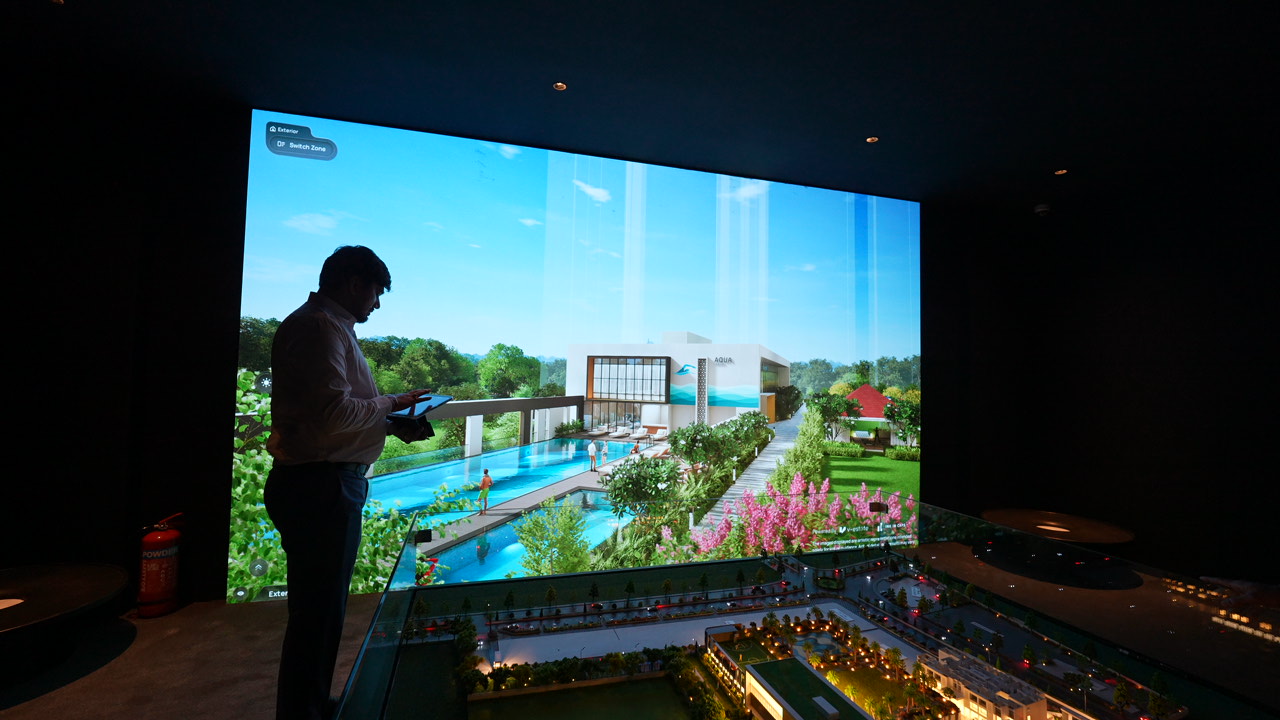
Show a buyer the exact window view at 6 p.m. on a winter evening. Remove doubt. Confirm expectations.
Let the buyer switch finishes and export images to the contract packet. Decision-making accelerates.
Map nearby schools and upcoming roads. Pin those locations to a buyer report for later review. Context stays intact.
These actions move a prospect from curiosity to commitment in a single session.
Transform Experience Centers into Conversion Engines
Interactive sales systems reduce friction, clarify expectations, and deliver measurable commercial gains. They work when built for offline activation and operated by trained staff.
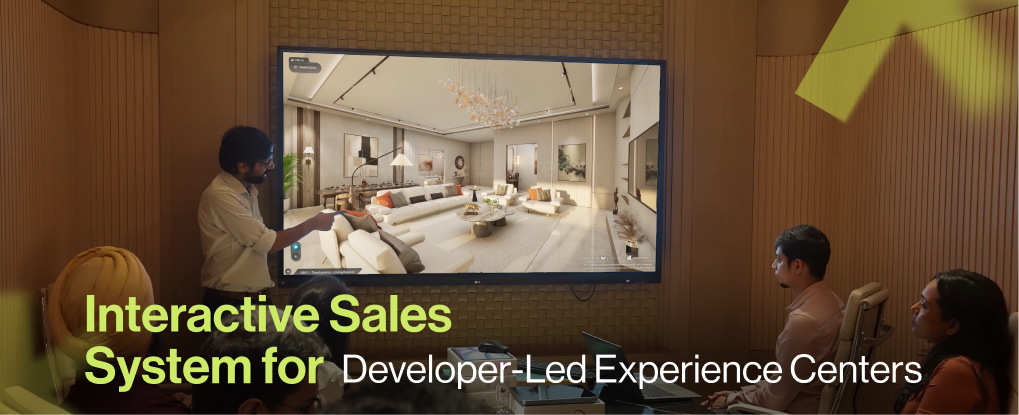
V-estate provides photorealistic 3D show flats, dynamic environmental controls, and amenity mapping in an offline-capable platform. Sales teams guide buyers through immersive property tours. Customization happens in real time. Lead quality strengthens. Conversion timelines shorten.
If you manage developer experience centers, request an on-site pilot to assess fit and measure impact. Validate visual fidelity, operational workflow, and conversion lift before full rollout. Contact V-estate to schedule a demonstration.