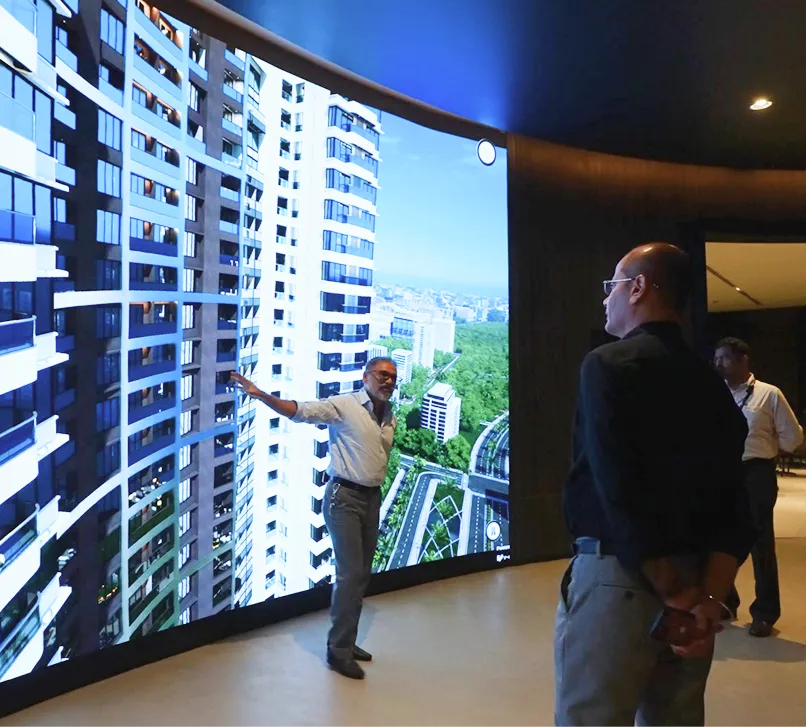
Real estate launches are getting louder. More projects. More brochures. More site visits. Yet buyers still walk away confused — unable to recall what made one project different from another.
This is not a visibility problem. It is a retention problem.
And for developers and marketing heads operating in dense urban micro-markets, retention directly impacts conversion.
The Recall Gap No One Talks About
A buyer visits three projects in a weekend. By Monday morning, layouts blur. Amenity lists merge. Location advantages sound identical.
Standard formats deliver information. They do not create memory.
Brochures get filed. Sample flats show one configuration. Sales pitches vary by representative. The buyer leaves with fragments — not clarity.
In competitive corridors like Thane, Navi Mumbai, or Pune's peripheral zones, this gap is measurable. Multiple launches. Similar ticket sizes. Near-identical configurations.
When differentiation fails at the point of experience, pricing becomes the only differentiator.
That is a position no developer wants to be in.
Where Traditional Launch Formats Break Down
Conventional presentation structures have four consistent failure points.
Passive viewing environment. Buyers observe. They are guided through a sequence decided by the sales team. There is no control, no exploration, no personal relevance.
Fragmented information delivery. Location is explained separately. Amenities are covered separately. Unit plans come last. The buyer never sees the full picture as a connected whole. Cognitive load increases. Retention drops.
Sample flat dependency. One configuration. One interior style. Buyers with different unit preferences leave with an incomplete mental image of what they are actually buying.
Inconsistent messaging. Different sales executives deliver different narratives. Brand positioning weakens. Trust takes a hit before it is even built.
None of these failures are about effort. They are about format.
A Case From a High-Density Project in Thane
A large-scale residential development in Thane faced a specific challenge. The project had strong fundamentals — location, design, amenity depth. But in a zone with multiple active launches, buyers were not retaining the key differentiators across visits.
The sales team was repeating the same explanations. Footfall was healthy. Conversion was not.
The gap was not in the product. It was in the experience structure.
The shift was towards building a guided, buyer-controlled property journey — one that replaced fragmented explanation with continuous, immersive exploration.
Structured Exploration as a Sales Tool
The experience was rebuilt as a layered sequence.
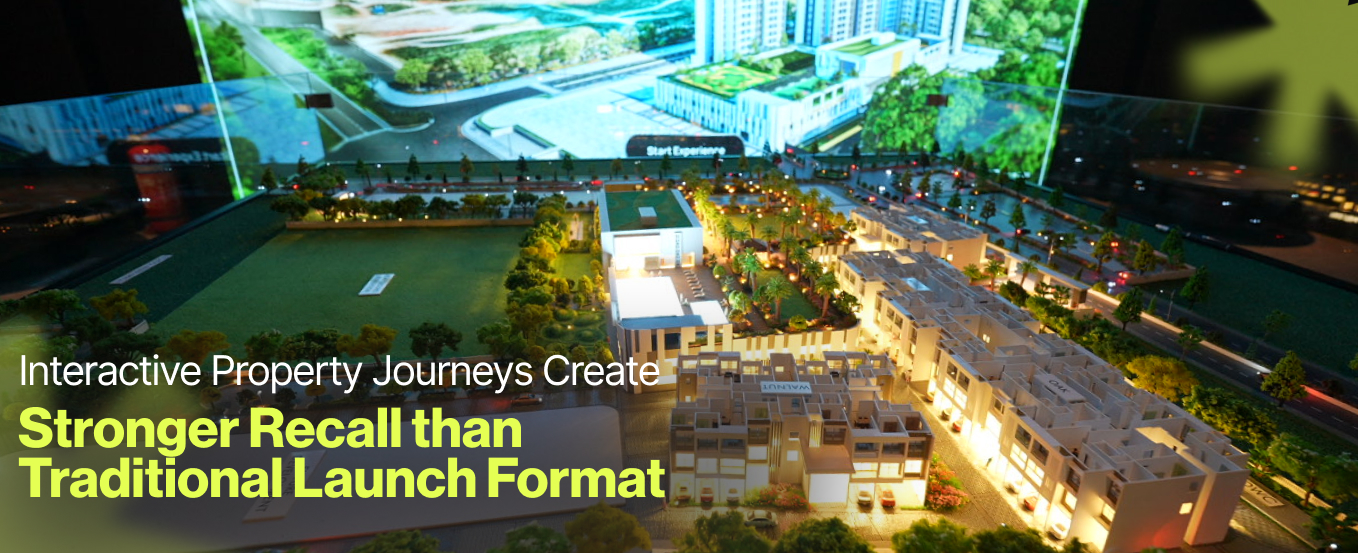
Project-level overview first. Full master layout. Tower positioning. Amenity zones. The buyer understands scale before going deeper.
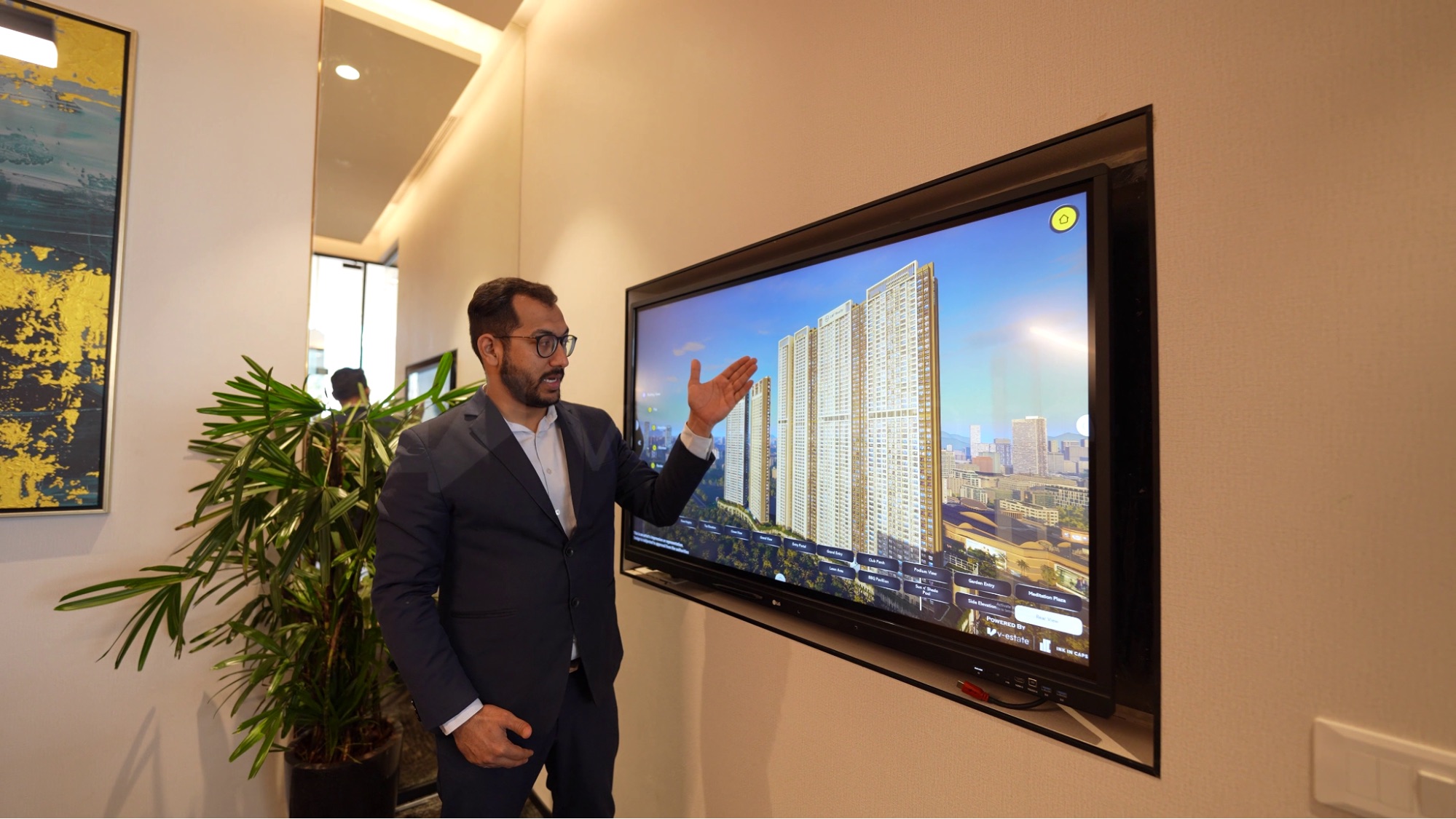
Location intelligence as a visual layer. Connectivity routes, existing infrastructure, upcoming developments — mapped and navigable. Context stops being verbal. It becomes visual.
Unit-level exploration on demand. Multiple configurations. Real proportions. Internal layout navigation. Buyers compare units on their own terms.
This sequence is not accidental. Each layer builds context for the next. Memory forms through connected understanding, not isolated data points.
Photorealistic Detail Changes What Buyers Remember
Static renders create assumptions. When proportions are ambiguous, buyers fill the gaps — usually inaccurately.
Photorealistic environments remove ambiguity.
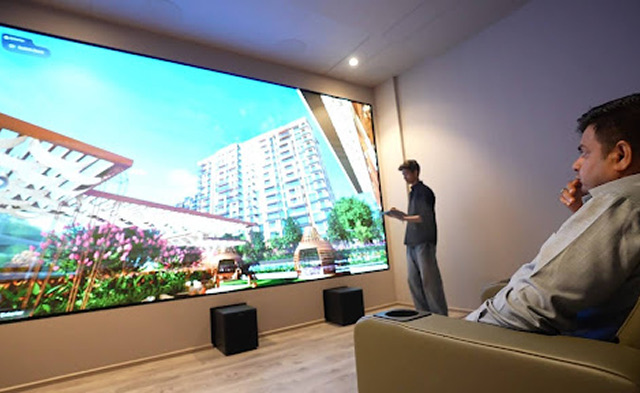
A buyer sitting in a virtual living room, seeing the actual view from a specific floor, at a specific time of day, forms a precise spatial memory. That memory travels back home with them.
Dynamic lighting and weather simulation go further. Morning light. Evening ambiance. Monsoon conditions. The property becomes situational — not just architectural.
This is the difference between seeing a flat and understanding how it will feel to live in it.
Customization Converts Exploration Into Ownership Thinking
Generic presentations maintain distance. The buyer evaluates. They do not project.
Interior customization collapses that distance.
Wall finish options. Furniture arrangement previews. Colour variations. When a buyer selects their preferred palette and sees it applied in real time, the mental shift is immediate.
They stop evaluating a project. They start imagining a home.
That shift in mindset is where conversion intent begins.
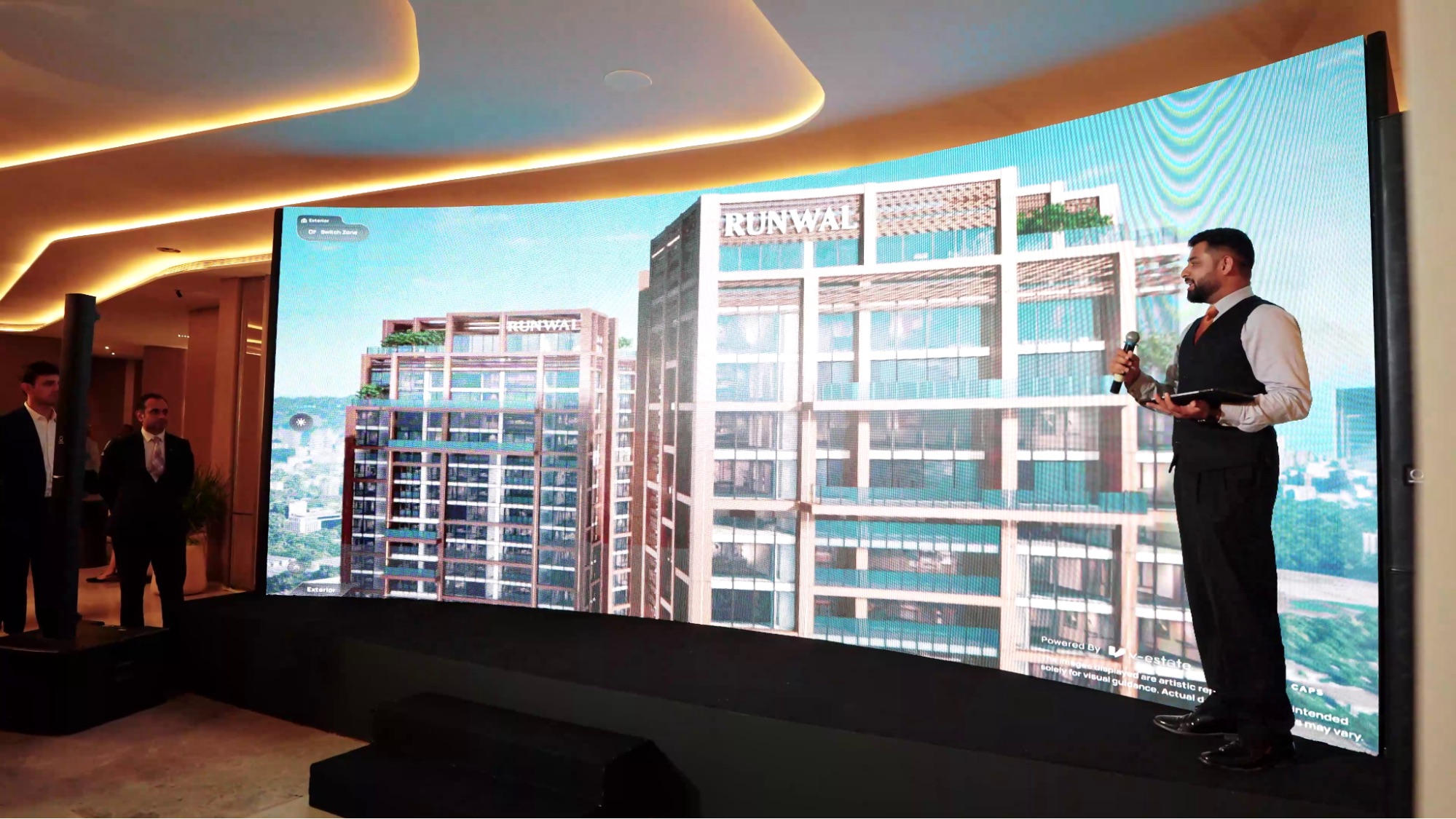
What Changes in the Sales Process
The downstream impact on sales operations is concrete.
Recall value increases. Buyers remember specific layouts, views, and amenities — not generic impressions. Follow-up conversations are more focused.
Site visit quality improves. Buyers who have already explored virtually arrive at the site with specific questions, not general curiosity. Drop-off rates from site visits decrease.
Lead qualification sharpens. Exploration behaviour — which units were viewed, how long, which features were customised — gives sales teams actionable context before the first conversation.
Repetition in sales cycles reduces. Less time explaining the basics. More time addressing decision-level concerns.
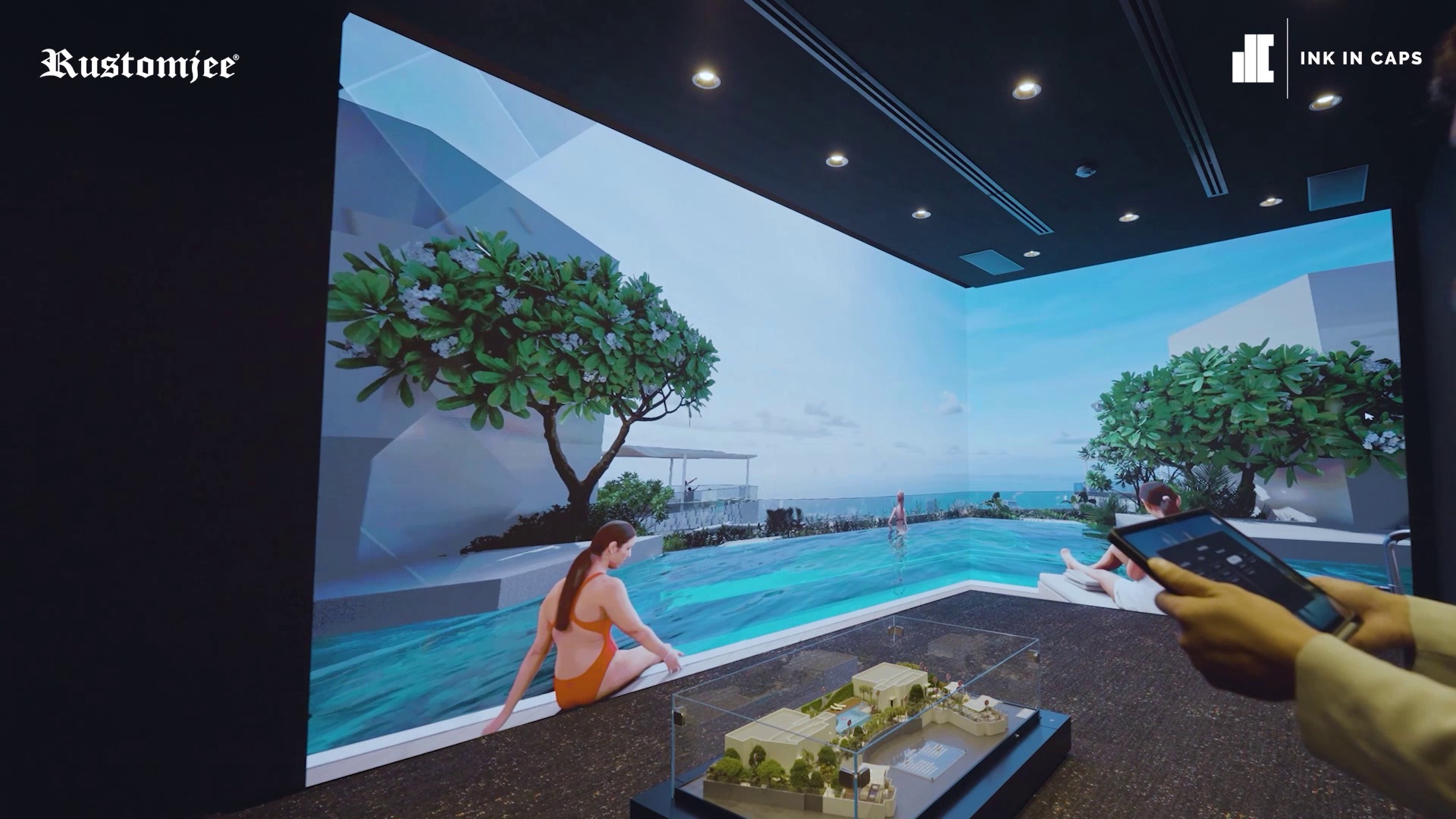
The Operational Case for Developers
Reducing dependency on multiple sample flats, printed collateral, and repeated presentations has measurable cost implications.
One unified interactive system replaces several expensive physical assets.
More importantly, it delivers a consistent buyer experience regardless of which sales executive is involved. Brand communication stays controlled.
V-estate Structures This Journey Into a Single Interface
V-estate is an offline interactive sales activation tool built for this exact problem.
It brings together photorealistic 3D virtual show flats, amenity walkthroughs, location mapping with infrastructure context, dynamic lighting and weather controls, and real-time interior customisation — all within one continuous, buyer-controlled experience.
No fragmentation. No dependency on a single salesperson's narrative. No configuration gaps.
The buyer navigates every layer at their own pace. The sales team operates with richer lead data. The developer maintains full control over brand consistency across touchpoints.