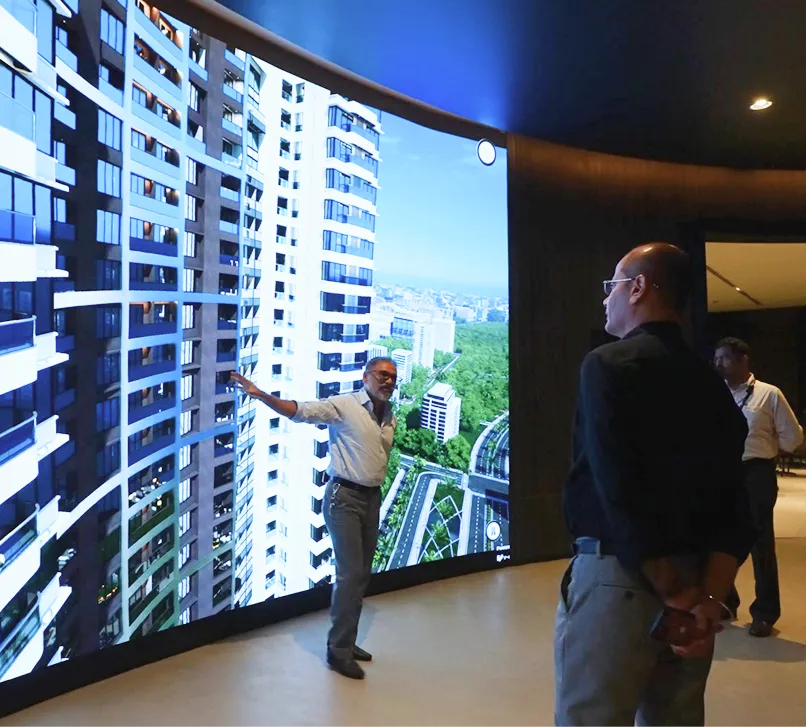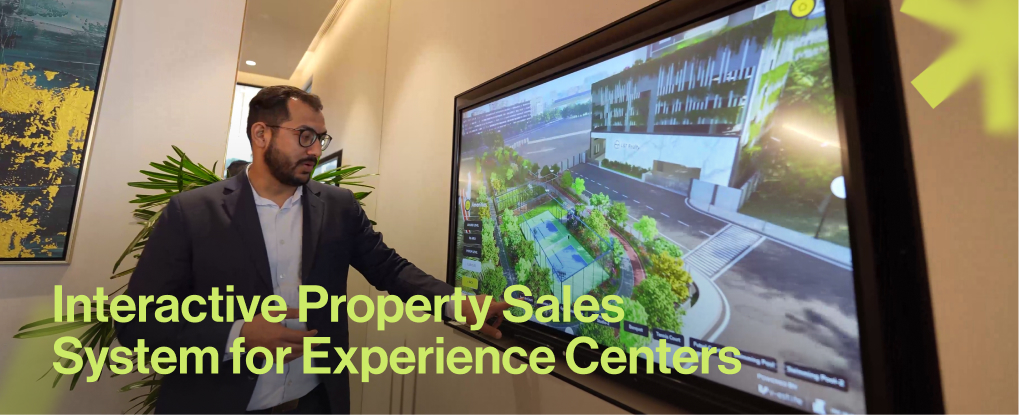
Experience centers lose qualified buyers when static displays fail to answer critical questions. Interactive property sales systems solve this by turning passive visits into measurable decision points. Buyers leave with clarity. Sales teams gain structured data. Conversion rates improve without adding headcount.
The visibility problem at onsite centers
Property developers invest heavily in experience centers. Yet most visitors leave without committing.
The core issues:
- Sales narratives differ between representatives
- Model units cannot show finish variations
- Buyers struggle to imagine completed spaces
- Repeat visits drain resources and delay decisions
- Manual follow-up creates inconsistent touchpoints
These gaps extend the sales cycle. They increase cost per acquisition. They let competitors capture indecisive prospects.
Offline interactive systems as the primary fix
An offline interactive property sales system eliminates dependency on internet connections while standardizing the buyer experience.
Core capabilities required:
Photorealistic 3D visualization. Buyers see accurate spatial dimensions, material textures, and finish quality. This removes guesswork from unit selection.
Dynamic environmental controls. Morning light, evening ambiance, and seasonal weather variations show real-world context. Buyers understand sightlines and external views before construction completes.
Real-time customization tools. Paint colors, flooring options, and furniture configurations change instantly. Buyers test preferences without waiting for physical mock-ups.
Integrated amenity mapping. Current and upcoming infrastructure overlays show transport links, schools, retail zones, and healthcare facilities. Distance and travel time metrics add decision-making precision.
Local deployment architecture. Systems run entirely on onsite hardware. No Wi-Fi failures. No server downtime. Consistent performance during peak traffic hours.
CRM-ready data export. Every interaction logs unit preferences, feature selections, and engagement duration. Sales teams receive structured leads with clear intent signals.
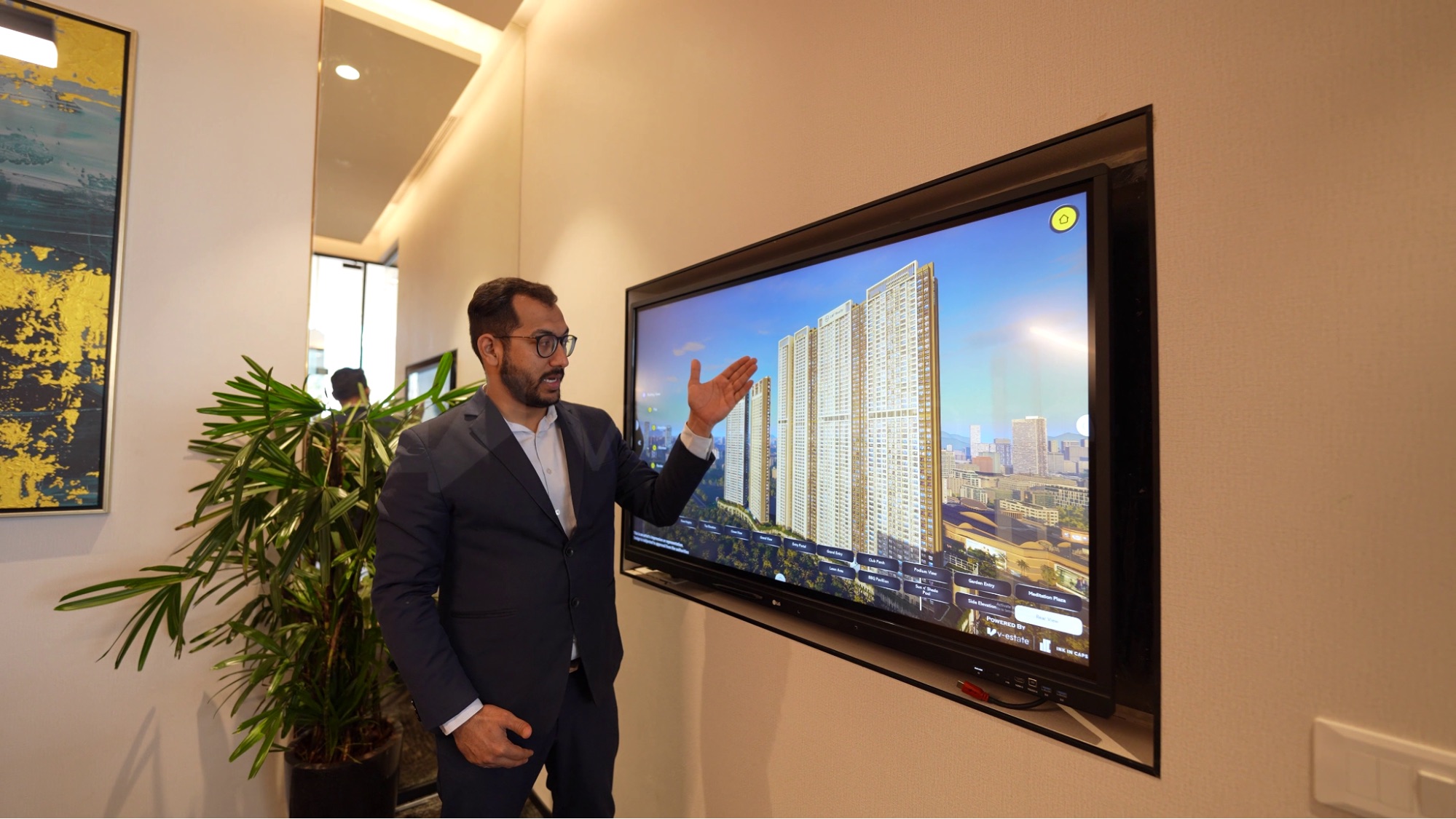
V-estate implementation for experience centers
V-estate operates as an offline interactive sales tool designed specifically for real estate experience centers. It delivers the full property exploration experience without requiring internet connectivity.
Technical features:
Photorealistic 3D virtual showflats render properties with architectural accuracy. Buyers see precisely how window views appear from living spaces. They understand scale, proportion, and finish quality instantly.
The amenity showcase maps current and planned infrastructure. Buyers explore connectivity options, lifestyle facilities, and convenience factors through layered geographic data.
Customization controls let buyers modify interiors in real time. Paint selections, flooring materials, and furniture arrangements change with single taps. The system saves each configuration for later review.
Dynamic lighting and weather controls demonstrate seasonal variations. Buyers see morning sunlight angles, evening shadow patterns, and year-round environmental context.
All visitor activity exports directly into CRM systems. Sales teams access structured data showing unit interest, feature preferences, and engagement depth.
.jpg)
Operational deployment steps
Define use case priorities. Identify whether the system primarily supports sales pitches, lead capture, or design feedback collection.
Select appropriate hardware. Touch-enabled displays with photorealistic rendering capabilities ensure smooth operation during high-traffic periods.
Structure content hierarchy. Present headline facts first. Add quick specification sheets. Include detailed technical documentation for serious buyers.
Configure offline data synchronization. Schedule automated CRM uploads at regular intervals to maintain lead pipeline freshness.
Train sales staff comprehensively. The system amplifies human expertise rather than replacing it. Representatives must translate technical choices into buyer outcomes.
Run pilot sessions immediately. Collect interaction metrics, session durations, and conversion data during initial deployment phases.
Measurable impact on conversion metrics
Interaction rate tracks the percentage of visitors engaging with the system. Higher rates indicate effective positioning and intuitive interface design.
Average session time correlates directly with purchase intent. Longer sessions signal serious consideration rather than casual browsing.
Configuration saves count personalized setups exported by visitors. Each save represents a qualified lead with documented preferences.
Lead conversion comparison measures before-and-after system deployment. Effective implementations show measurable improvement in booking rates.
Reduced site revisits demonstrate efficiency gains. Fewer repeat visits per closed sale indicate better first-contact clarity.
Risk management and content accuracy
Maintain exact parity between digital displays and legal property documents. Mismatched specifications create liability exposure and buyer distrust.
Implement offline data encryption protocols. Secure local storage protects visitor information and configuration data.
Establish version control processes. Content updates must deploy consistently across all experience center locations.
Avoid option overload. Excessive choices slow decisions rather than accelerating them. Maintain clear pathways to commitment.
Design feedback loop for product teams
Interaction logs reveal the most-selected finishes and features. Product teams use this data to refine standard fit-out offerings.
Amenity engagement patterns show which facilities drive interest. Marketing adjusts messaging to emphasize high-impact amenities.
Configuration frequency identifies underperforming options. Developers eliminate low-demand choices and focus inventory on proven preferences.
Implementation outcome example
An experience center deploys V-estate across multiple kiosks. Visitors interact for 6 to 12 minutes per session. The system captures preferred units, selected finishes, and specific questions asked.
Sales teams receive structured lead files with suggested next steps. Repetitive demonstrations decrease. Human time focuses on negotiation and closing rather than basic property explanation.
Conversion velocity improves. Cost per sale drops. Lead quality increases through documented engagement metrics.
Next action for decision-makers
Assess feasibility within your current experience center infrastructure. Request a technical brief or pilot deployment to validate compatibility with existing hardware, inventory systems, and sales processes.
Use pilot metrics to measure interaction rates, lead quality improvements, and conversion impact. If results align with business objectives, scale deployment across multiple centers using a standardized playbook.
Interactive property sales systems reduce onsite ambiguity, produce qualified leads, and accelerate buyer decisions. Implement them as focused sales tools that amplify team effectiveness while delivering measurable ROI.