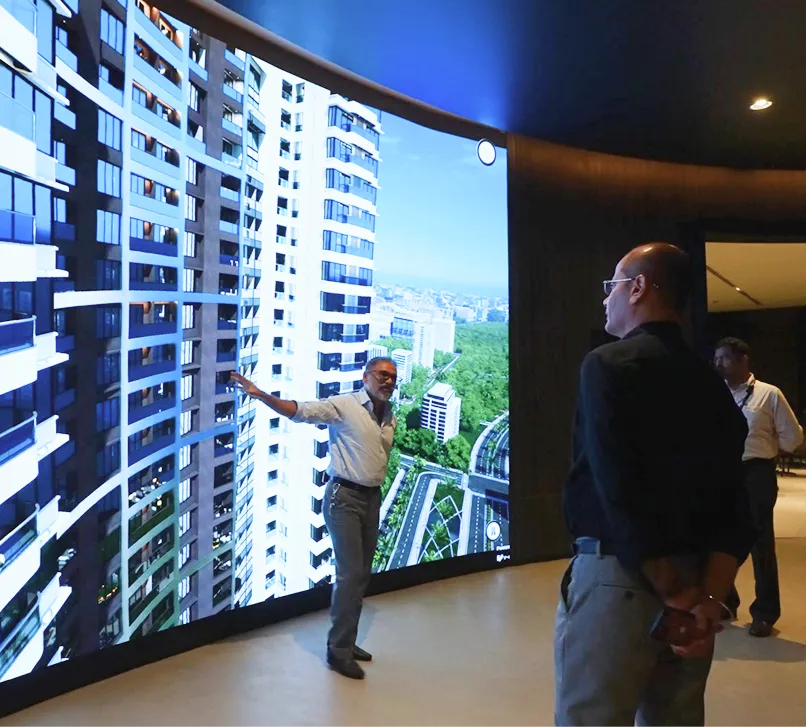
Premium units command 20–30% price markups in competitive high-rise markets. Buyers demand proof. Standard marketing collateral—flat floor plans, static renders, printed brochures—fails to justify these gaps. Real estate developers lose sales velocity and resort to discounting. Sales teams repeat verbal pitches that don't stick. Marketing budgets stretch thin across print materials, site visits, and agent training. The core issue remains unresolved: buyers lack tangible evidence for premium pricing.
Interactive elevation mapping changes this dynamic. It delivers visual proof linked to measurable unit advantages. Developers move from defensive pricing conversations to confident value conversations. This distinction drives conversion velocity and premium realization.
The Unit Premium Problem in High-Rise Development
Buyers scrutinize price differences across floors. A unit on level 25 costs 28% more than level 10. Why? View quality. Air circulation. Sound isolation. Light exposure. These benefits exist. Communicating them clearly does not.
Current sales approaches fall short:
Brochure limitations: 2D floor plans convey layout. They cannot show view angles, shadow patterns, or ambient light at 6 PM.
Verbal justifications lack credibility: "This floor catches better breezes" sounds generic. Buyers hear it elsewhere. Differentiation evaporates.
Physical site visits don't scale: Walking a buyer through each unit consumes hours. Scheduling conflicts delay decisions. Inventory ties up.
Render fatigue: Glossy renders promise too much. Reality disappoints. Trust erodes.
Sales rep inconsistency: Different agents pitch different advantages. Messaging fragments. Premium perception fragments with it.
The consequence is measurable: Conversion rates on premium units drop below 15%. Developers absorb extended holding costs. Price reductions follow. Net unit realization suffers.
Why Elevation Mapping Becomes Essential
Premium positioning depends on buyers understanding unit-specific benefits. Not project benefits. Not location benefits. Unit-level advantages tied to actual floor height, orientation, and proximity to amenities.
Elevation mapping isolates this variable. It shows:
Exact window orientation against surrounding landmarks, skyline, and open space.
Time-based light behavior—how morning sun enters versus evening light; seasonal angle shifts.
Spatial relationships between the unit window and nearby towers, roads, green spaces, and utility zones.
Amenity proximity at that elevation—how far to the clubhouse, pool, parking, exit gates.
Microclimate conditions—breeze flow patterns, noise attenuation distances, potential obstructions.
When buyers see these specifics rendered visually, premium justification becomes self-evident. The conversation shifts. Instead of defending the price, developers explain tangible lifestyle differences per floor.
Offline Interactive Mapping: The Execution Layer
Offline activation matters. Real estate sales happen in offices, exhibition centers, and site locations. Internet dependency creates risk. Peak sales hours see network congestion. Connection drops derail presentations. Salespeople lose momentum.
Offline-first elevation mapping eliminates this risk. The complete project database—3D models, amenity layers, lighting simulations—loads on tablets and kiosks stationed at sales points. No cloud dependency. No latency. Instant responsiveness.
Buyers select a floor. The system renders photorealistic 3D elevations instantly. Window views show precise exterior scenes—not generic backdrops. Details matter: the exact play of light through existing nearby trees, the actual sight line to water features, the real distance to neighboring developments.
Amenity overlays layer on top. Icons mark schools within 500 meters, shopping centers, transit stations, upcoming projects. Buyers assess connectivity without leaving the sales office. They understand neighborhood context per unit elevation.
Core Features That Drive Premium Realization
Photorealistic show flats anchor the experience. Users zoom into details. Materiality is evident—wood grain on flooring, fabric texture on sofas, granite finishes on counters. This granularity builds confidence in the delivery quality.
Dynamic window visualization simulates real exterior conditions. Morning light filtered through curtains. Evening sun creating warm amber tones. Seasonal shifts showing how shadows fall across living spaces. Buyers project lifestyle onto the unit. This mental ownership converts interest into intent.
Customization controls reduce friction. Paint the walls a chosen shade. Swap furniture configurations. Test if a preferred sofa fits the proportions. This agency—allowing buyers to personalize before purchase—increases attachment and decision velocity.
Lighting and weather controls reveal floor-specific conditions:
Early morning brightness on upper elevations versus shade on lower floors.
Monsoon-season cloud cover and how it affects natural light.
Summer afternoon heat exposure on eastern faces.
Evening breeze patterns visible through curtain movement.
Amenity proximity mapping displays facilities at that elevation's vantage point. Is the pool visible from the 20th-floor unit? The gym entrance—how many steps away? Upcoming metro station—which direction? Convenience becomes quantifiable.
Data logging tracks buyer behavior. Which floors generate dwell time? Do penthouses outsell mid-levels? Do specific amenity proximities drive interest? Marketing teams analyze interactions to refine positioning. Lead scoring becomes elevation-aware. High-intent buyers surface faster.
How This Connects to Sales Outcomes
Developers implementing offline elevation mapping report tangible sales metrics:
Premium uptake accelerates. Units on levels 22–30 previously lingered. Post-activation, absorption accelerates 25–40%. Buyers self-qualify through visual engagement. They understand lifestyle upgrades: reduced road noise, enhanced natural light, dominant views, optimized breeze corridors.
Negotiation cycles shorten. When buyers see precise elevation-specific benefits, price objections diminish. They're comparing value against visual evidence, not competing projects. Sales cycles compress by 20–35%.
Inventory turns predictably. Premium units sell in waves aligned with buyer viewing patterns. Developers hit absorption targets without discounting.
Cost structures improve. Print collateral budgets drop 40%. Agent training time reduces—visuals replace lengthy explanations. Site visit frequency decreases because buyers pre-qualify via elevation mapping. Marketing spend shifts from offline collateral to targeted digital acquisition.
Elevation Mapping as Competitive Differentiation
Markets saturated with lookalike towers lack differentiation. Offline interactive tools isolate leaders. Buyers share screenshots. Word-of-mouth amplifies. Developers own the premium justification narrative.
Implementation timelines matter. Setup takes days. Team training requires hours. Offline robustness handles Mumbai monsoons, Delhi dust, Bangalore server limitations. The system works reliably regardless of connectivity.
Real Estate Developers: Next Steps
Unit premium realization depends on buyer confidence in floor-level advantages. Interactive elevation mapping delivers this confidence through precise visual evidence and customization control.
Evaluate how your current sales activation addresses floor-level differentiation. Identify where conversion friction occurs. Test offline elevation mapping at your next sales event. Measure premium uptake velocity. Compare results against baseline.