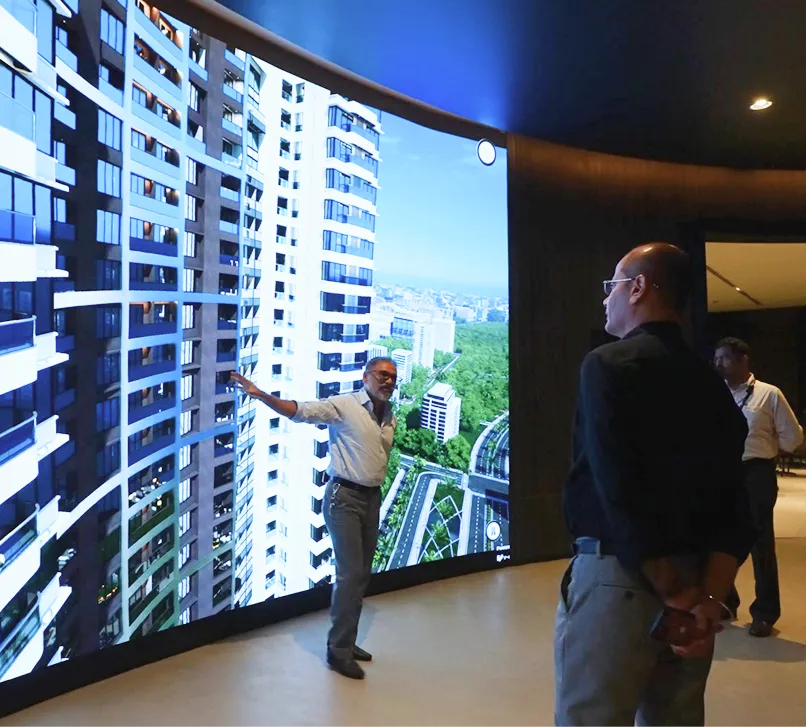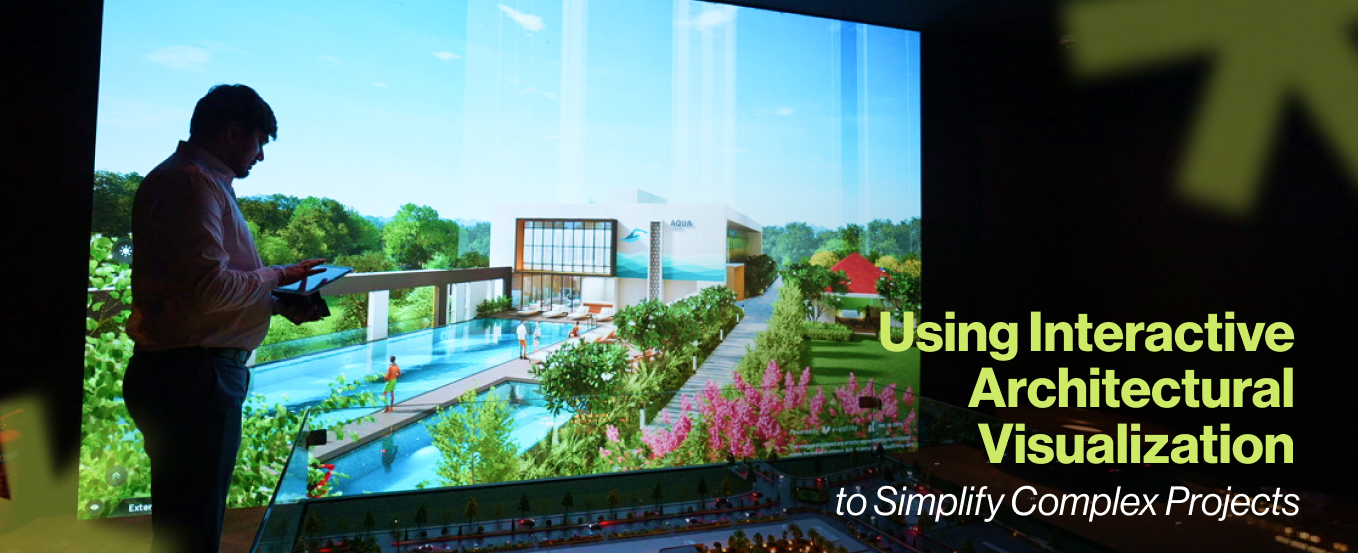
Large residential projects are hard to sell without the right tools.
Not because the product is weak. Because the communication breaks down before the buyer ever connects with it.
Master plans look dense. Multiple configurations create confusion. Future phases feel abstract. Buyers arrive with questions and leave without answers.
The gap between what developers build and what buyers understand is where sales cycles stretch and conversions stall.
The Real Problem Is Not the Product — It's the Presentation
Most developers invest heavily in the physical experience center. Printed floor plans. A sample flat or two. A well-trained sales team.
But the coverage is incomplete.
A single sample flat cannot represent twelve unit types. A printed plan cannot communicate scale. A verbal explanation of location advantages rarely sticks.
Buyers need to see. Not hear.
When clarity is missing, decision fatigue sets in. Buyers delay. They revisit. They compare elsewhere. Conversion timelines stretch.
This is a communication problem. And it requires a communication solution.
What Interactive Visualization Actually Solves
Interactive architectural visualization replaces explanation with direct experience.
The buyer is no longer a passive listener. They become an active explorer.
They navigate the master plan. They walk through a photorealistic unit. They check the view from the bedroom window at 7 PM. They switch the wall color. They see the amenity block in context, not on a separate printed sheet.
Every doubt gets addressed visually — not verbally.
This is the shift that changes sales behavior.
Layers That Actually Matter in a Complex Project
Effective visualization is not just about interiors. It connects every layer of a large development.
Master Plan Navigation Buyers understand tower positions, open spaces, access points, and phasing — without relying on a sales representative to interpret a 2D layout.
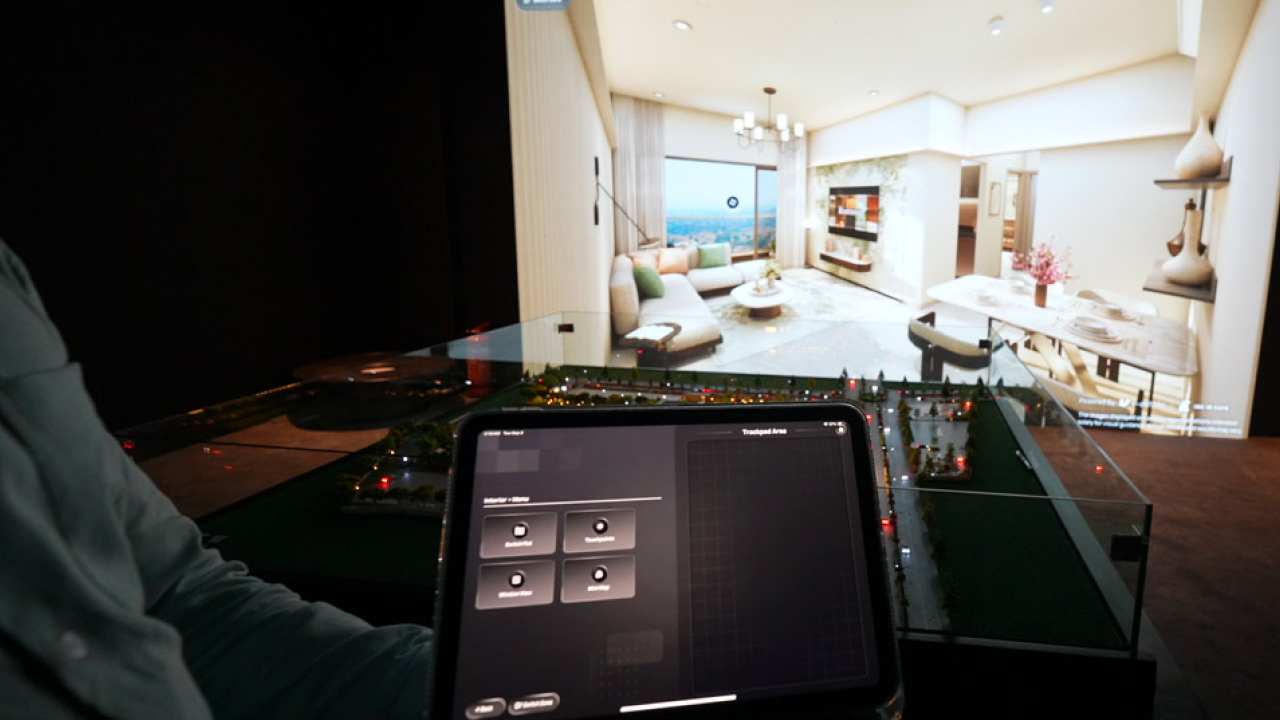
Unit-Level Exploration Photorealistic 3D representation of apartments with accurate proportions, furniture placement, and material finishes. Buyers understand livability before stepping into a sample flat.
External Environment Mapping Nearby schools, hospitals, metro access, upcoming infrastructure — mapped visually. Location advantages stop being a talking point and become visible.
Amenity Visualization Contextual placement within the project. Buyers understand where the clubhouse sits relative to their tower, how far the children's play area is, and how the landscape connects.
Dynamic Lighting and Weather Controls The unit at noon looks different from the unit at dusk. Buyers see both. This level of detail builds trust in ways a static render never can.
Customization Options Wall finishes, flooring choices, furniture preferences — visualized in real time. The unit becomes theirs before they book it.
Each of these features directly addresses a specific buyer hesitation.
Experience Center Impact — Real Observation
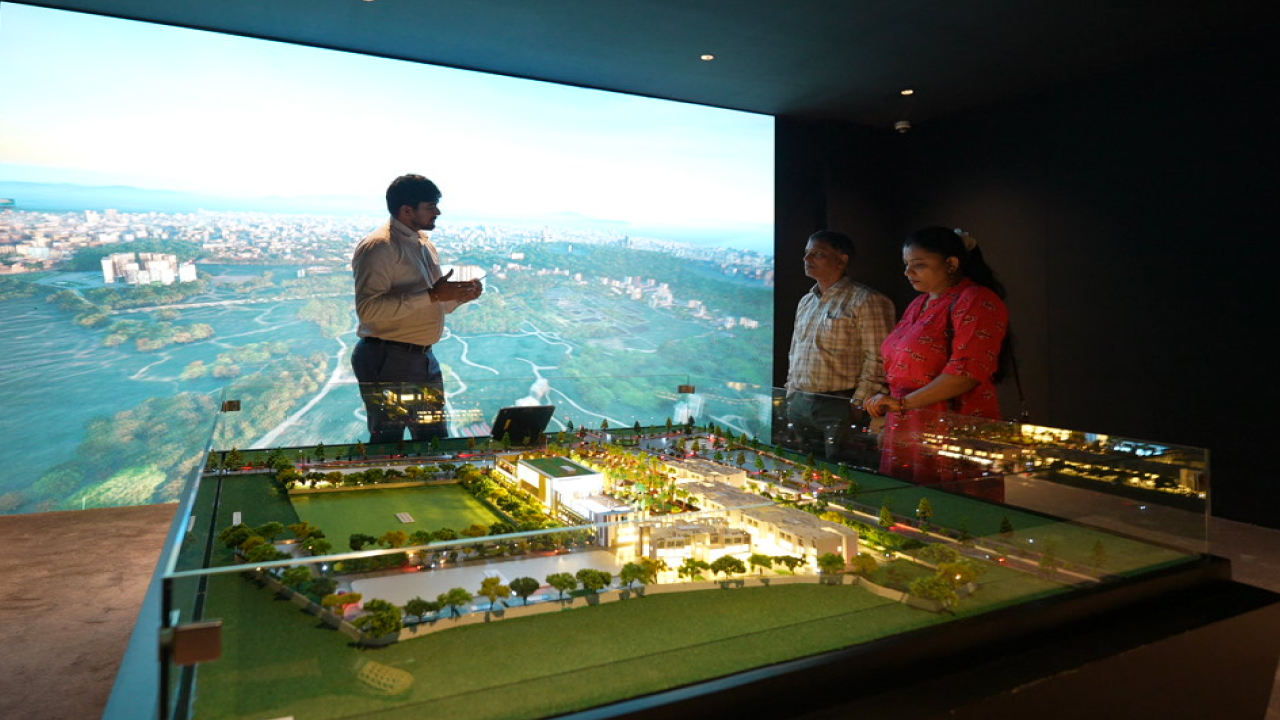
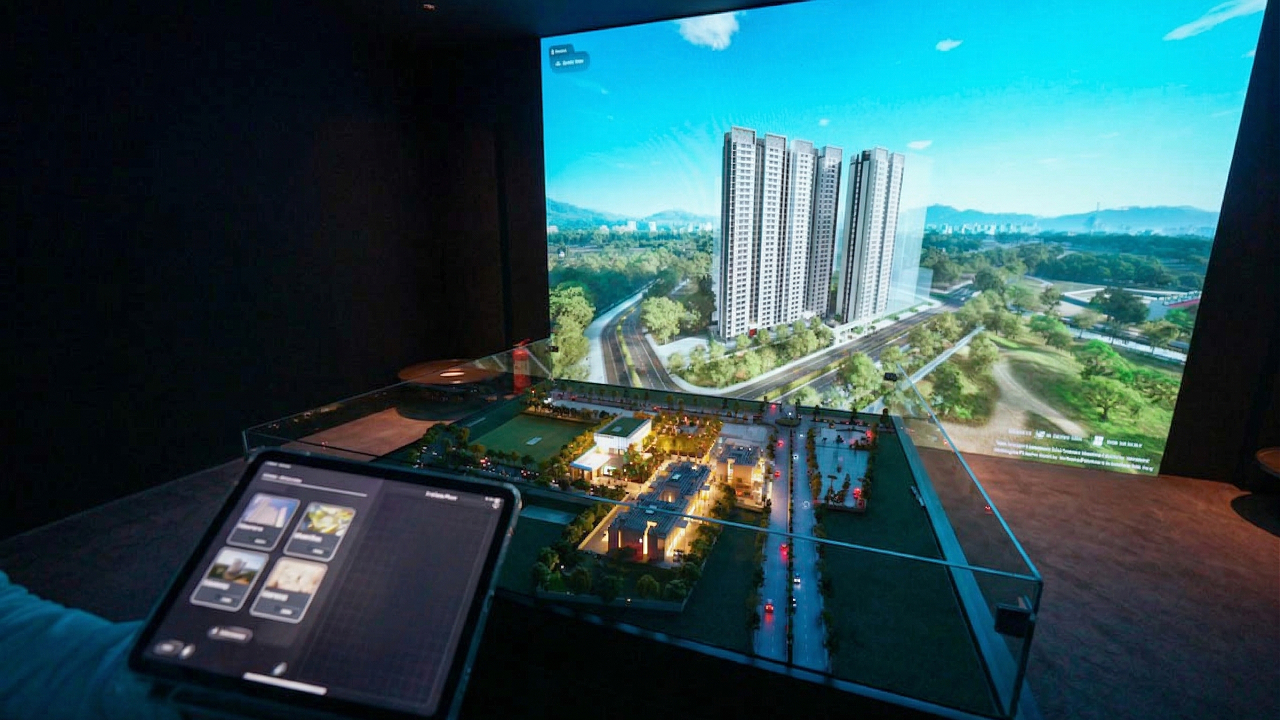
At the Rustomjee Urban Woods experience center, the traditional setup had its limits.
Printed plans. Physical walkthroughs. Heavy dependency on sales teams to walk every buyer through every configuration.
After integrating interactive visualization across the project, the shift was measurable.
Buyers navigated inventory independently. The need for repeated manual explanations reduced. Engagement time inside the experience center increased. Early-stage discussions moved faster because buyers arrived at conversations already informed.
The experience center stopped being a display space. It became a decision space.
That is the operational difference interactive visualization creates.
The Sales Funnel Effect
Interactive visualization does not just improve buyer experience. It directly impacts sales efficiency.
At the discovery stage — buyers grasp project scale and location advantages without verbal prompting.
At the evaluation stage — unit comparisons happen faster. Customization creates personal relevance. Buyers start to own the decision mentally.
At the closing stage — confidence is higher. Dependence on imagination is lower. The psychological distance between interest and booking shrinks.
Sales teams spend less time explaining and more time closing.

Relevance Across Project Types
This is not a premium-only tool.
Mid-income housing projects with multiple configurations benefit equally. Township developments with evolving phases need consistent communication across all touchpoints. Projects under construction need buyers to connect with a future that does not physically exist yet.
Interactive visualization works across all of these.
It scales. It updates digitally. It reduces the cost of maintaining multiple physical sample flats.
When design changes happen — and they always do — updates are implemented without rebuilding anything.
For Marketing Heads and Developers
The buyer profile has shifted. Self-guided discovery is now preferred. Visual confirmation is required before commitment. Emotional connection comes through personalization, not pitch.
Developers who present complex projects through static materials alone are leaving conversion potential on the table.
Interactive architectural visualization is not a feature addition. It is an operational requirement for large project sales.
It standardizes communication. It reduces sales cycle length. It increases the quality of every buyer interaction inside your experience center.
If your current setup relies on explanation more than experience, that is where the gap is.
Interactive visualization tools like V-estate bring master plan navigation, 3D show flats, location mapping, and customization into one offline, experience-center-ready platform — built specifically for the way developers sell and buyers decide.