Online configurators have transformed how people shop for cars, kitchens, and furniture. Choose a colour, adjust a layout, see the price update in real time — all from a browser, without a salesperson in sight. It's natural to assume real estate would follow the same trajectory. It hasn't, and the reasons why matter for any developer deciding where to invest their sales technology budget.
Why the online configurator model doesn't transfer directly
Online configurators work well when three conditions are met: the purchase decision is relatively low-stakes, the product is standardised, and the buyer is comfortable deciding without another person present.
Residential real estate meets none of these conditions. A flat purchase is one of the largest financial decisions a family will make. Units are not standardised — floor, direction, view, and finish all vary meaningfully within the same project. And the decision is rarely made by one person alone; it typically involves a spouse, parents, or extended family, often across multiple conversations and multiple visits.
What buyers actually need instead
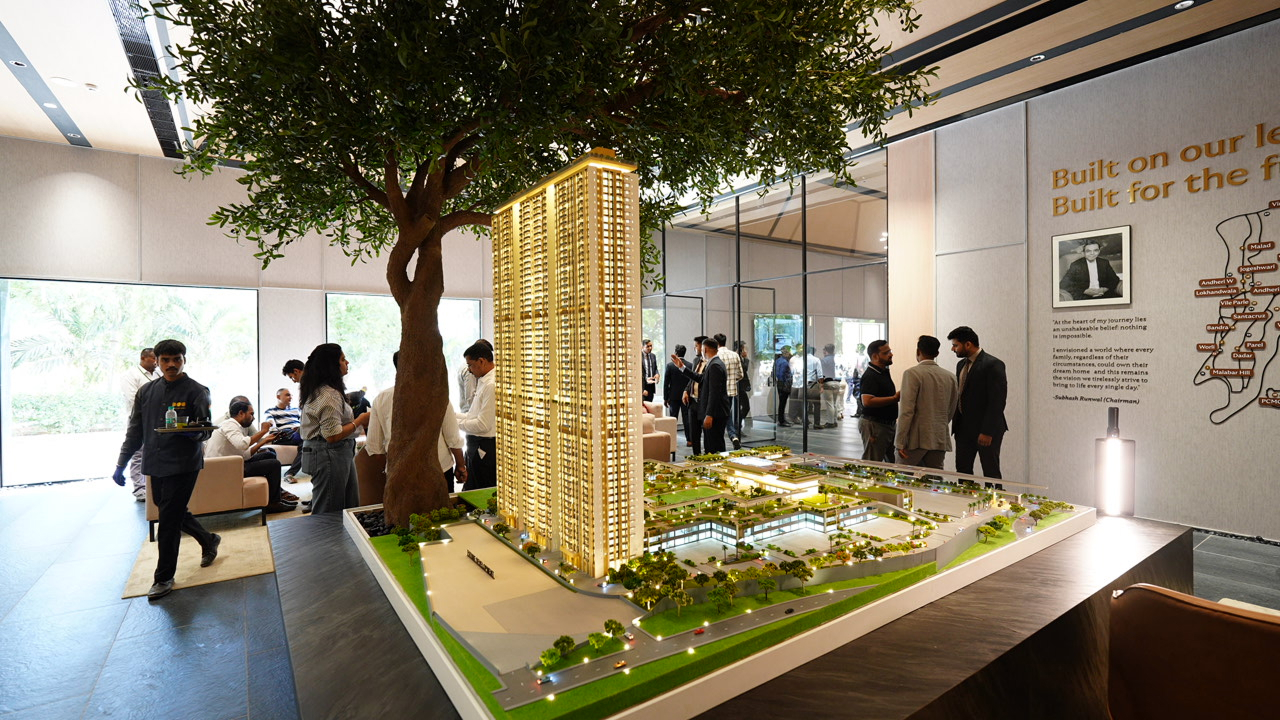
For a decision this significant, buyers need something an online configurator can't provide: a guided, in-person experience where questions can be asked and answered in real time, and where the sales team can read the room and adjust the conversation accordingly.
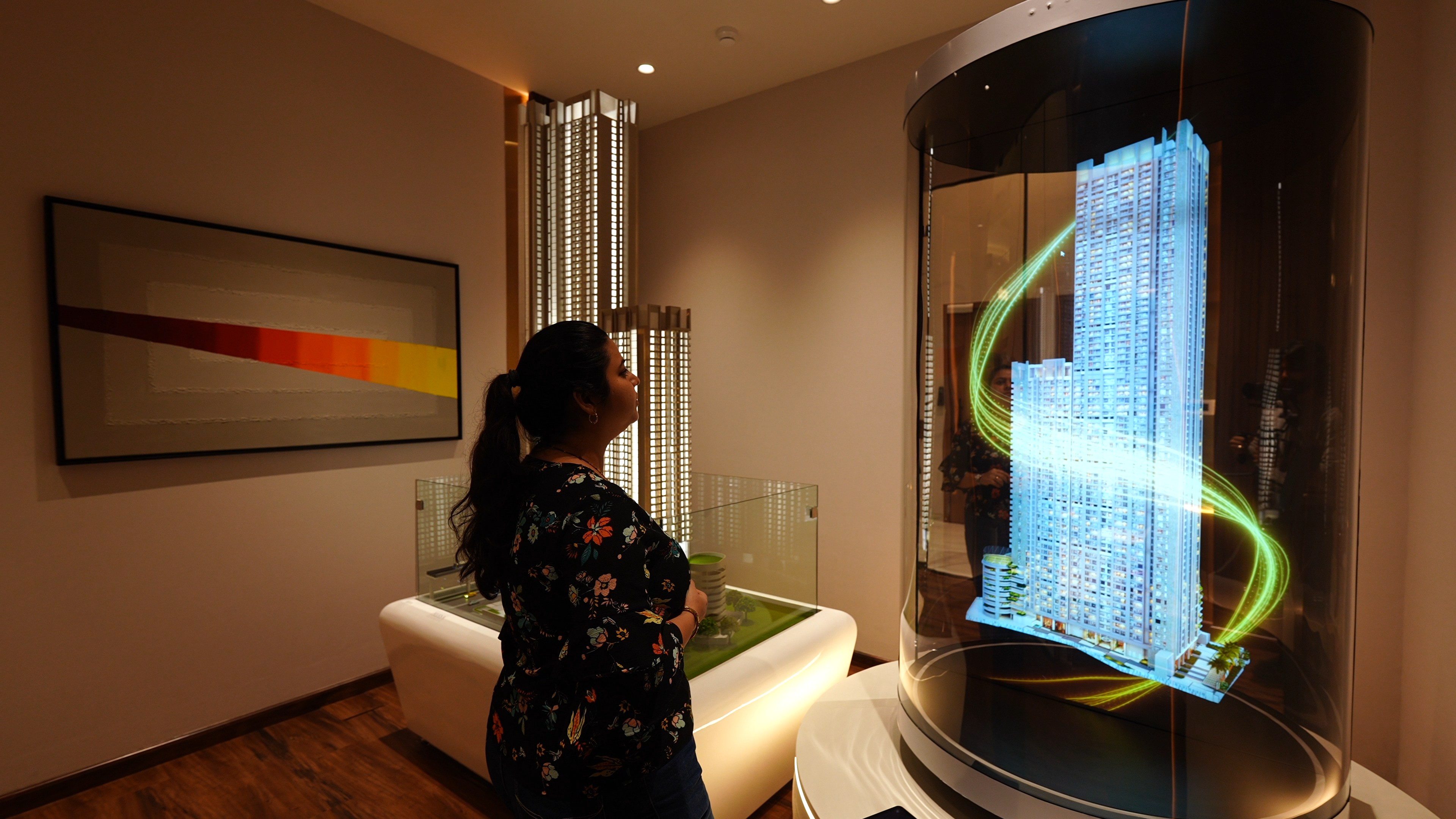
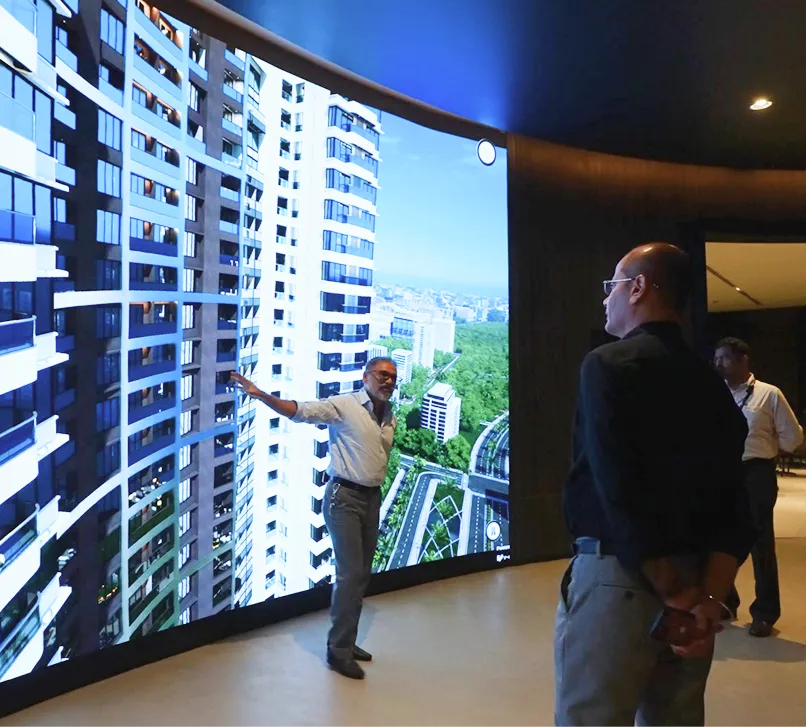
This is exactly what an offline, in-centre interactive tool is built for. V-Estate deploys digital twins, interactive scale models, and window view simulations inside the physical experience center itself — not as a self-serve website tool, but as a system a sales executive uses alongside the buyer, in person.
The proof is in how buyers actually behave
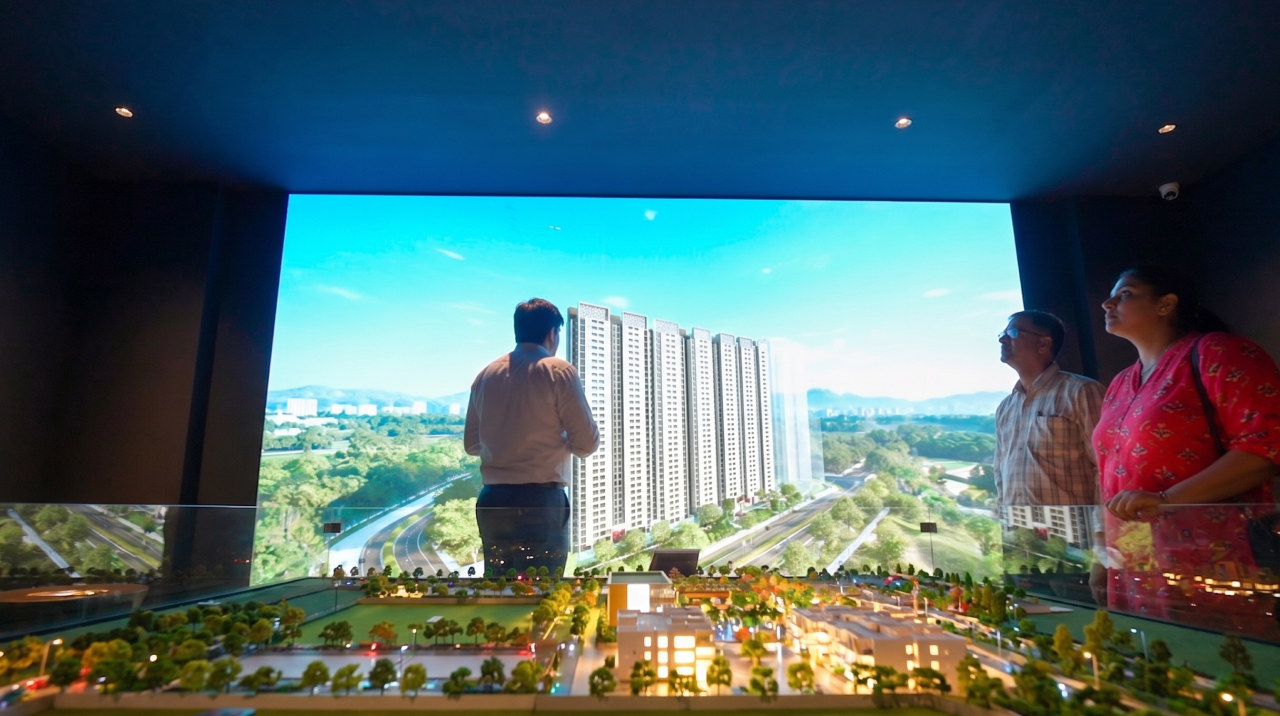
The clearest evidence for why offline still wins comes from how buyers engage once they're inside a well-designed experience center. At a Rustomjee gallery equipped with V-Estate's interactive tools, the impact was strong enough that, in the words of Rustomjee's Site Business Head, engagement improved, conversations became sharper, and conviction was visibly stronger — to the point that a child in one family visit tried to physically run into the amenities screen, believing it was real.
That kind of reaction doesn't happen with an online configurator. It happens when the technology is embedded inside a physical space, with a sales executive present to shape the experience and answer questions the moment they arise.
Where offline tools add value that online cannot
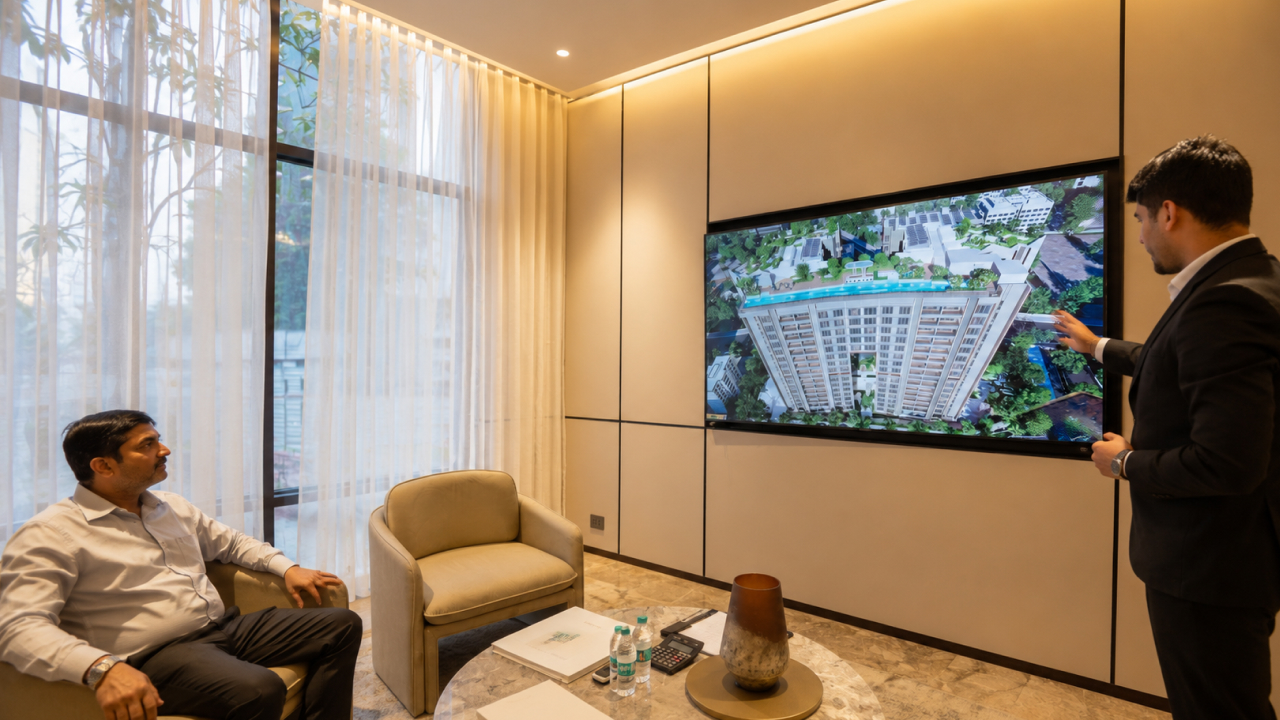
Real-time guidance. A sales executive can adjust what's shown based on a buyer's specific concerns — whether that's Vastu alignment, commute time, or a particular amenity — in a way a static online configurator cannot.
Family-inclusive decision-making. Multiple family members can engage with the same display simultaneously, discussing and debating in real time, rather than each person separately browsing a website at home.
Engineering credibility. In-centre tools like V-Estate's interactive material library let a sales executive demonstrate waterproofing, structural strength, or wiring safety through physical interaction — details that are difficult to communicate credibly through a screen alone. L&T Realty's Cluster Head noted that this kind of in-centre storytelling helped translate L&T's engineering depth into a clear, immersive experience that buyers could instantly understand.
Emotional immersion. Anamorphic LED displays, curved screens, and immersive amphitheatre AV create a scale of experience — light, sound, spatial depth — that a laptop or phone screen simply cannot replicate.
The right role for digital, and where offline takes over
None of this means online tools have no place in real estate. Digital marketing, project websites, and virtual previews all play an important role in generating interest and driving footfall. But for the moment that actually converts a browsing prospect into a committed buyer, developers with the strongest track records — Godrej, Rustomjee, Adani Realty, L&T Realty among them — have consistently invested in offline, in-centre technology rather than relying on digital self-service tools alone.
For high-ticket, high-consideration purchases, the in-person moment remains where trust is built and decisions are made. Offline interactive tools are designed for exactly that moment.
To see how an in-centre interactive system could strengthen buyer conviction at your project, book a demo with V-Estate.
.jpeg)