Buyers don't buy features. They buy clarity. When prospects fully grasp what a property offers, decisions happen faster. Objections drop. Conversions rise. Yet most developers still rely on static renders and verbal pitches that leave critical questions unanswered.
The Core Problem Facing Real Estate Developers
Sales teams spend hours explaining layouts. Buyers still leave confused. They cannot visualize the finished space. They worry about sightlines, natural light, and neighborhood context. This gap between presentation and comprehension is killing conversions.
Brochures show polished images. Site visits reveal concrete shells. The disconnect creates hesitation. Prospects delay decisions. They revisit competitors. They demand more information that sales teams struggle to deliver on the spot.
Information Delivery Drives Buyer Confidence
Clear property understanding shortens the sales cycle. Remote buyers and walk-in clients both need the same thing: confidence that they know what they're buying. Developers who present comprehensive property context see measurable improvements in lead quality and close rates.
This is not about better marketing claims. It is about giving buyers control over the information they need to decide. When prospects can test choices and explore outcomes independently, trust builds faster.

The Sales Center Must Do More Than Display
Traditional sales centers rely on model units, floor plans, and sales staff explanations. These work for some buyers. They fail for others who need to:
Visualize different finish options in real time
Understand how natural light enters at different times
See actual views from specific floors and orientations
Compare amenity locations and accessibility
Grasp neighborhood connectivity and future developments
Static displays cannot answer these questions comprehensively. Buyers leave with doubts. Sales teams field repetitive queries. The cycle extends unnecessarily.
Offline Interactive Tools Change the Sales Dynamic
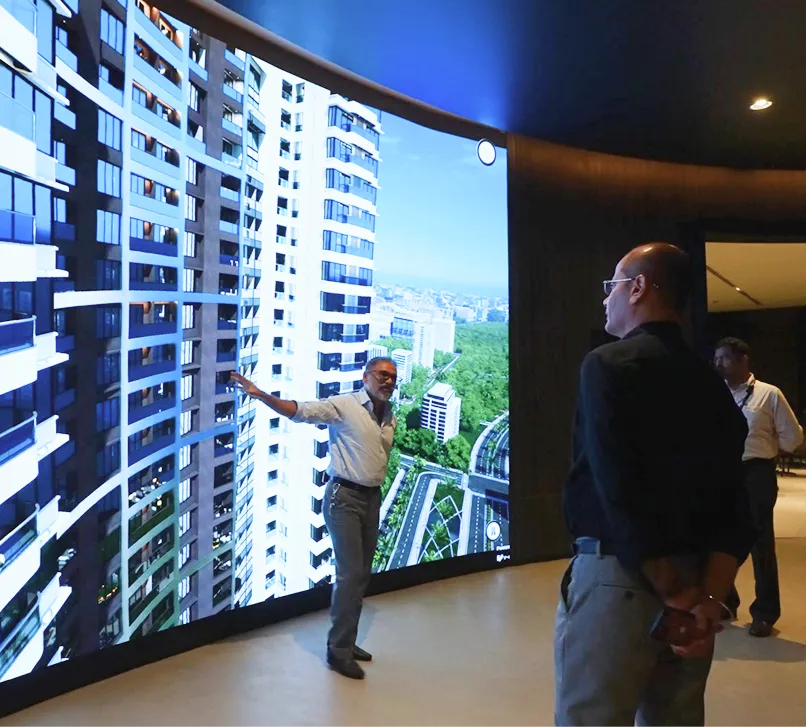
V-estate operates as an in-person sales instrument deployed in sales centers and field environments. It runs offline without internet dependency. The interface puts control in the prospect's hands.
Buyers select wall colors, furniture layouts, and finishes. They adjust lighting from morning to evening. They switch weather conditions from summer to monsoon. They rotate views to see exactly what they'll see from their balcony.
This is not a marketing gimmick. It is a functional tool that addresses the comprehension gap directly. Sales teams guide the interaction. Buyers explore independently. Questions get answered before they're asked.
Technical Capabilities That Matter for Sales Teams
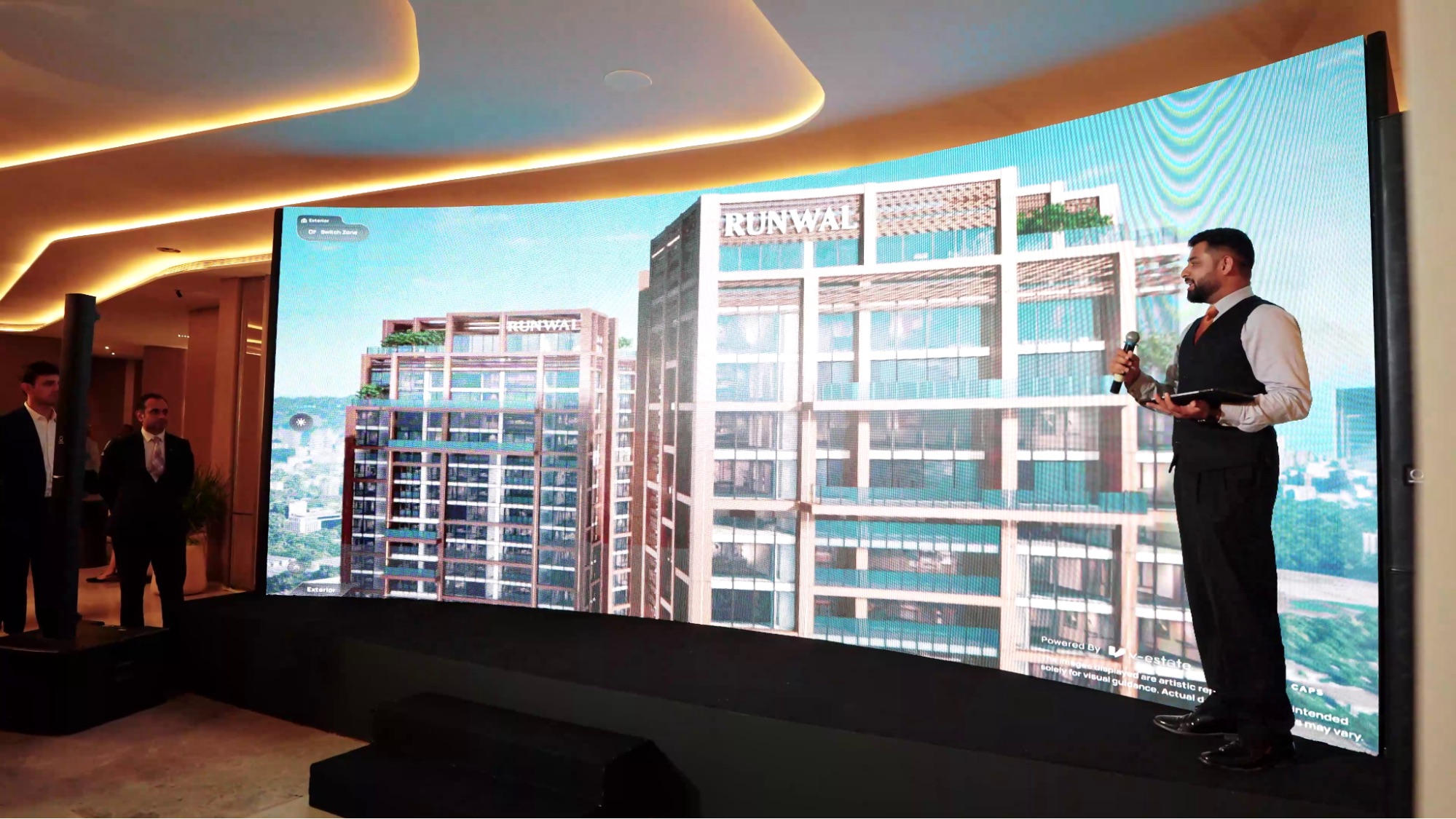
Photorealistic 3D environments replicate the final property accurately. Buyers see furniture placement, ceiling heights, and spatial flow. They understand room functionality immediately.
Dynamic lighting and weather simulation show how spaces transform. Morning light in the bedroom. Evening shadows in the living room. Monsoon views from the balcony. Buyers grasp the living experience across seasons.
Real-time customization lets prospects test combinations. They change flooring, wall colors, and furniture. They see results instantly. This eliminates the imagination barrier that stops many buyers.
Neighborhood mapping displays schools, hospitals, transport hubs, and upcoming infrastructure. Buyers assess location value without leaving the sales center.
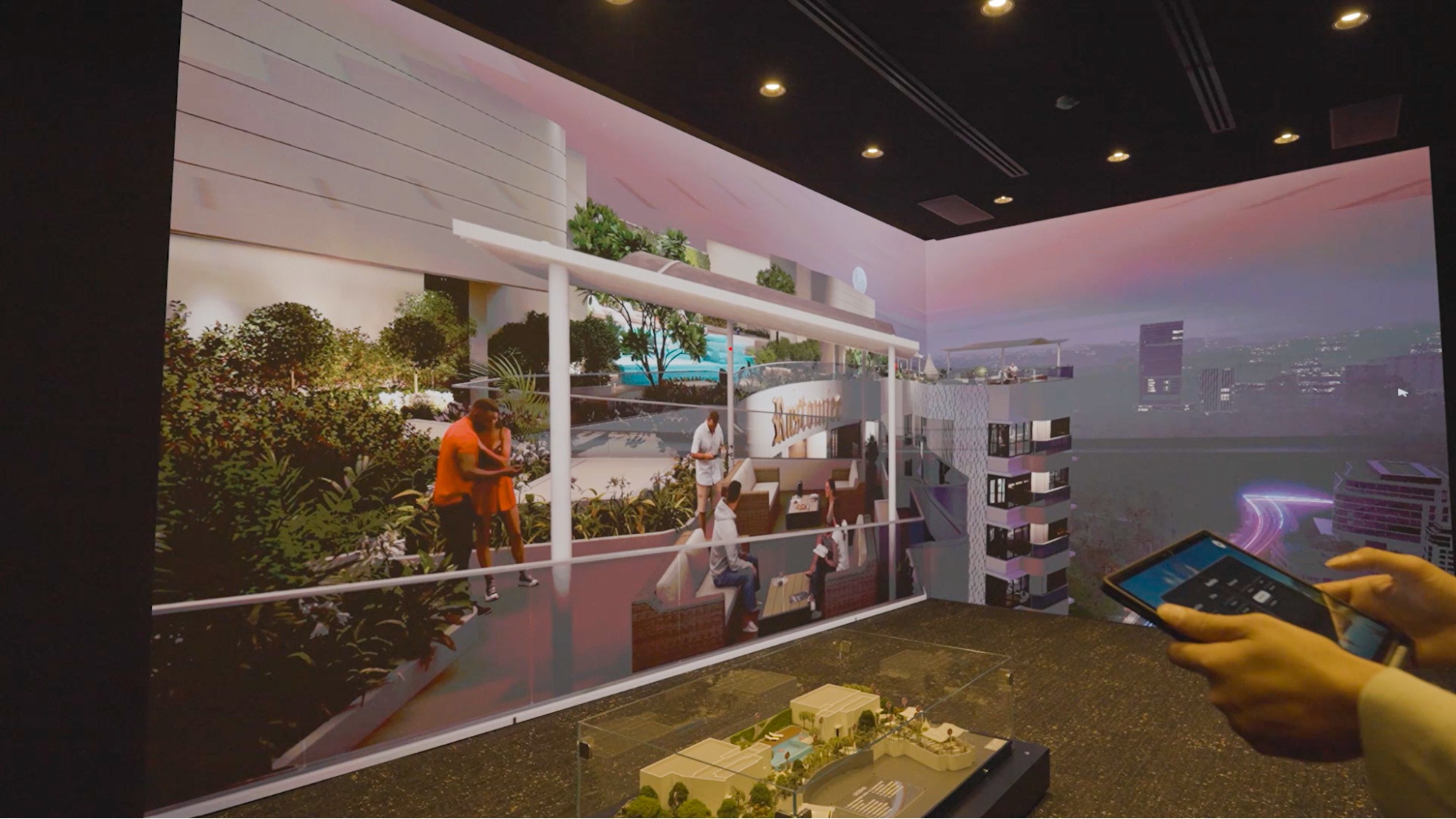
Portable deployment means field sales teams carry the same capability on tablets. Remote demos maintain consistency with in-center experiences.
Measurable Impact on Sales Performance
Developers tracking V-estate implementation report specific improvements:
Faster lead qualification. Sales teams identify serious buyers within the first interaction. Time spent on unqualified leads drops.
Higher conversion rates. Buyers who interact with the tool convert at measurably higher rates than those who see only traditional presentations.
Shorter sales cycles. Average time from first visit to booking decreases when buyers gain complete understanding early.
Reduced post-sale friction. Expectations align with delivery. Handover satisfaction increases. Dispute rates fall.
Lower cost per acquisition. Fewer site visits and shorter negotiation periods reduce overall sales costs.
Implementation Requirements for Maximum Effectiveness
Deploy in high-traffic areas of the sales center. Position the tool where prospects naturally spend time. Make it accessible without forcing interaction.
Train sales staff properly. They must guide the experience without overselling. The tool demonstrates value. Staff provide context and answer deeper questions.
Configure content based on actual buyer questions. Map common objections and queries. Ensure the tool addresses them specifically.
Use for remote and field sales. Equip teams with tablets running the same experience. Maintain consistency across all touchpoints.
Collect and analyze interaction data. Track which options buyers test most. Identify preference patterns. Use insights to refine offerings and marketing.
Metrics That Show Real Results
Track these KPIs before and after deployment:
Demo-to-lead capture rate
Lead-to-booking conversion percentage
Average sales cycle duration in days
Option preference patterns across buyer segments
Customer satisfaction scores at handover
Establish baselines first. Measure for 60 to 90 days post-deployment. Small, consistent improvements compound into significant commercial gains.
Operational Considerations for Sustained Success
Keep content current. Outdated floor plans destroy trust instantly. Update the experience as inventory and project details evolve.
Maintain system performance. Lag and crashes undermine the professional impression. Test hardware regularly.
Integrate with existing CRM systems. Track buyer preferences from demo through to final purchase. Use data to personalize follow-up.
Localize thoroughly. Show actual surroundings, not generic neighborhoods. Buyers verify information. Accuracy matters.
The Competitive Advantage of Clarity
Understanding is the single biggest sales accelerator in real estate. Developers who help buyers comprehend properties completely and confidently will outperform competitors still relying on traditional presentation methods.
This is not about technology for its own sake. It is about solving the fundamental problem that stops buyers from deciding: lack of clarity about what they're actually buying.
Next Steps for Developers Ready to Improve Conversions
Consider piloting an offline interactive sales tool at one sales center. Run it alongside your existing process at a control location. Measure conversion rates, cycle times, and option engagement across both sites.
The data will show whether removing the comprehension barrier directly impacts your bottom line. If results prove positive, scale the capability across your portfolio. If they don't, you've lost only a pilot investment.