Premium property buyers demand control. They want to visualize their investment from every angle before committing. Traditional property visits don't deliver this. Site schedules conflict. Weather delays inspections. Incomplete projects prevent full walkthroughs. Your sales team repeats the same explanations across dozens of prospects.
The result? Lead drop-off exceeds 60% post-visit. Marketing teams struggle with engagement. Conversion rates stall. Your competitive advantage shrinks while inventory costs climb.
This is the core challenge facing high-end real estate developers today.
The Real Problem: Visualization Limits Conversion
Physical site visits create bottlenecks. Your sales staff can host 10-15 buyers daily maximum. Peak seasons overwhelm teams. Off-seasons leave capacity wasted. This cap directly limits revenue velocity.
Static materials fall short. Paper floor plans lack spatial depth. 2D renderings miss proportions. Video tours show fixed perspectives only. Buyers can't explore what matters most to them. They leave without personalized context.
Customization requests overwhelm operations. A prospect asks: "What if the sofa faced this way?" Your team scrambles for answers. Another buyer wants paint color options. You show samples. Neither approach scales.
Nearby amenities stay abstract. Buyers don't understand commute times or neighborhood benefits. School proximity feels vague. Mall locations lack context. They can't visualize lifestyle connectivity before deciding.
The gap between expectation and delivery widens. Premium buyers have traveled globally. They've seen high-tech solutions. Your traditional approach signals outdated operations.
Why Physical Constraints Kill Sales Velocity
Distance matters. Global investors can't visit repeatedly. NRI buyers coordinate from abroad. Local prospects juggle work schedules. Every site visit requires time investment that many won't make.
Incomplete projects hide potential. Structural work obscures layouts. Unfinished interiors prevent visualization. Buyers struggle imagining finished spaces. They lose confidence in your vision.
Weather disrupts schedules. Monsoon delays plans. Extreme heat discourages visits. Your sales window shrinks during peak closing seasons when you need maximum momentum.
Static content limits exploration. Brochures show one angle. Models sit on shelves collecting dust. Buyers see what you choose to show, not what they need to understand. Control rests with you, not them.
Conversion funnels leak at visualization. A buyer tours the site. They leave uncertain. They don't call back. Another prospect lost to poor visualization experience.
Offline Immersive Technology Shifts Control to Buyers
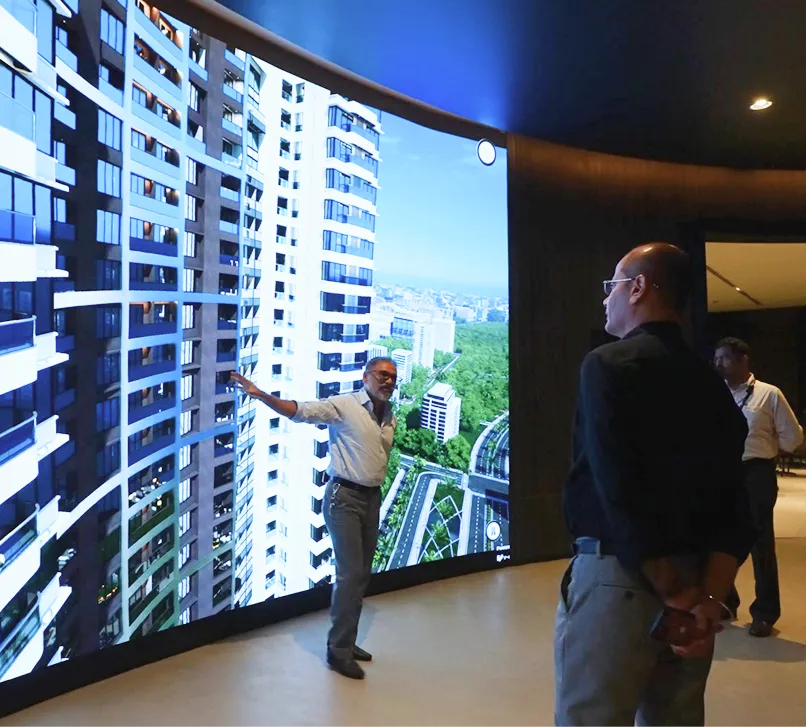
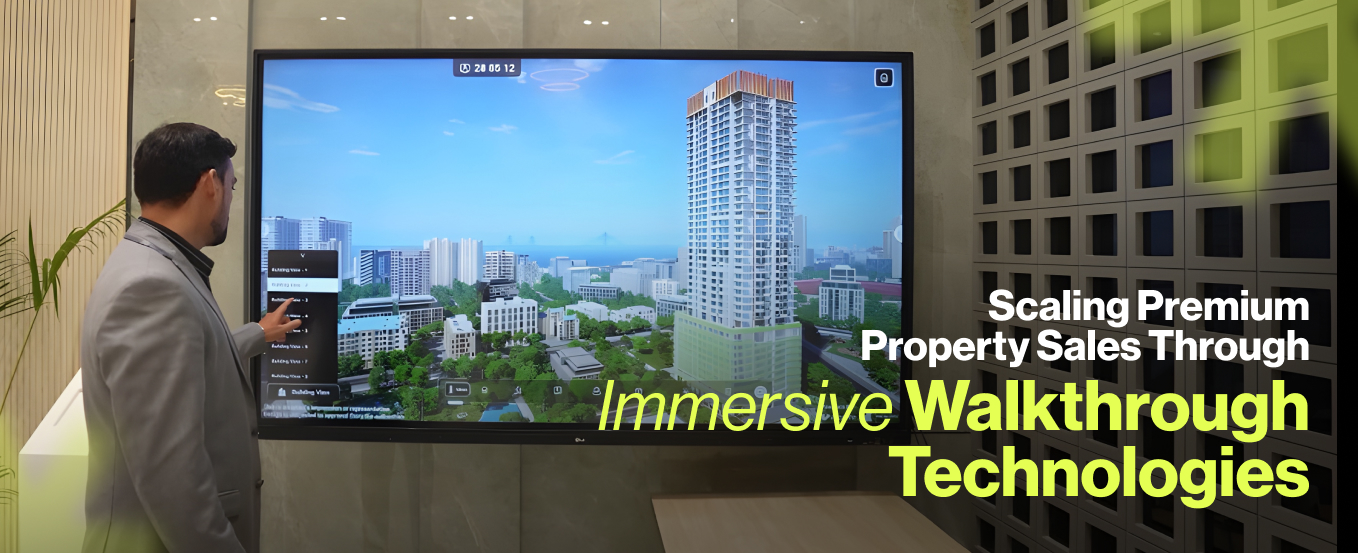
V-estate delivers photorealistic 3D show flats. These aren't simple renders. They simulate actual properties with exact architectural proportions. Window views match precise elevations. Balcony dimensions feel tangible. Buyers explore every angle at their pace.
Offline activation means no Wi-Fi dependency. Your sales team carries tablets or laptops to events, offices, or roadshows. The system runs independently. No connection issues. No bandwidth limits. Full functionality everywhere.
Dynamic controls let buyers test scenarios. Lighting shifts from morning sun to evening glow. Weather changes from monsoon rain to clear skies. Buyers see how natural light moves through rooms at different times of day. They visualize seasonal changes. This realism drives faster decisions.
Customization happens in real-time. Paint colors update instantly on walls. Furniture placement adjusts with a touch. Sofa styles change. Material finishes preview before commitment. Buyers generate personalized renders they can reference later. This personal investment deepens commitment.
How Amenity Mapping Strengthens Value Perception
Surrounding context drives premium pricing. Buyers need to understand what premium means in this location. V-estate maps nearby schools, malls, hospitals, and parks in 3D. Upcoming projects appear with timelines. Current connectivity visualizes commute paths.
Connectivity becomes tangible. Show distance to transit hubs. Highlight retail centers. Display upcoming infrastructure. Buyers grasp the full lifestyle value, not isolated property features.
This context justifies premium rates. When buyers visualize the complete neighborhood ecosystem, price resistance weakens. They're not buying a unit. They're buying a location ecosystem.
Features That Drive Sales Conversion
Precise show flat recreation. Windows frame exact views. Balconies capture true proportions. Materials match specifications. No approximations. Every detail builds confidence.
Weather and lighting controls. Morning sunlight on balconies. Evening reflections in living rooms. Rainy day perspectives. Buyers experience the property across conditions. This removes uncertainty about natural light quality.
Multi-language support. Global investors review properties in their native language. International buyers don't need translation assistance. Interface adapts instantly.
Standard hardware compatibility. Windows, iOS, Android all supported. Full 4K visuals render locally. Battery sustains 8-hour event days. File sizes stay under 2GB per project. Setup takes under 5 minutes. Your team deploys without technical hassle.
Built-in analytics. Track engagement time per tour. Monitor customization preferences. Identify drop-off points. Capture lead data automatically. Your CRM integrates seamlessly.
Implementation Moves Results in 30-Day Cycle Compression
Real numbers from deployed projects. One Mumbai luxury tower used this approach. Pre-launch event drew 500 prospects. 35% converted within 90 days. Traditional methods from comparable projects hit 18% conversion.
Site visit needs drop 40%. Virtual tours qualify leads pre-visit. Your sales team meets serious prospects only. Time management improves. Cost per close declines.
Close rates rise 25%. Buyers feel ownership through customization. They've spent time visualizing their space. Emotional investment accelerates commitment. Negotiations shorten. Closing velocity increases.
Operational efficiency compounds. Model production halts. Printing costs vanish. Sales agent time frees for relationship building and negotiations. Retention rises when buyers share personalized renders with family.
Strategic Advantage in Competitive Markets
Luxury differentiation requires experience innovation. Competitors offer standard site visits. You deliver buyer empowerment. Prospects associate technology adoption with quality construction standards. Your brand signals forward-thinking operations.
Global investor accessibility. NRI buyers tour from Mumbai headquarters. International investors preview properties without travel. Customization happens remotely. They arrive for close, not exploration. Efficiency multiplies.
Data builds future strategy. Popular customizations reveal preference trends. Amenity highlights that drive engagement inform positioning. Pricing adjustments based on demand patterns. Each project feeds intelligence for next launches.
The Implementation Path Forward
Start focused. Select one tower for pilot testing. Train five sales representatives. Run ten events. Gather feedback.
Refine based on usage. What customization options do prospects request most? Where do they spend time exploring? What amenity details matter most? Adjust your offering accordingly.
Scale across portfolio. Once you've optimized features, deploy across all projects. Your full inventory operates with consistent, efficient processes.
Integrate with existing systems. Connect to your CRM for automatic lead handoffs. Sync with marketing dashboards. Unify your sales operations.