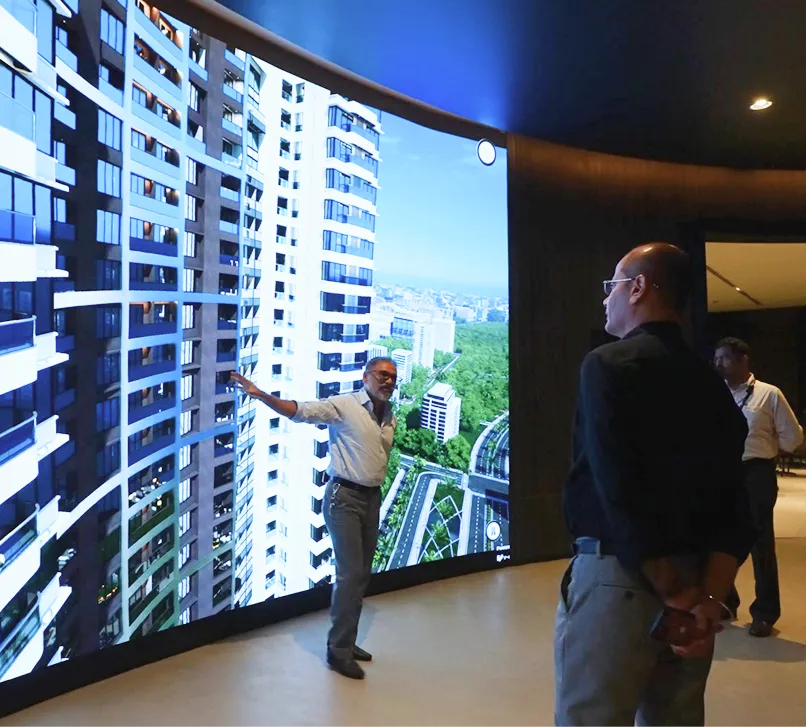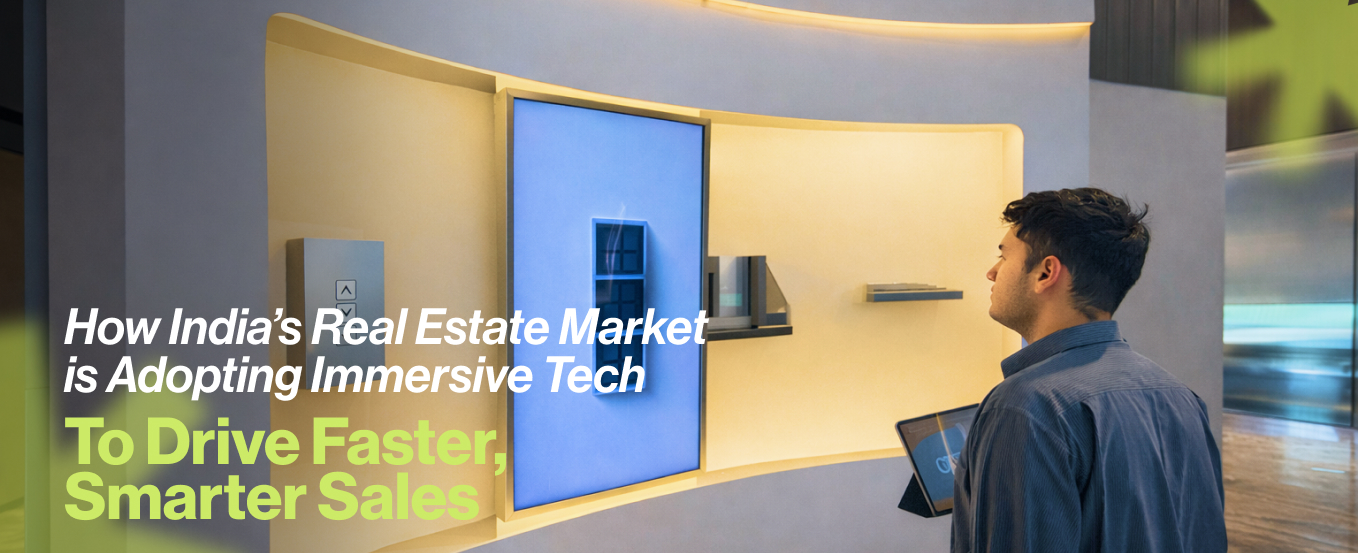
Luxury buyers in India are no longer satisfied with brochures and static floorplans. They walk into a sales office expecting clarity — not just aesthetics. And sales teams are struggling to deliver that clarity using outdated tools.
The gap between what a developer builds and what a buyer actually understands has always cost deals. Today, that gap is closing — not with bigger marketing budgets, but with smarter offline activation inside the sales experience centre.
The Real Problem Developers Are Facing at the Point of Sale
Most buyers at the luxury segment ask the same questions repeatedly during site visits:
How is this building structurally different?
What safety systems are installed?
What makes this worth the price over a competitor?
Sales executives often lack the tools to answer these with visual proof. Brochures lose their value mid-conversation. MP4 walkthroughs play on a loop without engaging buyers. Passive AV theatre rooms don't invite interaction.
The result: buyers leave without conviction. Deal velocity slows. Sales cycles stretch longer than they should.
The moment a buyer cannot visualise what they're investing in, their hesitation increases. That hesitation delays decisions.
Godrej Trilogy, Worli: A Case Study in Immersive Sales Activation
Godrej Trilogy in Worli, Mumbai, addressed this challenge directly. The project introduced a structured, technology-driven experience centre built around two offline interactive installations.
The brief was clear:
Replace passive presentations with an interactive sales journey.
Help buyers understand construction quality and engineering systems.
Build measurable conviction before any pricing conversation.
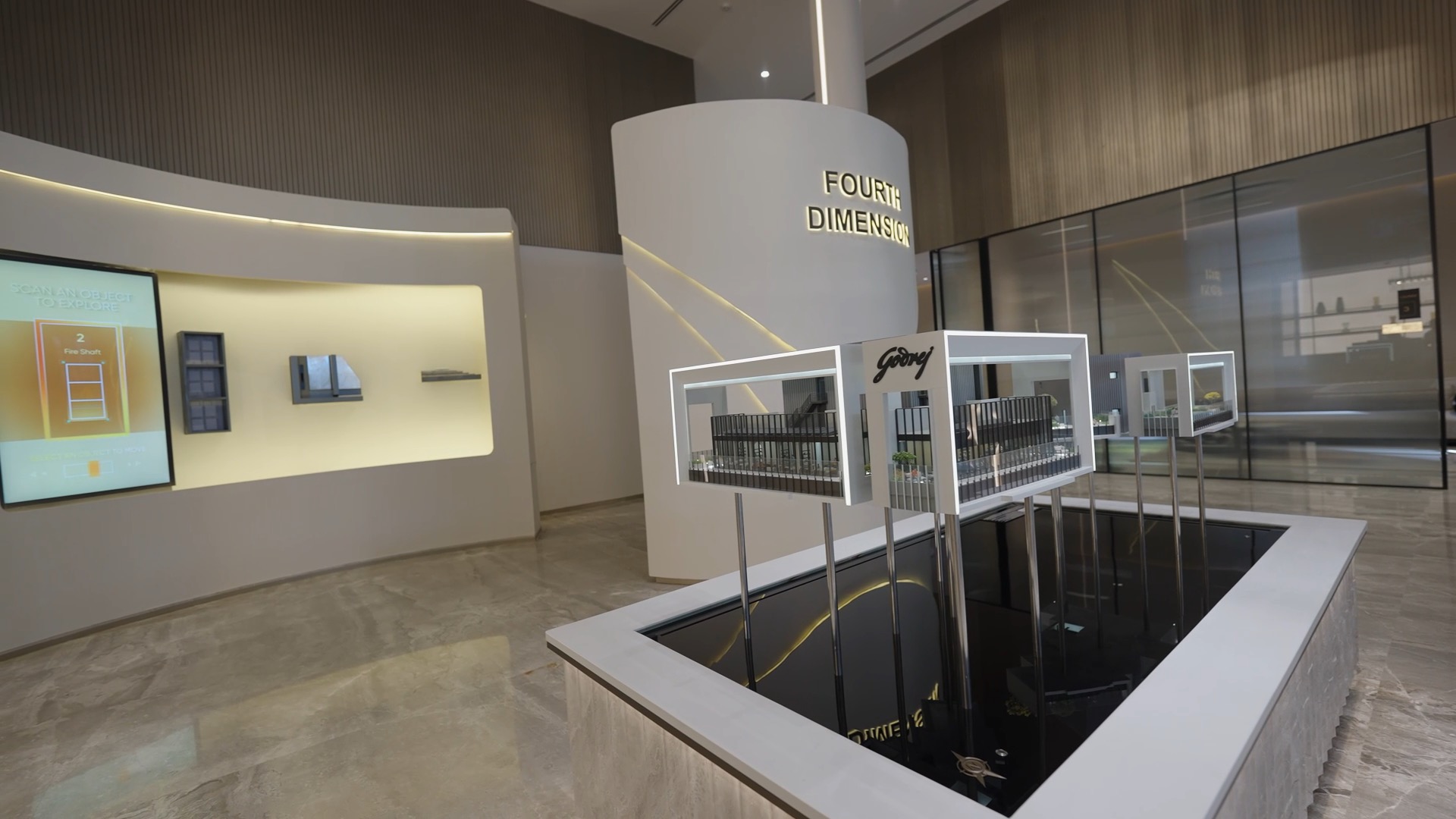
The result was The Fourth Dimension Experience Centre — an S-shaped spatial walkthrough connecting two immersive storytelling zones in one continuous flow.
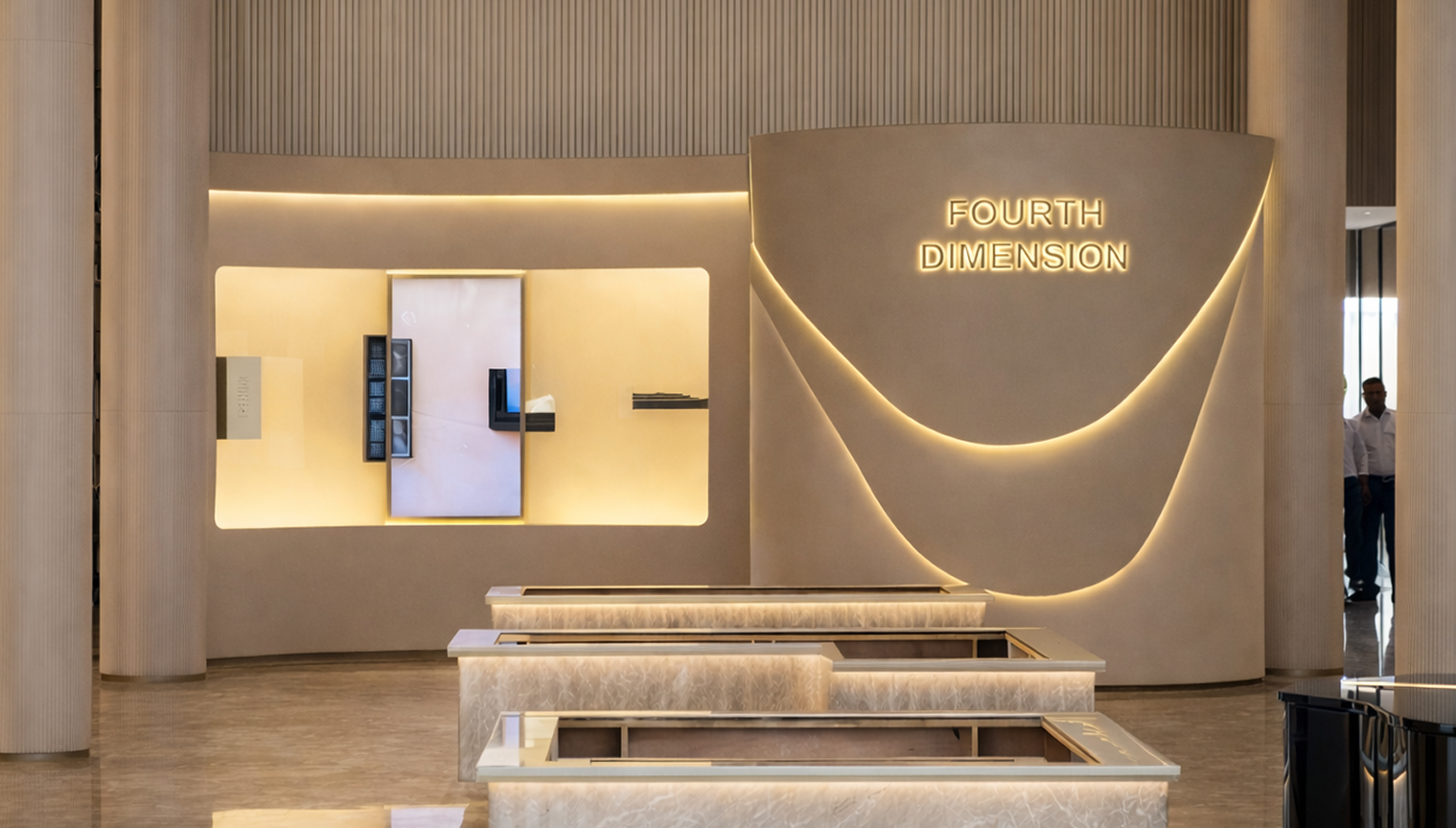
Two-Zone Experience Architecture
Zone 1 — Curved Rotoscopic Wall
The first zone featured a 10-feet-high curved rotoscopic wall. Motion-triggered kinetic animation translated invisible construction features into visible buyer proof.
Product narratives communicated through this installation:
Dual-layer waterproofing with reinforced RCC seepage-prevention design.
High-speed elevator systems engineered for optimal wait times in high-rise luxury towers.
Fire-rated shafts, FRLS wiring, and fire-retardant structural systems.
Double-glazed windows built for wind resistance, noise reduction, and coastal durability.
Average engagement per visitor: 15 minutes. Buyers paused. They discussed. They asked technical questions — which is exactly where conviction is built.
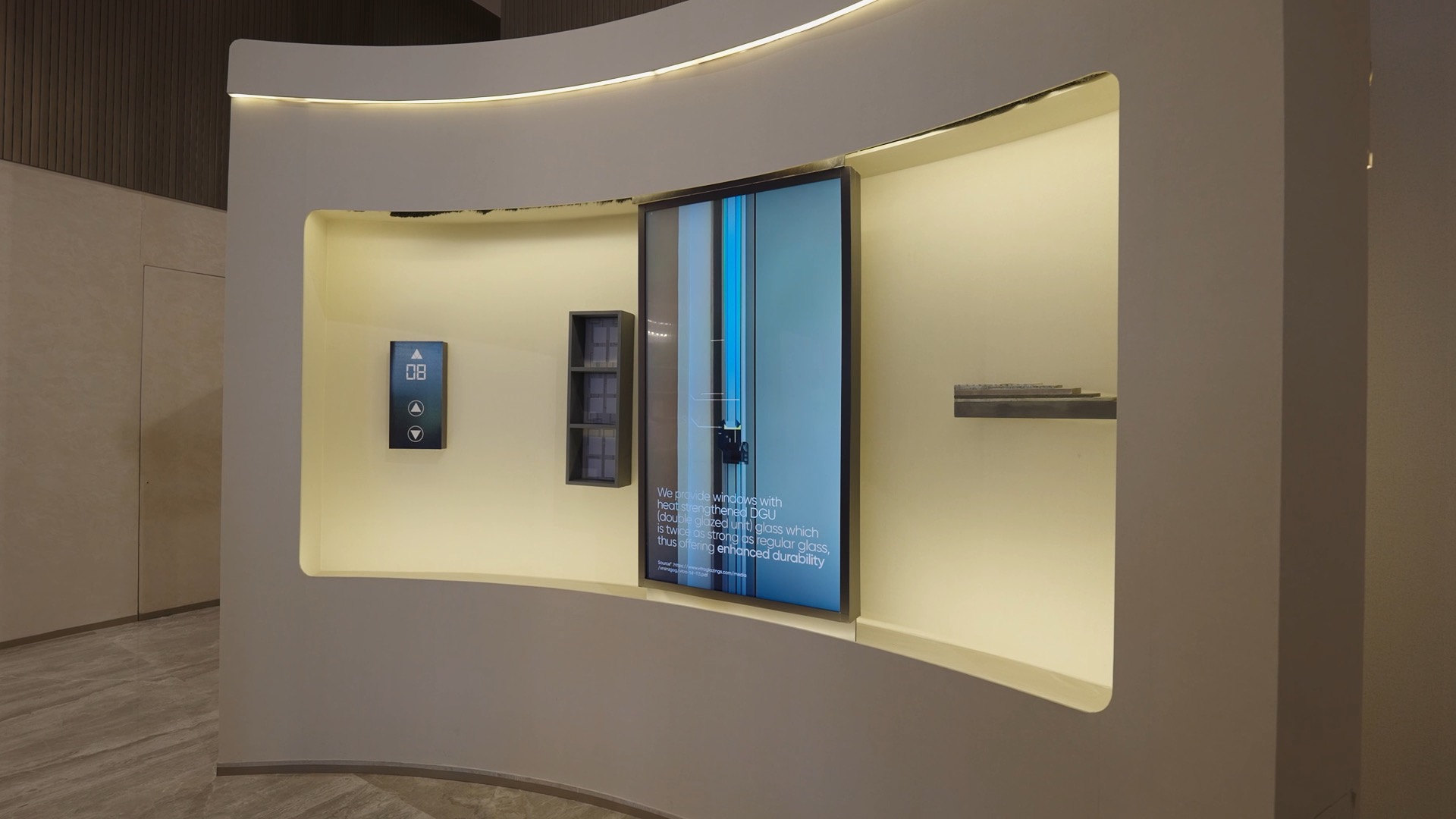
Zone 2 — Interactive Touchscreen Wall
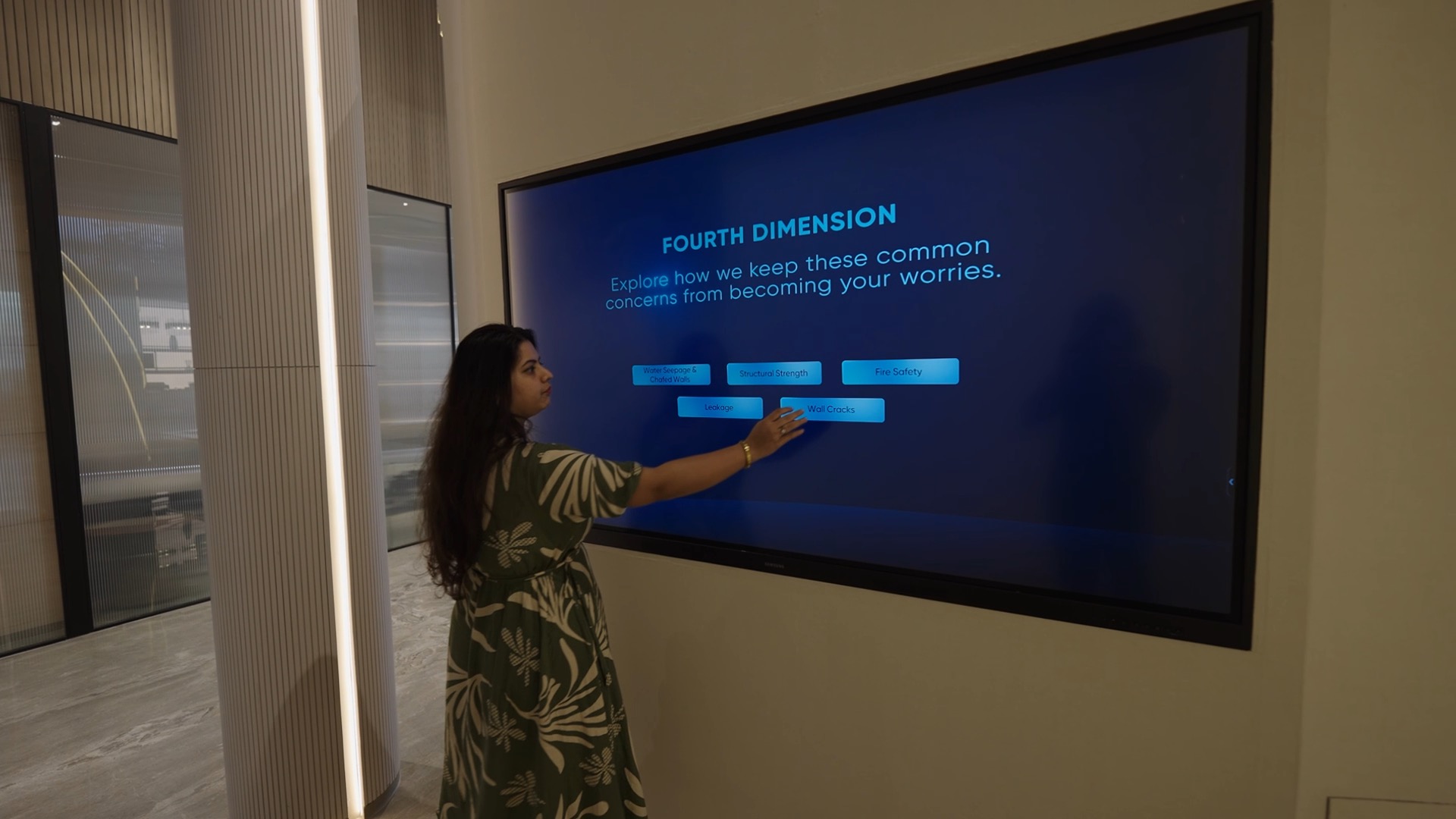
The second zone deployed an 86-inch Samsung interactive touchscreen integrated into the buyer walkthrough. Short 30–50 second animated explainers simplified complex engineering topics.
Build assurances presented through this installation:
Anti-capillary waterproofing treatments preventing seepage migration.
Earthquake-compliant structural reinforcement and load-bearing systems.
CPVC plumbing systems engineered for durability and leakage prevention.
Wind-tunnel structural validation by global engineering consultants.
PU foam crack-prevention technology reducing structural stress points.
Average engagement per buyer: 5 minutes of guided interaction. Sales executives used this zone as their primary structured conversation platform.
Sales Journey Structure That Builds Buyer Confidence
The experience centre was not just an installation — it was a repeatable sales process.
Each buyer interaction followed a defined flow:
Orientation briefing — introduction to the experiential technology format.
Rotoscopic wall walkthrough — engineering USPs communicated visually.
Touchscreen deep dive — build quality explored at the buyer's own pace.
Guided Q&A — sales executives supported by visual proof at every stage.
Pricing and unit discussion — only after complete engineering clarity.
This sequence is significant. Buyers reached the pricing conversation already convinced of product quality. The sales executive wasn't selling — they were confirming a decision the buyer had already moved toward.
Outcomes Recorded at Godrej Trilogy
The results were measurable:
Average buyer engagement time increased to approximately 20 minutes per visit.
Buyers asked significantly more technical questions — a direct indicator of higher purchase conviction.
Sales teams adopted both installations as their primary sales tools.
Technical product features were understood clearly through interactive storytelling — not verbal explanation.
This format became the first experiential tech sales format introduced for Godrej luxury residential projects.
When buyers spend more time engaging with construction quality, their confidence in the investment increases. That confidence shortens the decision timeline.
The Broader Shift in Luxury Real Estate Sales
What Godrej Trilogy achieved in Worli reflects a larger change in how luxury developers across India are approaching the sales experience.
Buyers at the ₹5 crore and above segment are research-driven. They compare projects. They ask detailed questions. And they make decisions based on perceived product integrity — not just visual appeal.
Developers who continue to rely on passive AV formats and printed collateral are losing ground. Not because their product is inferior — but because they cannot communicate its value at the point of sale.
Interactive offline installations — rotoscopic walls, touchscreen interfaces, spatial experience centres — give sales teams the infrastructure to have better conversations. Deeper conversations. Conversations that convert.
V-Estate: Interactive Sales Technology Built for Real Estate Developers
V-Estate is a real estate interactive sales tool that consolidates the entire property buying experience into a single, immersive offline journey.
Developers using V-Estate give buyers direct control of their property exploration experience. Key capabilities include:
Photorealistic 3D virtual show flats — lifelike property representation including window views, lighting conditions, and material finishes.
Immersive virtual property tours with amenity showcase — mapping nearby facilities and upcoming infrastructure.
Real-time customisation tools — buyers choose wall colours, furniture layouts, and interior finishes during the sales interaction.
Dynamic lighting and weather controls — buyers see how the property looks across different times of day and seasons.
Amenity and connectivity mapping — complete lifestyle visualisation including social infrastructure around the project.
V-Estate does not replace the sales executive. It equips them. Every interaction becomes structured, visual, and repeatable — regardless of which team member is presenting.
The outcome for developers: higher lead conversions, reduced sales cycle length, lower cost per acquisition, and measurably improved buyer satisfaction scores.