Real estate developers operate in shrinking margins. Site visits collapse during monsoon season. Buyers ghost after the first walkthrough. Marketing budgets stretch thin across channels that don't convert. Lead qualification drowns in noise. Sales teams chase unqualified prospects. Closing cycles extend beyond feasible timelines.
The core issue remains unchanged: buyers cannot visualize their future homes in a tangible, immersive way. Traditional brochures miss the mark. Renders feel static. Site visits depend on weather, time availability, and buyer mood. Amenity value stays abstract. Customization options remain theoretical. By the time prospects leave your sales office, competitor properties occupy their mental bandwidth.
This is where offline immersive infrastructure becomes non-negotiable.
The Real Barriers Blocking Developer Growth
Lead drop-off accelerates post-visit. A prospect walks your site on a cloudy afternoon. They cannot visualize sunset views from the master bedroom. The adjacent park looks dull under grey skies. Window perspectives feel cramped in imagination. They leave your office and visit three competitor projects within the week. Two of those projects offered something your property didn't: confidence in the vision.
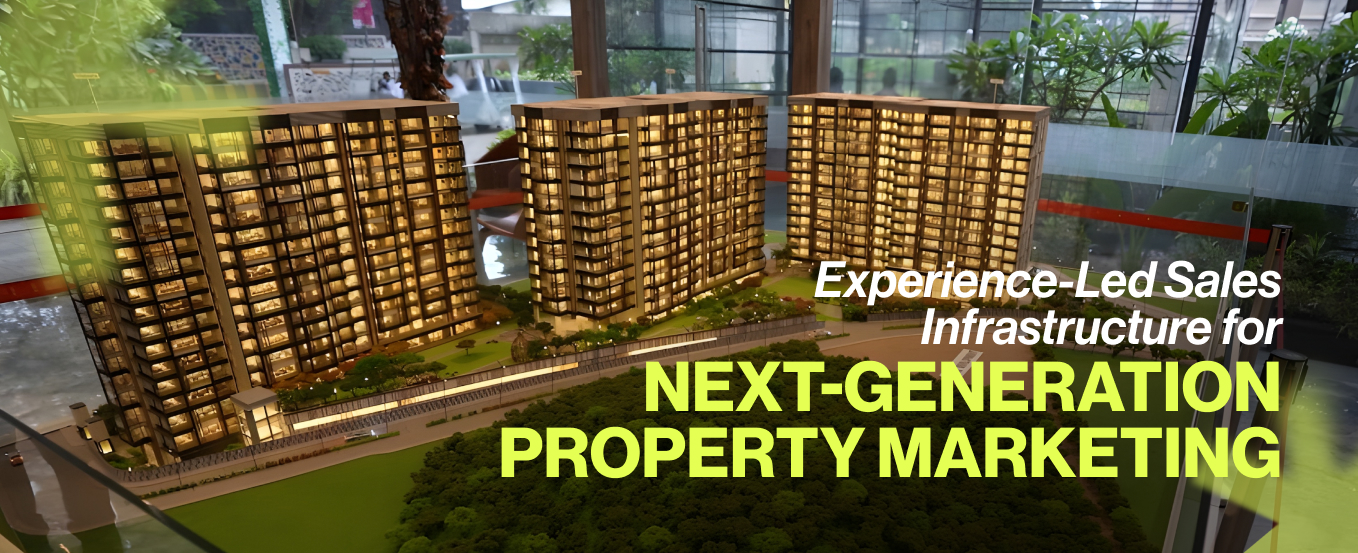
Static assets fail under pressure. Printed brochures become white noise. 2D floor plans confuse spatial relationships. Scale models demand storage space and replacement costs. Video walkthroughs feel detached. Prospects lack agency. They consume information passively instead of owning the discovery process. Passive buyers hesitate. Hesitation kills conversions.
Amenity narratives collapse without context. Developers highlight proximity to schools, malls, and transit hubs. But buyers never see the actual connectivity. They don't understand the daily commute quality. Lifestyle benefits remain promises on a PowerPoint slide. Trust erodes when abstract claims meet hard reality at possession.
Customization stays trapped in imagination. A buyer questions whether warm beige or cool grey walls suit their furniture. They wonder if their existing sofa will fit comfortably. No one shows them. They leave uncertain. Certainty drives purchase decisions. Uncertainty extends sales cycles by months.
Weather and timing fragment the buying journey. Peak summer heat keeps prospects indoors. Monsoon rains cancel site visits. Sunset views—a major selling point—vanish during noon showings. Properties reveal themselves at specific times and under specific conditions. Most buyers see them during worst-case scenarios. Perception suffers. Conversions suffer
Offline Immersive Infrastructure Solves This
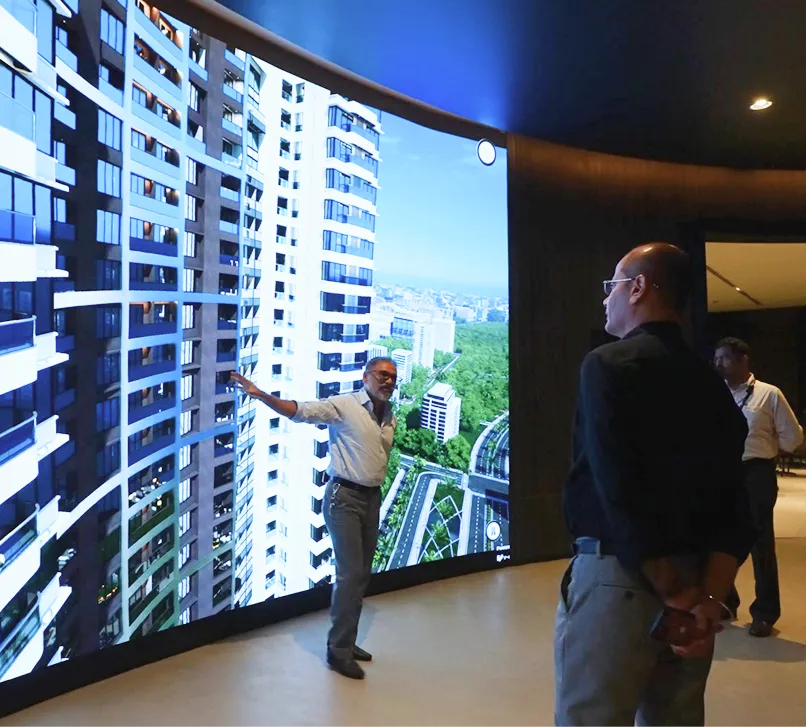
Offline activation infrastructure removes these friction points. It centralizes the entire property visualization into a single, controlled environment. No weather interruptions. No timing constraints. No passive consumption. Buyers engage actively. They explore at their pace. They control the narrative.
This is not online. This is not digital activation. This is offline, on-site activation equipment deployed in sales offices, expos, and events. It requires no internet dependency. It functions independently. Buyers interact with photorealistic representations. They test customizations instantly. They explore amenities in mapped, navigable detail. They see their future homes as they will actually exist.
The infrastructure operates locally. Sales teams deploy it where buyers already gather. No additional digital channels. No confusing omnichannel complexity. One powerful offline tool. One immersive moment. One decision point.
Core Capabilities Driving Conversion
Photorealistic 3D show flats eliminate visualization gaps. These are not cartoon renderings. They are high-fidelity digital models built from architectural precision. A buyer sits in the living room. They see exactly how sunlight enters at 6 PM. They observe how the window frames the city skyline or garden view. They notice the shadow patterns on the floor. They understand spatial proportions viscerally. No guesswork. No approximation. Reality, rendered digitally, before construction completion.
Amenity mapping contextualizes lifestyle. The infrastructure visualizes nearby schools, hospitals, shopping malls, and transit stops. Current and upcoming projects appear with realistic spatial relationships. Buyers navigate the neighborhood digitally. They understand walkability to markets. They assess commute times to workplaces. Vague proximity becomes concrete convenience. Abstract lifestyle becomes visualized reality.
Customization controls shift ownership to buyers. Paint colors change instantly. Sofa sets appear in rendered living rooms. Flooring materials swap in seconds. Buyers test configurations without imagination gaps. They see actual visual impact. They own the decision to select warm woods or cool marbles. Ownership builds confidence. Confidence drives commitment.
Dynamic lighting and weather controls reveal year-round appeal. The same property transforms across seasons and times of day. Morning sunlight differs from evening golden hour. Monsoon grey skies differ from summer brightness. Winter shadow patterns differ from summer glare. Buyers understand property performance across all conditions. No more "wait until summer to see the real lighting." They see it now. Year-round performance becomes transparent.
Direct Impact on Sales Operations
Conversion rates rise measurably. Developers running offline immersive activations report 25-40% increases in qualified lead conversions. Buyers who test customizations commit faster. Those who map amenities reduce post-purchase regret.
Sales cycles compress. Fewer follow-up visits required. Fewer "let me think about it" delays. Buyers come prepared with questions about specific details they tested. Sales conversations become consultative instead of exploratory. Closing happens faster.
Marketing costs drop substantially. Physical models cost thousands and occupy space. Repeated site logistics consume resources. Print materials multiply. Offline immersive infrastructure consolidates all of this into equipment deployed at strategic points. One technology serves unlimited prospects.
Customer satisfaction scores improve. Buyers feel heard. Their customization choices matter. They understand exactly what they're purchasing. Post-sale surprises diminish. Referral rates increase when customers feel confident in their purchase.
Integration Into Developer Workflows
Marketing heads integrate this offline infrastructure into existing sales funnels. Deploy at sales offices as standard activation. Activate at expos and property events. Use during investor presentations.
Sales teams gain qualification advantages. Prospects who spend time customizing units are serious buyers. Those who explore amenity maps care about lifestyle fit. Interaction patterns reveal intent. Follow-ups target genuine interest instead of hypothetical leads.
CRM integration tracks preferences. Which customizations did prospects test? Which amenities captured attention? This data informs follow-up conversations. It personalizes sales approaches. It accelerates closing discussions.
Developers scale across portfolios. Luxury high-rises use the same infrastructure as mid-segment residential projects. Suburban communities benefit equally. Technology adapts to project positioning. Amenity maps change. Customization options reflect market segment. Core immersive power remains constant.
Building Competitive Advantage Now
Real estate marketing moves fast. Developers who control buyer perception early own market position. Offline immersive infrastructure delivers this control. Buyers leave your sales office with clarity instead of confusion. They carry confidence instead of uncertainty. They remember your project with visual precision instead of vague impressions.
Competitors still deploy brochures and static models. You deliver immersive decision moments. That difference compounds across every prospect. Every conversion. Every referral.
The infrastructure pays for itself through reduced marketing spend and accelerated closing cycles. It improves customer satisfaction. It strengthens brand perception. It streamlines operations.
Start with your next major launch. Activate at your next expo. Watch how buyers interact. Measure the difference in conversion quality. Scale based on results.
The future of property sales runs offline. Immersive. Interactive. Buyer-controlled. Build that experience now.