Real estate developers lose sales at the final stage.
Buyers walk away because they cannot picture themselves living in the property.
Floor plans and brochures do not answer the questions that matter. What does the view look like from the bedroom? How will morning light fall in the living room? Is the kitchen layout practical for a family of four?
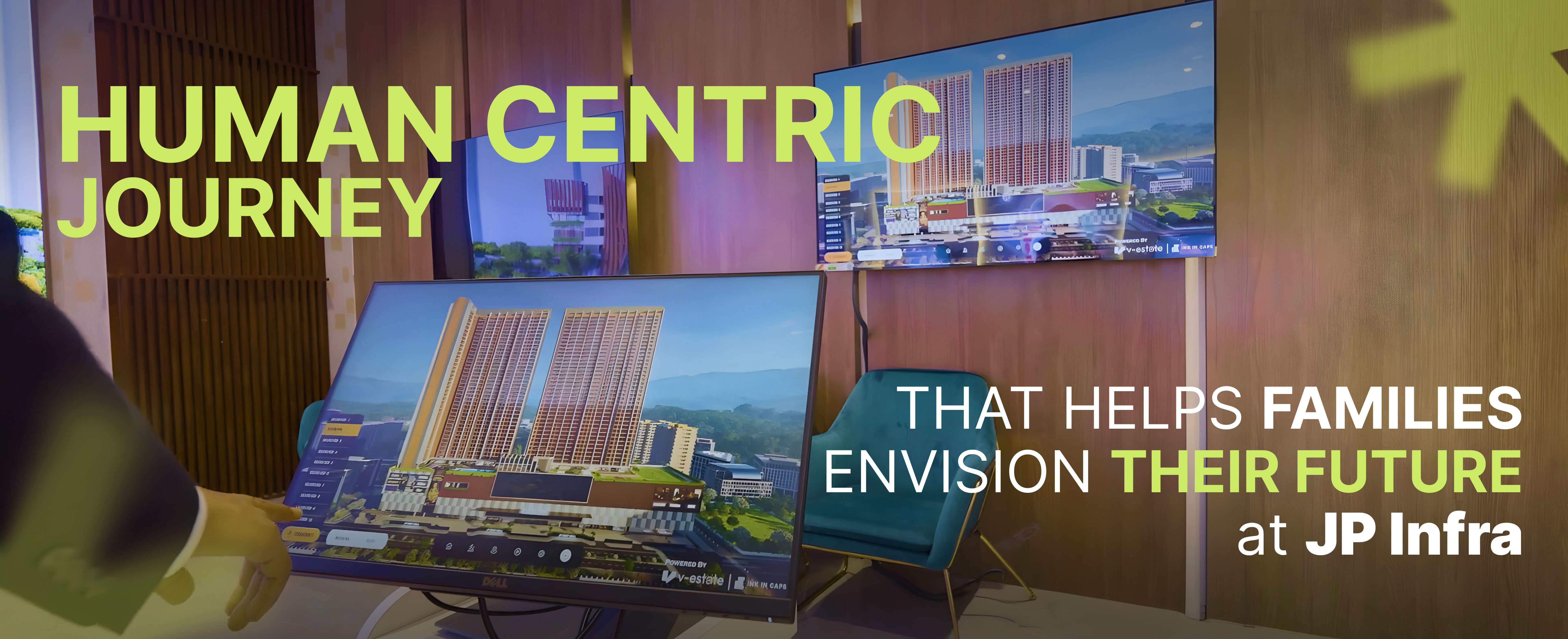
JP Infra solved this with an offline experience centre powered by V-estate. The result: faster decisions, higher conversions, and fewer wasted site visits.
The Core Problem Developers Face Daily
Buyers hesitate when imagination fails.
Static renderings and PDF floor plans leave too much open to interpretation. Families cannot commit when they are unsure. Sales teams spend hours explaining layouts, answering repetitive questions, and managing follow-ups that go nowhere.
The cost shows up in three places:
Long sales cycles that tie up resources
High drop-off rates between site visits and purchase offers
Increased cost-per-acquisition as leads stall
This is not a marketing problem. It is a decision-making problem. Buyers need clarity before they sign. Most developers never provide it.
How JP Infra Solved This
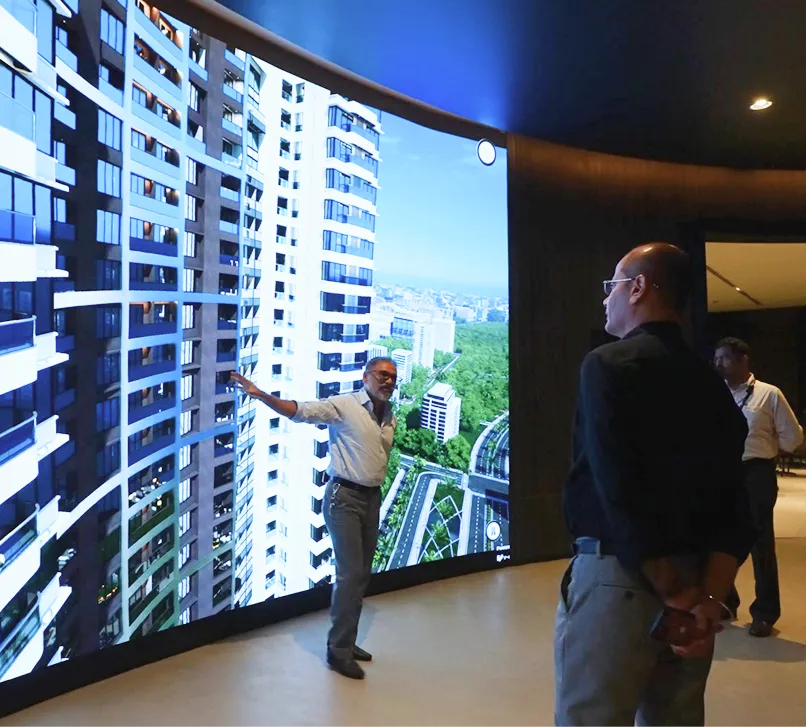
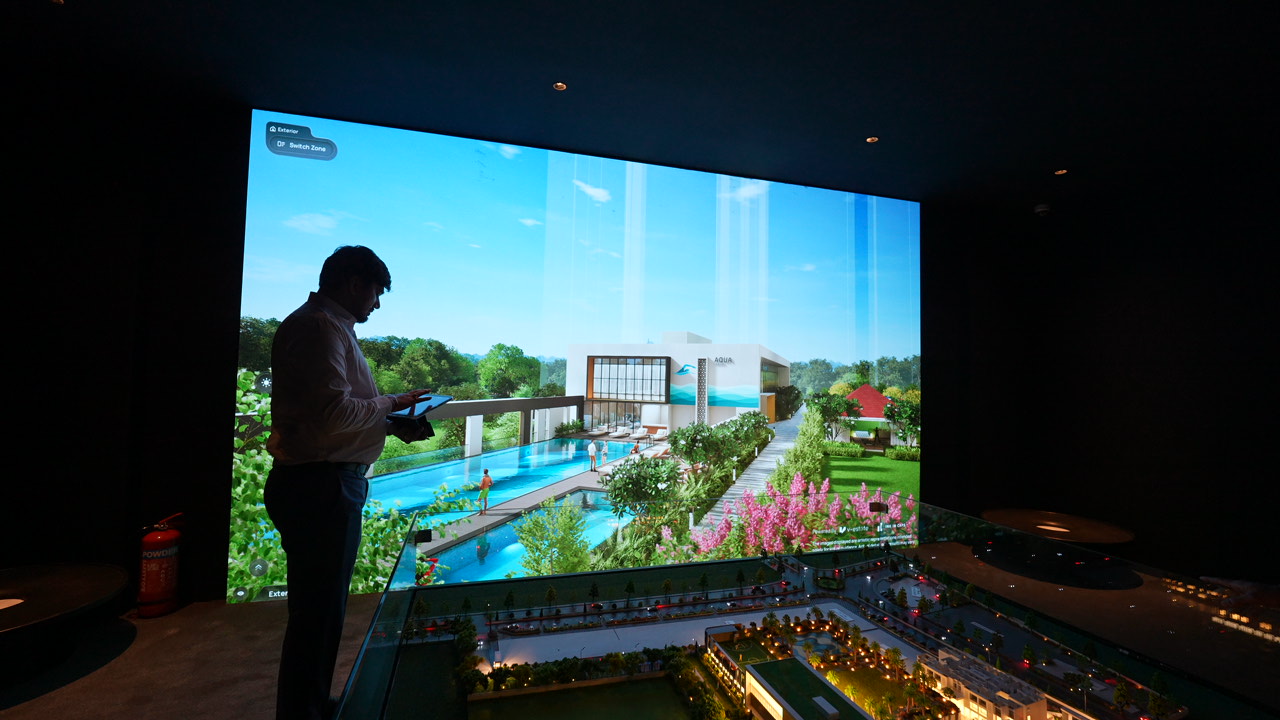
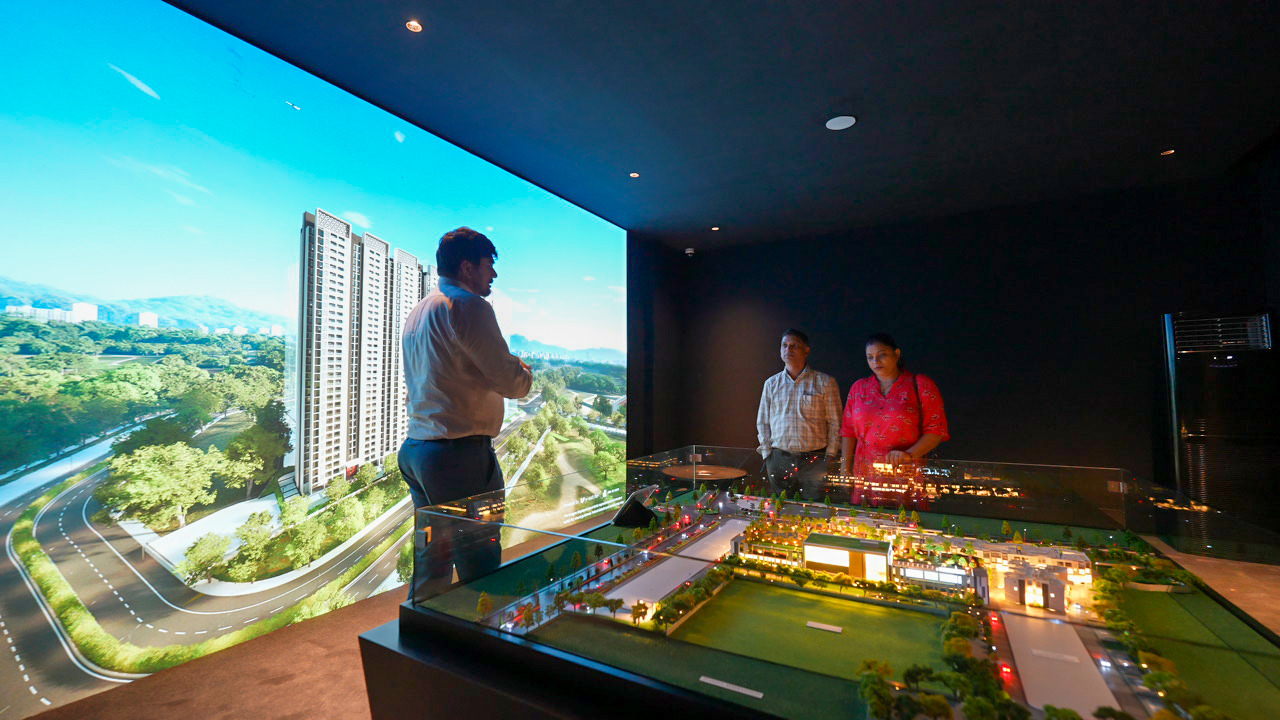
JP Infra created a physical activation centre. Not an online portal. Not a virtual tour sent over email. An in-person environment where buyers control the exploration.
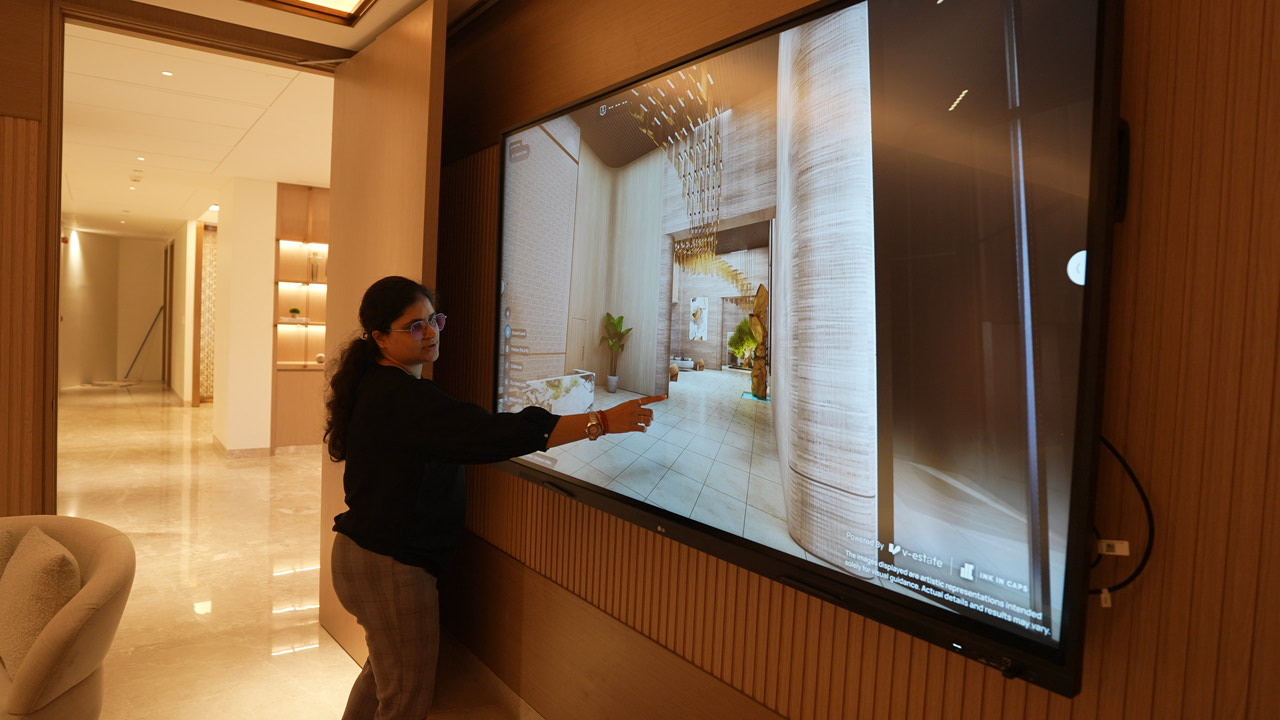
The centre uses V-estate, an interactive sales tool designed for offline property experiences. Buyers walk in, select units, change finishes, test lighting scenarios, and view exact window sightlines. Everything renders in photorealistic 3D.
The setup is deliberate:
Buyers operate the controls themselves
Sales advisors guide without scripting
Decisions happen in one visit instead of five
This is not about technology for its own sake. It removes uncertainty. Uncertainty kills deals.
Core Features That Drive Commercial Results
Photorealistic 3D Show Flats
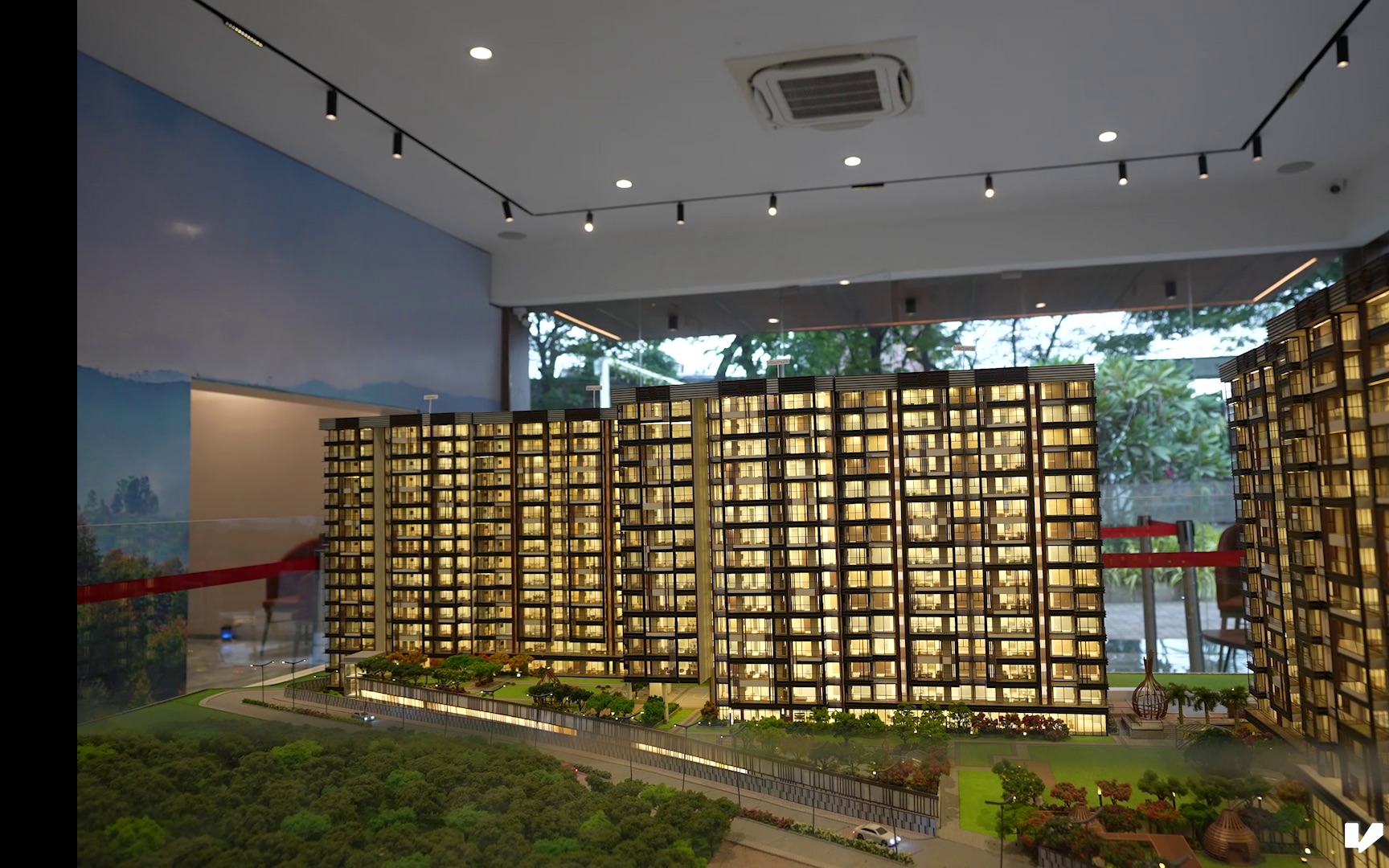
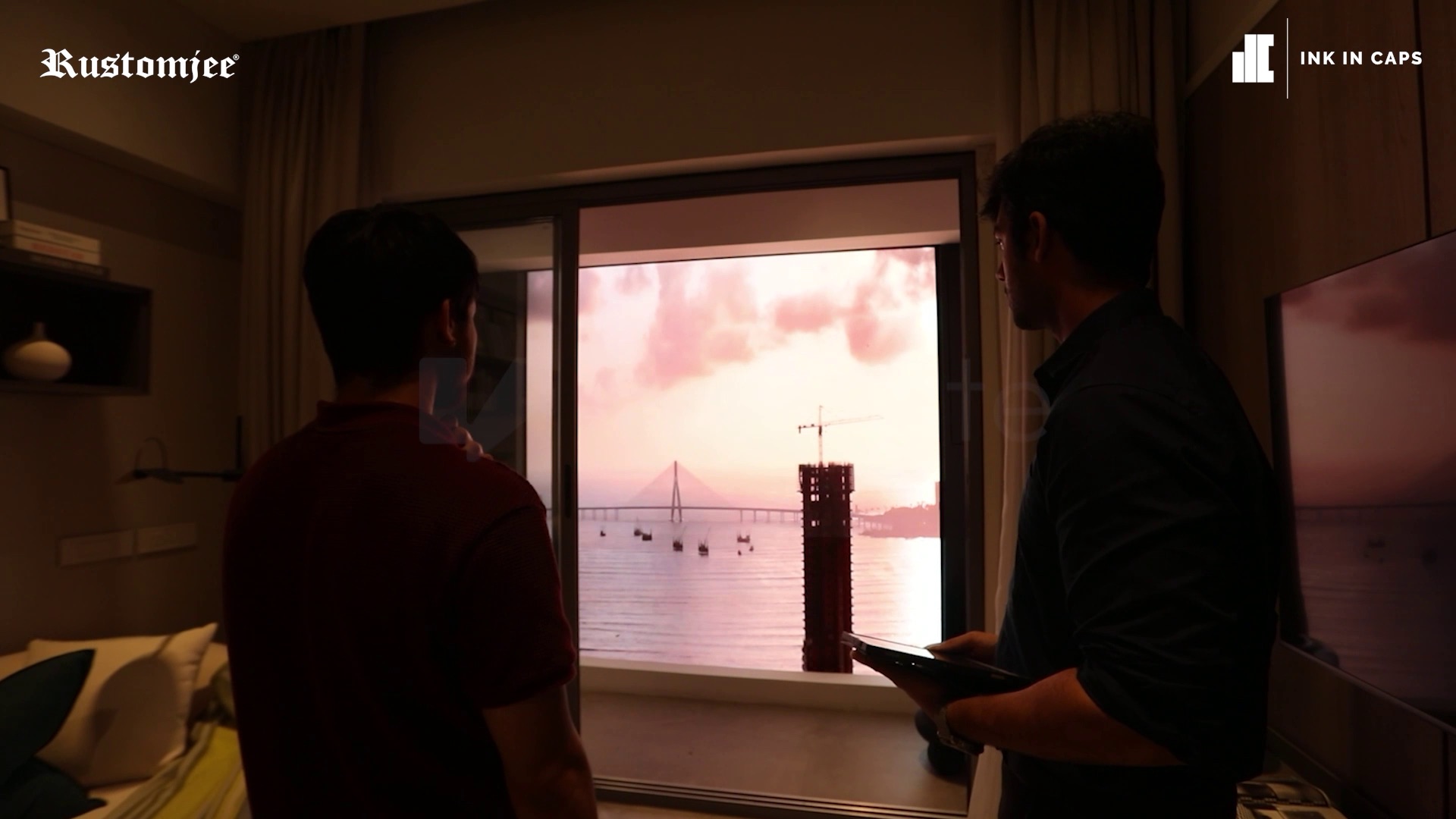
V-estate recreates interiors at true scale. Buyers see the exact view from their balcony. They understand how furniture fits. They judge ceiling height, natural light, and room proportions.
This eliminates the rendering gap. What buyers see in the centre matches what they will live in. No surprises. No post-purchase regret.
Real-Time Customisation Controls
Buyers change wall colours, flooring materials, and furniture layouts on demand. They switch between day and night lighting. They simulate monsoon weather to understand how the property feels during Mumbai's heaviest rains.
Every visual answer replaces a follow-up call. Questions that used to require site revisits now get resolved in minutes. Sales cycles compress.
Neighbourhood and Amenity Mapping
V-estate maps nearby schools, transit stations, hospitals, and future infrastructure projects. Buyers evaluate commute times and lifestyle trade-offs without leaving the centre.
This shifts the conversation from square footage to daily life. Families buy homes, not floor plans. The tool makes that distinction tangible.
Offline-First Activation Design
The centre is not a website. It is a guided, in-person experience. Sales teams use V-estate as a decision tool, not a demo script.
Trust builds faster in person. Buyers ask questions. Advisors respond in real time. Objections surface and get handled immediately. Commitment follows.
Measured Impact on Sales Performance
JP Infra reported immediate improvements after launching the centre.
Higher conversion rates from visits to offers. Media coverage highlighted increased engagement within weeks of opening. Buyers moved faster through the funnel.
Rapid decision-making at project launches. Early sales targets met ahead of schedule. The centre gave buyers confidence to commit during pre-launch phases.
Lower cost per sale. Fewer repeat site visits. Fewer long email chains. Fewer low-value touchpoints. One effective interaction replaced three ineffective ones.
These are not soft metrics. They are revenue and margin improvements.
What Developers Should Take From This
Design for buyer control, not sales control. Let families explore options themselves. Limit scripted presentations. Give them the remote control.
Prioritise accuracy over spectacle. Buyers spot fake renderings instantly. Trust collapses when the real unit does not match the visual. V-estate's photorealistic engine solves this.
Map the lifestyle, not just the layout. Show commute routes. Highlight nearby parks and schools. Answer the question: what does life look like here?
Blend human guidance with self-service. Train advisors to interpret buyer emotion, not memorise product specs. The tool handles information delivery. Advisors handle emotional decision-making.
Track which visuals drive offers. Measure what buyers interact with most. Does the balcony view close deals? Does customisation increase commitment? Adjust your centre setup accordingly.
Why This Approach Matters Now
Buyer expectations have shifted. Families research thoroughly before visiting a site. They expect clarity, not persuasion.
Demand is selective. Inventory sits longer. Price reductions do not move stubborn units. The barrier is not price. It is confidence.
An offline experience centre powered by V-estate removes that barrier. Buyers see their future. They test scenarios. They commit.
This is not experimental. JP Infra proved the model works. The question for other developers is whether they will adopt it before their competition does.
Implementation Path for Your Next Project
Start with your top three buyer objections. Is it view uncertainty? Layout concerns? Neighbourhood questions?
Build a focused V-estate activation that answers those three. Deploy it in your sales office. Train your team to use it as a decision tool, not a marketing gimmick.
Run a pilot on your next pre-launch. Measure visit-to-offer conversion before and after. Track sales cycle length. Compare cost per sale.
The data will speak for itself.
For implementation priorities and setup guidance, consult with teams experienced in offline property visualisation tools. V-estate provides the infrastructure. Your sales and marketing teams execute the deployment.
The families who walk into your sales centre want to see their future. Give them that clarity, and they will buy.