.jpg)
Off-plan sales have always walked a tightrope. You're asking buyers to commit lakhs sometimes crores to something that exists only on paper. The floor plan looks promising, the renders shine, but between signing and possession lies months or years of uncertainty. That gap breeds doubt, and doubt kills conversions.
The developers who crack this aren't the ones with the flashiest brochures. They're the ones who've figured out how to make the invisible visible how to turn architectural intent into something buyers can actually experience before construction wraps. Walkthroughs, done right, close that credibility gap. Not through gimmicks, but through clarity.
Why Transparency Matters More Than Ever in Off-Plan Sales
Buyers today aren't naive. They've heard the horror stories—units that feel smaller than promised, views that don't match the CGI, finishes that look cheaper in person. Every off-plan purchase carries inherent risk, and buyers know it.
Your job isn't to minimize that risk through clever marketing language. It's to make the actual offering so transparent that buyers can assess that risk themselves. When someone can walk through their future home—virtually or physically—and understand exactly what they're buying, objections shrink. Decision timelines compress. Deals close.
Transparency isn't a nice-to-have anymore. It's table stakes for serious developers competing in metro markets where buyers have options.
Virtual Walkthroughs: Showing What Doesn't Exist Yet
Virtual walkthroughs solve a fundamental problem in off-plan sales: how do you sell empty space convincingly?
Making Layouts Make Sense
Floor plans are abstract. Even experienced buyers struggle to translate 2D lines into lived space. A 1,200 sq ft layout could feel spacious or cramped depending on how those square feet are distributed. Virtual walkthroughs eliminate that guesswork.
When buyers can navigate a space in three dimensions moving from the entrance to the living area, checking sightlines from the kitchen, understanding how rooms connect they grasp the flow immediately. That bedroom that looked small on paper? They realize it works because of the window placement and proportions. The open-plan kitchen? They see how it actually integrates with the dining space.
This isn't about dazzling prospects with technology. It's about giving them the spatial understanding they need to make confident decisions.
Material Reality Before Construction
One of the biggest disconnects in off-plan sales happens at handover. Buyers imagined one finish quality based on sample boards and descriptions, then walk into something that feels... different. Not necessarily inferior, just not what they pictured.
Virtual walkthroughs with accurate material rendering fix this. When lighting hits rendered marble exactly as it will in the finished unit, when wood grain texture matches the specified veneer, when buyers can see how natural light interacts with wall colors—expectations align with reality.
Interactive walkthroughs can go further, showing fixture options, tile choices, or upgrade packages in context. A buyer considering premium fittings can see exactly what they're paying extra for, right there in the space. No imagination required, no surprises later.
Reaching Buyers Who Can't Visit
If you're developing in Mumbai but selling to NRIs in Dubai or Bangalore-based buyers considering a Pune project, physical site visits aren't always practical. Virtual walkthroughs collapse geography.
A buyer in Singapore can explore a Goregaon apartment during their lunch break. A Hyderabad executive can compare three different configurations in your Gurgaon tower without booking flights. You're not just expanding your market you're giving remote buyers the same confidence local buyers get from visiting your experience centre.
Physical Site Visits: Trust Through Tangible Progress
Virtual tools are powerful, but they can't replace the reassurance of standing on actual ground, seeing actual progress.
Progress Verification That Matters
Every delay worries buyers. Is the timeline slipping? Is construction quality being compromised to catch up? Monthly WhatsApp updates help, but nothing beats a physical visit where buyers see their building rising, floor by floor.
Smart developers structure periodic site visits not just as reassurance, but as milestone celebrations. Third-floor slab poured? Invite buyers to see it. Structure complete? Walk them through the skeleton of their future homes. This isn't hand-holding; it's proof of execution.
Quality Assessment Beyond Specifications
Specification sheets list materials and grades, but buyers can't gauge quality from paperwork alone. During site visits, they see the thickness of walls, the finish on concrete work, the quality of waterproofing, the attention to joinery details.
These observations build confidence or raise flags early enough to address them. A buyer who spots uneven plastering during construction can have it corrected before handover. That's better for both parties than discovering issues after possession when fixing them disrupts move-in plans.
Location Reality Checks
Your brochure promises connectivity, your map shows nearby amenities—but what's the lived experience? A site visit reveals the actual traffic flow during evening rush hour, the distance that grocery store actually feels when you're walking it, whether that metro station under construction creates livable levels of noise.
Buyers making location based decisions need ground truth, not marketing prose. Developers confident in their location let buyers experience it first hand, quirks included. That honesty pays off in buyer satisfaction long after sale closure.
Final Verification Before Handover
The pre-possession walkthrough is your last quality gate. Buyers check every fitting, test every switch, verify every finish against their agreement. Snag lists get created, punch items get identified, rectifications happen before keys change hands.
Skipping or rushing this step creates post-handover disputes buyers discovering issues after moving in, developers scrambling to fix occupied units, relationships souring. A thorough final walkthrough, with time for buyers to inspect properly, prevents most of these headaches.
Building Communication and Trust Throughout the Journey
Walkthroughs—virtual and physical—aren't standalone events. They're touchpoints in an ongoing conversation between you and your buyers.
Regular, Meaningful Updates
Technology makes regular updates scalable. Monthly construction photos, short video walkthroughs showing progress, updated virtual tours as amenities take shape these keep buyers engaged and informed without requiring constant site access.
The goal isn't volume of communication. It's relevance. Show them something new, something that confirms their decision, something that builds anticipation for handover. Generic "work is progressing well" messages don't cut it. Specific visual proof does.
Addressing Concerns Before They Escalate
Transparent walkthroughs surface concerns early. A buyer notices during a virtual tour that their unit faces another building more closely than expected. That's better discovered now than after handover. You can address it—explain the actual distance, show privacy features, offer alternative units if available.
Problems caught early are inquiries. Problems discovered at handover are disputes. Walkthroughs shift the timing in your favour.
How Interactive Tools Make Transparency Scalable
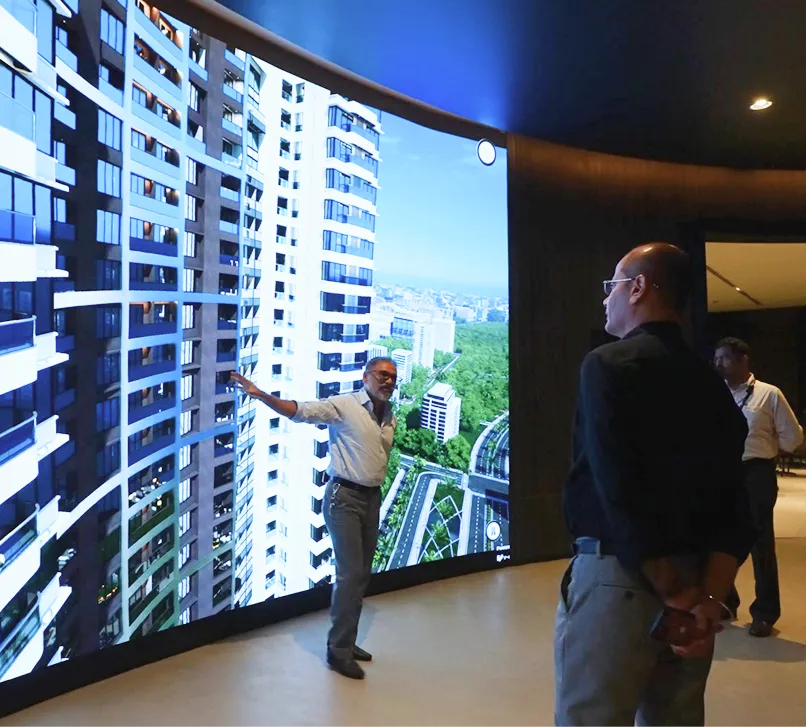
Tools like V-estate take walkthrough transparency further by putting control in buyers' hands. Instead of passive viewing, buyers actively explore changing finishes, adjusting lighting to see morning versus evening ambiance, viewing seasonal changes, customizing their space within available options.
This interactivity does two things. First, it increases engagement. Buyers spend more time with your offering because exploration is genuinely interesting. Second, it builds ownership. When buyers customize their view, select their preferences, and visualize their specific choices, they're not just touring—they're mentally moving in.
The detail matters too. Showing how sunlight streams through a east-facing window during morning hours, letting buyers see the exact view from their balcony including adjacent developments, displaying how amenities like the gym or pool look from different angles—this level of clarity eliminates most objections before they form.
Making Walkthroughs Work in Your Sales Process
Technology and site access only deliver transparency if you integrate them properly into your sales journey.
Train your sales team to use walkthroughs as exploratory tools, not just presentation decks. The goal isn't demonstrating features—it's helping buyers discover fit. Ask questions. "Which spaces matter most to you?" "How do you imagine using this layout?" Then show relevant aspects through the walkthrough.
Use physical site visits strategically. Early in the buying process, they help buyers gauge location and project scale. Mid-construction, they reassure about progress. Near completion, they allow detailed inspection. Each visit serves a different purpose; structure them accordingly.
And maintain consistency between virtual and physical reality. If your virtual walkthrough shows specific finishes and configurations, those better match what gets built. Discrepancies destroy trust faster than any amount of transparency builds it.
The Bottom Line on Transparency
Off-plan sales will always carry uncertainty—that's the nature of buying something unbuilt. But developers who embrace transparency through comprehensive walkthroughs convert better, face fewer disputes, and build reputations that drive referrals.
This isn't about adopting the latest technology for its own sake. It's about solving a real problem: how do you sell something invisible convincingly and ethically? Walkthroughs—virtual explorations that show intent, physical visits that prove execution—answer that question.
The developers winning in competitive markets aren't the ones with the biggest ad spends. They're the ones buyers trust. And trust, in off-plan sales, comes from seeing clearly what you're committing to. Show them. Clearly, repeatedly, honestly. The conversions follow.