One of the strongest factors influencing real estate decisions today is infrastructure. In a metro city like Mumbai, a new railway line, coastal roads, commercial spaces, or a major connectivity project can significantly impact a buyer’s perception about a project location. But there’s one roadblock.When an upcoming property is marketed, major real estate developers rely on plans, maps, announcements, and construction sites. But for a buyer standing inside the sales gallery, it can be difficult to imagine what their connectivity routes in the vicinity or transit corridors will be around the upcoming property investment they are planning for. A static map or verbal sales pitch can barely communicate the actual experience of living in a prime location or future lifestyle to the buyer.This is where real estate virtual tours can create a difference.
What Are Real Estate Virtual Tours
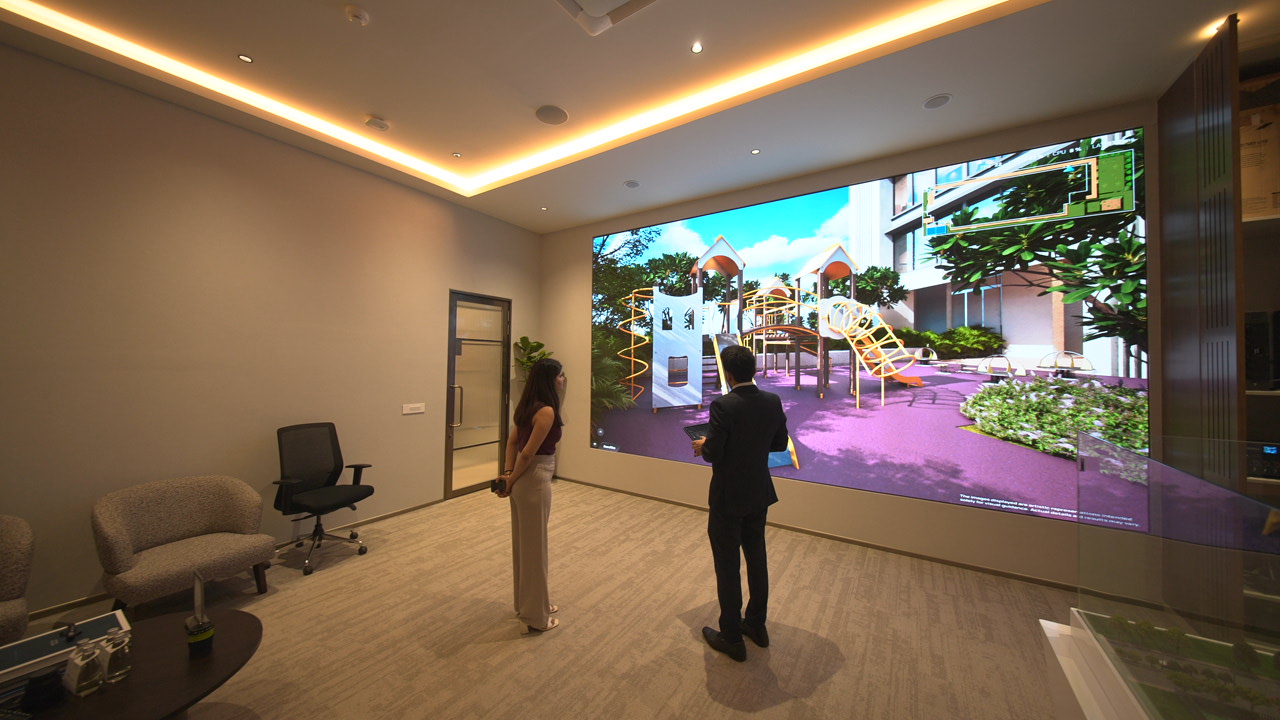
Real estate virtual tours are high-fidelity, interactive environments that are designed to showcase an underconstructed property to buyers and its future value and proposition before it actually exists. For leading developers, this has become a necessary strategic sales and marketing asset to transform their real estate sales journey via this interactive visualization layer.
A well-built interactive virtual tour helps showcase the entire project vision, amenities, floor plans, interiors, tower elevation, connectivity, and surrounding infrastructure within one seamless navigable experience. This allows the sales reps to demonstrate the potential value of the project, from location to lifestyle, without asking buyers to imagine an upcoming asset.Interactive virtual tours can actually shorten the gap between the buyer conviction and architectural intent, giving prospects a clear understanding to evaluate their decision about making a high-value investment.
Showcasing Upcoming Infrastructure and City Catalysts in Real Estate Virtual Tours
Location value for a real estate developer matters the most today. But the prime address is actually shaped by what the surrounding micro market is set to become. In Mumbai, the new metro corridors, coastal road connectivity, commercial and retail spaces, educational hubs, sea-link, etc., are materialistically transforming the accessibility, demand, and long-term property positioning and reshaping the entire MMR region over the coming years. According to recent reports, MMRDA has also brought forward its target to complete the ongoing infrastructure and connectivity works by December 2028, entirely increasing their scale and speed of transformation.But the challenge arises when leading real estate developers fail to communicate the value of that future infrastructure through conventional sales methods.
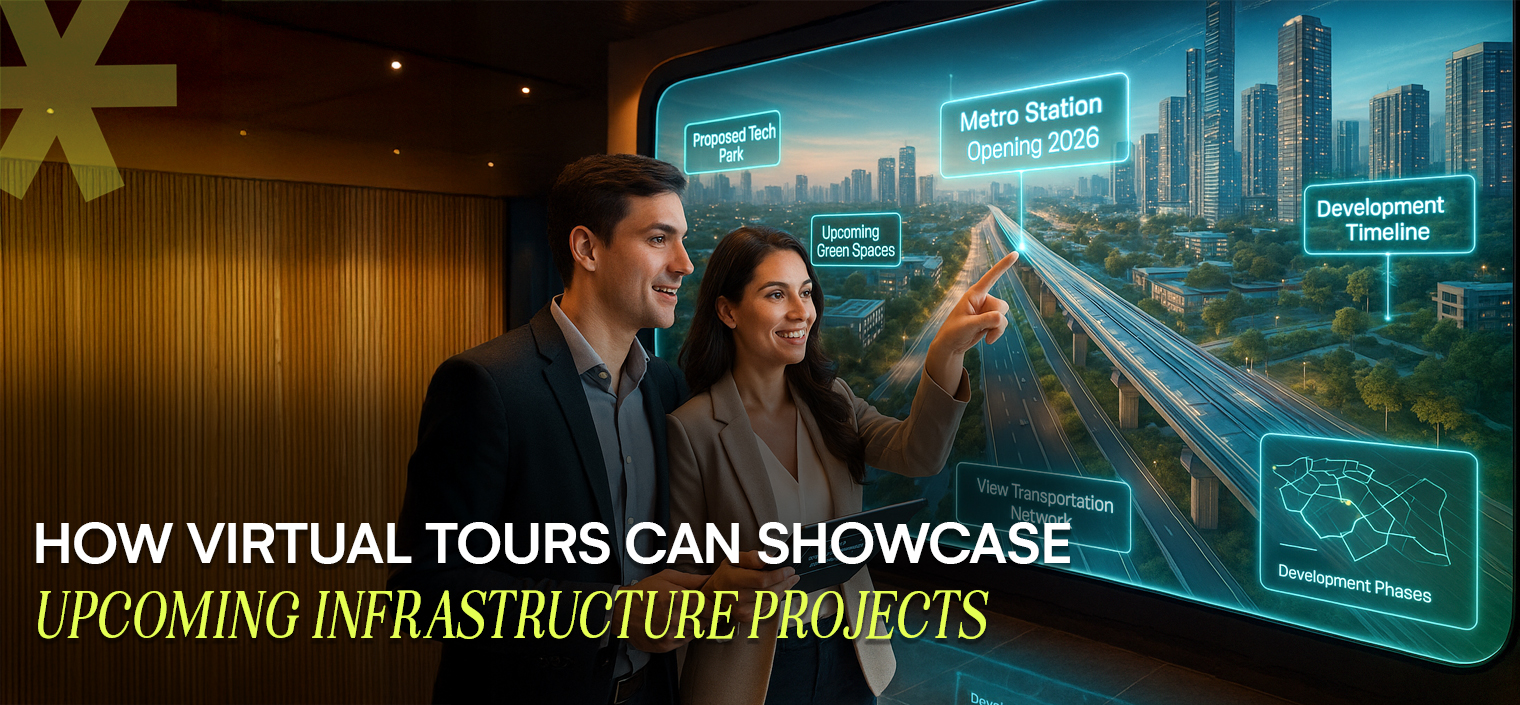
This is where interactive virtual tours are becoming strategically valuable. A high-fidelity virtual tour can showcase the entire development, existing vicinity, and the upcoming infrastructure, demonstrating its relationship with the project, key destinations, and the wider micro market.
From Interactive Vicinity Mapping to Future Micro-Market Visualization
For leading developers, virtual tours consist of a bigger opportunity than simply showcasing connectivity.A well-designed virtual tour can help the sales team demonstrate:Project’s Future Positioning: Give buyers a complete understanding of the project's value in terms of the urban developments in the same vicinity.
Future Mobility: Visualize upcoming road networks, metro corridors, connectors, and transport infrastructure connected to the project.Travel Networking: Showcase the project’s proximity and connectivity to key destinations like business parks, educational institutes, airports, railway stations, etc. through interactive visualization.Sales Enablement: Sales reps get a dynamic interactive tool to explain location-led value during high-fidelity sales presentations.Micro Market Evolution: Show how new infrastructure can connect residential developments to commercial, retail, education, healthcare, and entertainment districts. This becomes particularly powerful when buyers move from building to the neighborhood and then to a larger city context without breaking the narrative.The strategic shift is simple: instead of asking the sales team to explain the future of a location, make the future visible.
Narang Valora: Making Future Connectivity Part of the Sales Proposition
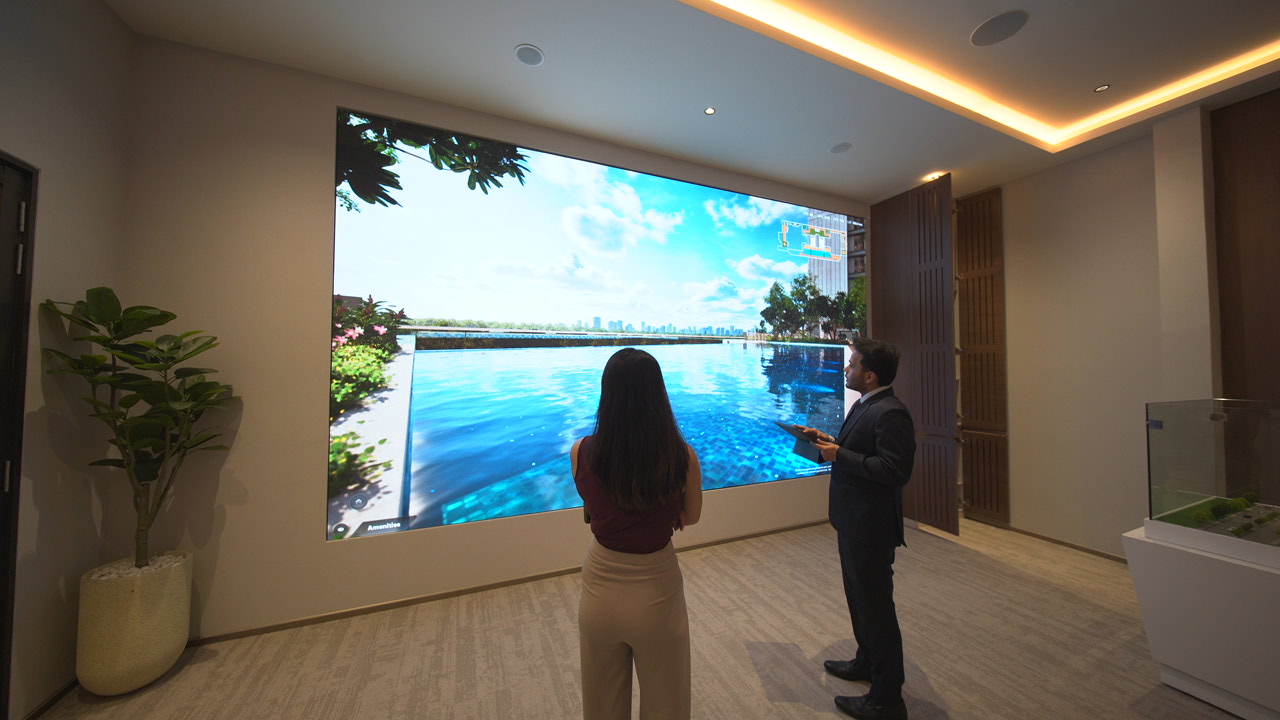
Narang Realty for their Valora project presented a clear challenge. The project was located at a highly competitive micro market, Goregaon West, and was priced at a 30% premium over the competitive residential developments. Hence, just communicating the luxury and architectural positioning wasn’t enough. The project needed to establish the location value and future connectivity that could strengthen its value proposition during the sales presentations.V-Estate addressed this by creating a strategic experience wherein the project’s architecture, lifestyle, views, future connectivity, and upcoming infrastructure could be experienced as one cohesive sales journey.
Visualizing the Project Within Its Future Context
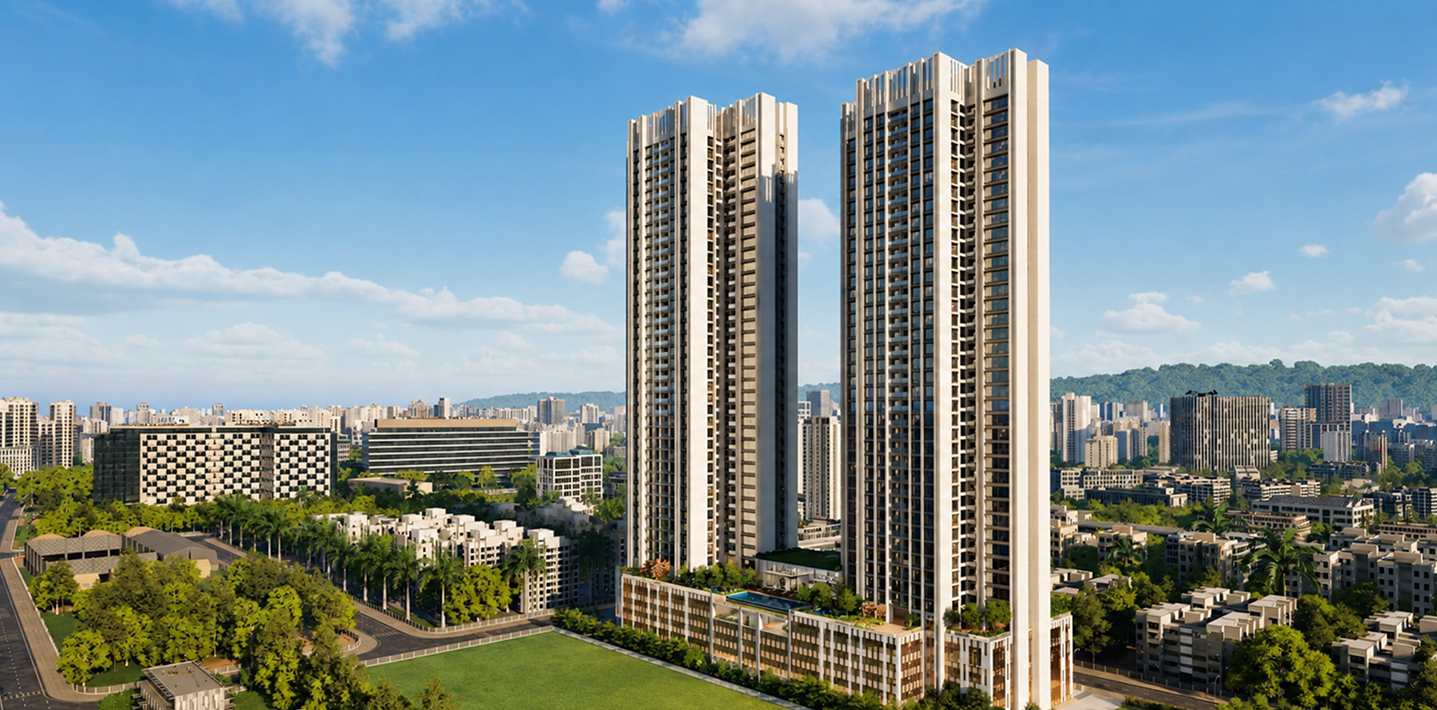
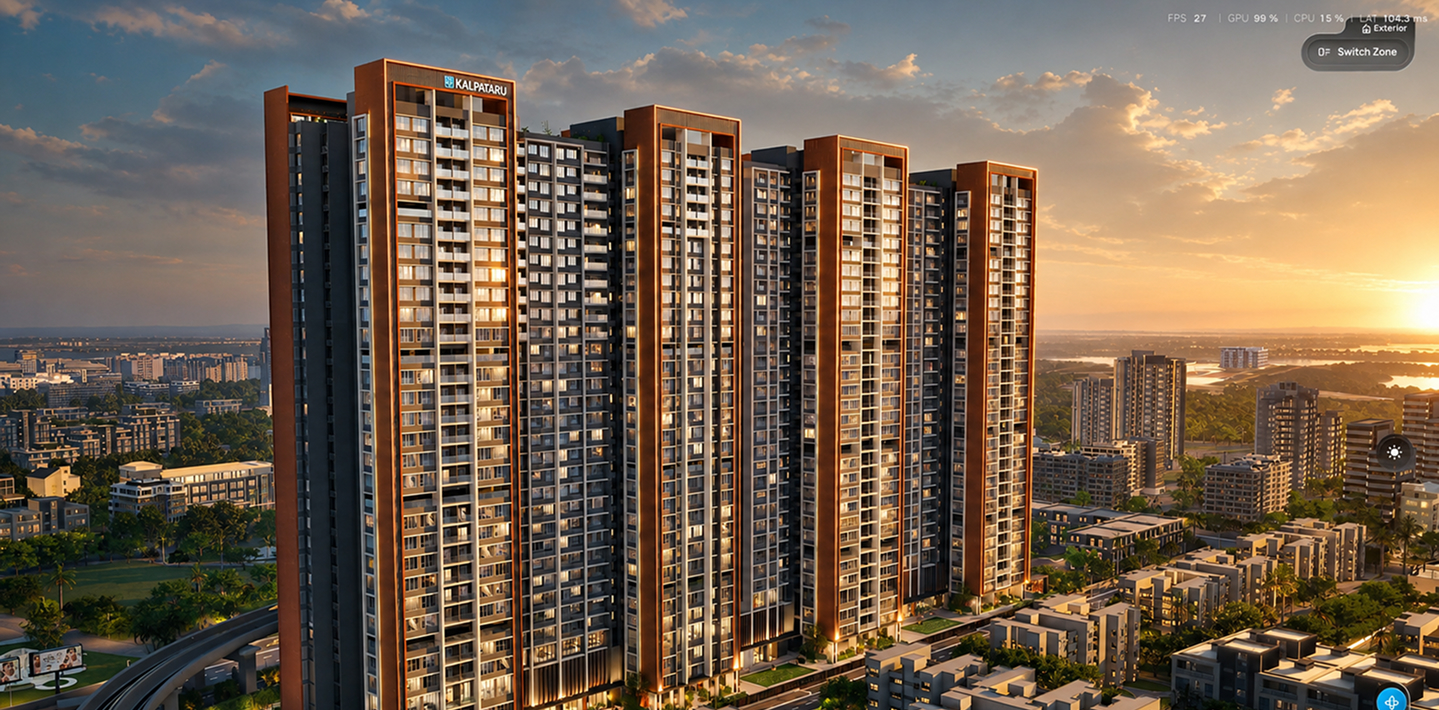
At the first visualization layer, V-Estate recreated the entire project’s photorealistic digital twin, allowing buyers to explore its two residential towers. 42-floor vertical profile and six-level parking podium in a real-time environment.Then the digital experience extended beyond the property.Through interactive vicinity mapping, buyers could understand the entire context of Bangur Nagar, including the Coastal Road, Goregaon Mulund Link Road (GMLR). Malad Versova Connector. Commercial hubs, educational institutes, healthcare facilities, and entertainment destinations.This transformed infrastructure from a line item in a location brochure to a strong part of the property's visual value proposition.The immersive virtual tour experience also demonstrated another key USP of the project, uninterrupted mangrove views and recreational ground views. By connecting the surrounding environment to the residences, V-Estate helped buyers understand not only the project’s current scenario but also how its protected views and connectivity contribute to its long-term positioning.
How Virtual Property Tours Lead to an Interactive Sales Conversation
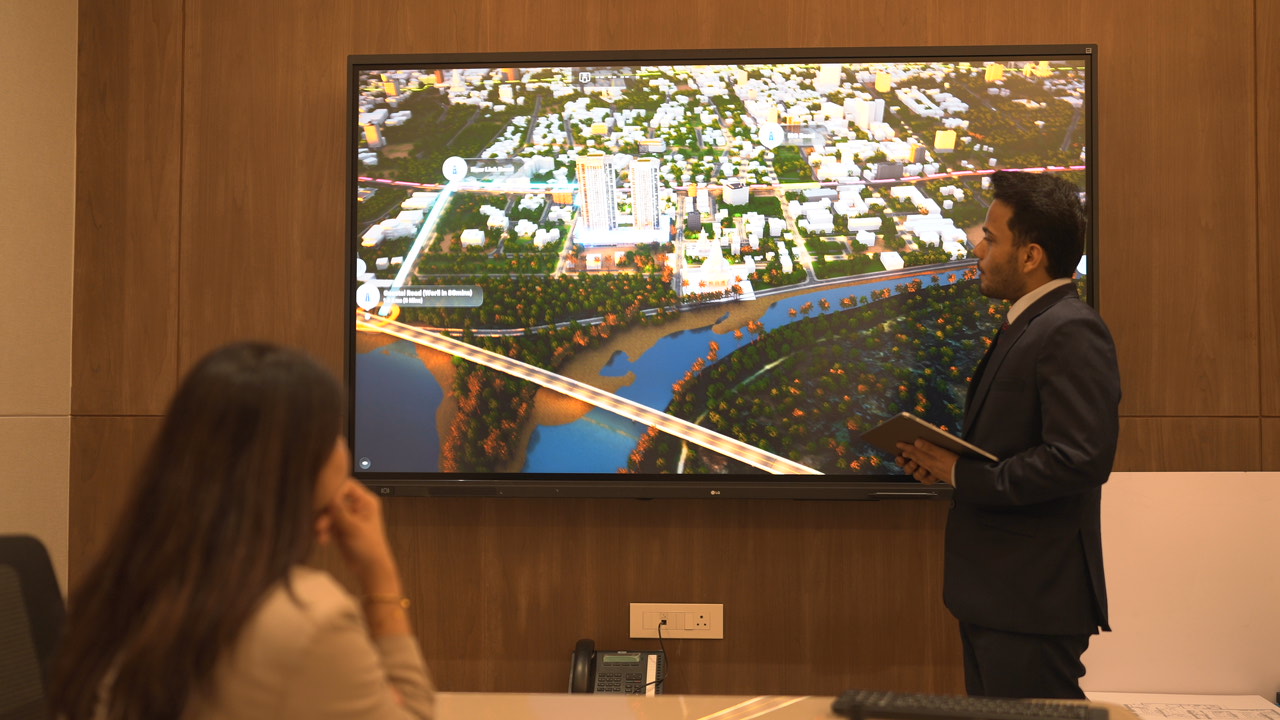
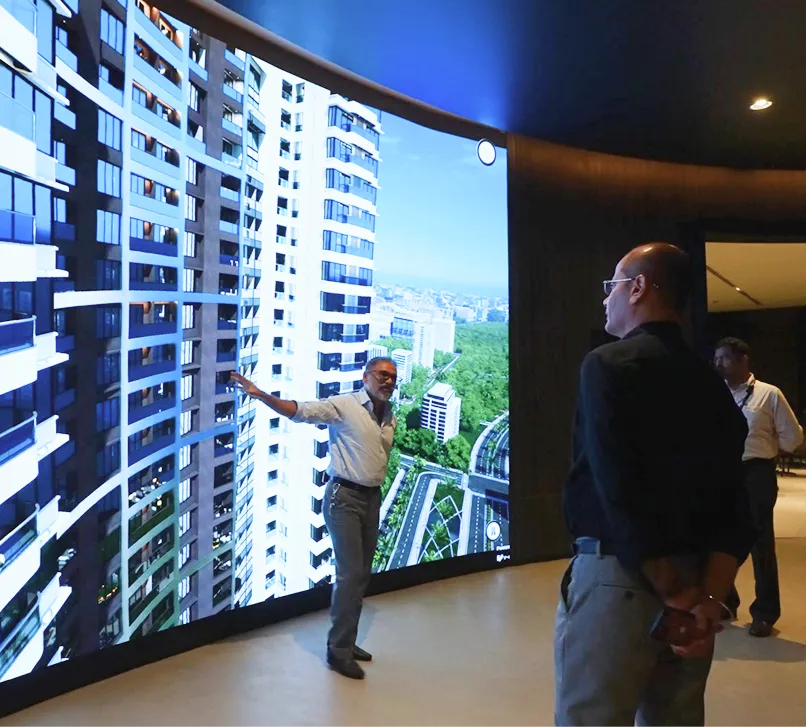
The infrastructure visualization didn’t exist as a standalone presentation. It was integrated into a much broader buyer journey.The immersive AV room combined a 16:9 LED wall with an IoT-enabled scale model. Buyers could explore architecture, vicinity, amenities, and floor-specific views, while 32 IoT touchpoints allowed consultants to instantly bring different parts of the project to life.
The experience then went into areas where the sales team could look at tower elevation, interiors, and things to enjoy, like how the building connects with other places and what the view is like from each floor using V-Estate’s interactive sales tool.
For one person the talk might be about getting to places where people work. For another person the talk might be about how easy it's to get around where fun places are or how the building relates to beautiful views.
The end result was a sales place where future infrastructure and roads were part of a talk about what the property is worth instead of just saying it's in a good location.
From Future Buildings to High-Value Positioning
The impact was commercial.V-Estate’s interactive virtual tour experience helped Narang Realty show that the project was 30% more expensive than others by using design planning that puts privacy first, a lifestyle that feels like a hotel, open views of the mangroves, and plans for better ways to get around. The whole place was made, built, and put in place in three months and five days of training, and it made sure everyone used the tool perfectly.
The Narang Valora example shows how virtual tours can help in selling an estate that is based on future building plans: they can make future city changes something that buyers can see, understand, and feel is worth the money.
Why This Matters for Leading Real Estate Developers
Upcoming infrastructure and connectivity can change how people see an area long before the property is done. The problem for leading developers is to explain that value clearly and in a way that people believe in so it can help them decide to buy.
A smart virtual tour gives the pictures needed for that talk. It can bring together the architectural blueprint, how the train lines will connect, and maps that show what is around new roads, important places, and other buildings into one place where people can move around and explore.
For marketing leaders this gives a strategic direction across sales presentations. For sales people it gives them a way to explain complicated location ideas. For CXOs it makes the commercial story stronger: how the project is positioned within the next evolution of its micro market.
As Mumbai’s infrastructure networks continue to expand with roads, train lines, places along the coast, and links to other areas, being able to see how these changes happen will become increasingly important for high-end properties to show why their location is valuable. Book a strategic consultation with V-Estate today to transform your next project’s sales experience.
.jpg)