Introduction
In the off-plan real estate sector, time is one of a developer's most critical operational risks. Every day a residential or commercial unit remains unsold, it accumulates holding costs, extends marketing expenditures, and delays capital reinvestment into new developments.
Despite these financial pressures, the conventional real estate sales cycle remains notoriously sluggish. When prospective buyers visit a traditional sales gallery, they are often overwhelmed by abstract floor plans, static brochures, and aggressive verbal pitching from sales executives.
This passive sales approach leaves buyers with lingering doubts regarding spatial dimensions, window views, natural lighting, and neighborhood infrastructure. Instead of making a confident purchasing decision, buyers leave the office to think it over, resulting in drawn-out follow-ups and lost conversions.
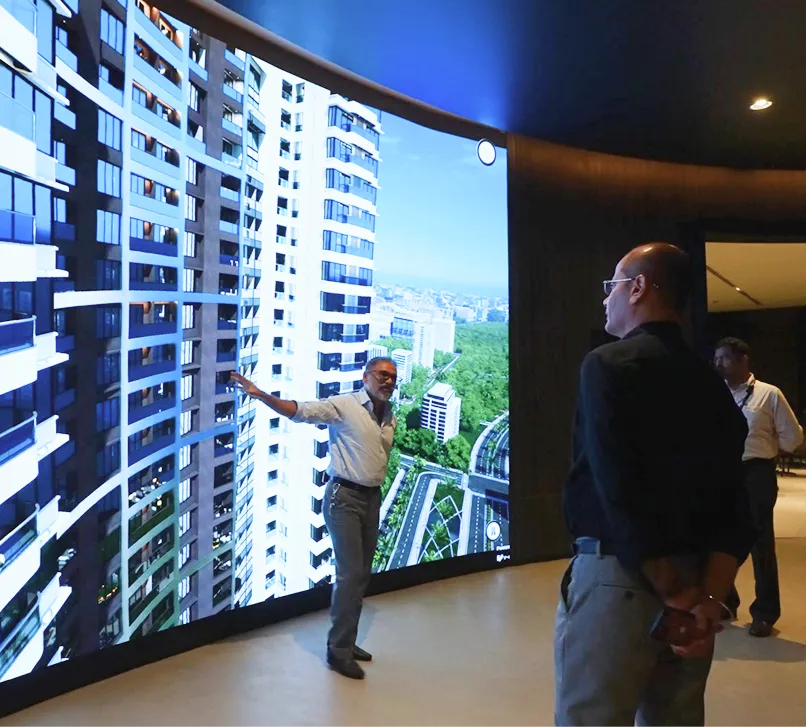
To shorten the sales cycle, leading property developers are transforming how they engage walk-in prospects. By integrating interactive, offline buyer engagement tools into their physical sales offices, developers eliminate visual ambiguity, accelerate trust, and guide buyers from initial curiosity to contract commitment in a fraction of the traditional time.
Understanding What Stalls Off-Plan Property Transactions
A prolonged real estate sales cycle is rarely caused by a lack of buyer interest; it is caused by unanswered questions. When buyers cannot independently verify critical details about an off-plan property, their natural instinct is to delay the transaction.
The Three Core Buyer Doubts: Layout, Sunlight, and Neighborhood
During a traditional sales office visit, three distinct information gaps consistently create friction and stall conversions:
- Spatial Confusion: Buyers struggle to understand how two-dimensional floor plans translate into living space, questioning whether standard furniture will fit comfortably.
- Environmental Uncertainty: Without accurate visual proof, buyers worry about blocked window views, balcony privacy, and natural sunlight penetration across different seasons.
- Locational Ambiguity: Buyers visiting emerging townships often lack clarity regarding existing access roads and upcoming municipal infrastructure.
Why Traditional Follow-Up Cycles Lose Momentum
When a buyer leaves a sales gallery with unresolved spatial doubts, the sales executive is forced into a defensive follow-up cycle. Sending email attachments, static renders, or site location pins rarely restores the momentum generated during the initial office visit. Closing a deal requires resolving these questions instantly, while the prospect is sitting in the sales office.
Shifting Buyer Psychology Through Self-Directed Exploration
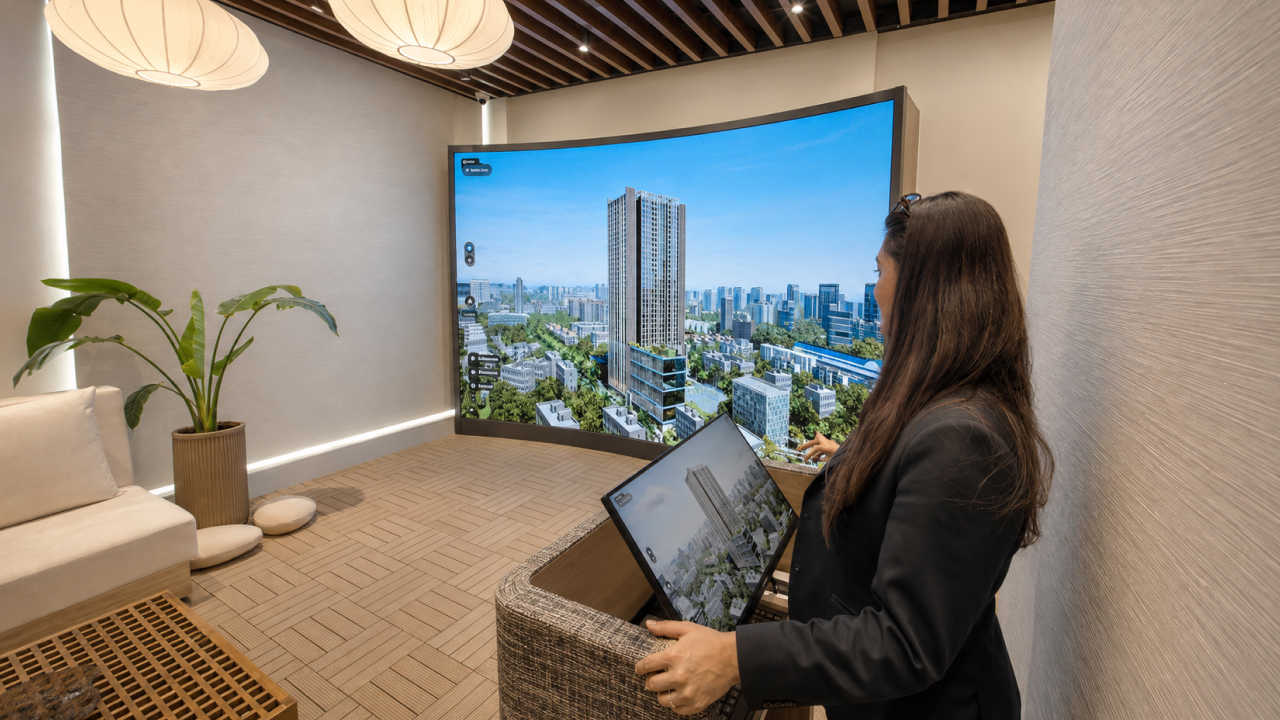
Interactive touchscreen tools change the psychological dynamics of a sales meeting. When a buyer takes control of a digital display to navigate a property, their brain shifts from passively assessing a sales pitch to actively exploring a future home.
Moving Prospects from Passive Listeners to Active Explorers
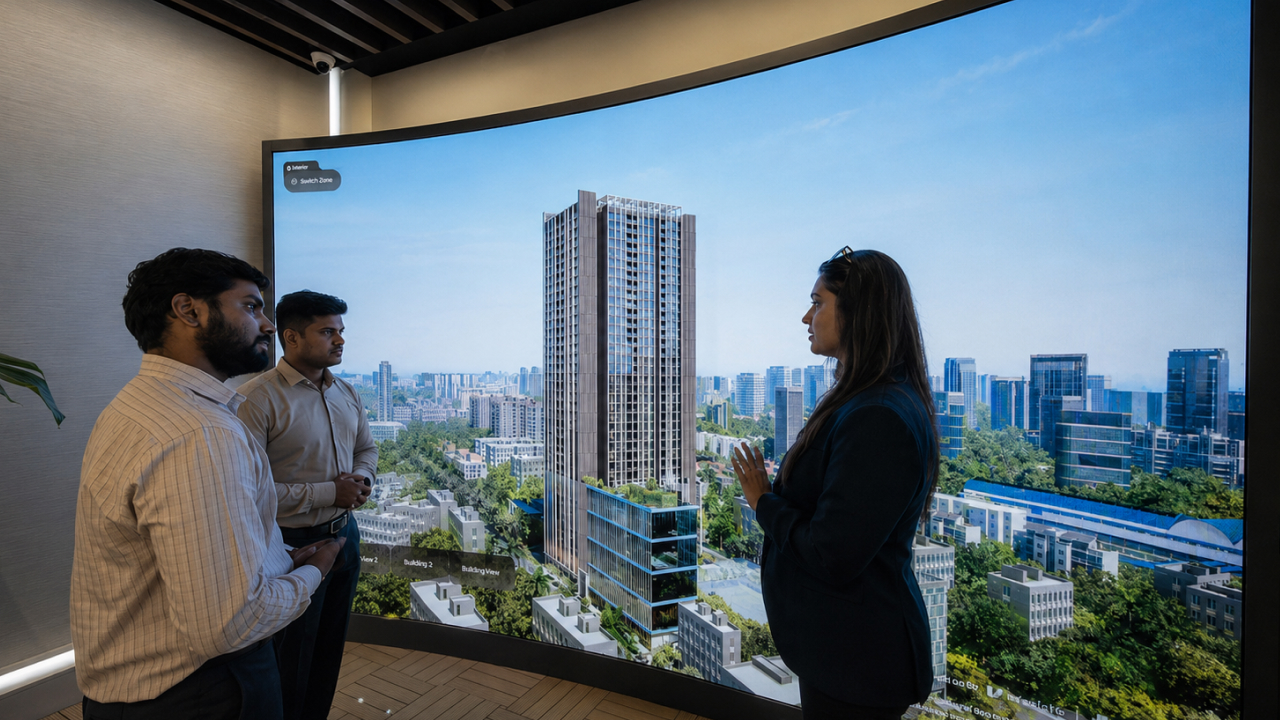
Allowing buyers to autonomously navigate through an off-plan property transforms their relationship with the space.
- Self-Directed Verification: Buyers open virtual doors, inspect ceiling heights, and step onto balconies at their own pace, building personal trust.
- Reducing Perceived Risk: Visual transparency removes the fear of hidden structural flaws or inaccurate view promises.
- Creating Emotional Ownership: When a buyer spends time customizing interior finishes and testing daylight angles, they begin mentally moving into the property.
Building Immediate Trust Through Visual Verification
Trust is the foundation of off-plan property sales. When sales executives can visually verify every claim about an apartment's view, ceiling height, or layout efficiency, buyers no longer feel sold to—they feel informed. Instant visual proof eliminates skepticism and accelerates contract readiness.
Accelerating Commitment with Vicinity and Infrastructure Mapping
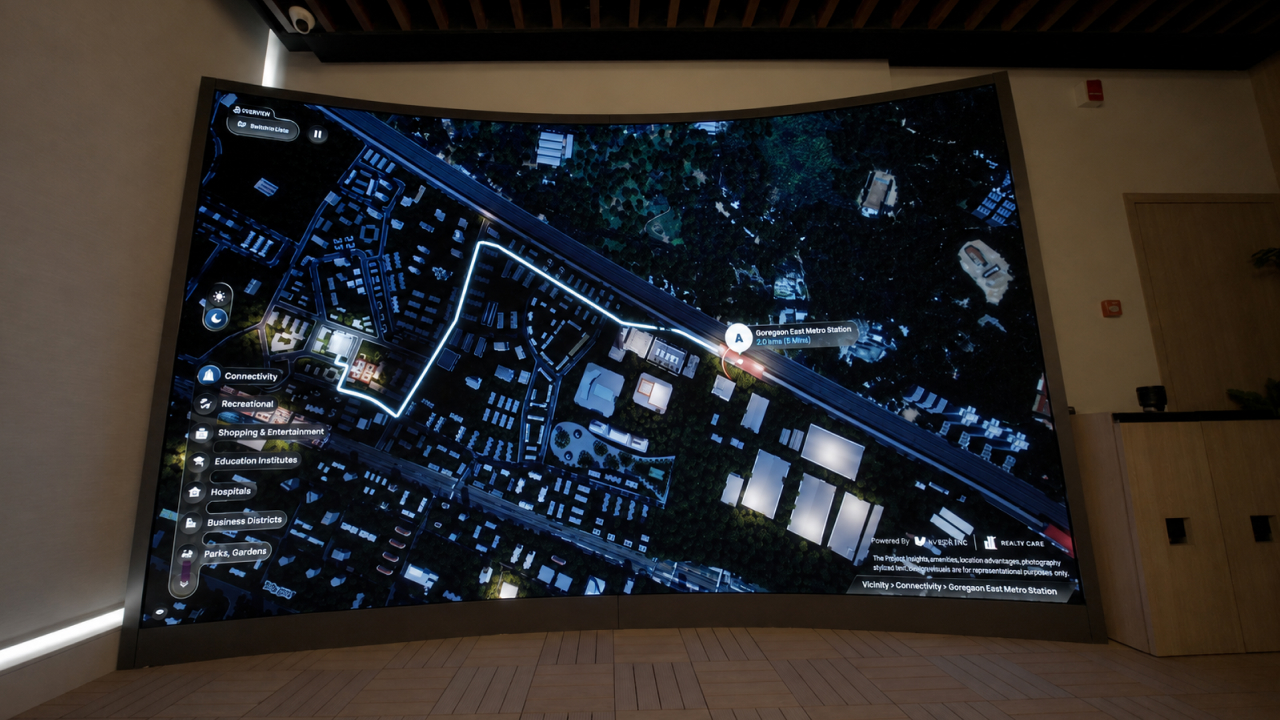
Location remains the primary driver of property value, yet traditional paper maps and static site plans fail to communicate connectivity effectively. Interactive mapping tools remove locational hesitation by making neighborhood infrastructure visually explicit.
Proving Neighborhood Connectivity and Long-Term Value
For developing townships and emerging residential corridors, buyers often hesitate because current roads appear underdeveloped. Interactive mapping proves long-term locational convenience.
- Interactive Vicinity Mapping: Buyers touch the screen to highlight educational institutions, hospitals, commercial hubs, and transit stations, instantly viewing precise travel distances.
- Upcoming Infrastructure Mapping: Developers overlay approved municipal projects—such as future metro lines, coastal roads, or expressway interchanges—directly onto the 3D map.
Highlighting Existing Transit and Upcoming Municipal Projects
Visualizing upcoming connectivity reassures investors of capital appreciation potential. When buyers see how future transit lines connect the development to major business districts, locational anxiety is replaced with investment confidence.
Transforming Sales Executives into Consultative Advisors
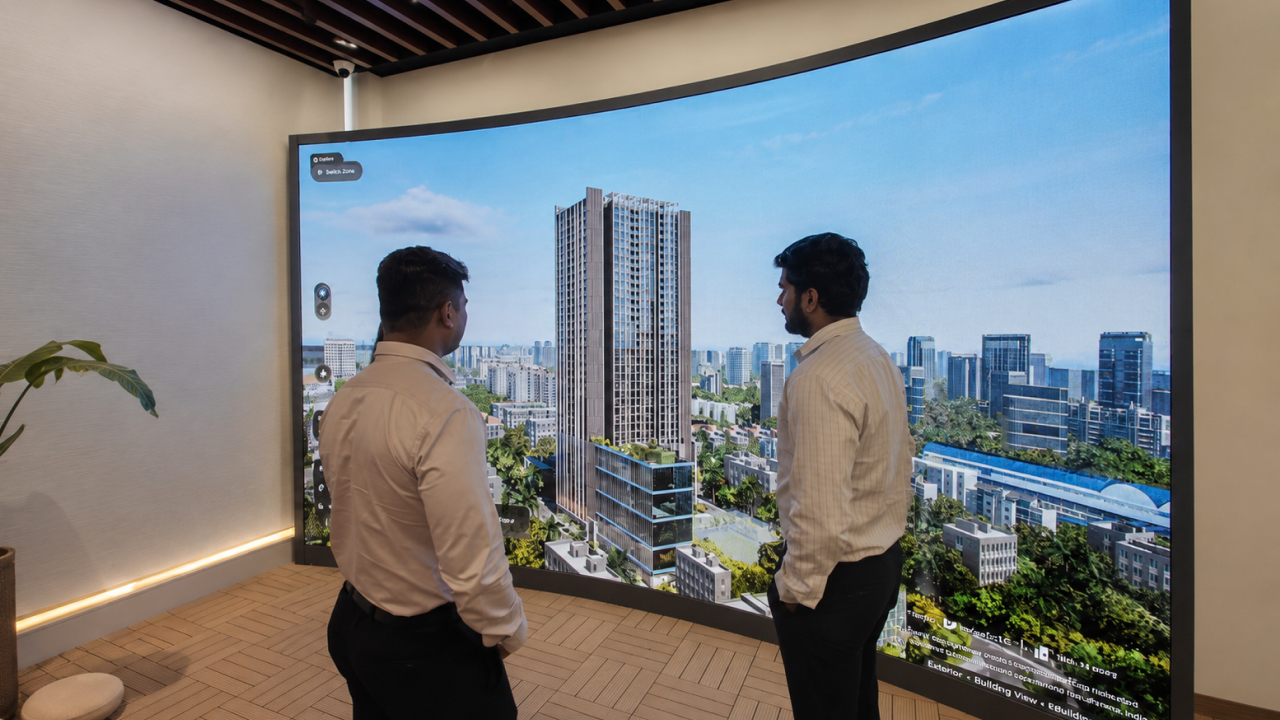
The deployment of interactive offline sales tools fundamentally upgrades the capability of a developer's sales force. Instead of reciting generic promotional scripts, executives use real-time data and visual proof to conduct consultative sales meetings.
- Collaborative Dialogue: Sales meetings transition from executive monologues to interactive, buyer-guided explorations.
- Instant Objection Handling: Concerns regarding room dimensions or sunlight exposure are resolved live on screen through realistic simulations.
- Custom-Tailored Pitches: Sales executives can instantly switch floor plans, views, and interior styles to match the specific profile of the buyer sitting in front of them.
Driving Rapid Off-Plan Conversions with V-Estate
A practical example of an engagement platform designed to accelerate sales velocity is V-Estate. Built specifically for property developers and builders, V-Estate is an offline interactive real estate sales solution that removes buying friction inside physical sales offices.
V-Estate is not an online property portal or a web-based virtual tour. It is engineered to operate natively on local hardware, delivering zero-latency, high-resolution interactive experiences in sales experience centers, builder offices, project launch events, property exhibitions, and investor presentations.
The platform integrates photorealistic 3D virtual show flats, an amenity showcase, interactive vicinity mapping, and infrastructure visualization. By featuring dynamic day and night lighting, seasonal weather controls, realistic window views, and interactive interior customization, V-Estate answers complex buyer questions instantly.
When walk-in prospects can verify window sightlines, customize wall paint and furniture layouts, and explore surrounding connectivity during their first visit, hesitation evaporates. Developers utilizing V-Estate experience higher lead conversion, better customer engagement, improved customer satisfaction, and a significantly shortened sales cycle.
Conclusion
In modern off-plan real estate sales, reducing the decision-making cycle requires eliminating buyer doubt. Relying on passive printed brochures, static floor plans, and aggressive verbal pitching creates friction that delays contract execution and erodes project profitability.
Homebuyers demand transparency, real-time visual verification, and interactive control over their property exploration. By deploying offline interactive buyer engagement tools, developers empower prospects to independently validate layouts, window views, and neighborhood infrastructure.
Integrating a purpose-built offline platform like V-Estate transforms a standard sales gallery into a consultative, high-converting environment. Developers seeking to accelerate sales velocity, improve lead conversion, and shorten their sales cycle must make interactive visualization a core component of their offline sales strategy.