.jpg)
Amenities rarely lose relevance because buyers stop wanting them. They lose relevance when buyers are asked to interpret value on their own.
Across most sales galleries, amenities are still introduced as lists. Pools. Gyms. Gardens. Lounges. These lists are detached from daily routines, location context, and real usage. Buyers listen. They compare. They negotiate. Then they pause.
The pause is not about pricing. It is about lack of clarity.
In experience centers in 202, this approach is already outdated.
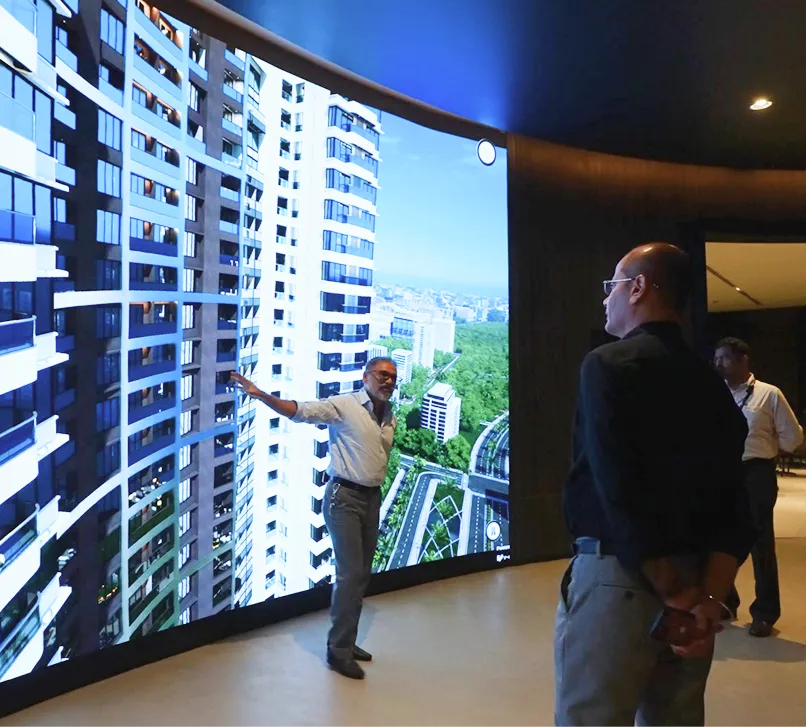
At Rustomjee Verdant Vista, amenities were repositioned through real estate experiential technology as integrated decision drivers. The outcome was measurable. Conversion ratios increased by thirty percent, and closures moved faster in one of Thane’s most competitive micro markets.
This is how amenities stop being features and start shaping buyer conviction.
The End of Amenity Checklists: Designing Value Through Experiential Systems
Amenity checklists no longer influence serious decisions.
When amenities are presented as bullet points, buyers are forced to calculate relevance mentally. That calculation differs from buyer to buyer. Uncertainty enters early. Conversations drift toward price instead of purpose.
Momentum weakens before conviction is formed.
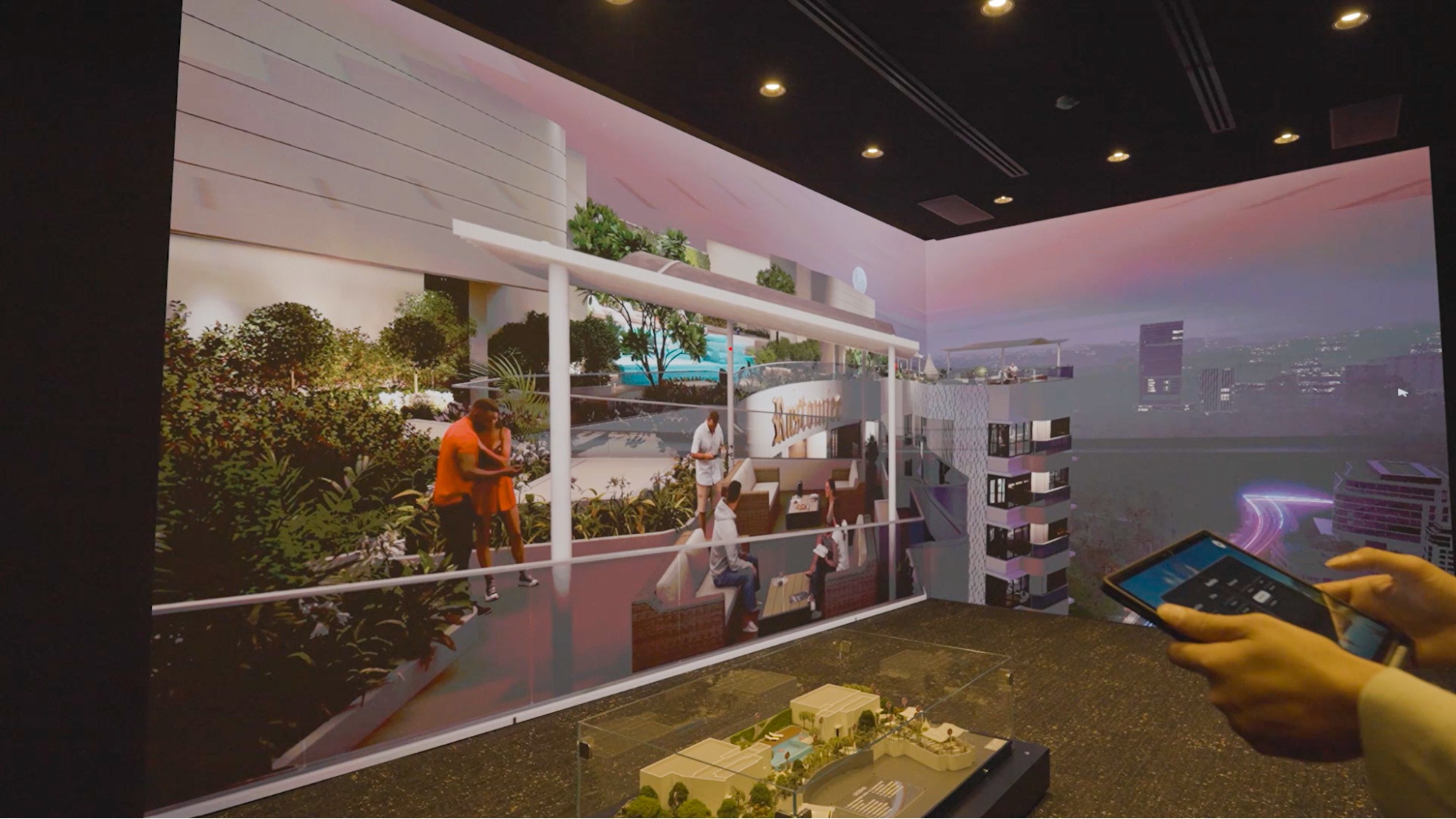
At Verdant Vista, amenities were not introduced as inventory. They were embedded into an experiential system. Buyers encountered them only after understanding the lifestyle friction each amenity resolved.
Through this system, buyers clearly understood:
Which amenities reduced daily effort across work, wellness, and family routines
How shared spaces replaced external dependencies created by dense urban surroundings
Why the amenity mix supported long-term ownership value
The checklist disappeared. Clarity took its place.
Establish Amenity Exploration Through Interactive Property Walkthroughs
Explanation slows decisions. Exploration accelerates them.
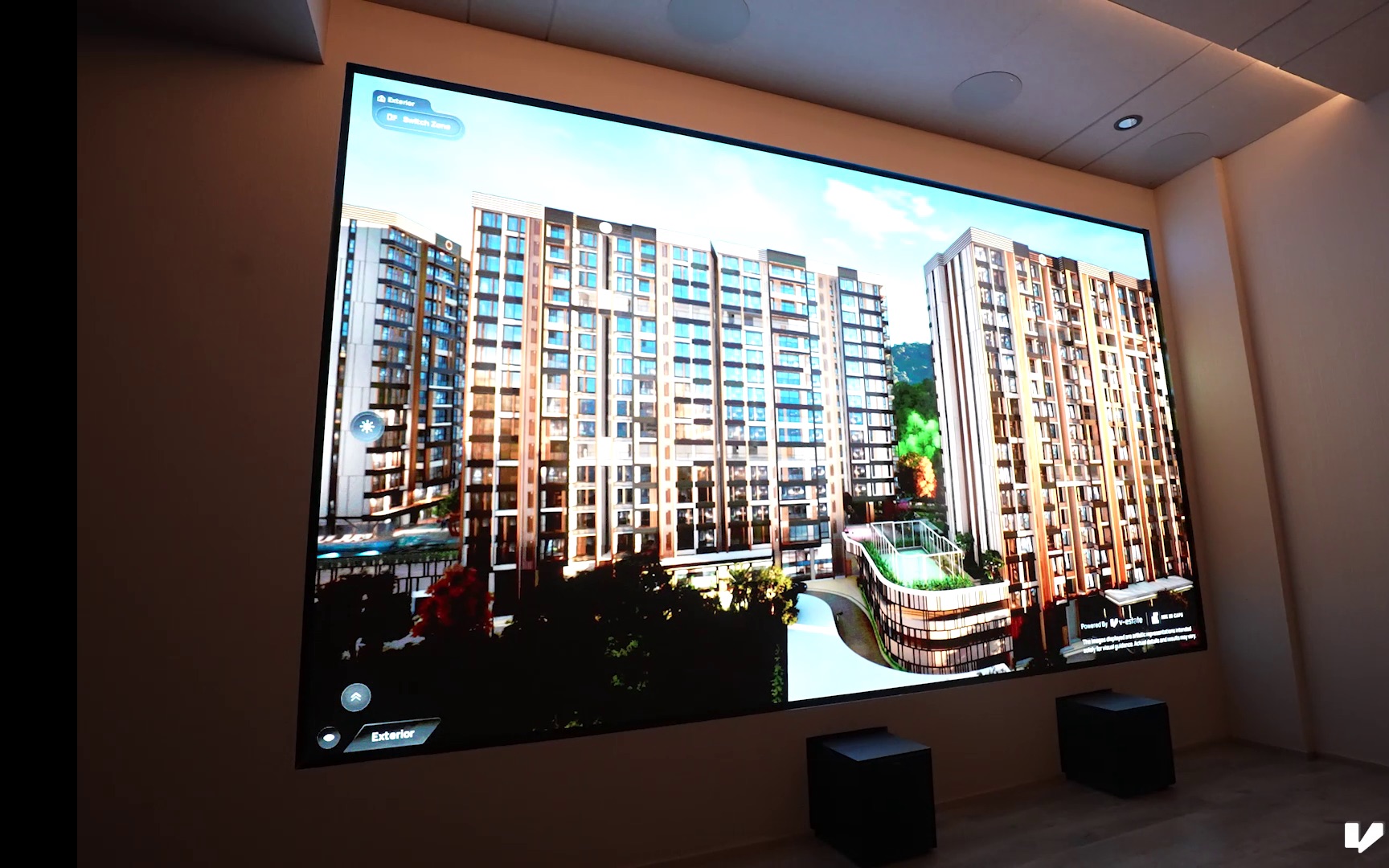
Verdant Vista deployed interactive property walkthroughs that allowed buyers to move through amenity zones independently. The impact was immediate.
Buyers explored:
Podium, ground level, and rooftop amenities in real time
Distance between homes, circulation paths, and shared spaces
How amenities fit into weekday routines and weekend use
Because buyers controlled the walkthrough, engagement deepened. Questions became precise. Repetition reduced. Decisions progressed without pressure.
Anchor Amenity Value to Location Using 3D Real Estate Walkthroughs
Amenities derive meaning from their surroundings.
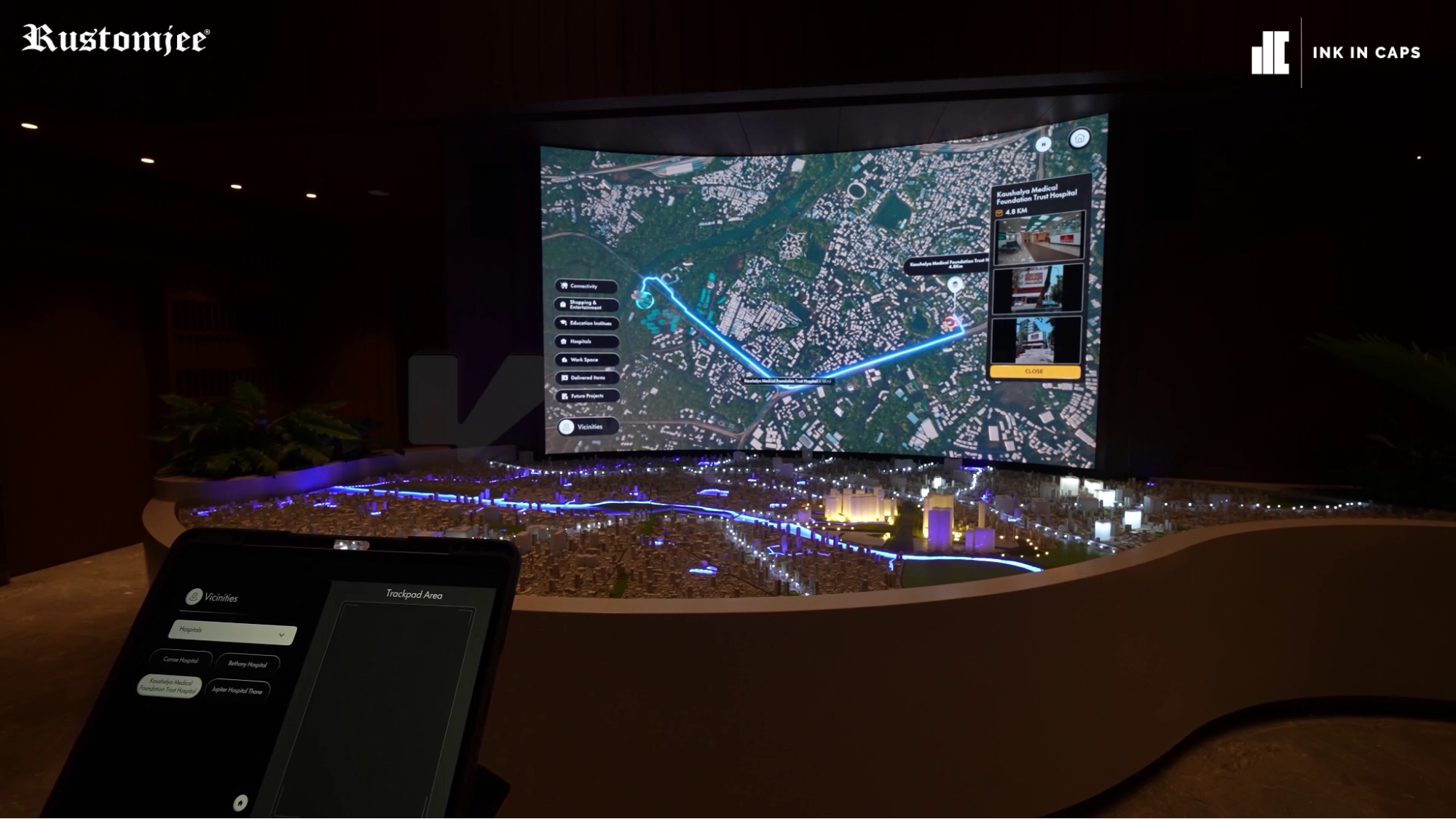
Verdant Vista integrated 3D real estate walkthroughs with a twenty-five-kilometer vicinity scale model powered by IoT. Educational institutions, business hubs, highways, rail networks, and upcoming infrastructure were visualized dynamically.
Buyers immediately saw:
Which amenities reduced dependence on city travel
How commute time shaped daily energy and convenience
Why in project lifestyle mattered in this specific micro market
Location stopped being abstract. It became visible and verifiable.
Build Buyer Conviction Through a Digital Twin Real Estate Experience
Buyers rarely question amenities. They question representations.
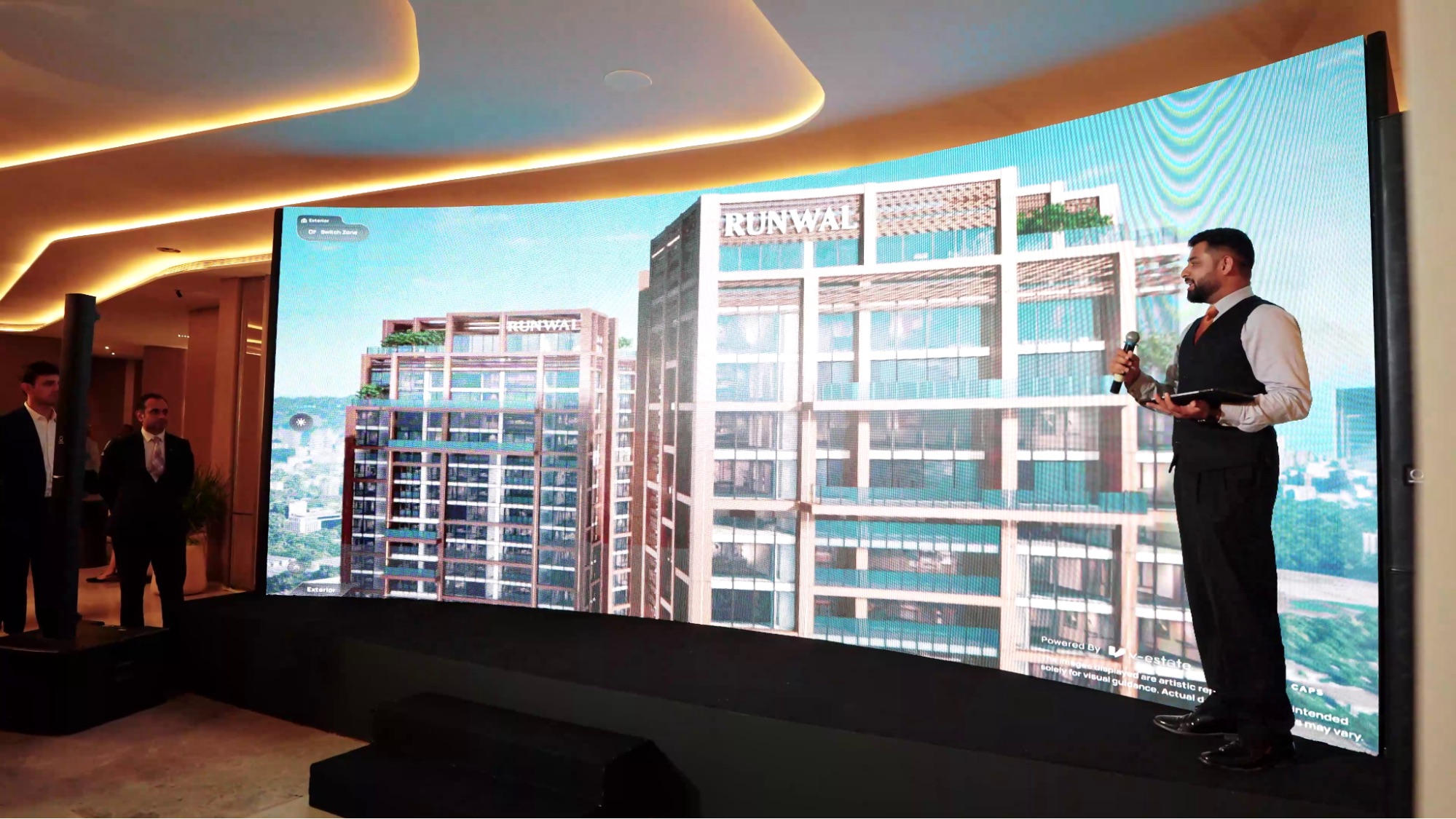
Verdant Vista addressed this using a digital twin real estate environment. Amenities, exteriors, interiors, and circulation logic existed as one continuous system.
This allowed buyers to:
Verify spatial scale instead of assuming it
Understand privacy, openness, and movement logically
See how amenities connected to individual homes
Digital twins do not persuade emotionally. They establish structural understanding. That understanding strengthens conviction.
Accelerate Closures with an Interactive Sales Tool That Reduces Narration
Sales velocity improves when narration reduces.
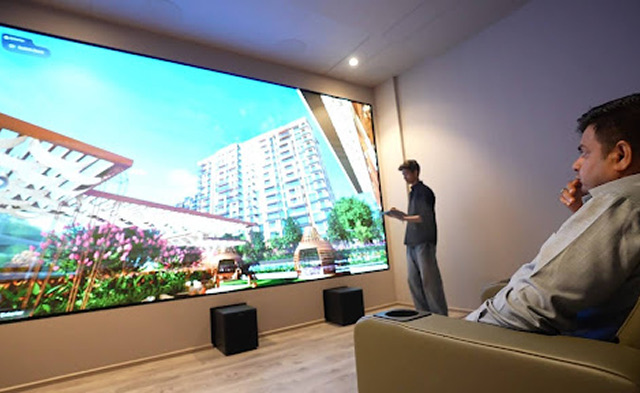
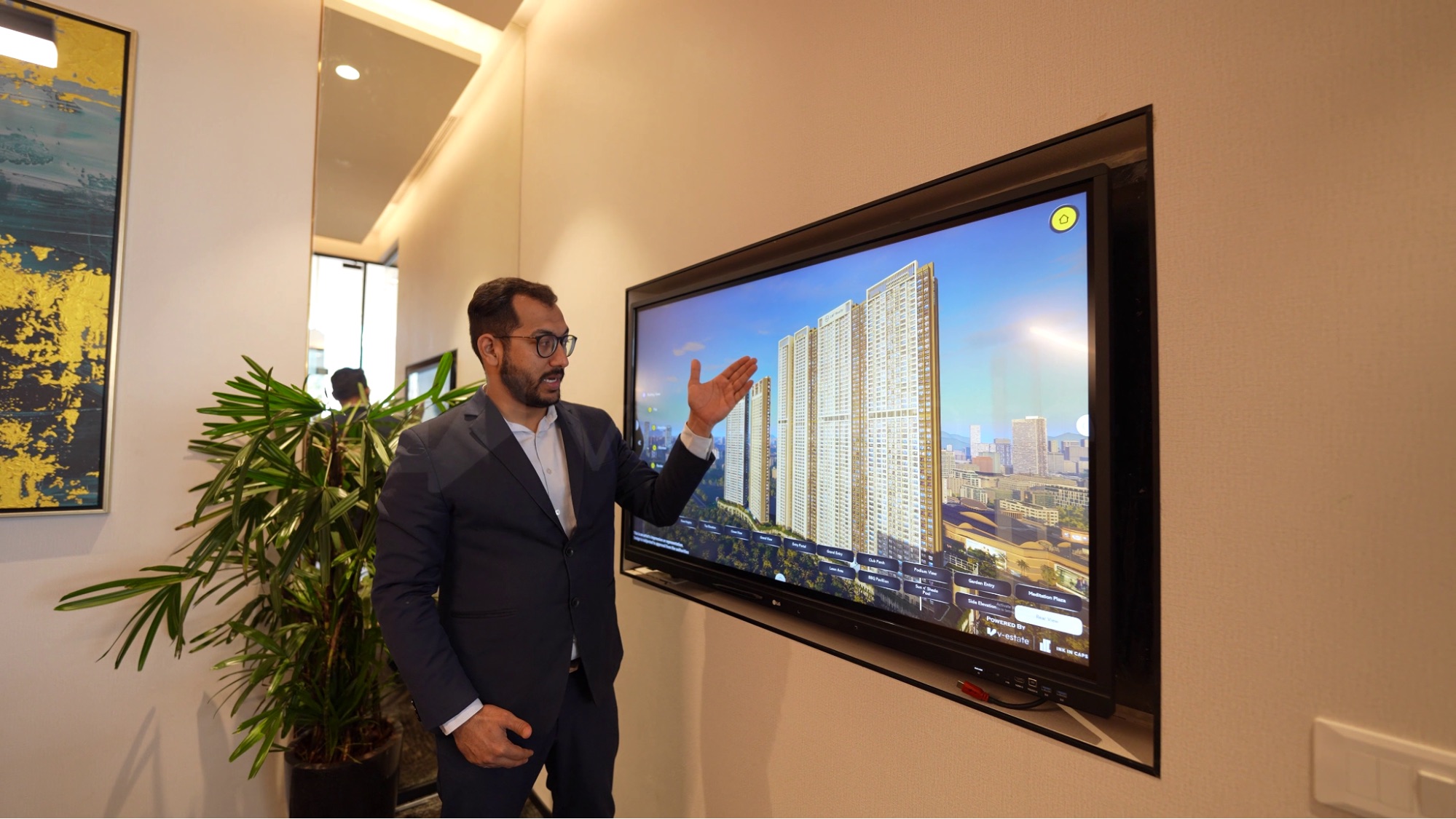
Verdant Vista deployed a touch-enabled interactive sales tool inside the experience center. Amenities, layouts, interiors, and vicinity context lived inside one interface.
Operational outcomes followed quickly:
Fewer repeat visits for clarification
Sharper commercial discussions
Sales teams guiding exploration rather than explaining basics
When buyers explored independently, objections softened. Decisions became easier to justify across family stakeholders.
Reinforce Amenity Value Through Interior and Amenity Alignment
Amenities fail to convert when homes do not support their use.
Verdant Vista paired amenity storytelling with interior unit walkthroughs. Buyers saw:
Window-specific views aligned to open spaces
Layout efficiency relative to shared zones
How private living areas complemented community spaces
This alignment removed a common friction point. Amenities were no longer admired in isolation. They were trusted in context.
Let Buyers Calculate Value Through Experience
Informed buyers evaluate ownership value instinctively.
Instead of stating benefits, Verdant Vista allowed buyers to experience:
Time savings through on-site conveniences
Reduced reliance on external memberships
Lifestyle consolidation within one development
When buyers arrive at these conclusions themselves, resistance drops. Pricing discussions become structured and rational.
Outcomes That Matter in Experience Centers in 2025
Presenting amenities as experiential value systems delivered:
Thirty percent increase in conversion ratios
Faster closures driven by reduced ambiguity
Strong recall in a dense Thane market
High sales team adoption due to clarity
No new amenities were introduced. Only understanding was engineered.
The Takeaway
Amenities do not close deals. Clarity does.
In experience centers in 2025, buyers expect interactive property walkthroughs, digital twin real estate environments, and interactive sales tools that help them evaluate projects with precision and context.
If amenities still live on brochures or static screens, decision cycles slow and pricing power weakens.
Let’s design an experience that helps buyers understand value clearly and move forward with conviction. Reach out to us to build a real estate experiential system that supports faster, better-informed decisions.