Real estate sales have a credibility problem. Buyers commit significant money to properties they cannot fully visualize. Developers invest heavily in marketing tools that fail to communicate project value effectively.
The gap between what is promised and what is understood remains painfully wide.
Brochures oversimplify. Floor plans confuse. Static renders do not answer real questions.
PropTech entered this space not as innovation theater but as operational necessity. It addresses failures in buyer comprehension, sales consistency, and decision confidence.
For developers and marketing teams, this shift is no longer experimental. It is structural.
Real Challenges Facing Real Estate Sales Operations
Sales teams encounter the same obstacles repeatedly across markets and project types.
Buyer visualization gaps remain severe Spatial dimensions are hard to communicate. Layout flow stays abstract. Elevation drawings lack contextual depth.
Physical sample flats create operational strain Construction delays affect sales timelines. Design iterations become costly. Scalability across multiple projects is limited.
Sales messaging lacks uniformity Different salespeople present differently. Site-to-site variation weakens brand trust. Buyer confidence suffers from inconsistent information.
Decision cycles extend unnecessarily Buyers leave meetings with unresolved doubts. Follow-up visits increase. Closing timelines stretch.
Market differentiation becomes difficult Competing projects appear similar. Location advantages fail to translate visually. Amenity value gets lost in static presentations.
These are not failures of intent. They are failures of experience delivery.
PropTech's Role in Offline Sales Infrastructure
PropTech has moved beyond backend analytics and portal integrations. Its real value now sits in physical sales environments.
Technology functions as a translation layer between architectural vision and buyer understanding.
Interactive visualization replaces guesswork. Spatial accuracy replaces mental approximation. Consistency replaces variable interpretation.
This does not replace sales teams. It equips them with clarity tools.
Photorealistic Visualization Solves Communication Failures
Three-dimensional immersive environments address multiple friction points simultaneously.
Design precision becomes accessible Exact proportions are visible. Room transitions feel natural. Light behavior across hours is demonstrated.
Context gains depth Unit-specific views show actual sightlines. Neighboring infrastructure appears accurately. Connectivity stops being hypothetical.
Emotional barriers reduce Buyers stop imagining outcomes. Anxiety around spatial unknowns decreases. Trust builds through tangible demonstration.
Brochures and scale models cannot deliver this level of comprehension.
Interactive Exploration Changes Buyer Engagement
Modern buyers resist passive presentations. They expect control over their evaluation process.
Interactive sales tools provide:
Independent navigation capability Room-by-room exploration without pressure. Pace controlled by the buyer.
Instant configuration comparison Switching between unit types. Layout efficiency becomes self-evident.
Visual amenity assessment Scale and access are clear. Integration with residential spaces is visible.
Participation shifts buyer psychology from listening mode to decision mode.
Digital Customization Accelerates Purchase Decisions
Customization expectations are standard now. Physical customization remains expensive and slow.
Digital environments resolve this friction efficiently.
Material choices become visual decisions Wall finishes change in seconds. Furniture arrangements update instantly.
Lighting simulation across time periods Morning natural light assessment. Evening ambience evaluation.
Seasonal and weather condition visualization Monsoon daylight patterns. Summer heat perception through glass facades.
This reduces post-booking second-guessing. It minimizes revision requests during handover.
Amenity and Location Context Without Physical Constraints
Amenities frequently get under-explained in sales conversations.
Scale remains unclear. Distances feel abstract. Future infrastructure stays disconnected from present decisions.
Interactive mapping solves this communication gap.
Nearby facilities appear with spatial accuracy Educational institutions. Healthcare infrastructure. Public transit access.
Planned developments gain visual context Not as text mentions. As integrated spatial references.
This builds lifestyle comprehension rather than just property awareness.
Operational Benefits for Developers and Sales Leadership
Beyond buyer experience improvements, PropTech delivers measurable internal outcomes.
Reduced sample flat dependency Lower capital lock-in. Faster pre-launch readiness.
Compressed sales cycles Fewer repeat meetings. More focused initial conversations.
Standardized sales communication Every buyer receives identical information. Every site office operates from the same system.
Improved lead qualification Informed buyers ask relevant questions. Conversion discussions stay focused.
Multi-project scalability Single platform deployment. Consistent experience across locations.
These directly impact cost efficiency and revenue predictability.
V-estate as an Offline Interactive Sales Platform
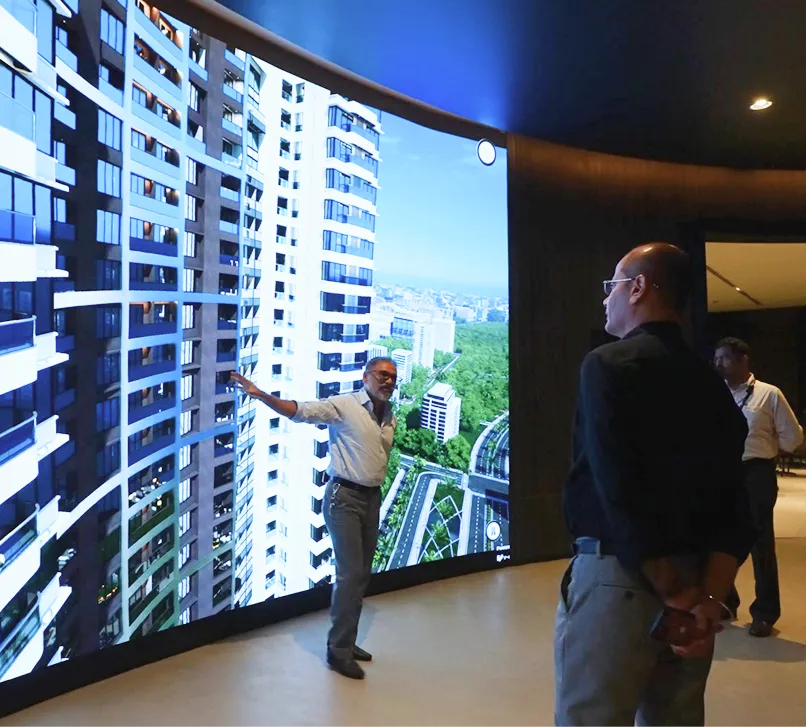
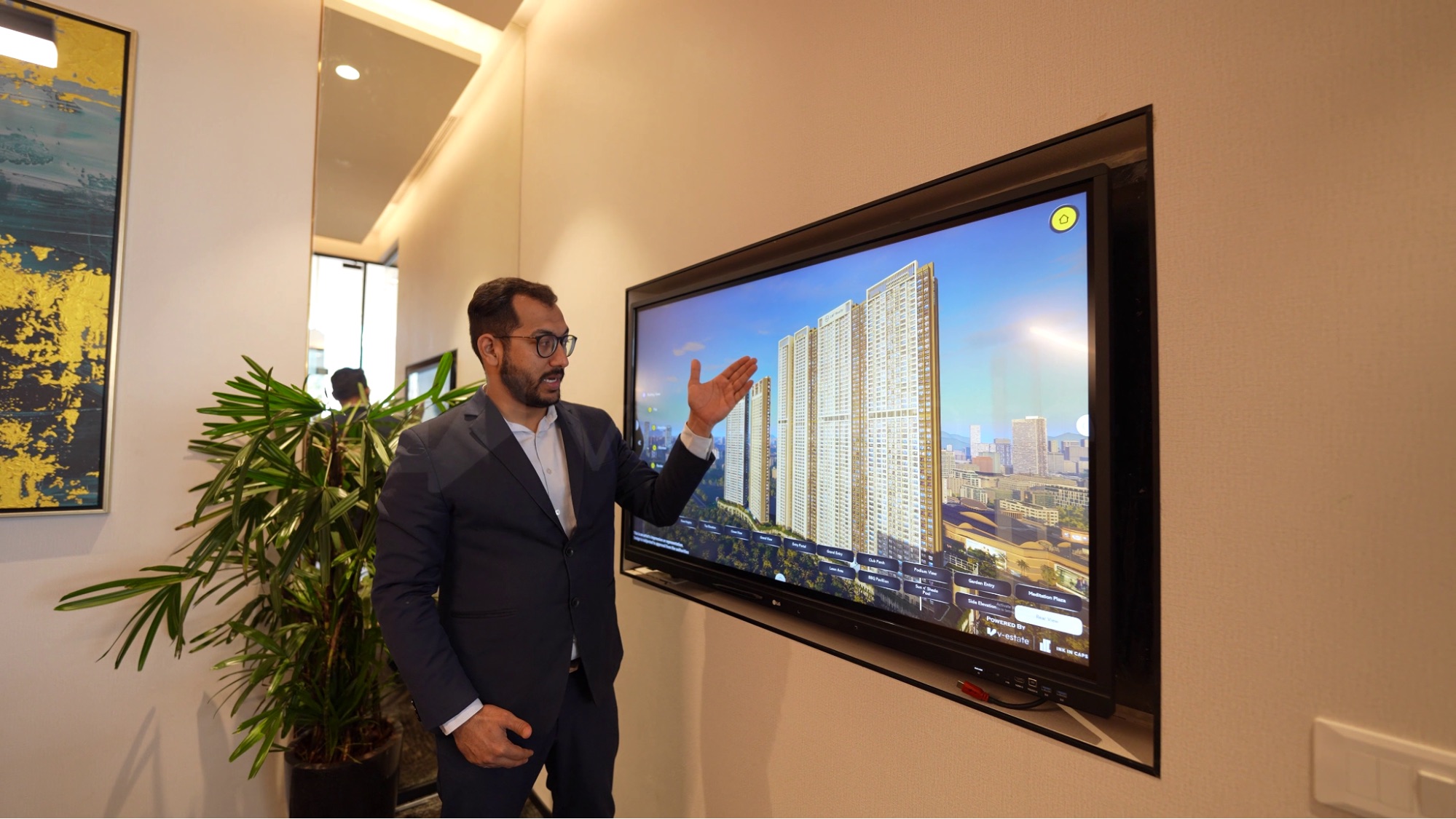
V-estate operates within physical sales infrastructure. It is designed for site offices, experience centers, and developer showrooms.
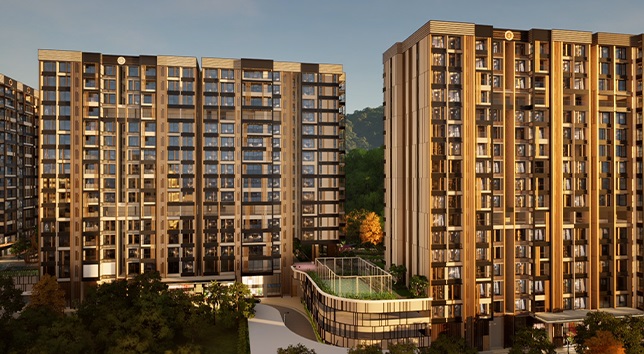
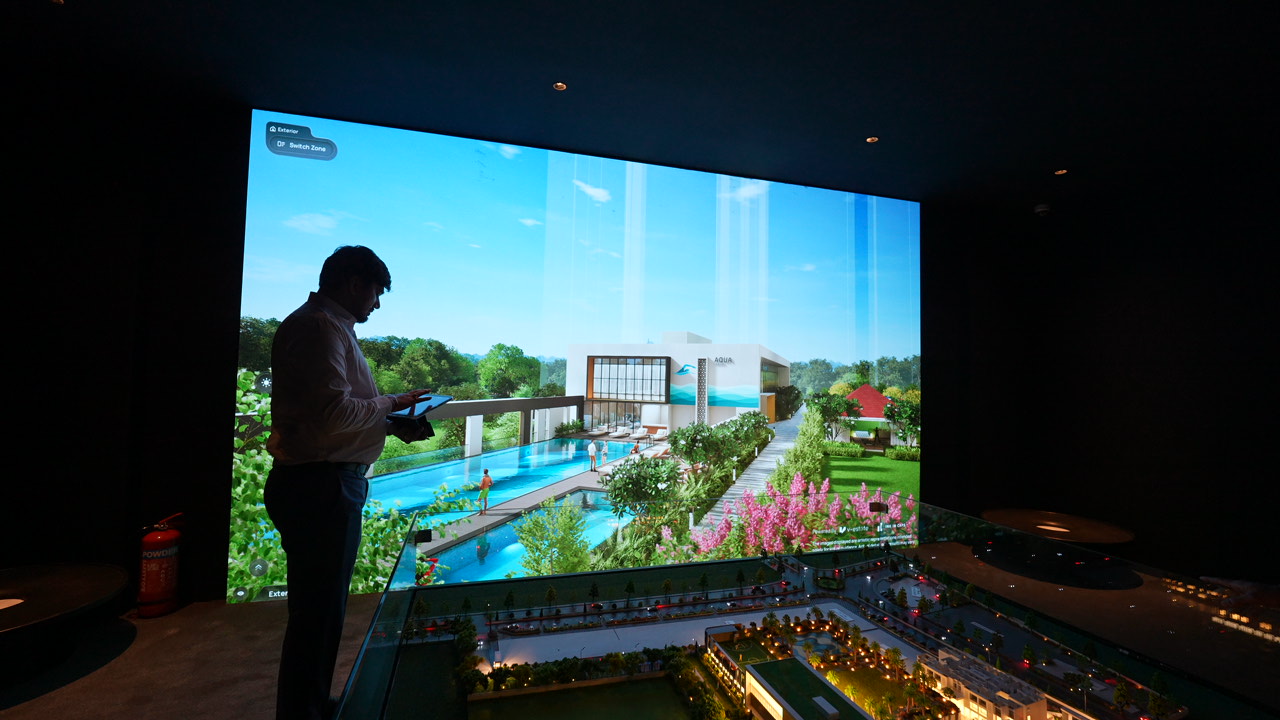
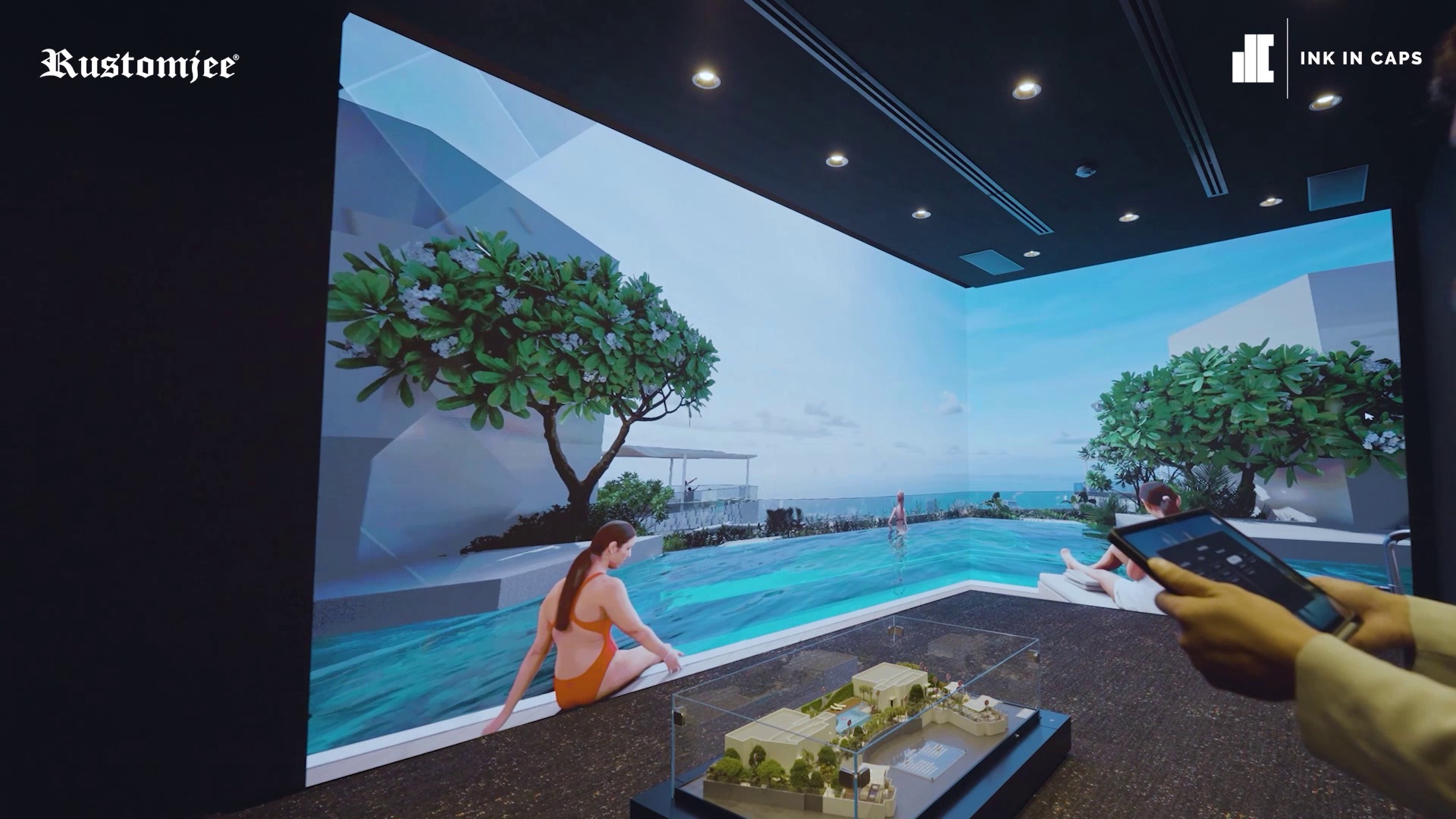
Photorealistic 3D virtual show flats deliver accurate interior representation. External views from specific units are included down to street-level detail.
Immersive property walkthroughs enable self-paced exploration. Buyers control navigation and focus areas.
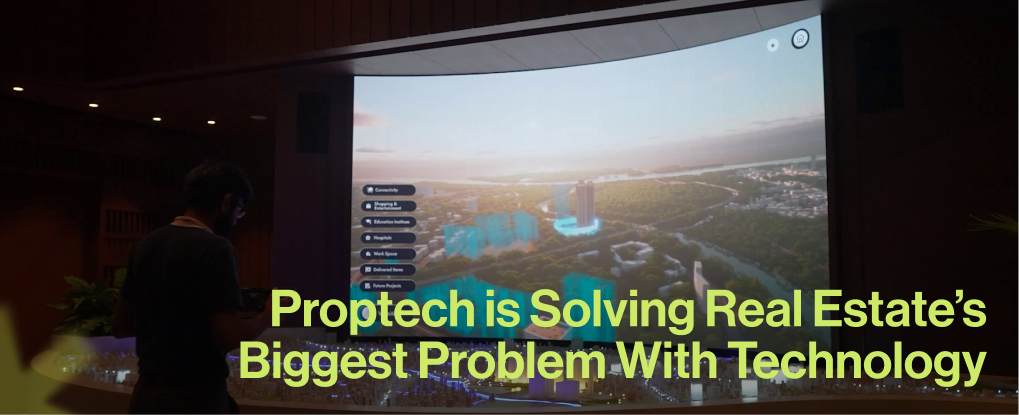
Amenity and location visualization maps real connectivity and lifestyle infrastructure. Both existing and upcoming developments appear in context.
Customization capabilities allow material, furniture, lighting, and weather modifications. Buyers visualize personalized outcomes before financial commitment.
This consolidates fragmented sales tools into a single interactive environment.
Market Relevance Across Segments
Acquisition costs continue rising. Buyer financial commitment grows heavier.
Clarity becomes a risk management tool for both parties.
PropTech reduces expectation misalignment before booking. It protects brand reputation post-handover.
Across premium, mid-segment, and mixed-use developments, this relevance remains constant.
Not because it impresses. Because it functions.
Strategic Implications for Development and Marketing Teams
PropTech has transitioned from future consideration to current operational requirement.
Projects communicating with clarity sell faster. Projects reducing ambiguity build stronger buyer confidence.
Interactive offline sales environments align marketing intent, sales execution, and buyer comprehension within one system.
Improved conversion sits at this alignment point. Scalability begins with this efficiency.
Final Assessment
Real estate performance depends on closing the gap between perception and reality.
When buyers explore, visualize, and personalize before committing, decisions become informed rather than speculative.
V-estate provides this clarity within offline sales operations, enabling developers to present projects with precision and consistency.
For teams focused on friction reduction, conversion quality improvement, and transparent buyer experiences, this approach has become operationally relevant.
The question is not about whether to adopt. It is about implementation timing and execution quality.
.jpg)