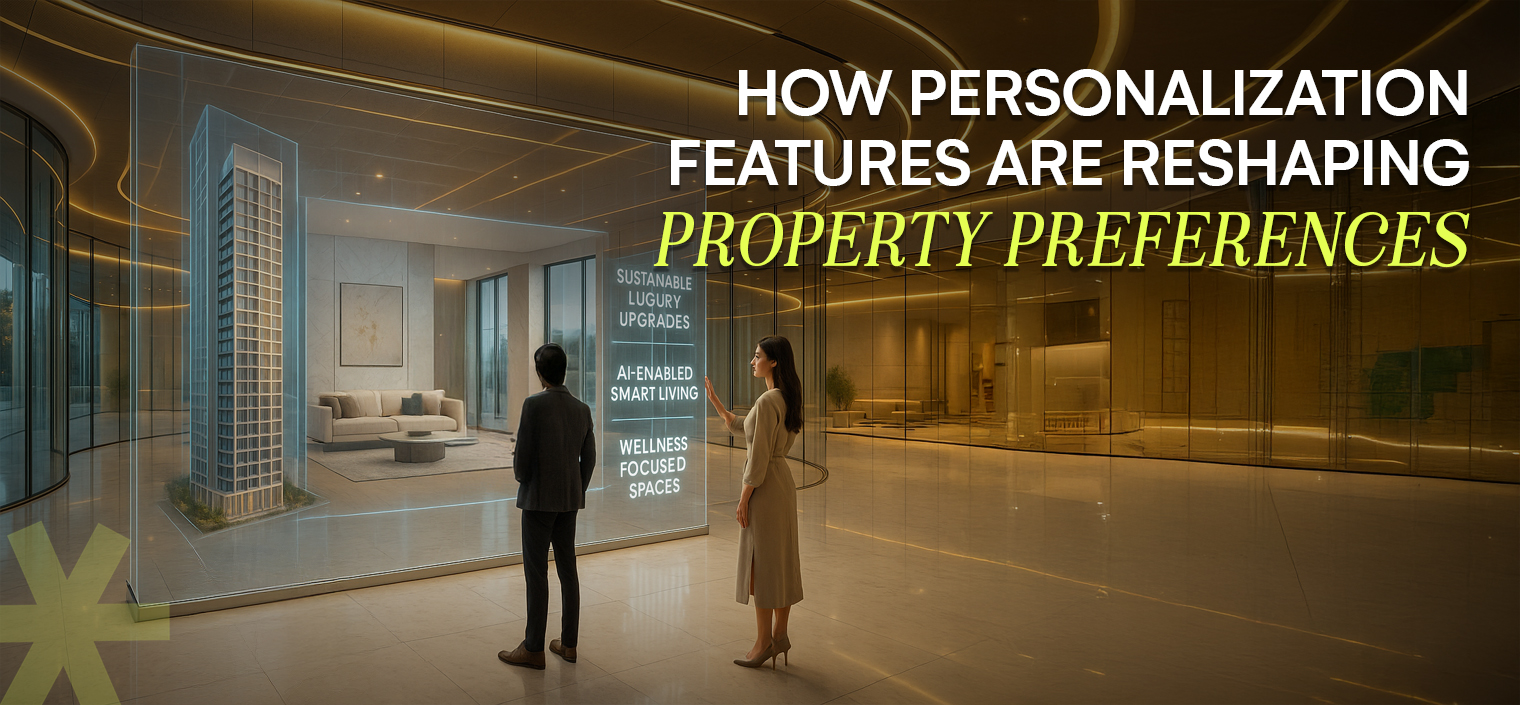
Buyers no longer evaluate homes generically. They evaluate them personally.
Across residential real estate, one behavioral shift is becoming clear.
Buyers are spending less time being persuaded and more time validating whether a specific home fits their daily life.During early site visits, the questions are no longer broad or aspirational. They are practical and individualized.
Buyers want to understand whether a particular unit suits their furniture, how daylight behaves throughout the day, what the exact view will look like, and whether the surrounding environment aligns with their lifestyle.
When these answers are not immediately visible, the decision is postponed.
This is the core reason sales cycles stretch.
The challenge is the absence of personalized clarity during the first interaction.
As a result, personalization has moved from being a marketing enhancement to becoming a core sales infrastructure capability.
How V-Estate operationalizes personalization inside the sales journey
V-Estate approaches personalization not as a visual upgrade but as a structured decision support system.
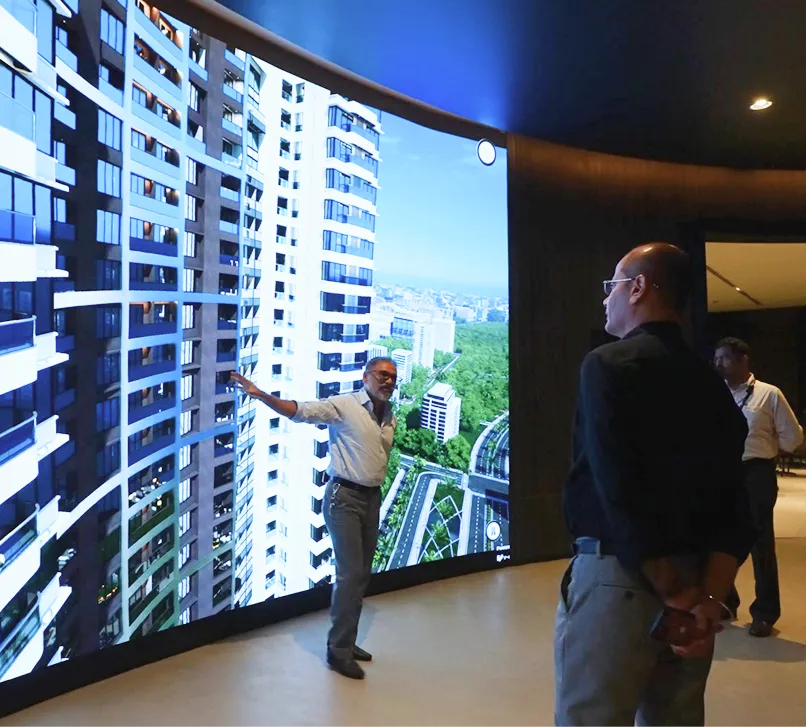
Our interactive software is designed to allow buyers to configure and evaluate the property according to their own preferences during the walkthrough itself, rather than relying on imagination or later follow ups.
Key capabilities include:
Immersive unit level visualization
Buyers explore their exact layouts rather than representative sample units. Room proportions, circulation, balcony positions, and sightlines are presented with high fidelity. This removes interpretation gaps around scale and usability.
Real time configuration tools
Sales teams can instantly modify finishes, wall colors, and furniture arrangements. Buyers see the effect of their choices immediately, which helps them evaluate fit rather than speculate.
Dynamic lighting simulation
Natural light and shadow behavior are modeled across different times of day and seasonal conditions. This provides a realistic understanding of comfort and livability that static renders cannot offer.
Amenity and neighborhood context
Amenities, podiums, and surrounding infrastructure are presented as part of a connected ecosystem. Buyers evaluate the full living environment rather than isolated features.
Live objection handling
Design or space related concerns are resolved visually during the walkthrough. Instead of taking queries offline, sales teams demonstrate solutions immediately, which shortens the path to commitment.
Collectively, these features reduce uncertainty and help buyers reach informed decisions faster.
Why personalization directly improves sales outcomes
Personalization is not just enhancing the buyer experience. It is materially improving sales performance.
Traditional walkthroughs depend on explanation. Sales teams describe layouts, views, and finishes, and buyers interpret that information mentally. This interpretation based process slows evaluation and increases uncertainty, often resulting in repeat visits and delayed decisions.
Personalized, interactive walkthroughs replace explanation with demonstration. Buyers can test layouts, adjust finishes, evaluate lighting conditions, and validate views in real time. Questions that would normally require follow ups are resolved during the same session.
This shift from verbal assurance to visual proof changes how quickly decisions are made.
Across digital industries and increasingly within proptech, personalized engagement consistently drives measurable improvements:
higher time spent evaluating the product
faster comprehension of options
fewer repeat site visits
reduced clarification cycles
stronger conversion probability
AI driven personalization systems commonly report engagement uplifts of thirty to forty percent compared with static interfaces. In real estate, similar behavioral patterns are emerging as interactive visualization replaces passive presentations.
Operationally, this translates into:
shorter decision cycles
higher daily sales throughput
lower dependency on follow ups
improved conversion per walk in
For developers, personalization is therefore not a design feature. It is a lever that directly influences revenue velocity.
The expanding role of AI in personalization
Artificial intelligence is now central to scaling personalization beyond manual controls.
Modern proptech systems use AI in three key ways.
Preference learning
Platforms analyze interaction patterns such as which layouts are explored, what configurations are modified, and where attention is concentrated. This creates a behavioral profile that reflects true preferences rather than stated ones.
Predictive recommendations
Based on this learning, the system surfaces relevant units, configurations, or amenities proactively. Buyers are guided toward suitable options without needing extensive filtering.
Real time assistance
Conversational interfaces and generative AI can answer contextual queries and guide exploration dynamically, reducing friction during high footfall sales scenarios.
Industry estimates suggest AI will contribute billions of dollars in value to real estate primarily by improving customer experience and accelerating transactions. Personalization will account for a significant share of that impact.
In practical terms, AI will ensure that every buyer experiences a version of the project tailored to their specific needs.
What this means for evolving property preferences
Personalization does not change what buyers value. It changes how clearly they can recognize what suits them.
When buyers interact with a system that adapts to their preferences:
unsuitable options are eliminated faster
clarity improves earlier in the journey
confidence builds before booking
repeat visits reduce
sales cycles compress
Over time, this leads to more decisive behavior and more efficient conversions.
Preferences become sharper because the evaluation process is sharper.
Closing perspective
Static walkthroughs require buyers to imagine outcomes. Personalized walkthroughs allow buyers to verify them.
That difference is reshaping how property decisions are made.
Developers relying only on fixed renders and sample flats will continue facing longer explanations and slower closures. Those implementing interactive, personalization driven proptech systems will enable faster understanding, higher conviction, and shorter sales cycles.
If your sales journey still presents the same experience to every buyer, it is already outdated. Build a system that adapts to individual preferences in real time.
Get in touch with V-Estate to schedule a strategic consultation today.