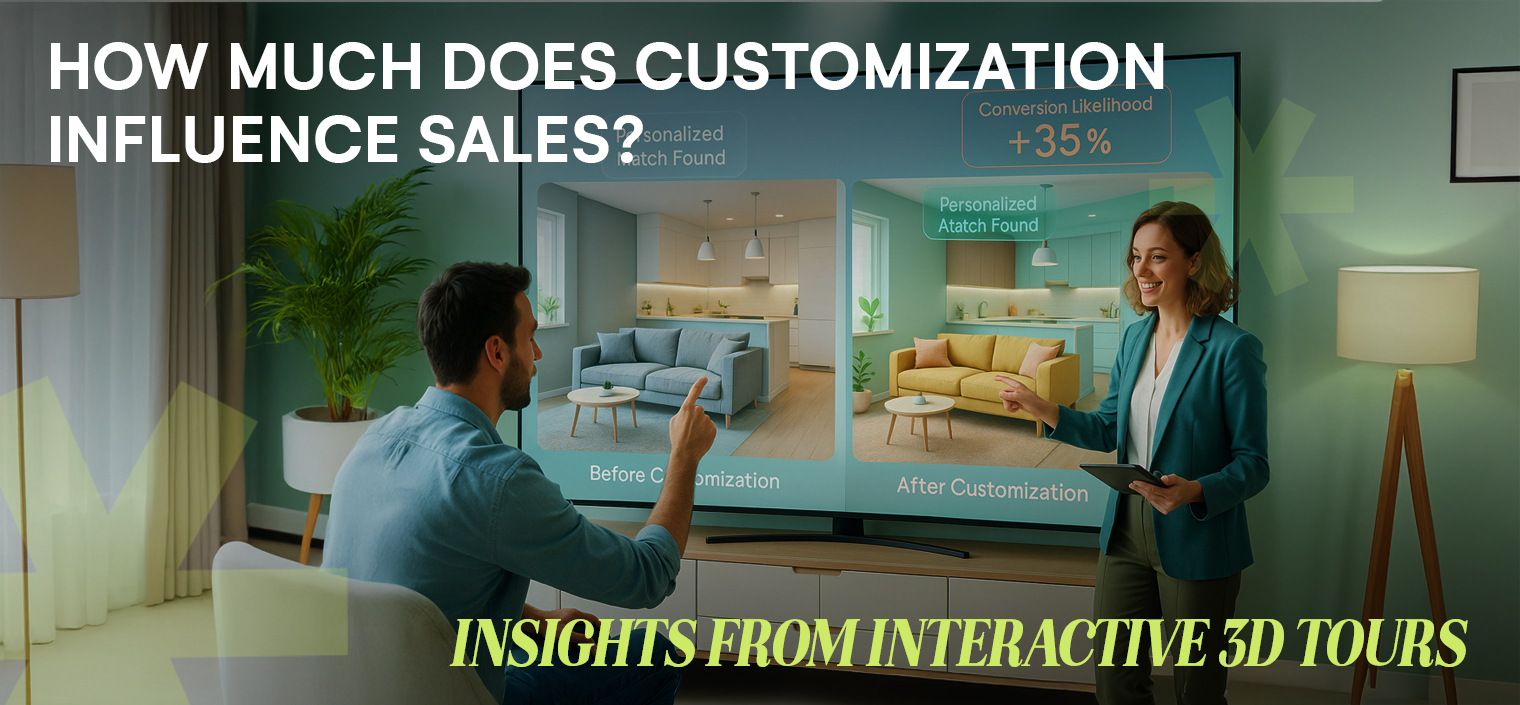
In real estate sales, buyers rarely say no because they dislike a project. They say no because they cannot see their version of it.
Modern homebuyers do not want generic walkthroughs or fixed narratives. They want relevance. They want to understand how a space adapts to their lifestyle, their priorities, and their daily routines. This is where customization becomes a decisive factor in conversion.
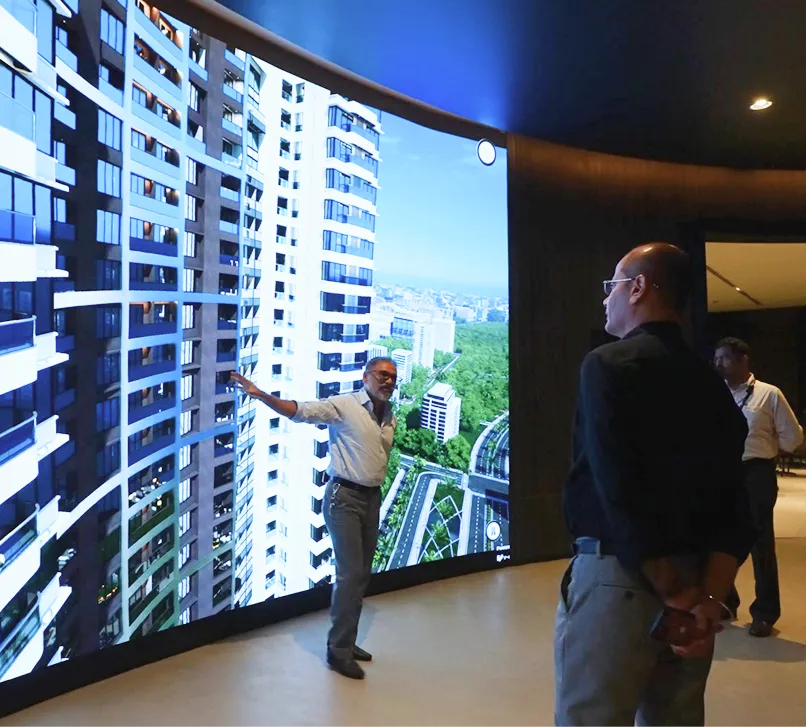
Interactive 3D tours have transformed customization from a sales promise into a live experience. Instead of explaining possibilities, developers can now demonstrate them in real time.
Customization is no longer cosmetic. It is strategic. And its impact on sales is measurable.
Why Customization Matters More Than Ever in Real Estate Sales
Today’s buyers arrive well researched. They have compared prices, locations, and amenities online before stepping into an experience center. What they lack is personal clarity.
Traditional sales environments deliver one static version of the project. Buyers are forced to mentally adapt it to their needs, which introduces friction and doubt.
Customization through interactive 3D tours changes this dynamic by allowing buyers to: • Explore different sightlines and orientations • Understand how amenities relate to their daily movement • See how nature, light, and views interact with their potential home • Experience scale and proximity instead of imagining it
This level of control shifts the buyer mindset from evaluation to ownership.
Interactive 3D Tours as a Customization Engine
Interactive 3D tours are not just visual tools. They are decision tools.
Built on advanced experiential technology in real estate, these platforms allow sales teams to tailor conversations dynamically without altering the core narrative.
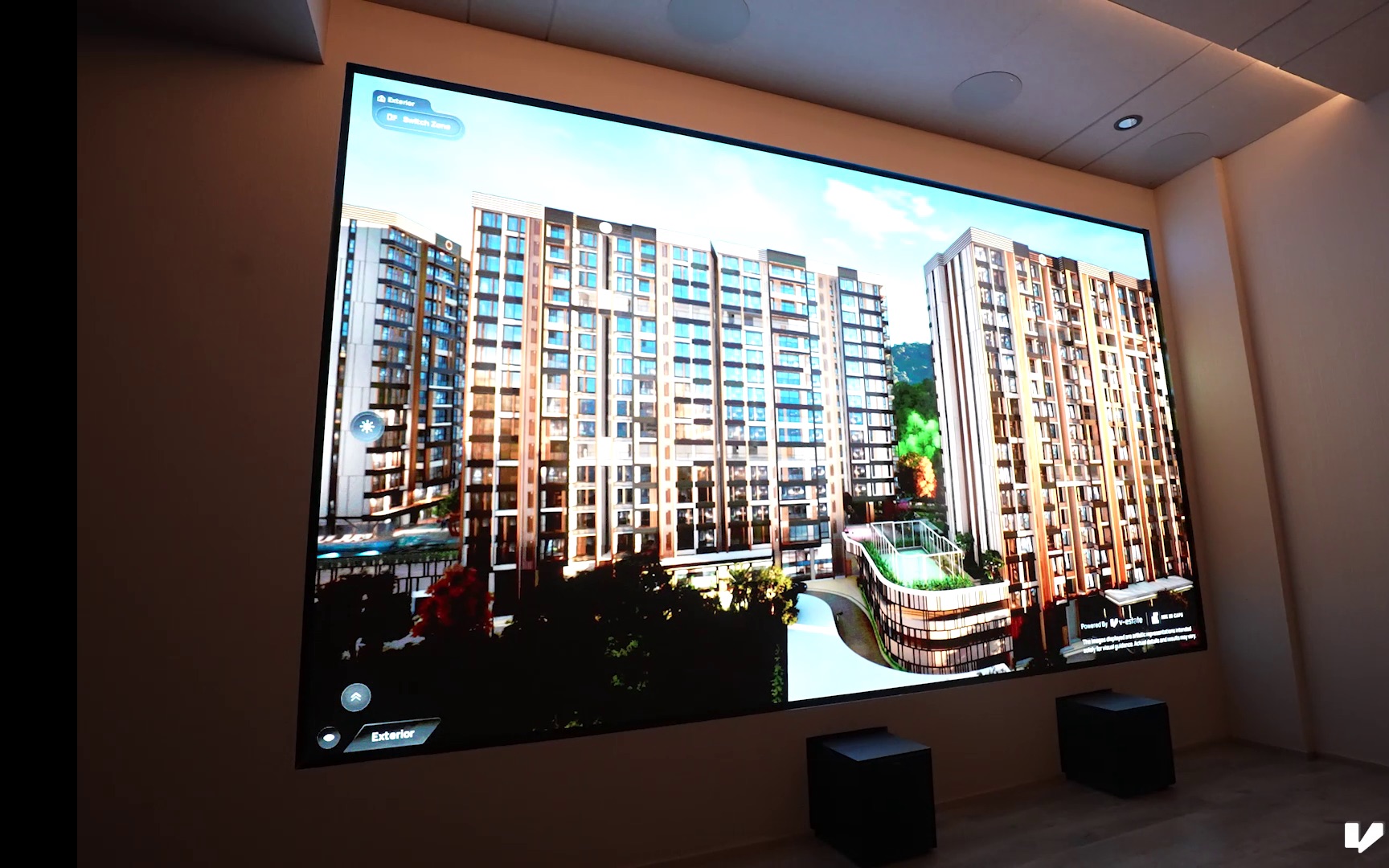
Key customization capabilities include: • Real time navigation across masterplans and towers • Selective focus on specific amenities or landscapes • Accurate visualization of sightlines, elevation, and orientation • Seamless movement between exterior context and interior spaces
The buyer no longer consumes a fixed presentation. They co create their own understanding of the project.
Where Customization Directly Influences Sales Outcomes
Customization impacts sales in three critical ways.
Reduction in ambiguity When buyers can explore specific angles, elevations, and proximities, uncertainty drops sharply. Fewer follow up questions mean faster decisions.
Emotional alignment Buyers connect more strongly when the experience highlights what matters most to them, whether it is greenery, views, or lifestyle zones.
Standardized yet flexible storytelling Sales teams deliver a consistent narrative while adapting emphasis based on buyer interest. This balance dramatically improves conversion quality.
Nahar’s Chandivali Valley: How Customization Drove Confidence at Scale
Chandivali Valley is a landmark residential development within Nahar’s Amrit Shakti township. Built on complex, elevated terrain and surrounded by dense greenery, the project’s strongest differentiator was its valley like setting framed by a developer cultivated Miyawaki forest.
Static images and traditional scale models were incapable of communicating this complexity.
The objective was clear. Create a customizable, immersive sales experience that could deliver transparency, highlight unique USPs, and standardize buyer understanding across every visit.
Designing a Codified, Customizable Customer Journey
The solution was not a standalone technology installation. It was a structured, four stage journey where customization was embedded at every step.
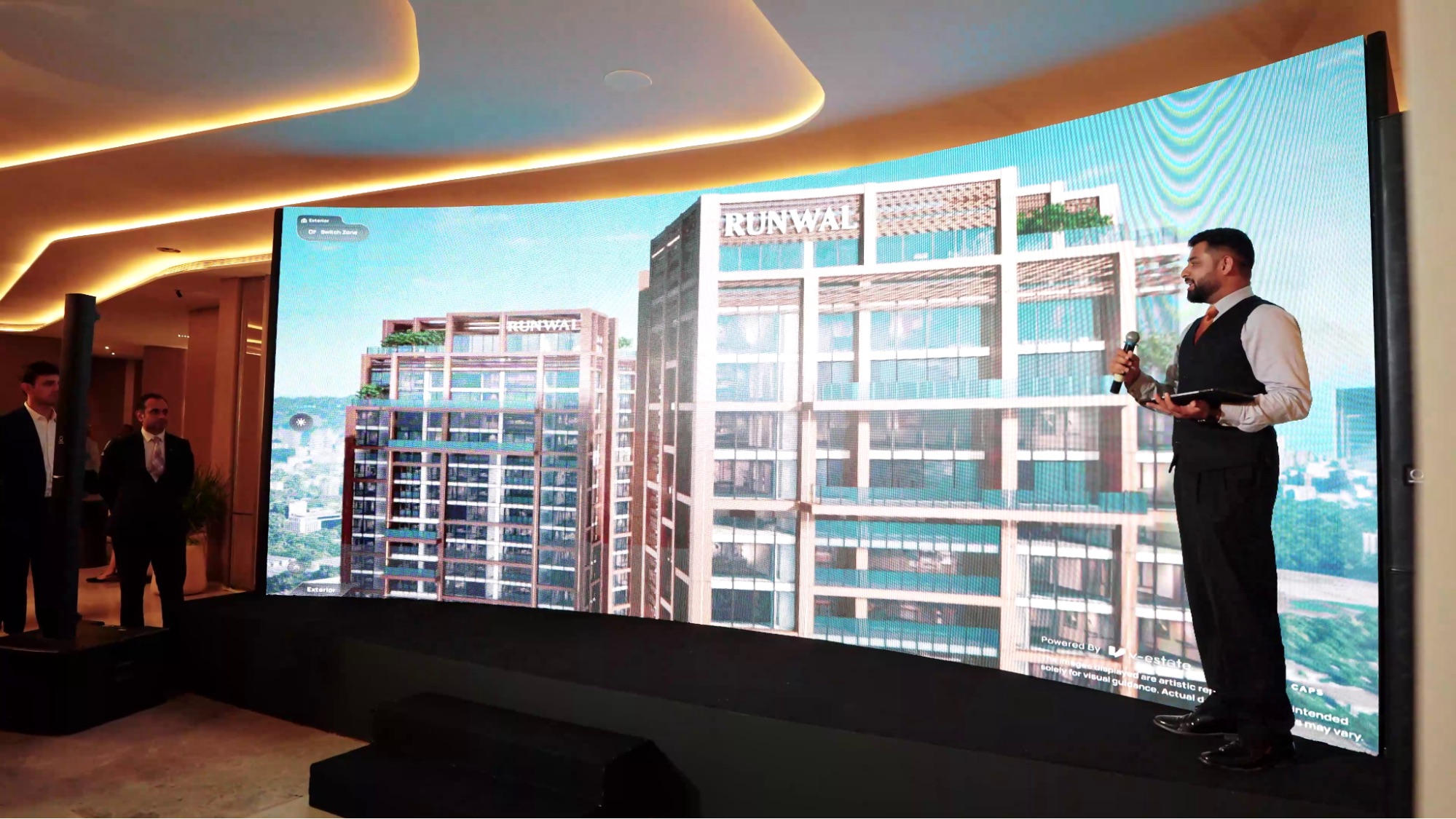
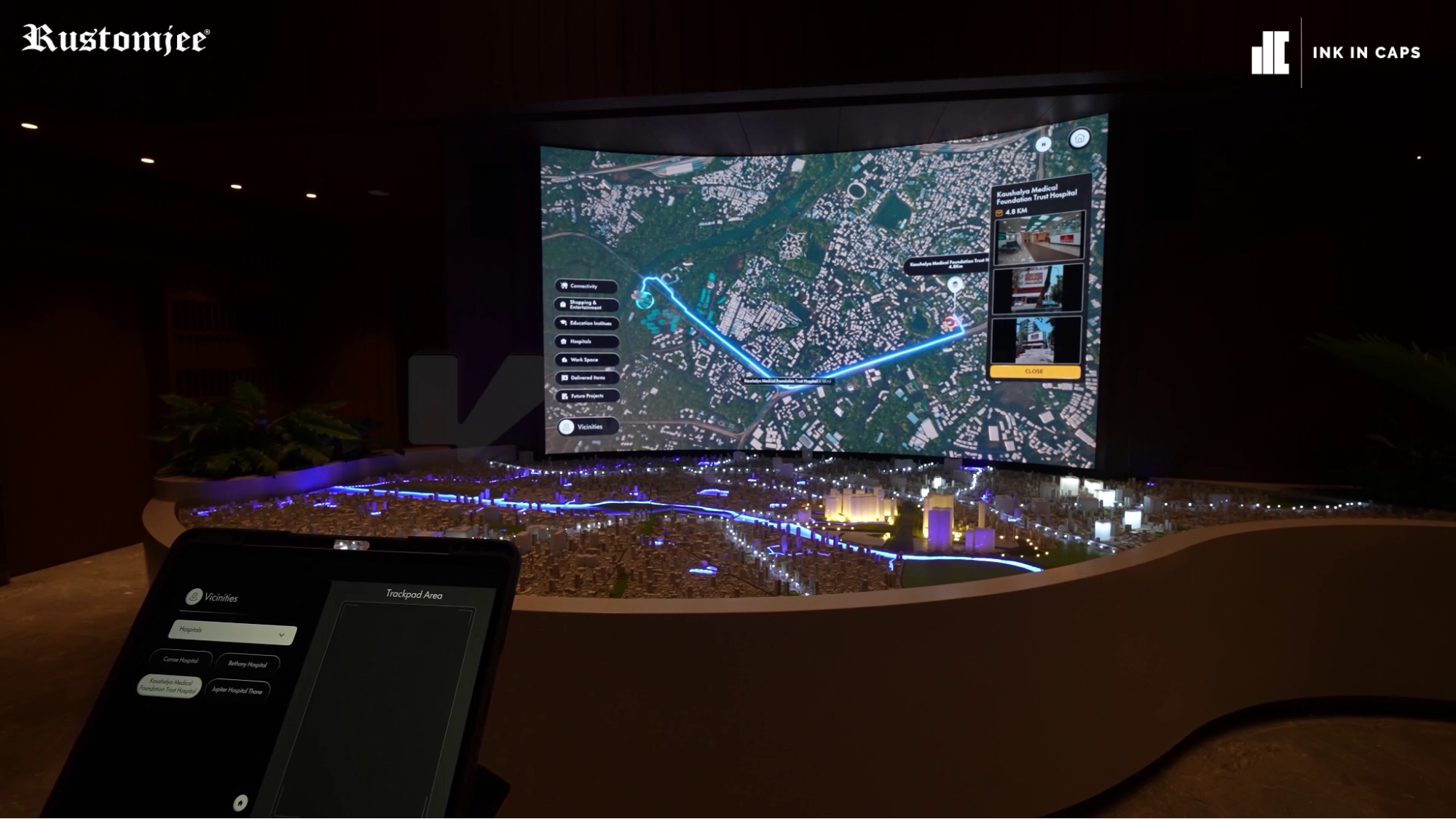
Step 1: Immersive AV Presentation as a Digital Twin Every visitor began their journey inside the AV room.
• A 13.5 ft × 8.3 ft LED wall displayed a fully interactive digital twin• Sales executives controlled the experience live using an iPad • Towers, elevations, amenities, and landscapes were navigated dynamically
This mandatory first touchpoint ensured every buyer received a complete and transparent overview before discussions began.
Step 2: Physical Scale Model Reinforcement After understanding the project digitally, buyers moved to the physical scale model.
The digital experience allowed them to contextualize what they were seeing physically, reinforcing spatial memory and scale.
Step 3: Sample Flat with 1:1 Visual Accuracy Buyers then walked through the sample flat, experiencing finishes and proportions that exactly matched what they had seen in the digital twin.
This continuity strengthened trust and eliminated visual disconnect.
Step 4: Discussion Rooms for Personalized Clarification
The journey concluded in private discussion rooms where customization shifted from exploration to decision making.
Showcasing USPs Through Customizable Visualization
The interactive 3D platform allowed sales teams to highlight Chandivali Valley’s strongest USPs based on buyer interest.
Miyawaki Forest and Amrit Vihar • Dense forest zones modeled in high fidelity • Trails and proximity visualized in real time • Nature positioned as a living asset, not background scenery
Heritage Banyan Tree and Central Podium • High detail modeling of the heritage tree • Accurate scale and placement within the podium • Clear understanding of how amenities revolve around this space
Tower Orientation and Unobstructed Views • Live navigation across sightlines and elevations • Demonstration of how towers avoid overlooking each other • Custom camera paths emphasized openness and privacy
Customization allowed buyers to focus on what mattered most to them without breaking the standardized narrative.
Technology That Enabled Customization Without Compromise
The platform was built on Unreal Engine 5.4, leveraging advanced features to balance realism with performance.
Complex geometry optimization • High poly heritage tree remodeled for performance • Nanite used for intricate façade and balcony details
Custom Procedural Content Generation system • Purpose built PCG tools to create dense Miyawaki forest layers • Dynamic control over species, density, and level of detail
Real time lighting and camera pipelines • Lumen used for accurate light and shadow behavior • Multiple camera rigs ensured perfect composition across interiors and exteriors
Despite high visual fidelity, the system ran flawlessly on a large format LED wall.
Deployment, Training, and Adoption
The experience center was deployed using a novel phased installation strategy that minimized downtime and dependency conflicts during interior completion.
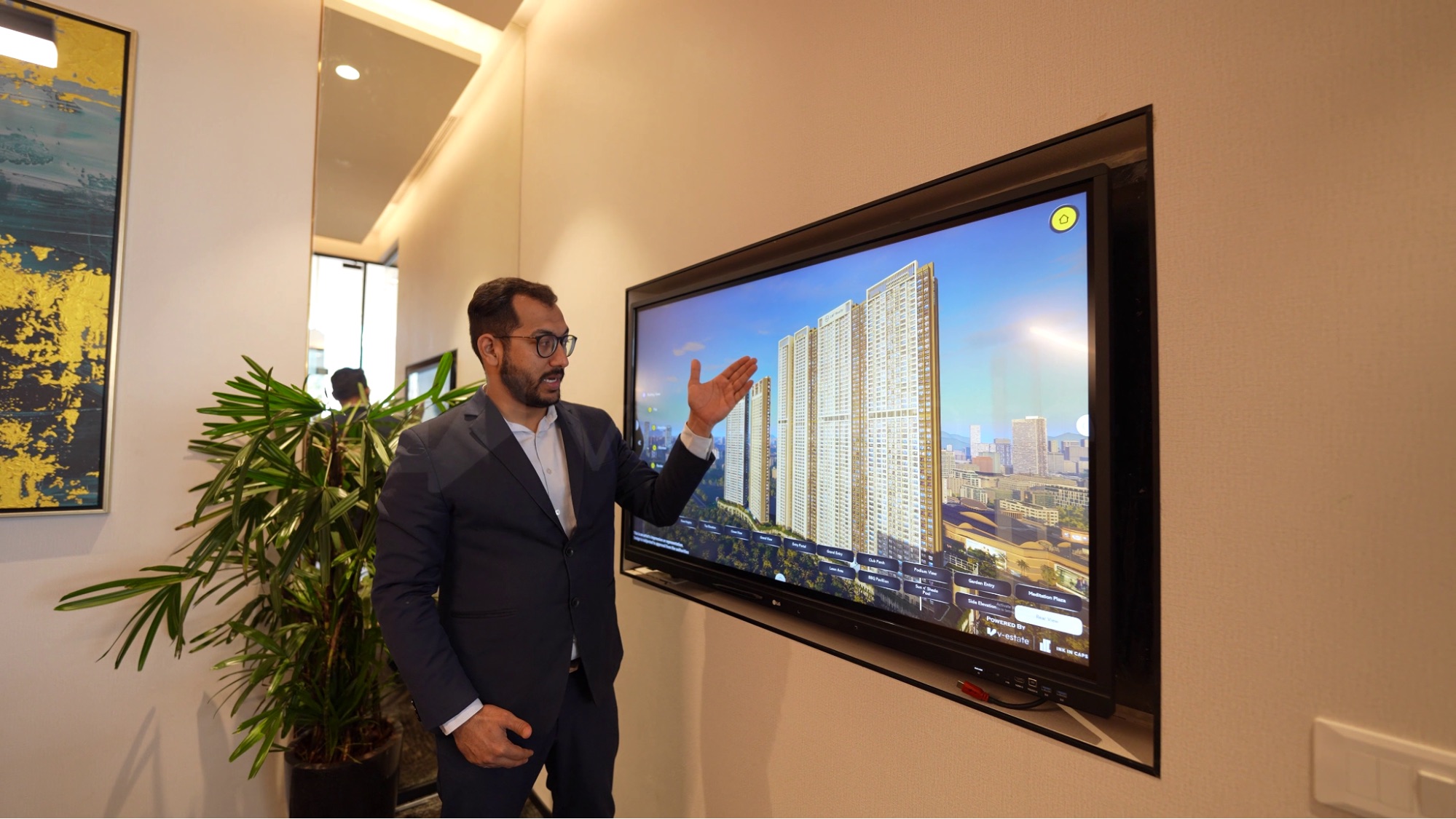
Over 25 sales executives, closing managers, and channel partners were trained to operate the system confidently.
The result was rapid adoption and consistent usage across the sales team.
Business Impact of Customization Driven Experiences
Customization delivered tangible results.
First mover advantage The Chandivali Valley experience center became the first immersive sales gallery of its scale in the micro market.
Standardized yet flexible conversion path Every buyer experienced the same transparent journey, with customized emphasis based on interest.
Higher buyer confidence Accurate visualization of terrain, forest proximity, and sightlines reduced ambiguity and shortened decision cycles.
Operational stability With dedicated support, the system has maintained 100 percent uptime since launch.
Customization did not complicate sales. It simplified decisions.
The Strategic Takeaway
Customization influences sales because it shifts control to the buyer without diluting the brand narrative.
Interactive 3D tours allow developers to remain consistent while letting buyers personalize understanding. That balance is where trust is built and conversions accelerate.
Buyers convert faster when they see a project through their own lens.
V-Estate designs interactive 3D tours and immersive real estate experiences that combine customization with clarity. It helps developers turn complex projects into conviction-led buying decisions.
If your project has a strong story but complex USPs, it is time to let buyers explore it their way.