The real estate development industry faces an unprecedented challenge today. With markets saturated beyond belief and buyers overwhelmed by countless options, developers are struggling to capture attention, let alone convert prospects into actual sales. Traditional marketing methods—glossy brochures, static floor plans, and weekend open houses—simply don't cut through the noise anymore.
The harsh reality is that most developers are fighting for the same pool of buyers using identical strategies. Everyone promises luxury, everyone claims prime locations, and everyone showcases beautiful photography. So how do you stand out when everyone looks the same?
Smart developers have found their answer in 3D virtual flat technology—and it's revolutionizing how properties are marketed, sold, and experienced.
The Problem Every Developer Faces in Today's Market
You've invested millions into a residential project. Your marketing team has created stunning visuals, your sales team is trained and ready, but potential buyers are still hesitant. They visit your sales office, flip through brochures, but something's missing. They can't truly visualize themselves living in the space.
Meanwhile, your competitors down the street are facing the exact same challenge. Everyone's promising the world, but nobody's delivering an experience that genuinely helps buyers make confident decisions.
The root problem isn't your product—it's how people experience it. Traditional marketing creates a gap between imagination and reality that leaves buyers uncertain and developers frustrated with lengthy sales cycles.
How 3D Virtual Flats Are Solving Real Problems
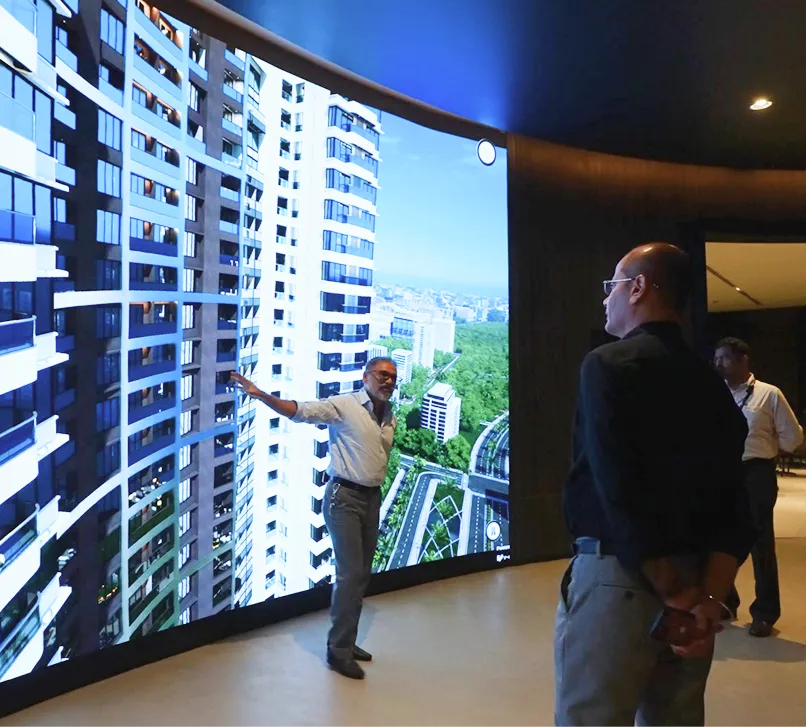
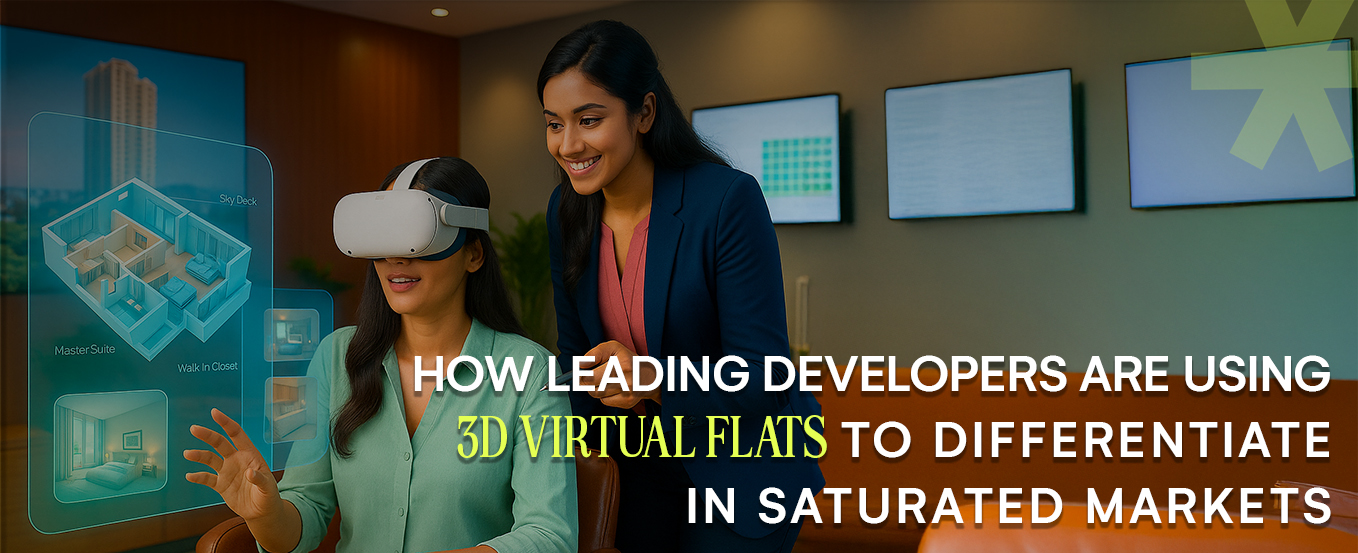
Leading developers have discovered that 3D virtual flats address multiple pain points simultaneously. Instead of asking buyers to imagine how a space might feel, these immersive digital experiences let them actually walk through properties before they're even built.
When prospects can navigate through every room, examine finishes up close, and experience natural lighting conditions, something magical happens. The abstract becomes tangible. Suddenly, buyers aren't just looking at another property listing—they're experiencing their potential future home.
This technology creates what psychologists call "mental ownership"—that emotional connection where buyers start thinking "this could be mine" rather than "this is nice." Once that mental shift occurs, the sales process becomes dramatically easier.
Breaking Down Geographic Barriers
One of the most significant advantages smart developers are leveraging is the ability to reach buyers anywhere in the world. Geographic limitations have traditionally been one of the biggest constraints in real estate sales. You could only sell to people willing and able to visit your physical location.
3D virtual flats eliminate this constraint entirely. A buyer in Singapore can thoroughly explore a Mumbai apartment at 2 AM local time. An investor in London can walk through multiple units in a Bangalore development during their lunch break. International buyers, who often represent some of the most serious and well-qualified prospects, can now engage with properties in ways that were impossible just a few years ago.
This expanded reach doesn't just increase your potential buyer pool—it fundamentally changes your competitive landscape. You're no longer competing only with local developers; you're showcasing your projects to a global audience that values innovation and convenience.
Accelerating Decision-Making for Unbuilt Projects
Pre-sales have always been challenging because they require buyers to make significant financial commitments based on promises rather than reality. Traditional methods—floor plans, artist renderings, and physical model units—provide limited insight into the actual living experience.
3D virtual flats transform pre-sales by giving buyers confidence in their investment decisions. When someone can walk through their exact unit, see how morning light filters through the windows, and understand how their furniture might fit in the space, they're far more likely to commit early.
This early commitment benefits developers tremendously. Faster pre-sales mean improved cash flow, reduced financing costs, and stronger relationships with investors and lenders. Projects with strong pre-sales also tend to attract more buyers later, creating a positive momentum cycle.
Operational Efficiency That Impacts Your Bottom Line
The financial benefits extend beyond sales acceleration. Building physical show flats for every unit type and design variation is expensive and time-consuming. Material costs, construction time, ongoing maintenance, and eventual demolition all add significant expenses to development projects.
3D virtual flats eliminate most of these costs while providing superior flexibility. Need to show how a unit looks with different flooring options? It takes minutes to update a digital model versus weeks to renovate a physical space. Want to test buyer preferences between two different kitchen layouts? You can A/B test virtually without any construction costs.
This operational efficiency becomes particularly valuable for developers working on multiple projects simultaneously. A single virtual tour can be customized for different developments, different unit types, and different target markets without the logistical nightmare of maintaining multiple physical show spaces.
Data-Driven Insights That Improve Future Projects
Every interaction with a 3D virtual flat generates valuable data that traditional marketing methods simply cannot provide. Developers can track which rooms buyers spend the most time exploring, which features generate the most interest, and where potential buyers lose engagement.
This behavioral data provides insights that go far beyond simple demographic information. Understanding that buyers consistently spend extra time examining kitchen storage solutions might influence design decisions in future projects. Discovering that balcony views are the most-explored feature might inform pricing strategies for different unit orientations.
Smart developers are using these insights to refine not just their marketing approaches, but their actual product development. When you understand what buyers truly value—demonstrated through their behavior rather than stated preferences—you can design projects that better meet market demand.
Building Trust Through Transparency
Trust is the foundation of every real estate transaction, but it's particularly challenging to establish when selling unbuilt properties. Buyers naturally worry about whether the finished product will match their expectations based on marketing materials.
3D virtual flats address this concern by providing unprecedented transparency. When buyers can examine every detail of their potential home—from tile patterns in the bathroom to the view from their bedroom window—they develop confidence in both the product and the developer.
This transparency creates a different type of sales conversation. Instead of trying to convince buyers that your project is worth their investment, you're providing them with the tools to convince themselves. The sales process becomes consultative rather than persuasive, leading to stronger relationships and higher customer satisfaction.
Staying Ahead of Market Evolution
The real estate industry is experiencing rapid technological evolution, and buyers' expectations are changing accordingly. Younger buyers, in particular, expect digital experiences that match the sophistication they encounter in other industries.
Developers who embrace 3D virtual flat technology position themselves as industry leaders rather than followers. This technological sophistication doesn't just attract more buyers—it attracts better buyers who appreciate innovation and are willing to pay premium prices for superior experiences.