.jpg)
Real estate marketing does not struggle to generate interest. It struggles to convert interest into clear, informed decisions.
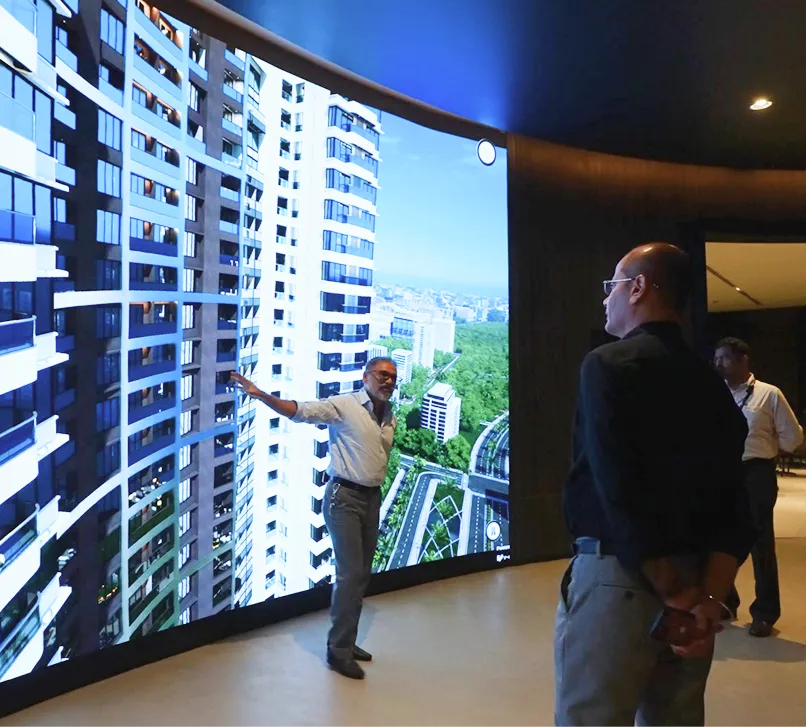
Buyers today are cautious, comparison-driven, and unwilling to rely on imagination. Static images, linear videos, and verbal explanations slow momentum because they leave too much open to interpretation. Interactive walkthroughs have changed this dynamic by giving buyers control, clarity, and context at the exact moment decisions are formed.
At the center of this shift is V-Estate, an interactive sales system built to turn property evaluation into a structured, buyer-led experience rather than a sales pitch.
The Market Shift Toward Interactive Walkthroughs
Real estate marketing has moved from presentation to participation.
Interactive walkthroughs allow buyers to explore properties at their own pace, validate layouts visually, and understand spatial relationships without relying on explanation. This shift has delivered measurable outcomes across experience centers using interactive walkthrough systems:
Longer engagement durations, with buyers spending 30–50 minutes actively exploring properties instead of passively viewing content
Fewer repeat visits, as layout, view, and amenity questions are resolved in a single session
Higher-quality inquiries, driven by buyers who have already evaluated the property in depth
Marketing stops being descriptive and becomes evaluative. That change directly impacts conversion velocity.
Buyer-Led Exploration Replaces Guided Narration
The defining strength of interactive walkthroughs is buyer control.
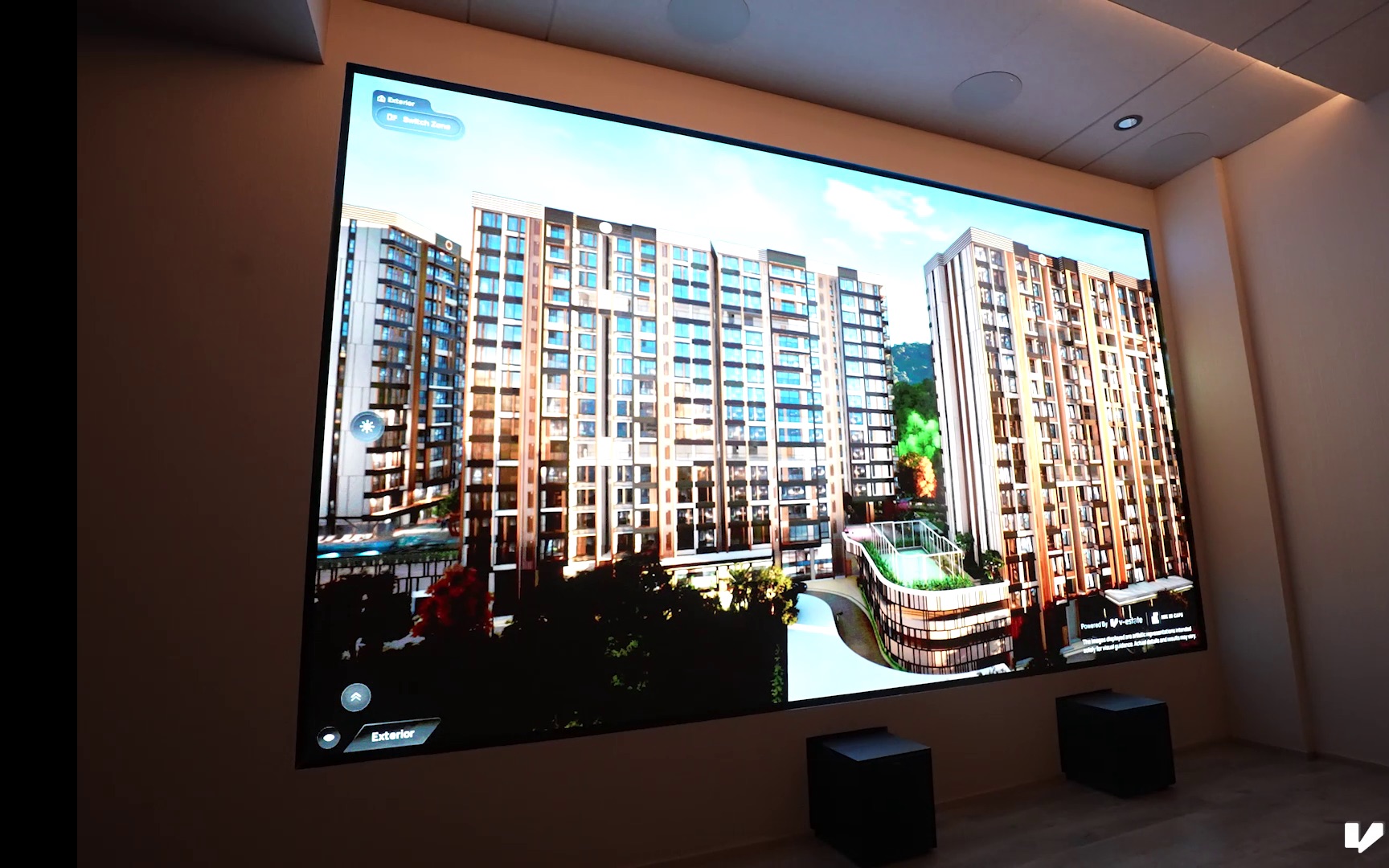
Unlike pre-recorded videos, an interactive walkthrough lets buyers choose what they explore, when they explore it, and how deeply they go. This autonomy increases involvement and reduces resistance.
In deployments using interactive 3D walkthroughs, buyers consistently demonstrate:
Deeper focus on layout flow and room proportions
Clearer understanding of views, orientation, and adjacency
More decisive movement into commercial discussions
When buyers drive exploration, sales conversations become sharper and more productive.
Interactive Walkthroughs Reduce Dependence on Physical Visits
Physical site visits remain important, but they no longer need to carry the full burden of explanation.
Interactive walkthroughs allow buyers to complete most of their evaluation before stepping onsite. This is especially valuable for:
Remote buyers and NRIs
High-footfall launches where time per buyer is limited
Off-plan developments with no physical construction available
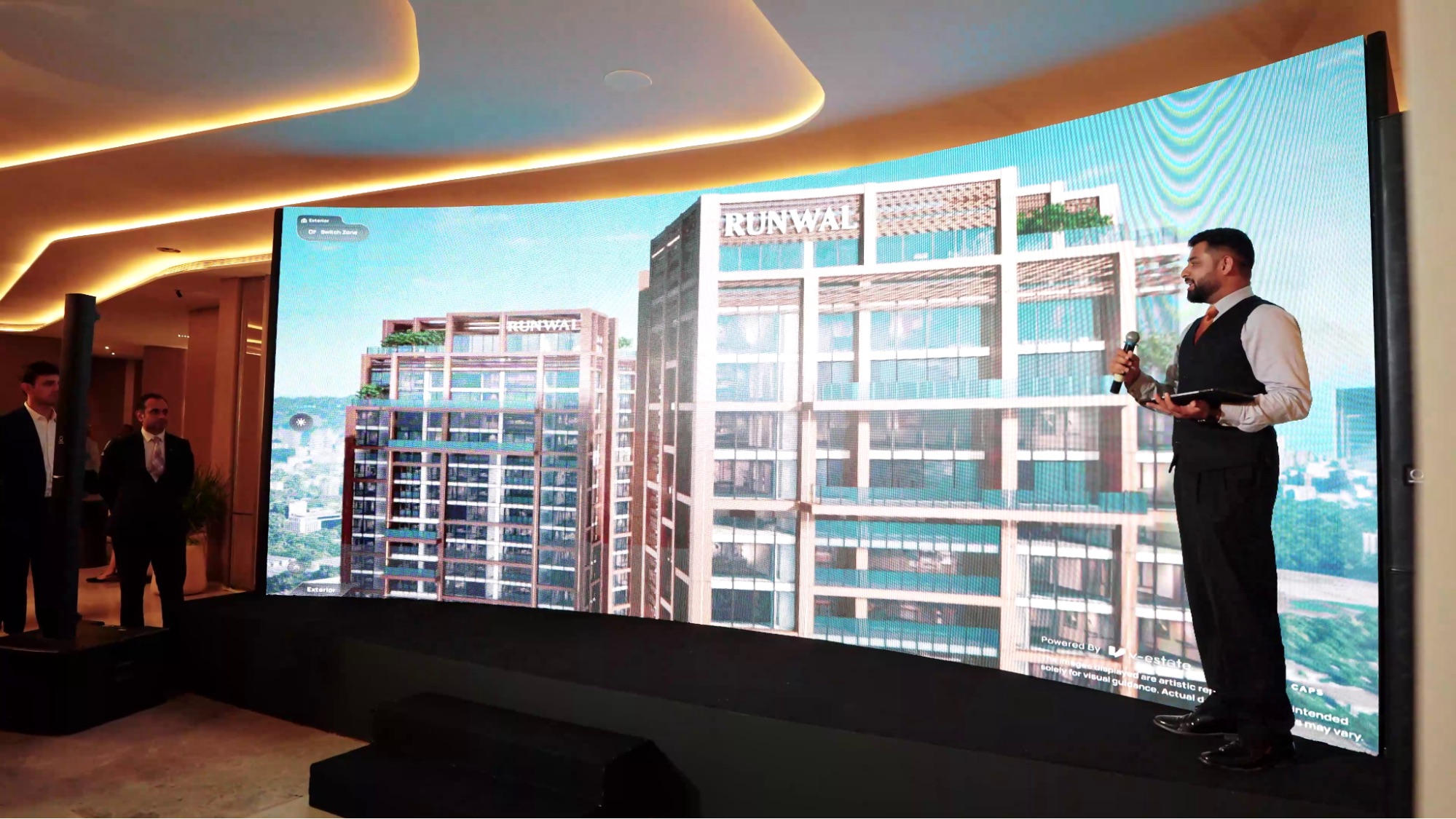
Across V-Estate-enabled experience centers, teams report smoother crowd flow and improved handling of 150–200+ families per day, without compromising clarity or buyer attention.
Key Capabilities That Drive Buyer Conviction
Interactive walkthrough platforms succeed because they combine multiple evaluation layers into a single system:
Interior walkthroughs that show real proportions, not scaled diagrams
Window-specific views that remove uncertainty around outlook and orientation
Amenity walkthroughs that show placement, scale, and usability in context
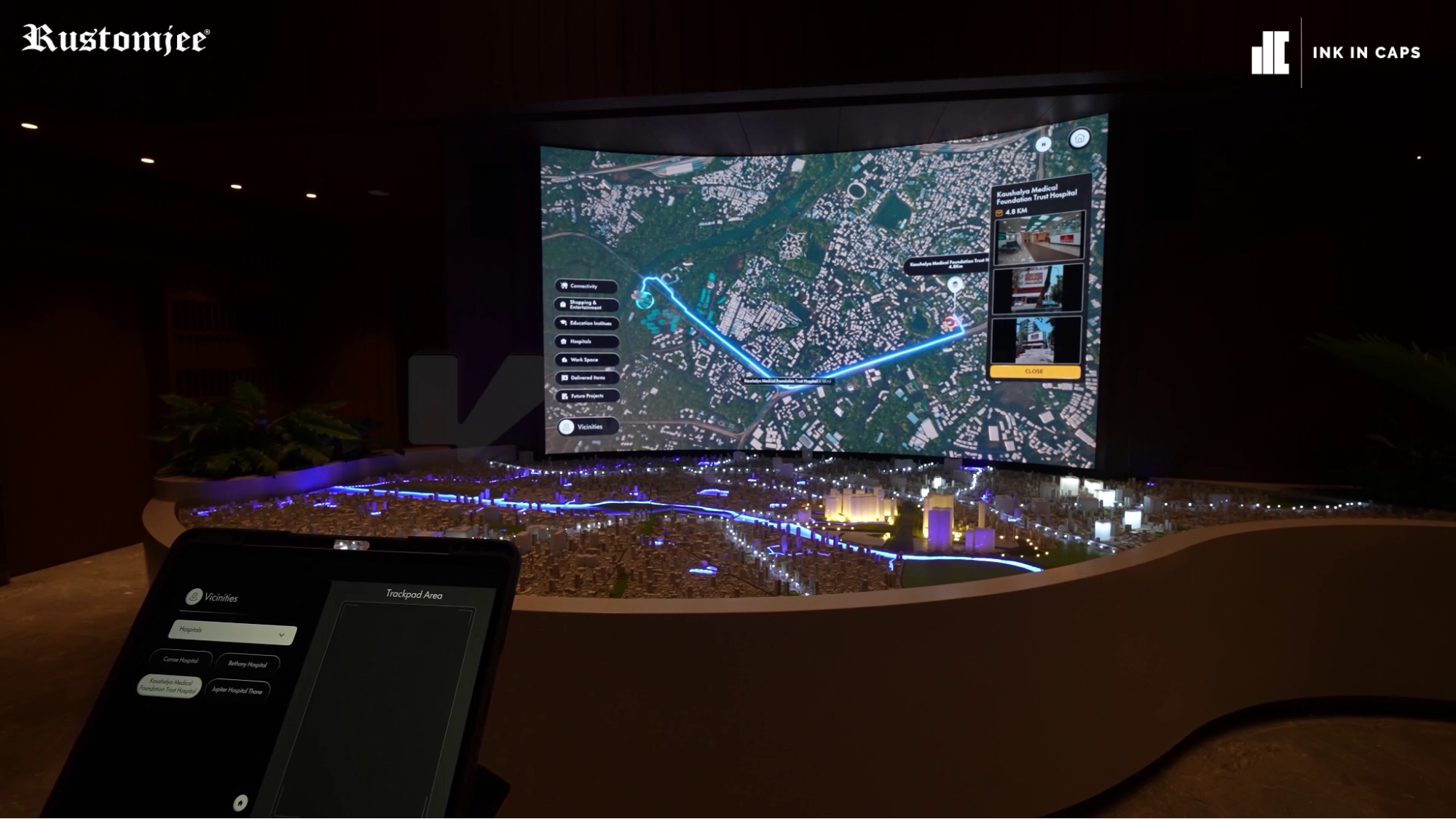
Vicinity mapping that connects the property to daily routines and infrastructure
These features eliminate guesswork early, which shortens decision timelines later.
Why Interactive Walkthroughs Strengthen Sales Team Performance
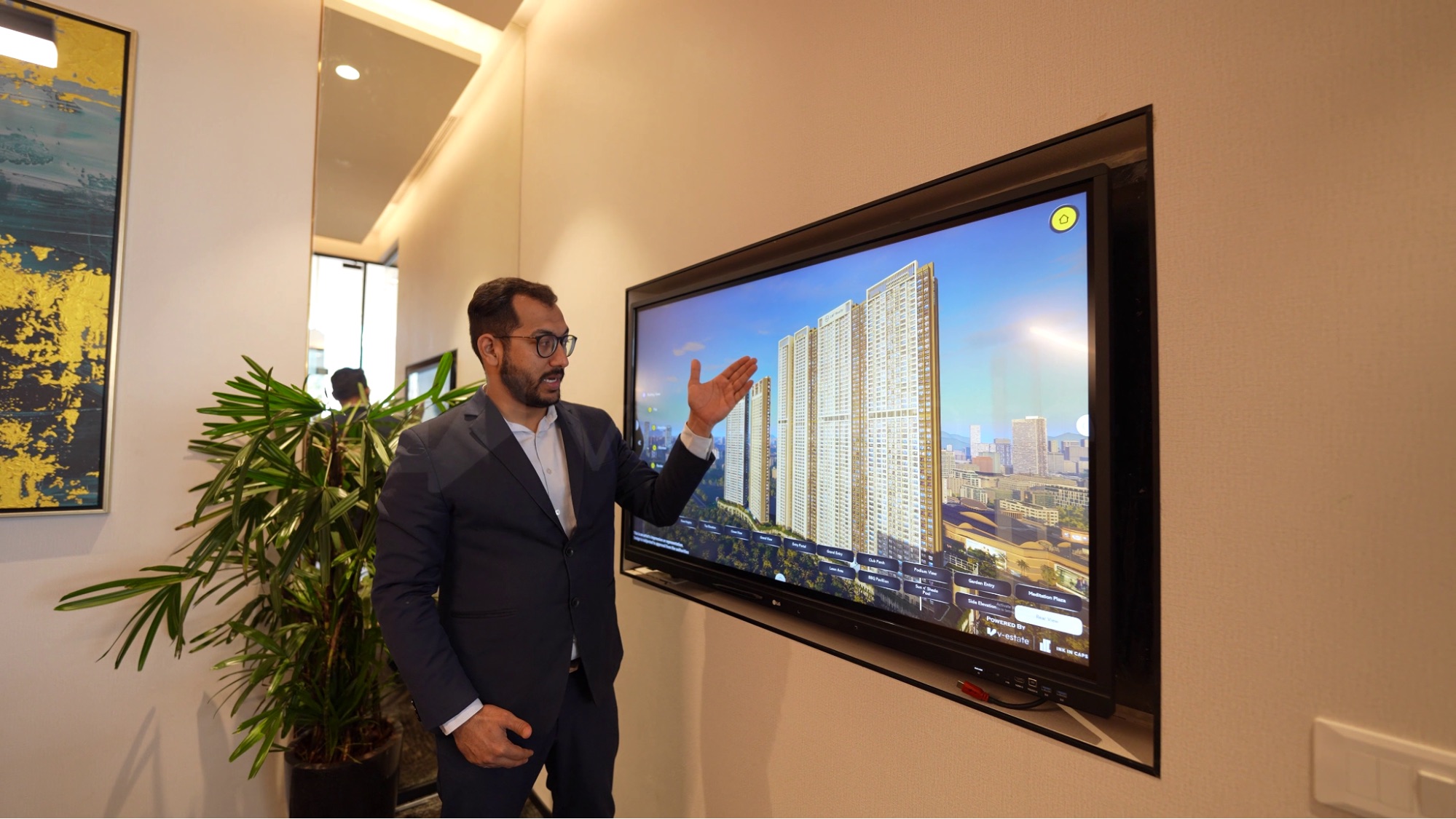
Interactive walkthroughs do not replace sales teams. They remove friction from their role.
With a unified interactive system:
Sales teams avoid repeating basic explanations
New team members onboard faster with standardized narratives
Discussions shift from justification to alignment
Instead of convincing buyers, teams guide buyers who already understand what they are evaluating.
Digital Twin Environments Extend Marketing ROI
When walkthroughs are built as digital twin environments, their value extends beyond the site office.
The same interactive asset can be used across:
Channel partner presentations
Remote buyer walkthroughs
Follow-up discussions without loss of clarity
This reuse ensures consistency across touchpoints while reducing dependency on printed or static collateral.
Business Impact Observed Across Interactive Walkthrough Deployments
Across multiple V-Estate implementations, developers have recorded:
Shorter evaluation cycles during launch phases
Improved buyer recall of layouts and amenities
Higher engagement quality rather than inflated footfall metrics
Reduced friction during closing conversations
These outcomes are driven by clarity, not novelty.
Conclusion: Interactive Walkthroughs Are Now a Marketing Baseline
Real estate marketing is no longer about how well a project is described. It is about how clearly it can be evaluated.
Interactive walkthroughs have become foundational because they:
Improve engagement depth
Reduce uncertainty early
Protect sales momentum across channels
Developers who continue to rely on static formats are not behind on technology. They are behind on buyer expectations.
If your objective is to help buyers reach informed decisions faster while strengthening conversion efficiency, interactive walkthroughs are no longer optional.
Let’s talk about how an interactive walkthrough system can improve engagement quality, compress evaluation timelines, and strengthen your real estate marketing outcomes.