.jpg)
Walk into any premium real estate experience centre today, and you'll notice something different. Sales teams aren't juggling multiple screens or checking three different systems to answer a simple inventory question. Marketing collateral matches what prospects see on their phones. And somehow, everyone—from the ground sales team to the project manager—is working from the same information.
This wasn't always the case.
For years, real estate developers struggled with a painful reality: fragmented data scattered across Excel sheets, outdated inventory trackers, disconnected CRM systems, and sales teams operating on assumptions rather than facts. The result? Missed opportunities, frustrated buyers, and operational chaos that ate into margins.
Experience centres have quietly evolved into something far more valuable than fancy sales offices—they've become the operational backbone that finally brings order to the complexity of on-site sales.
The Problem with Fragmented Information
Most developers still operate in silos without realizing it. Your inventory team has one version of unit availability. Your sales team has another. Marketing is promoting units that sold yesterday. And your finance team is reconciling mismatched numbers at month-end.
This isn't just inefficient—it's expensive.
When a prospect walks into your experience centre expecting to see a specific unit configuration they viewed online, only to discover it's unavailable or priced differently, you've lost more than a sale. You've damaged trust. And in real estate, trust is everything.
The challenge isn't technology—most developers have invested in decent systems. The problem is integration. Or rather, the lack of it.
What Makes an Experience Centre the Central Command
The modern experience centre functions as a unified operational hub by connecting previously isolated data streams into one coherent system. Here's how this actually works on the ground:
Centralized Property and Inventory Data
Instead of pulling information from multiple sources, everything flows into one place. Unit availability, pricing tiers, payment plans, floor plans, amenity details—all standardized and updated in real time. When a sales executive opens the system, they're seeing the same numbers that management sees, that finance sees, that marketing sees.
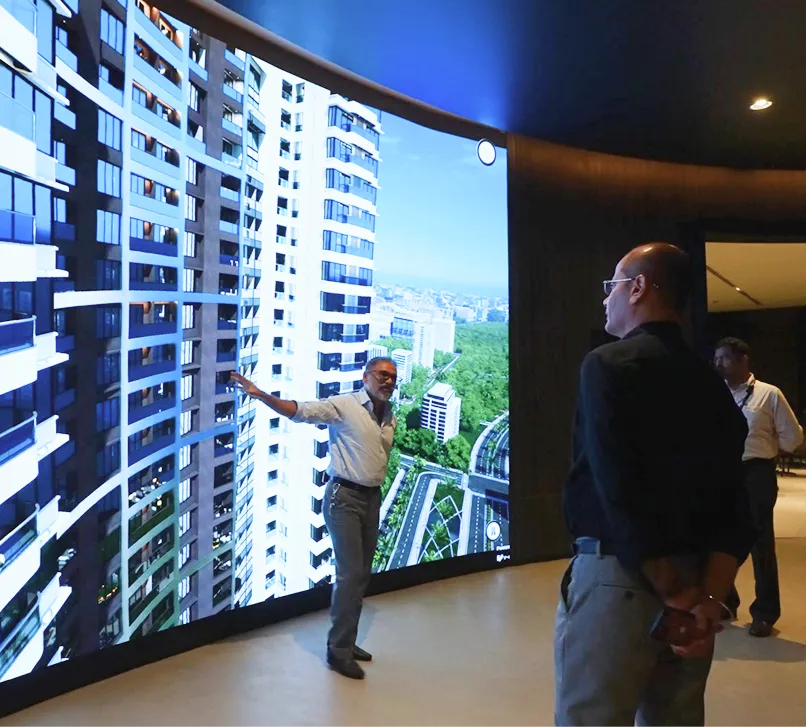
V-estate takes this further by letting prospects interact with photorealistic 3D representations of actual units—not generic renderings. They're seeing their specific floor, their actual view, their exact configuration. And because everything is connected, what they customize and save becomes part of their buyer profile instantly.
Unified Buyer Intelligence
Customer data shouldn't live in scattered spreadsheets. Every interaction—site visits, digital inquiries, configuration preferences, budget discussions—should feed into a single buyer profile that any team member can access.
This means your sales team isn't starting from zero every time someone walks in. They know what the prospect looked at on the website, which units they customized, how they engaged during previous visits. The experience becomes continuous, not repetitive.
Live Inventory and Fulfillment Tracking
Nothing damages credibility faster than incorrect availability information. When your experience centre connects directly to inventory management, you eliminate the gap between what's shown and what's actually available.
Real-time tracking means sales teams can confirm availability instantly, lock units confidently, and provide accurate timelines. No more awkward callbacks to "verify" information. No more losing deals because a competitor moved faster.
Consistent Brand and Marketing Alignment
Marketing spends months developing campaigns, messaging, and visual assets. Then sales teams show prospects something completely different on-site. The disconnect is jarring.
When all content is pulled from a single content management backbone, everything stays aligned. The renders prospects saw online match what they're experiencing in the centre. Pricing is consistent. Messaging is coherent. The brand promise holds.
V-estate's immersive virtual tours become part of this unified narrative—prospects aren't switching between disconnected tools. They're moving through one integrated experience where physical and digital blend seamlessly.
Reliable Analytics and Performance Metrics
Decision-makers need accurate data, not guesswork. When your experience centre aggregates all transaction data, engagement metrics, and conversion patterns in one place, you finally get a clear picture of what's actually happening.
Which units are getting the most attention? Where are prospects dropping off? What configurations drive faster decisions? Which sales approaches convert better? You stop relying on anecdotes and start managing with evidence.
The Real-World Impact
This isn't theoretical. Developers who've implemented unified experience centres are seeing measurable differences:
Sales teams close faster because they have immediate access to everything they need. No waiting for approvals. No hunting for information. No conflicting data causing hesitation.
Buyers feel more confident because the experience is coherent and transparent. What they see is what they get. The immersive tools—like V-estate's dynamic lighting and weather controls—let them genuinely understand what they're buying, reducing post-purchase anxiety.
Operations become leaner because staff aren't wasting time reconciling systems or chasing down information. Workflows simplify. Errors decrease. The entire machine runs smoother.
Leadership makes better decisions because they're working from reliable data. When you're not questioning the numbers, you can focus on strategy. You can spot trends earlier. You can adjust tactics faster.
How Technology Enables the Shift
Modern experience centres leverage digital twins and spatial intelligence to create living reflections of physical projects. This isn't about flashy tech demos—it's about operational clarity.
With tools like V-estate, you're not just showing prospects pretty pictures. You're giving them control. They explore properties remotely or on-site, customize finishes, adjust layouts, visualize different times of day—all while you're capturing valuable data about their preferences and decision-making patterns.
This data feeds back into your single source of truth, enriching buyer profiles and informing everything from inventory planning to marketing focus.
IoT sensors, CRM platforms, and analytics systems all feed into this unified view. Teams across departments—sales, marketing, operations, customer service—work from the same dataset, eliminating the telephone game that plagues traditional operations.
The Strategic Advantage
Here's what most developers miss: the experience centre isn't just a sales tool. It's an operational advantage.
When you shift from reactive scrambling to predictive management, you change the game. You're not just responding to buyer inquiries—you're anticipating them. You're not just filling units—you're optimizing for the right buyers at the right price points.
You eliminate the delays that come from information silos. You reduce the costly mistakes that stem from outdated data. You create transparency that builds internal alignment and external trust.
Real estate operates on thin margins and long timelines. Every inefficiency compounds. Every error costs. A unified experience centre removes friction from the entire operation, letting you focus resources on what actually drives revenue: understanding buyers and delivering exceptional experiences.
Moving Forward
The question isn't whether to centralize your operations—it's how quickly you can make it happen. Every day you operate with fragmented systems is a day you're losing ground to competitors who've figured this out.
V-estate offers developers a way to transform experience centres into true command hubs—where digital and physical converge, where data flows seamlessly, and where every stakeholder works from the same operational reality.
The future of real estate sales isn't about more technology. It's about smarter integration. Experience centres that function as a single source of truth aren't just nice to have—they're becoming table stakes.
Your buyers expect coherence. Your teams need clarity. Your business demands efficiency. The tools exist. The question is whether you're ready to deploy them strategically.