Real estate developers today face a familiar tension: rising costs on one side, and increasingly informed, experience-driven buyers on the other. For years, physical mock-up apartments were the default way to bridge this gap. They worked—until they didn’t.
As projects scale, timelines tighten, and buyer expectations shift, traditional mock-ups are showing their limits. Digital twins are emerging not as a novelty, but as a practical response to these challenges.
This shift is less about technology for its own sake, and more about rethinking how properties are presented, understood, and sold.
The Problem with Traditional Mock-Up Apartments
Mock-up apartments come with an unspoken trade-off. They look impressive, but they are expensive, inflexible, and limited in reach.
Developers must allocate prime inventory space to a single configuration. Construction, interiors, lighting, and ongoing upkeep quickly push costs into the hundreds of thousands. Once built, the mock-up is locked in. Any change in layout preference, finish, or buyer feedback means rework—often slow and costly.
There is also a reach problem. A physical mock-up serves only those who can visit the site. Remote buyers, NRIs, and international investors are left to rely on images, videos, or floor plans that rarely convey spatial reality.
Over time, these constraints create friction—not just operationally, but strategically.
What Makes a Digital Twin Different
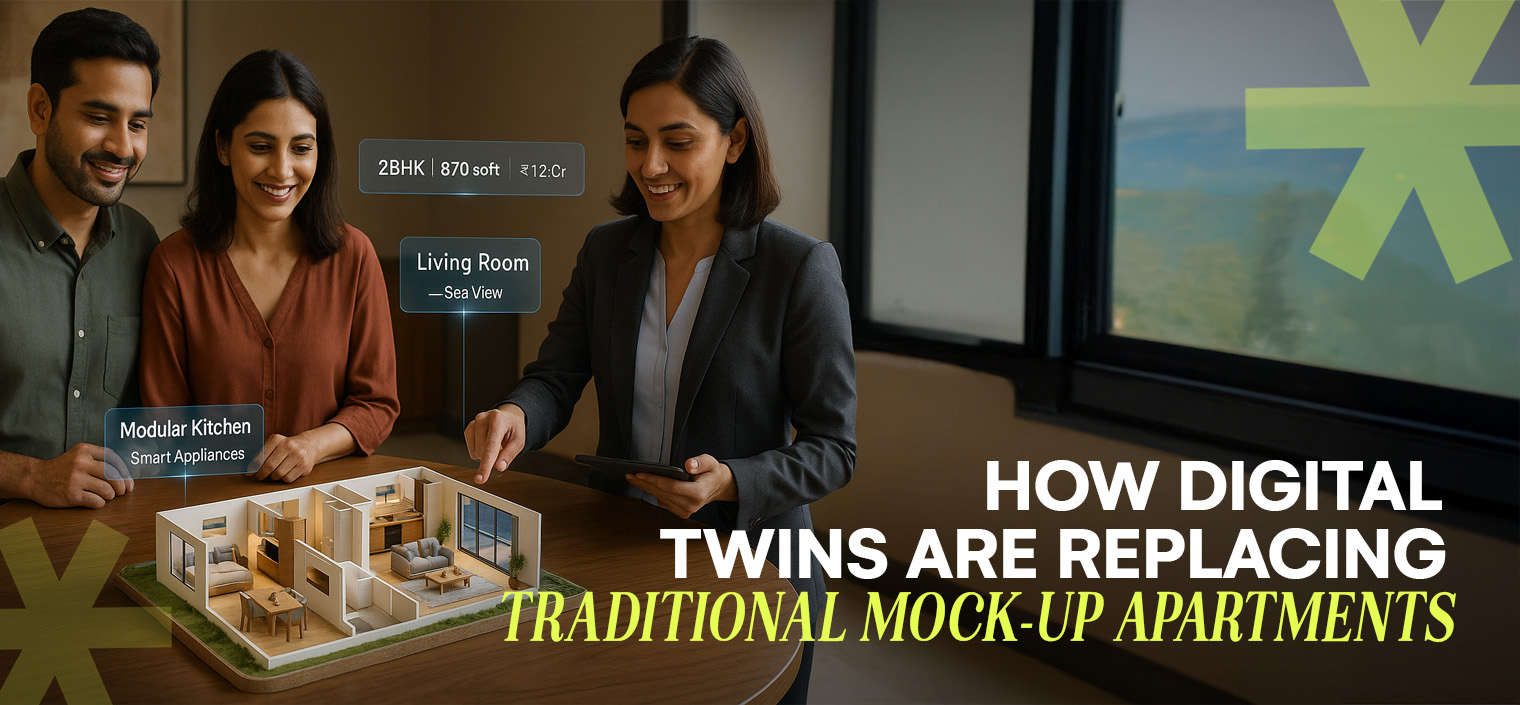
A digital twin is not just a 3D walkthrough or a polished render. It is a dynamic, interactive representation of a real property, built to evolve with the project.
Unlike static visuals, digital twins allow:
Real-time updates as designs change
Interactive exploration of layouts, finishes, and views
Accurate spatial and scale representation
Because they are software-driven, changes that would take weeks in a physical mock-up can be executed in hours. This flexibility fundamentally changes how developers respond to buyer feedback and market shifts.
A More Honest Buyer Experience
Buyers today want control and clarity. They want to explore at their own pace, compare options, and understand what they are committing to—before construction is complete.
Digital twins support this behavior naturally.
Instead of being guided through a single, fixed show unit, buyers can:
Move freely through different unit types
Visualize views from specific floors
Experience lighting changes across the day
Compare layouts side by side
This level of interaction builds confidence. Decisions are no longer based on imagination alone, but on informed exploration.
For remote buyers especially, digital twins reduce the gap between expectation and delivery, which is often the root cause of post-purchase dissatisfaction.
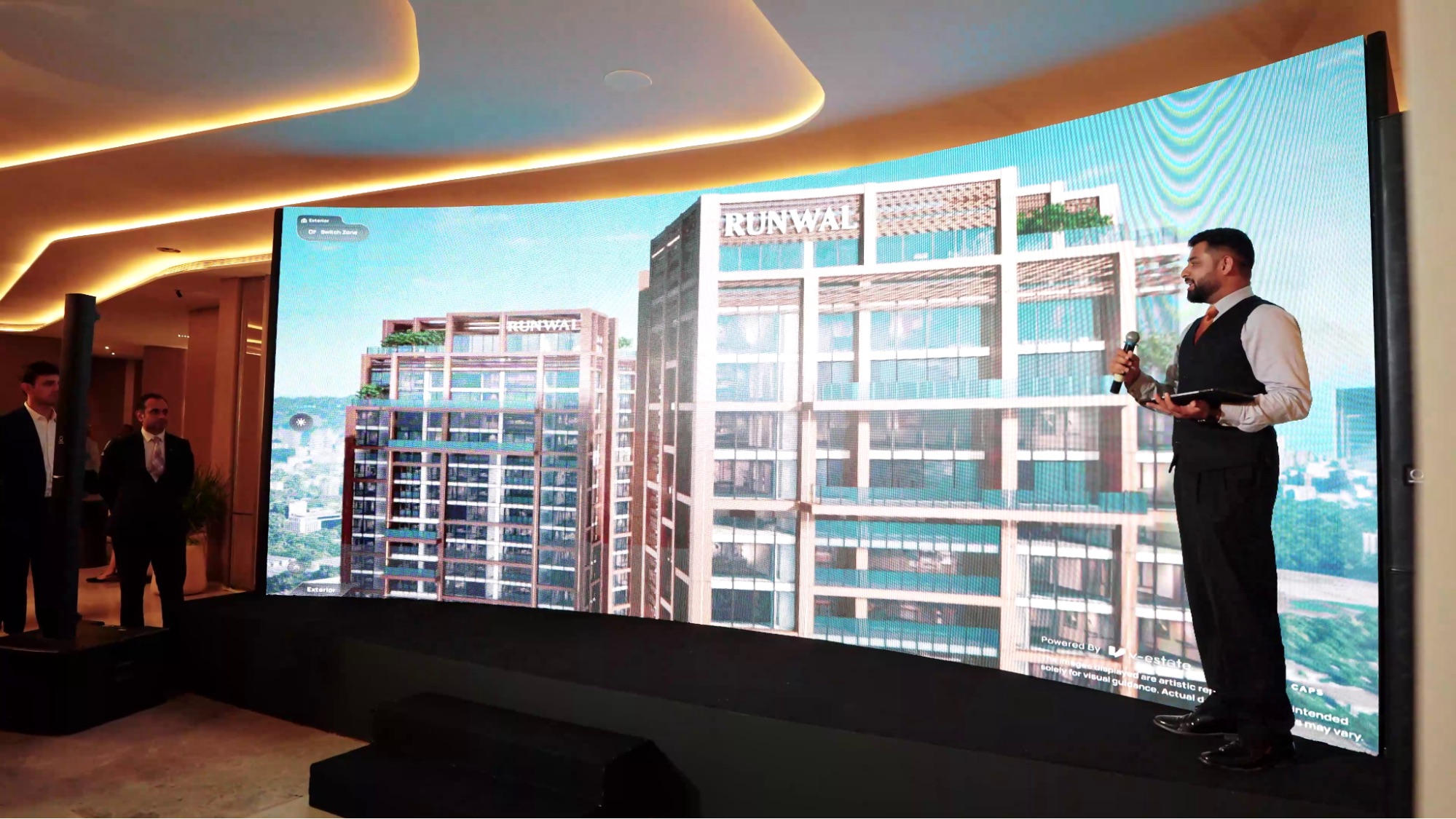
Operational Benefits That Go Beyond Cost Savings
Removing physical mock-ups immediately reduces construction and maintenance costs, but the deeper value lies in flexibility and insight.
With digital twins, developers gain:
Faster iteration based on buyer preferences
The ability to test and present multiple configurations
Data on what buyers actually explore and engage with
This behavioral insight helps teams refine layouts, amenities, and even pricing strategies. Physical mock-ups offer no such feedback loop.
In practice, this turns property presentation into a learning system, not just a display.
Addressing Adoption Concerns
Shifting away from physical mock-ups does require adjustment. Sales teams need to adapt their storytelling. Buyers may initially question whether a virtual experience is “enough.”
The transition works best when it is deliberate. Many developers begin by using digital twins alongside traditional tools, gradually letting results build confidence. Over time, as engagement increases and sales cycles shorten, the reliance on physical mock-ups naturally declines.
The key is execution quality. High visual fidelity, intuitive controls, and guided demonstrations matter. When done well, buyers rarely miss the physical unit.
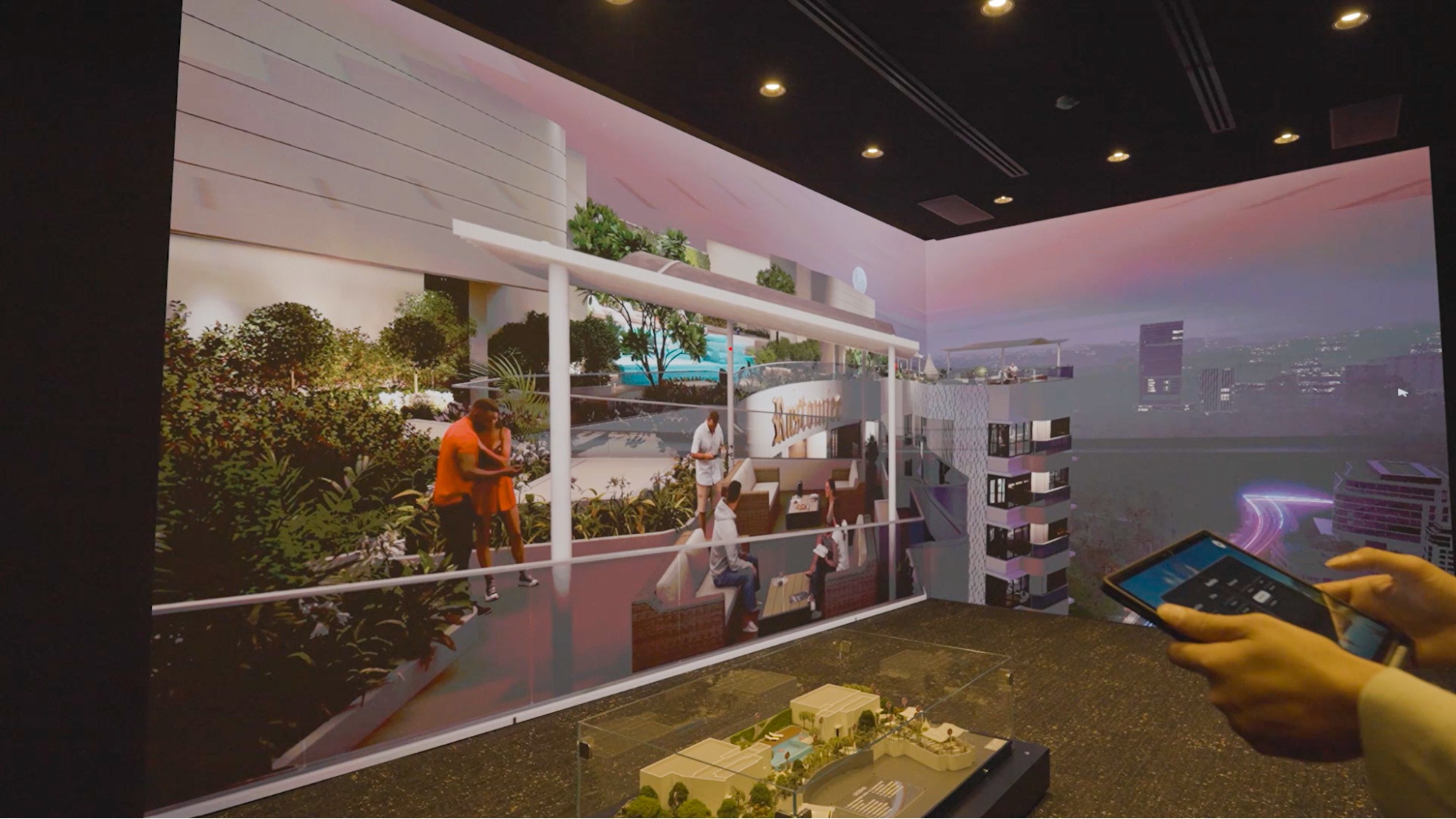
Where Property Marketing Is Heading
As buyers grow more comfortable with digital-first experiences, property marketing is following the same trajectory seen in other industries: fewer physical constraints, more personalized engagement.
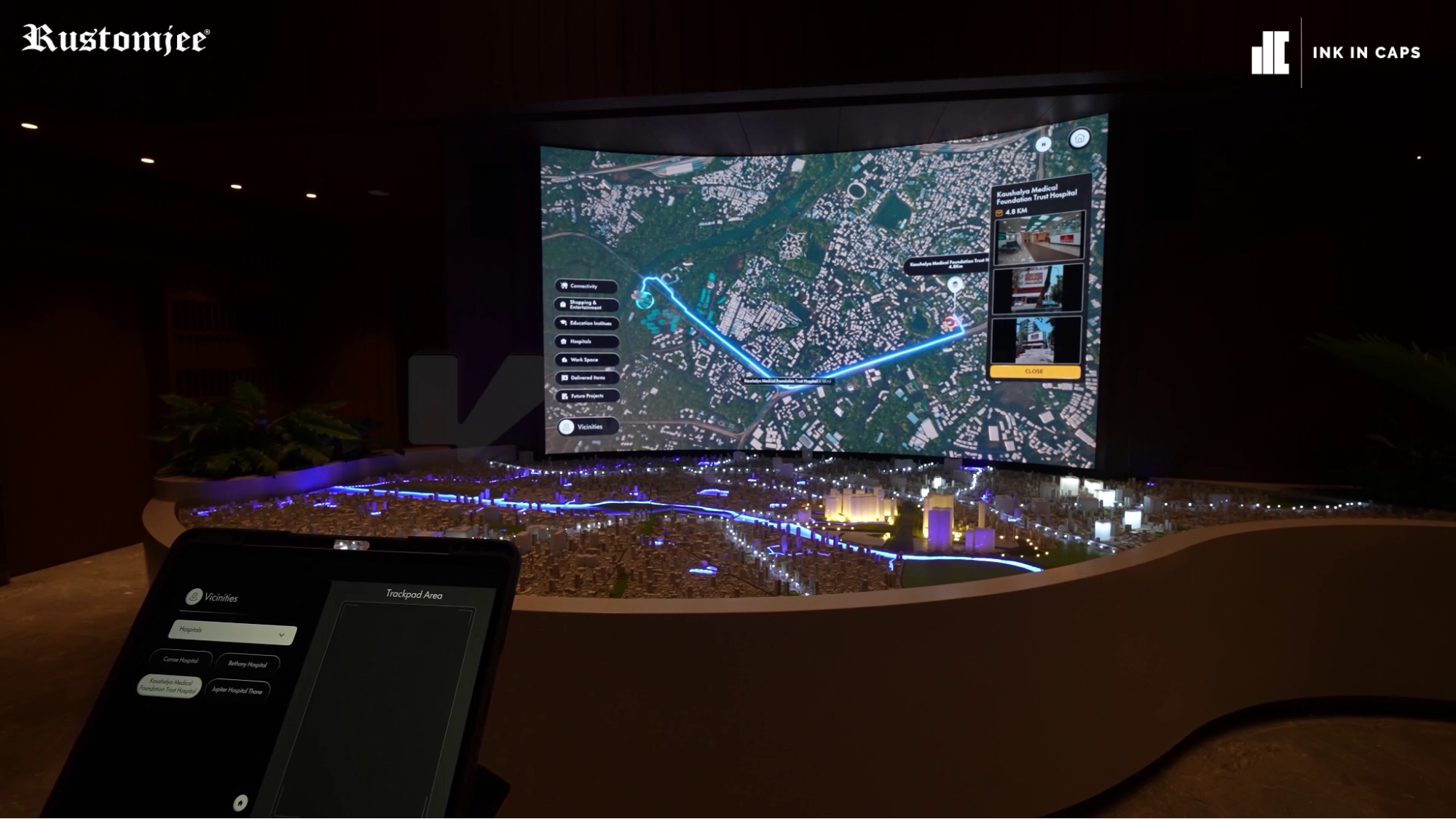
Digital twins are already being combined with immersive environments, real-time rendering, and intelligent interfaces to create cohesive experience centers rather than fragmented touchpoints.
The result is not just faster sales, but clearer communication and stronger brand recall.
Making the Strategic Shift
Replacing mock-up apartments with digital twins is not simply a cost decision. It reflects a broader shift toward transparency, flexibility, and buyer-centric thinking.
Developers who adopt this approach gain the ability to:
Reach wider audiences
Adapt quickly to market signals
Reduce uncertainty for buyers and teams alike
Digital twins are not a replacement for good design or strong fundamentals. They are a better way to present them.
Explore the solution
Learn how V-estate helps developers create immersive digital twin experiences that replace traditional mock-ups and support smarter, more confident property decisions.
.jpeg)
.jpg)