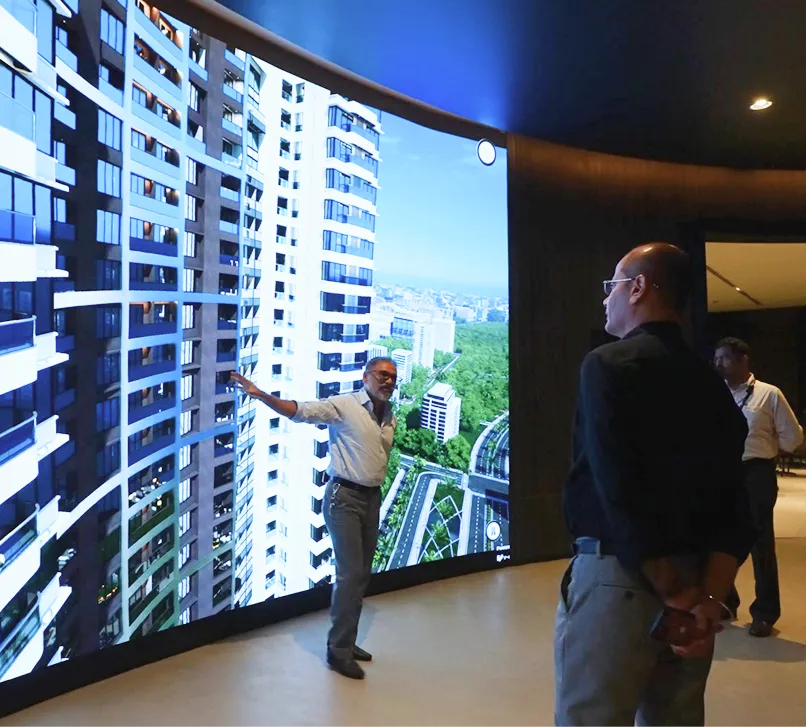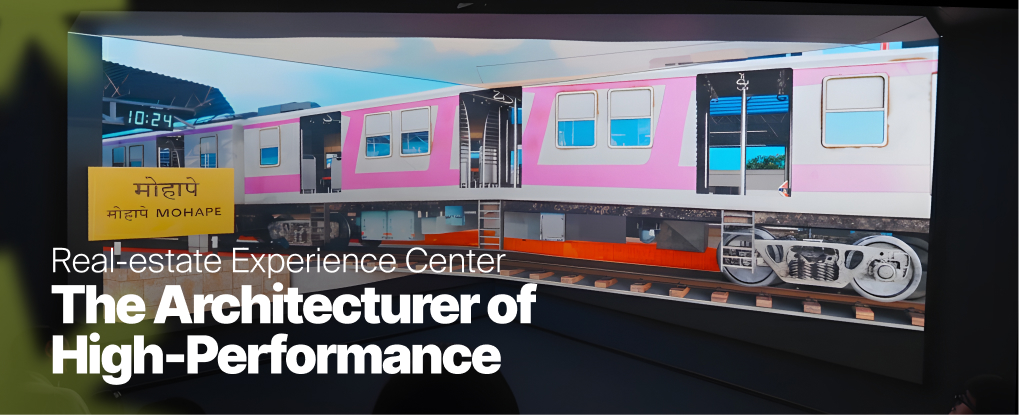
Buyers don't invest in floor plans. They invest in certainty.
When the project is under construction and the infrastructure is 3 years away, certainty is the hardest thing to sell. Traditional brochures, printed renders, and standard AV setups don't close that gap. They create it.
This is the core challenge facing every developer working in a future-led or emerging micro-market. A well-engineered experience centre — built around the right technology and a structured narrative — can solve this decisively.
Real Estate Experience Centre: The Core Sales Problem
Most sales environments are built for projects that are already visible. A buyer can see the site, walk a sample flat, read construction progress directly.
Future-led projects operate on a completely different selling logic. The value rests on infrastructure that doesn't exist yet — airports under construction, sea links in approval, economic corridors mapped only on government documents.
The result: buyers carry a perception gap. They understand the pitch intellectually. They cannot feel the conviction needed to commit.
Three gaps consistently appear in future-led project sales:
Buyers cannot spatially contextualise distant infrastructure
Commute-time claims feel abstract without simulation
Lifestyle feasibility remains unproven in the buyer's mind
Standard presentations don't resolve these gaps. They only describe them — and description rarely converts to purchase commitment.
Immersive Experience Centre Design: The Structural Approach
A high-performance experience centre is not about technology for its own sake. It is about engineering a buyer journey that compresses trust, context, and conviction into a repeatable, scalable format.
The Godrej Panvel experience centre — built around a 145-acre project dependent on future airport and sea-link connectivity — offers a direct case model. One primary objective: replace perception with spatial clarity.
The 180-Second Narrative Framework
The core experience was structured as a 180-second group immersive film. Every second was scripted with purpose.
Act 1 — Past: Delivered execution credibility. Showed completed projects. Established trust before making any future claims.
Act 2 — Present: Grounded buyers in current site reality. Tower progress, neighbourhood development, existing connectivity.
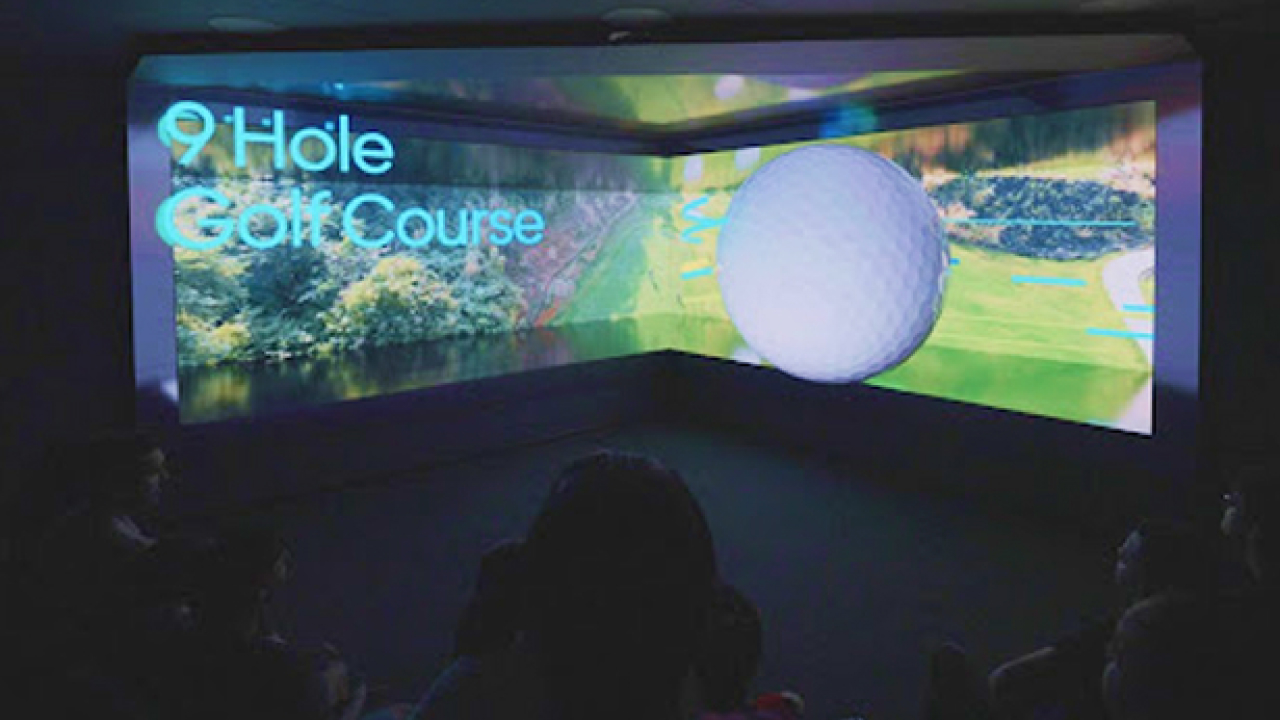
Act 3 — Future: Deployed anamorphic 3D visualisation and photoreal walkthroughs to make upcoming infrastructure tangible.
Three minutes. Full buyer context. Repeatable across every session.
Amphitheatre Layout for Group Processing
Session capacity: 15+ buyers simultaneously. The amphitheatre format created shared group conviction — buyers aligned together, not in isolation.
Operational capacity reached 5,400+ visitors per month without degrading experience quality.
.jpg)
Anamorphic 3D Visualisation in Real Estate Sales
Anamorphic 3D is not a display upgrade. It is a spatial communication tool.
In a traditional presentation, infrastructure is described — timelines, distances, route maps. Buyers process this as data. Data requires interpretation. Interpretation introduces doubt.
Anamorphic visualisation projects future infrastructure into the room environment with depth and scale. A buyer doesn't read that the airport is 25 minutes away. They experience the transit corridor spatially.
The functional impact:
Distance and connectivity understood in seconds — no verbal explanation required
Scale of infrastructure investment communicated viscerally
Recall and emotional conviction significantly higher than standard AV
For developers marketing emerging micro-markets, this is not a premium addition. It is a sales necessity.
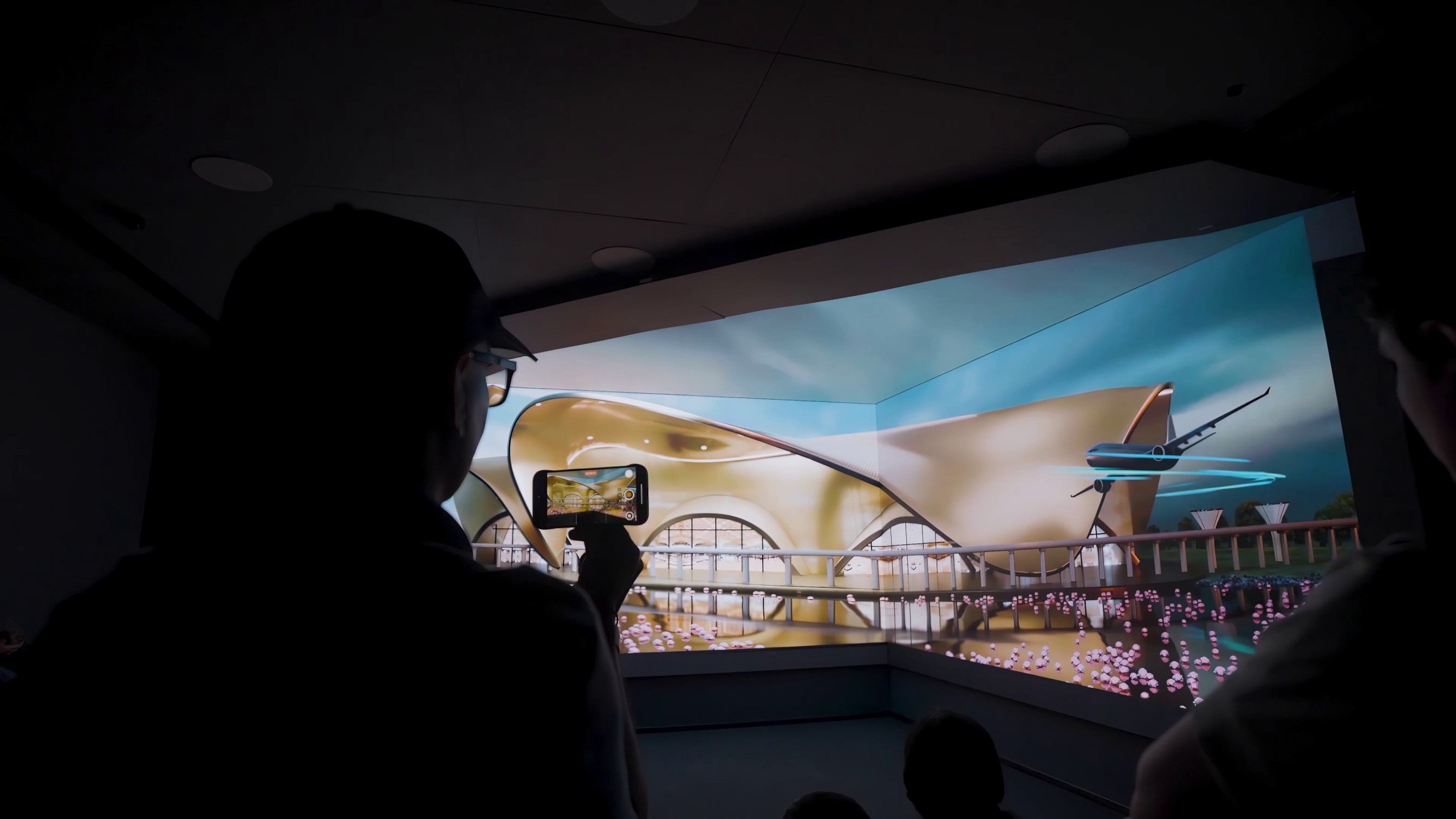
Photoreal Walkthrough Rendering: Balancing Vision with Credibility
Immersive infrastructure visualisation creates excitement. Photoreal walkthroughs ground that excitement in believable product detail.
Production-grade renders showing accurate tower sightlines, balcony views, interior finishes, and amenity spaces serve a specific buyer psychology. They shift the question from "will this project be built?" to "which configuration best fits my lifestyle?"
That is a fundamentally more commercially useful mental state for a buyer to occupy.
Key rendering requirements for sales-grade output:
Accurate perspective modelling — not idealised angles that won't match real occupancy
Lighting behaviour that reflects actual orientation and season
Material and finish representation accurate to specification
Buyers who experience this level of detail make decisions faster. The ambiguity that extends sales cycles is removed at the experience centre — not by the sales team later.
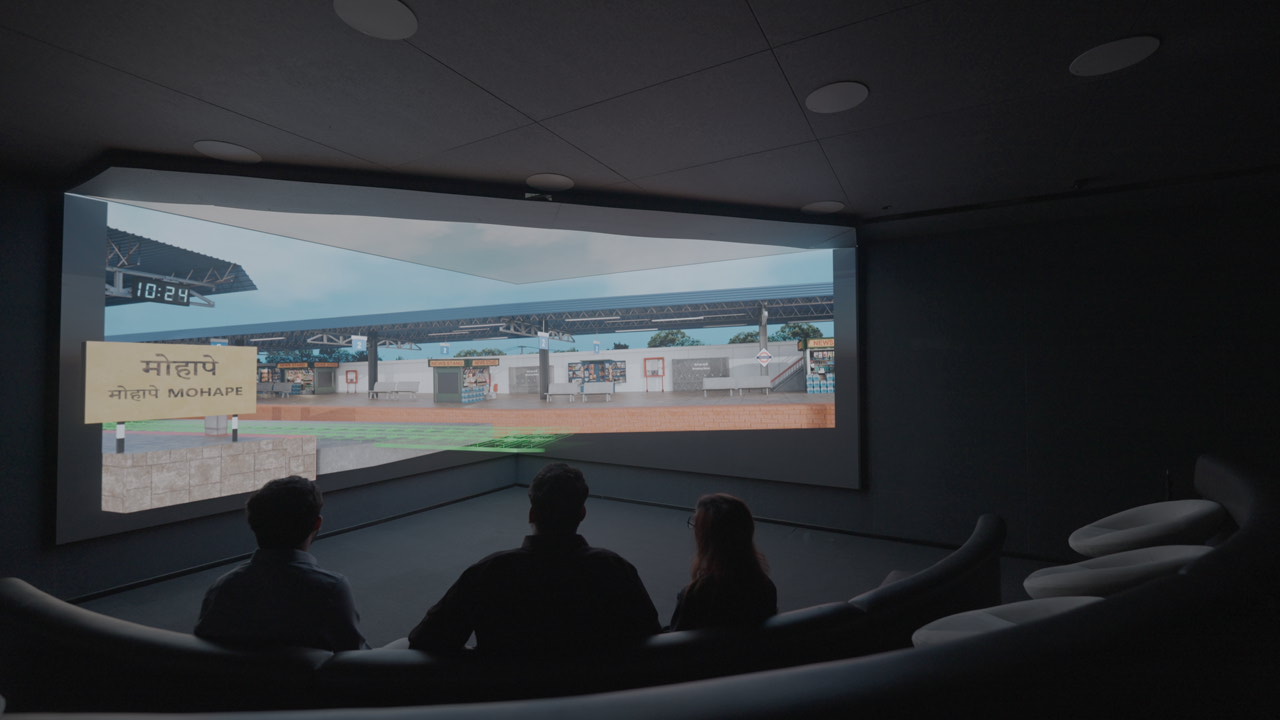
Sales Integration: Converting Group Experience into Individual Intent
An experience centre that creates excitement without capturing intent has failed its commercial function.
The operational model at Godrej Panvel:
Interactive touch tables synced with the master immersive display
Scenario tools for commute-time and amenity filtering — live, in session
QR-based mobile deep-link allowing buyers to save their session and continue evaluation independently
Auto-tagging of buyer interests for prioritised CRM follow-up
Shared group excitement was systematically converted into individual, measurable buyer intent. The experience centre became a lead qualification engine, not just a presentation room.
Operational Performance: The Commercial Benchmark
A premium experience centre must be justified by operational performance, not aesthetics.
5,400+ visitors processed per month — consistent experience quality at high throughput
15+ buyers per session — group conviction model, simultaneous decision-maker alignment
180 seconds to full buyer context — past credibility, present reality, future vision in one structured narrative
Infrastructure comprehension achieved immediately — airport access, sea-link proximity, growth corridors spatially understood
These are the benchmarks that separate a high-performance experience centre from an expensive showroom.
Relevance for Developers and Marketing Decision-Makers
This model is directly applicable when:
Project value is dependent on infrastructure not yet complete
Buyer footfall is high but conversion rates are below expectation
Sales teams are losing buyers at the future value objection
Existing AV and brochure-based presentations are not differentiating sufficiently
Every element — narrative structure, visualisation technology, group session design, CRM integration — is deployable and measurable. Marketing heads and project directors should evaluate their current conversion stack against this standard.
If buyers are leaving without spatial clarity and conviction, the sales environment is the problem — not the project.
V-Estate: Offline Immersive Sales Infrastructure for Real Estate Developers
V-Estate builds offline immersive experience centres engineered specifically for real estate sales environments. The platform integrates photorealistic 3D virtual show flats, infrastructure and connectivity visualisation, amenity mapping, and real-time customisation into a single buyer journey.
V-Estate capabilities relevant to this use case:
Photoreal 3D virtual show flats — accurate finishes, sightlines, and lighting behaviour
Infrastructure and connectivity mapping — current and upcoming projects visualised spatially
Dynamic lighting and weather controls — property experience across different times of day and season
Real-time customisation — wall colours, furniture, layout configurations — in session
Immersive group session architecture for high-throughput visitor processing
If your current sales environment is not converting at the rate the product deserves — the experience centre architecture needs to change. Connect with the V-Estate team to discuss your project requirements.