The challenge facing real estate developers today isn't just about selling square footage—it's about selling dreams, lifestyles, and futures. When potential buyers step into a property, they're not just evaluating walls and floors; they're trying to envision their entire life unfolding within those spaces. The most successful developers understand that the magic happens when buyers can genuinely picture themselves living beyond the confines of four walls, imagining the view outside their window as part of their daily narrative.
The Psychology Behind the Window View
Every morning, millions of people wake up and look out their windows. That view becomes part of their daily ritual, their emotional landscape, and their sense of home. Research shows that 78% of homebuyers consider the view from their windows as a crucial factor in their purchasing decision. Yet, many developers struggle to convey this experience effectively, especially when properties are still under construction or when buyers are touring from distant locations.
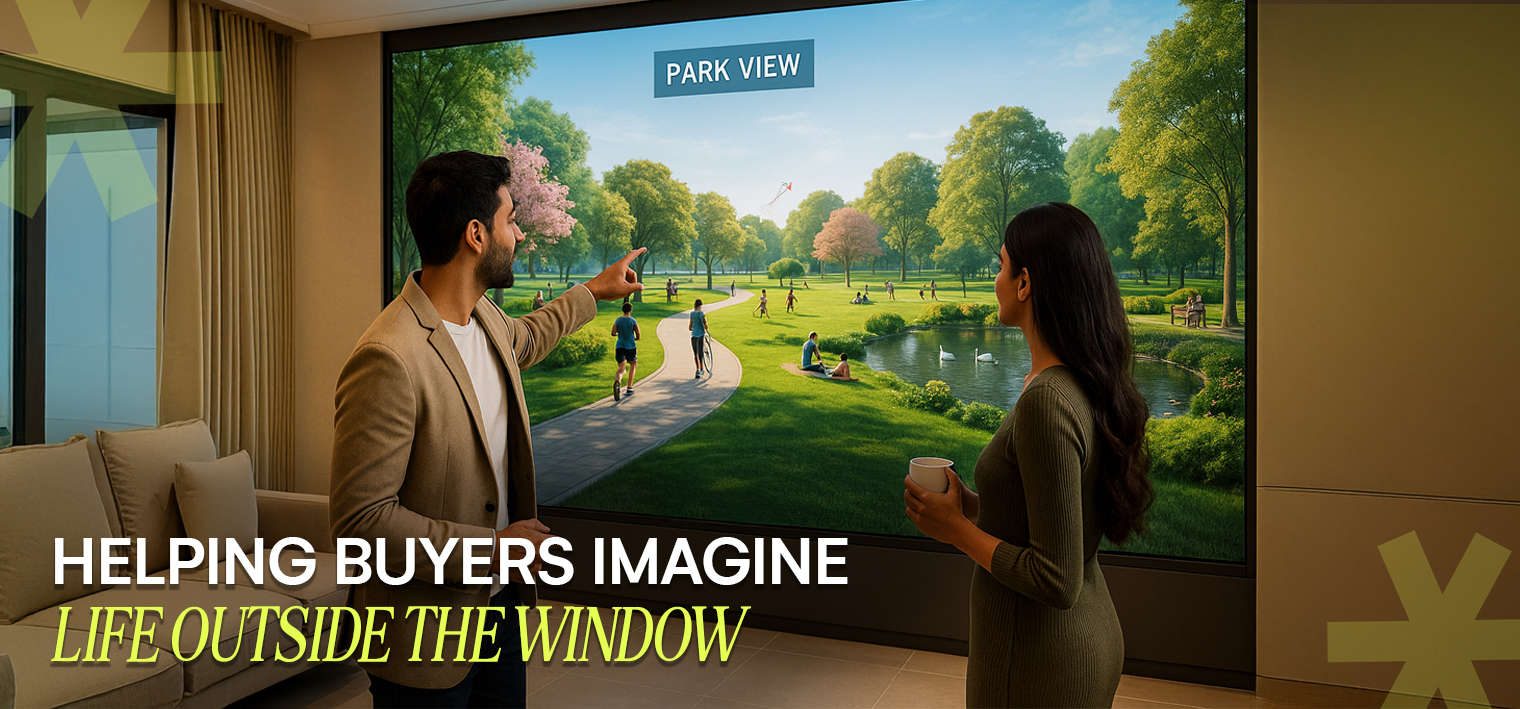
The human brain is wired to create emotional connections through visualization. When buyers can imagine sipping their morning coffee while gazing at a serene park or watching the sunset from their balcony, they're no longer just considering a purchase—they're envisioning their future lifestyle. This emotional engagement transforms casual browsers into committed buyers.
Common Challenges Developers Face
Traditional property marketing often falls short when it comes to showcasing the complete living experience. Static images and basic floor plans fail to capture the essence of what life could be like in a particular location. Developers frequently encounter several obstacles:
Buyers struggle to visualize incomplete projects. When properties are still under construction, potential customers find it difficult to imagine the finished product, let alone the surrounding environment and amenities that will enhance their daily lives.
Geographic barriers limit property tours. With buyers often located in different cities or countries, physical site visits become impractical, making it challenging to showcase the property's full potential and neighborhood advantages.
Generic marketing materials lack emotional impact. Standard brochures and basic photography fail to convey the unique lifestyle benefits that set one property apart from another in an increasingly competitive market.
The Power of Immersive Visualization
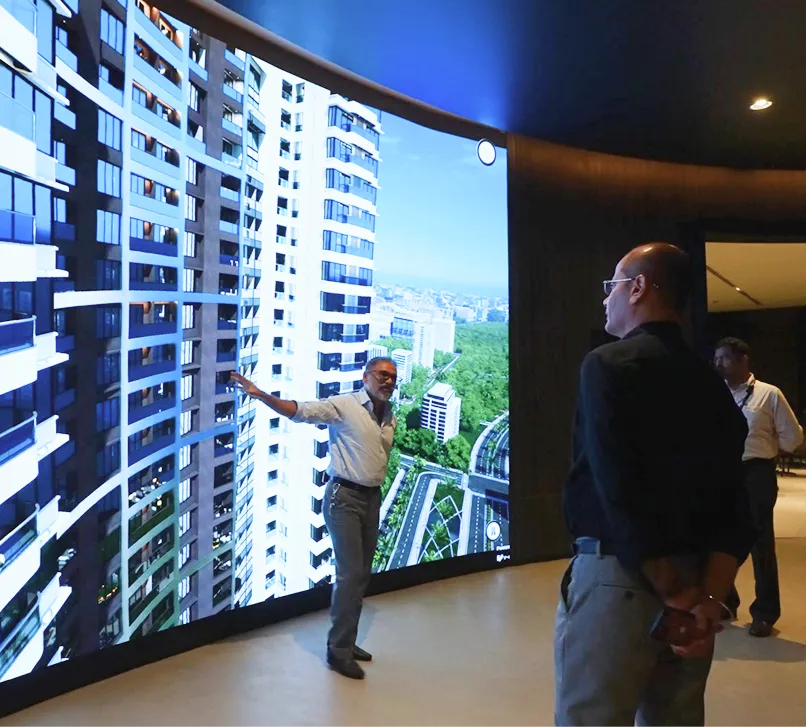
Modern technology has revolutionized how developers can address these challenges. Immersive visualization tools allow potential buyers to experience properties in ways that were previously impossible. Instead of relying on imagination alone, buyers can now step into photorealistic environments that showcase not just the property itself, but the entire lifestyle it offers.
Advanced 3D modeling creates lifelike representations that capture every detail of a property, from the texture of the walls to the way natural light filters through windows at different times of day. This level of detail helps buyers form genuine emotional connections with spaces they haven't physically visited.
Dynamic lighting and weather controls enable buyers to see how their potential home will look during various seasons and times of day. They can experience the warm glow of sunset streaming through their living room windows or observe how the morning light illuminates their kitchen workspace.
Showcasing the Complete Lifestyle Experience
Successful developers understand that selling a property means selling a lifestyle. This approach requires showcasing not just the building itself, but the entire ecosystem that surrounds it. Buyers want to understand their daily routines, their weekend activities, and their long-term quality of life.
Neighborhood connectivity plays a crucial role in buyer decision-making. When developers can demonstrate proximity to schools, shopping centers, parks, and transportation hubs, they're painting a picture of convenience and accessibility that resonates with modern buyers.
Amenity showcases help buyers envision their leisure time. Whether it's a rooftop garden where they can unwind after work, a fitness center for morning workouts, or a community space for social gatherings, these features become selling points when buyers can visualize themselves using them regularly.
The Art of Customization and Personalization
Every buyer has unique preferences and needs. What appeals to a young professional might not resonate with a growing family. Successful developers recognize this diversity and provide tools that allow buyers to customize their experience according to their specific requirements.
Interactive customization options enable buyers to experiment with different interior designs, color schemes, and furniture arrangements. When they can see how their existing furniture might look in a new space or explore different aesthetic options, they begin to take ownership of the property mentally.
Detailed window views become particularly important in urban environments where the outlook can significantly impact daily life. Buyers want to know whether they'll wake up to a bustling street scene, a peaceful garden, or a stunning skyline.
Creating Emotional Connections Through Technology
The most effective property marketing goes beyond showcasing features—it creates emotional experiences. When buyers can virtually walk through their potential home, adjust the lighting to match their preferences, and explore the surrounding neighborhood, they're not just viewing a property; they're experiencing a future lifestyle.
Virtual property tours eliminate geographical barriers and time constraints, allowing buyers to explore properties at their own pace and convenience. This accessibility opens up new markets and creates opportunities for developers to reach a broader audience.
Immersive experiences can increase buyer engagement significantly, with studies showing that properties marketed with advanced visualization tools sell faster and often at higher prices than those using traditional marketing methods.
Building Trust Through Transparency
Modern buyers are more informed and discerning than ever before. They expect transparency, detailed information, and the ability to make informed decisions. Developers who provide comprehensive, accurate visualizations build trust and credibility with their potential customers.
Accurate representations of both current conditions and future developments help buyers understand exactly what they're purchasing. This transparency reduces surprises and increases customer satisfaction throughout the buying process.
Detailed mapping of current and upcoming projects in the vicinity gives buyers a clear picture of how their neighborhood will evolve over time, helping them make informed long-term investment decisions.
The Future of Property Marketing
As technology continues to evolve, so do buyer expectations. The real estate industry is moving toward more immersive, interactive, and personalized experiences that help buyers make confident decisions about one of life's most significant purchases.
Developers who embrace these advanced visualization tools position themselves at the forefront of the industry, offering experiences that not only meet current buyer expectations but exceed them. This competitive advantage translates into faster sales, higher customer satisfaction, and stronger brand reputation.
The key to success lies in understanding that buying a home is fundamentally an emotional decision. When developers can help buyers imagine their lives outside the window—their morning routines, their evening relaxation, their weekend activities—they're not just selling properties; they're selling dreams, lifestyles, and futures.
The window view becomes more than just a feature; it becomes a portal to a new chapter in the buyer's life story.