The real estate sales floor is changing. Traditional methods that dominated the market for decades are losing ground. Developers and sales teams face a fundamental shift in how properties are presented, evaluated, and sold.
This transition is not about technology adoption alone. It reflects a deeper evolution in customer behavior and decision-making patterns. Understanding this shift matters for anyone managing property sales today.
The Traditional Sales Model Under Pressure
Conventional property sales rely heavily on physical assets. Brochures, 2D floor plans, scale models, and finished show flats form the backbone of most sales presentations. These tools served the industry well enough when customer expectations were different.
The limitations have become visible. Static materials cannot convey spatial experience. Show flats represent one configuration among many. Scale models lack context. Brochures cannot adapt to individual customer preferences.
Customers today expect more. They want to understand spaces before construction completes. They seek personalized experiences that reflect their lifestyle needs. They require confidence in high-stakes investment decisions.
The Experience Gap in Property Sales
The gap between presentation and reality creates friction in sales cycles. Customers struggle to connect floor plans with lived experiences. They cannot visualize amenities usage. They find it difficult to assess spatial relationships through static images.
This uncertainty drives delayed decisions. Sales cycles stretch longer. Conversion rates suffer. Marketing spend increases to compensate for inefficiency.
The problem compounds in pre-sales scenarios. Selling under-construction or off-plan properties traditionally required customers to imagine based on limited visual aids. Many customers cannot bridge this imagination gap. The risk perception remains high.
Experience-Led Selling: A Practical Approach
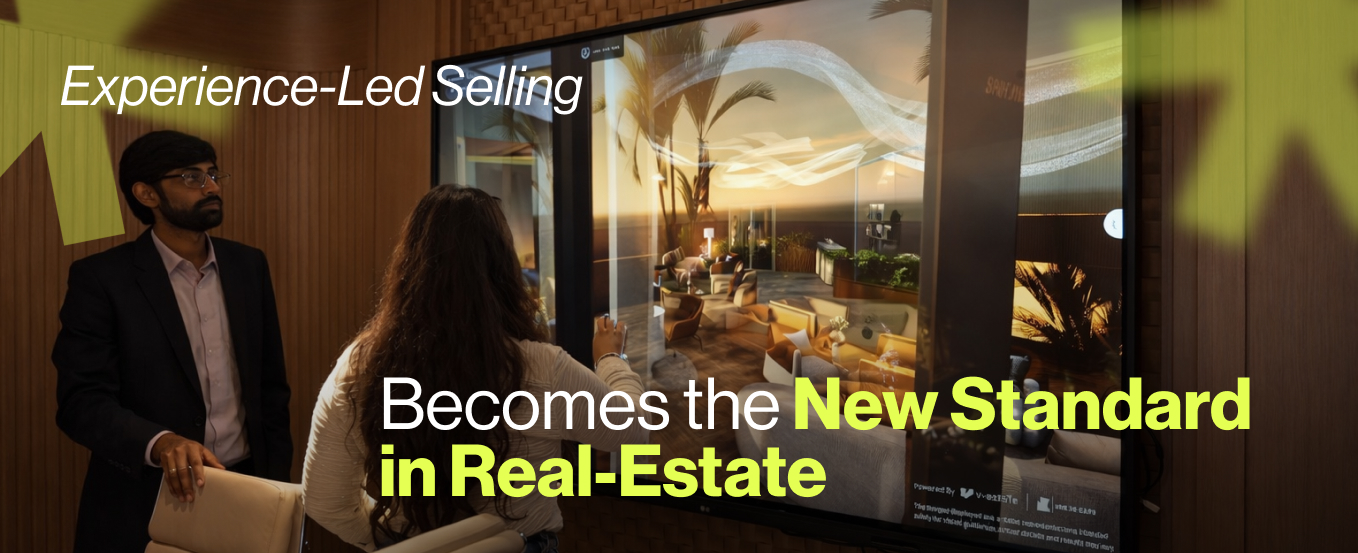
Experience-led selling addresses these challenges directly. It shifts the focus from presentation to immersion. Customers engage with properties through interactive experiences rather than passive viewing.
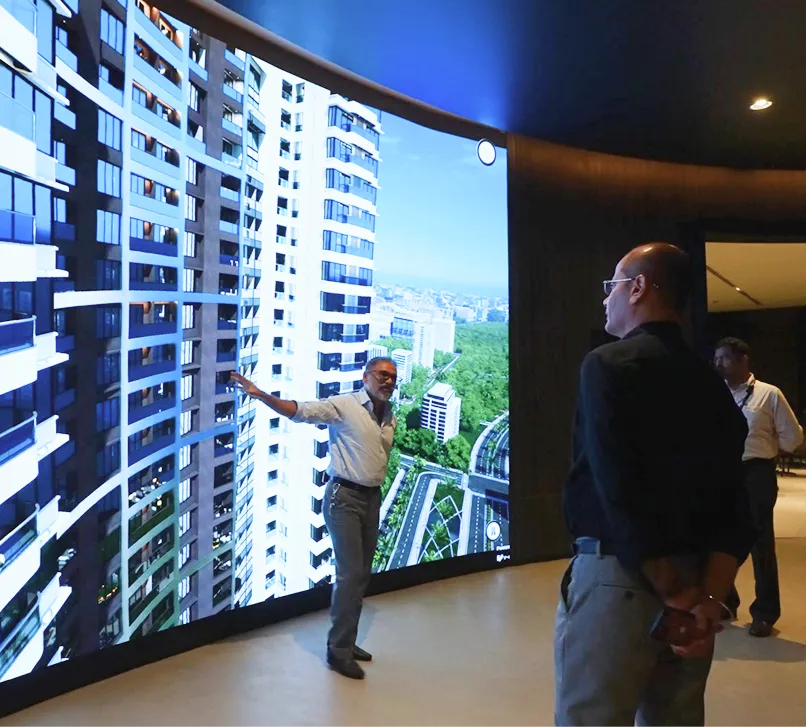
The approach integrates into physical sales environments. Sales lounges and experience centers become activation zones where customers explore properties at their own pace. Sales teams guide conversations based on customer interactions rather than scripted presentations.
This is not a virtual solution. It is an offline tool designed for on-ground sales environments. The technology exists within physical sales infrastructure, supporting real-time customer engagement.
Real-World Impact on Sales Performance
Developers implementing experience-led selling report measurable improvements. Sales cycles reduce significantly. Customer engagement time increases. Conversion rates improve.
Sales teams observe that customers who engage with immersive experiences require less handholding. They arrive at decisions faster. Their questions become more specific and relevant. The sales conversation moves from basic orientation to targeted discussion of needs and preferences.
The impact extends beyond individual sales. Marketing teams gain insights from customer interaction data. Sales forecasting becomes more accurate. Inventory management improves based on preference patterns.
Integration into Existing Sales Infrastructure
Implementing experience-led selling does not require rebuilding sales operations. The technology complements existing tools and processes. It enhances rather than replaces skilled sales personnel.
Photorealistic 3D environments replace or supplement traditional show flats. Real-time customization allows exploration of different configurations during customer visits. Dynamic controls enable sales teams to adapt presentations based on customer reactions.
The approach works within time constraints. A typical customer session lasts 20–30 minutes. The experience must deliver value within this window while leaving space for discussion and negotiation.
Addressing Specific Developer Challenges
For developers managing multiple projects, experience-led selling provides consistency. Quality does not vary between sites. The experience can be deployed across locations with uniform standards.
For large-scale township projects, the approach helps customers understand master plans and amenities distribution. They can visualize location context, connectivity, and neighborhood development stages.
For luxury segment marketing, personalization becomes possible. High-net-worth customers expect tailored experiences. Interactive customization options allow exploration of premium finishes, material options, and lifestyle configurations.
The Role of Sales Personnel
Experience-led selling does not eliminate the need for skilled sales teams. It changes their role from information providers to experience facilitators. Sales personnel interpret customer interactions, identify preferences, and guide discussions.
The technology handles exploration while sales staff focus on relationship building, objection handling, and closure. This division improves efficiency and job satisfaction.
Measuring Business Impact
The effectiveness of experience-led selling manifests in clear metrics:
Reduced sales cycle duration from weeks to days
Higher conversion rates from initial inquiry to booking
Improved customer satisfaction scores through better-informed decisions
Lower marketing cost per acquisition through improved efficiency
These outcomes compound over time. Satisfied customers generate referrals. Repeat business increases. Brand reputation strengthens in the market.